REVIEW · DUBROVNIK
Dubrovnik Combo: Old Town & Ancient City Walls
Book on Viator →Operated by Dubrovnik Walks · Bookable on Viator
Dubrovnik is one of those cities that grabs you fast. This combo bundles a guided Old Town walk with a full city walls circuit, so you get context and views without juggling tickets. I especially like the audio headsets for clear guiding and the fact that both walks are tightly routed around the city’s big hitters. The main consideration: the city walls entrance costs extra, and the walls walk is stair-heavy.
You’ll also appreciate that you can pick a departure time that fits your day, rather than being locked into one awkward schedule. One other practical note: the total time is about 3 hours 30 minutes, so wear shoes that can handle stone streets and a lot of steps.
In This Review
- Key Things to Know Before You Go
- Dubrovnik in One Block: Old Town Walk Plus Walls Circuit
- Meeting Point, Audio Headsets, and the Pace You Should Expect
- Old Town Walk: Pile Gate to Stradun Landmarks That Tell the City’s Story
- Pile Gate and the First Orientation Moment
- Franciscan Monastery and Onofrio’s Fountain
- Stradun: Sights Along the Main Thoroughfare
- Luza Square and the Old Town Center of Gravity
- Ending Point Near the Port
- City Walls Tour: The 2 Kilometers That Turn Views Into Understanding
- What the Walls Include (and What It Costs Extra)
- How the Walls Were Built
- Key Structures You’ll See Along the Circuit
- When to Go for Comfort
- The Real Work on the Ground: Steps, Shoes, and Weather
- Price and Value: What $52 Buys, and How to Budget for the Walls
- Who This Combo Tour Fits Best
- Should You Book This Dubrovnik Combo Tour?
- FAQ
- How long is the Dubrovnik combo tour?
- What language is the tour offered in?
- Are audio headsets included?
- Where do I meet the guide?
- Does the price include the city walls entrance fee?
- Is a Dubrovnik Pass accepted for the city walls?
- How long is the Old Town walking part?
- How long is the city walls part?
- Is this a walking tour or does it include sitting?
- What happens if the weather is bad?
Key Things to Know Before You Go
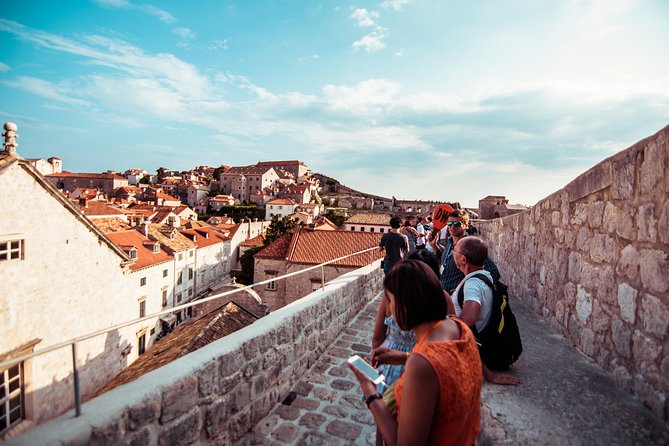
- Two tours in one: Old Town first, then the walls circuit, so you see the city at street level and from above.
- Audio headsets make a real difference, especially in busy areas where it’s hard to hear over foot traffic.
- Meet near Pile Gate: the start location puts you right at the main Western entrance into the old city.
- City walls ticket is separate: the €40 entry is not included, but it gets you access to Fort Lovrijenac.
- Expect real walking work on the walls, including lots of stairs and a couple of steep segments.
- Smaller groups (max 35) help the pacing feel organized rather than chaotic.
Dubrovnik in One Block: Old Town Walk Plus Walls Circuit
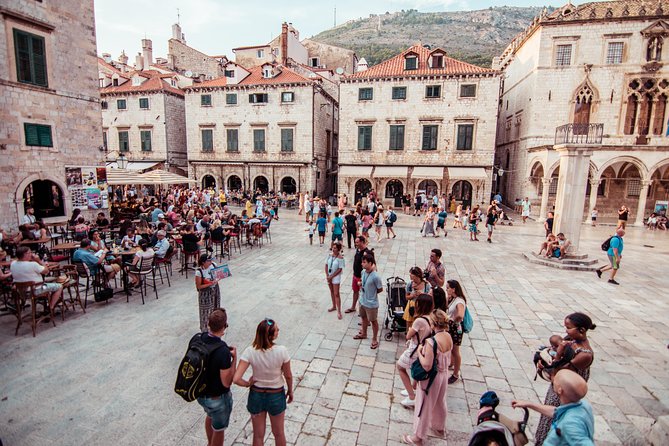
If you have a tight schedule, this is a smart way to cover Dubrovnik’s two essentials. The Old Town walk gives you the story—how the city grew, how it functioned as a prosperous port, and what shaped its culture over centuries. Then the walls take over, literally showing you the defensive thinking behind the shape of the city.
The big value here is that the route is handled for you. Instead of figuring out what to see first on Stradun, where to stop for landmarks, and how to time the walls entrance, your guide keeps you moving in a logical order. And because there are departure times you can choose, you can plan around heat, crowds, or the rest of your itinerary.
You can also read our reviews of more tours and experiences in Dubrovnik.
Meeting Point, Audio Headsets, and the Pace You Should Expect
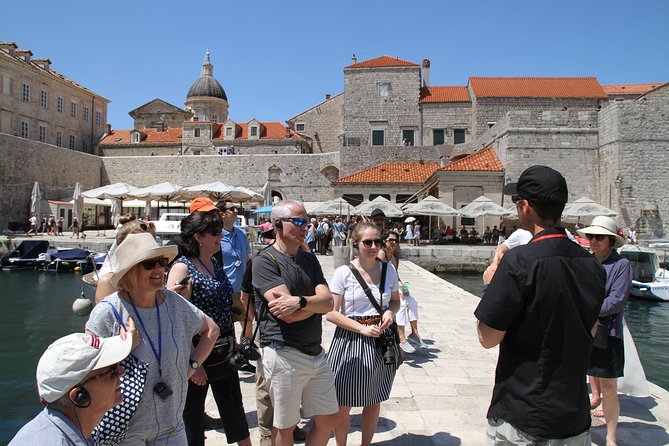
This runs with a licensed local English-speaking guide, and it’s designed for clarity. You’ll meet at Dubrovnik Walks under the orange umbrella on Brsalje ul. 8, then the plan pulls you into the Old Town area near Pile. The start point is easy to find, and the tour keeps group gathering simple before you head out.
Audio headsets are included, and they’re used in groups of 4+ people. That matters more than you’d think in Dubrovnik, where the streets can get noisy. The walls section also benefits from clear instructions because you’ll be negotiating steps and railings while listening.
In terms of pacing, the Old Town part is mostly walking with stops, while the walls part is where the physical demand ramps up. You’ll be moving through the full circuit, learning as you go, not watching the city from one viewpoint the whole time.
Old Town Walk: Pile Gate to Stradun Landmarks That Tell the City’s Story

The Old Town segment is about 1.5 hours and is built around Dubrovnik’s most recognizable landmarks. It starts near the Pile Gate area, and you begin your walk into the historic core with your guide setting the stage for what you’re about to see.
Pile Gate and the First Orientation Moment
You enter through Pile Gate, the main Western entrance. It’s a good way to start because it immediately puts you in the medieval layout—this is the gateway rhythm you’ll keep noticing throughout the walk.
There’s also a short pause in Brsalje Square for a quick summary. You don’t need to pay attention to learn the route, but it helps you understand the big themes before you start passing the major sights.
Franciscan Monastery and Onofrio’s Fountain
As you work along the stone-paved streets, your guide points out key religious and civic landmarks. One highlight is the Franciscan Monastery, where you’ll see the Pietà sculpture and a still-operating pharmacy that’s considered among the oldest in Europe. Even if you’re not typically a museum person, this kind of living detail makes Dubrovnik feel less like a set piece and more like a real city with continuity.
Another anchor stop is Onofrio’s Fountain, built in 1438 at the end of an 8-mile (12-km) aqueduct. It’s one of those sights that looks straightforward until someone gives you the context—then it turns into a story about infrastructure, planning, and how a port city handled daily life.






Stradun: Sights Along the Main Thoroughfare
From there, you follow the Stradun, the city’s main thoroughfare. This is where Dubrovnik’s famous symmetry and pale stone start to make sense. Your guide ties the architecture and street layout to the city’s development over centuries.
Expect passes by major public buildings, including:
- Sponza Palace
- Rector’s Palace
- Orlando’s Column (a monument connected to the city’s long-standing freedom and sovereignty)
- Cathedral of the Assumption, a baroque church rebuilt after the devastating earthquake of 1667
If you like history that’s connected to what you’re standing next to, this part works well. It’s not only about naming buildings; the guide uses the landmarks to explain why Dubrovnik developed the way it did.
Luza Square and the Old Town Center of Gravity
You’ll spend time around Luza Square, Dubrovnik’s central hub, with stops that include views of St. Blaise’s church and Orlando’s Column again, plus other nearby landmarks like Sponza Palace and a small fountain. This square gives you a natural break in the walking rhythm and a chance to orient yourself before the day pivots to the walls.
Ending Point Near the Port
The Old Town walk finishes back toward the port area (Porat Dubrovnik). That’s convenient because your next segment—city walls—is also planned to end close by. It reduces the stress of dragging yourself across town after standing in lines and taking photos.
City Walls Tour: The 2 Kilometers That Turn Views Into Understanding

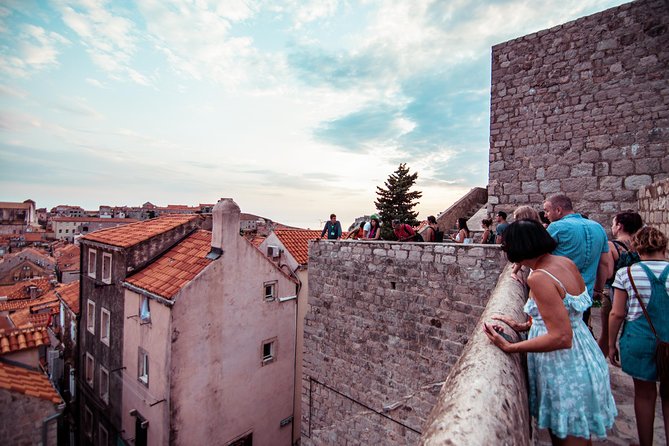
The walls section is about 2 hours and is the part most people remember, mainly because it’s physical. You’re looking at roughly a 1.2-mile (2-km) circuit, and you’ll climb and descend steps along the fortifications.
Two things make the walls tour worth doing even if you’ve seen a lot of photos:
- You’re walking the defensive route, so you understand why the city was protected where it was protected.
- The views are part of the lesson, because you can see how the walls controlled sightlines over the port and sea.
What the Walls Include (and What It Costs Extra)
The guide will help you purchase city walls tickets, but the ticket price is not included in the tour price. The walls entrance is listed as €40 per person. The ticket includes access to Fort Lovrijenac—which you can visit after the tour, even though it sits physically separated from the main walls circuit.
This is also where the Dubrovnik Pass can matter. The pass covers one city walls visit, but you must purchase and collect it in advance.
How the Walls Were Built
Your guide explains how the strategic layout developed, including the idea that the sea channel separating the city from the mainland was covered with earth, leading to construction that enclosed the present-day Old Town. You’ll also hear that the walls were restored multiple times over history to resemble the original appearance. That restoration detail helps if you’re thinking like a traveler—how does something survive centuries of weather, war, and tourism pressure? The answer is careful rebuilding.
Key Structures You’ll See Along the Circuit
You’ll get views and explanations tied to specific defensive points. Expect to see:
- Minceta Tower
- Fort Revelin
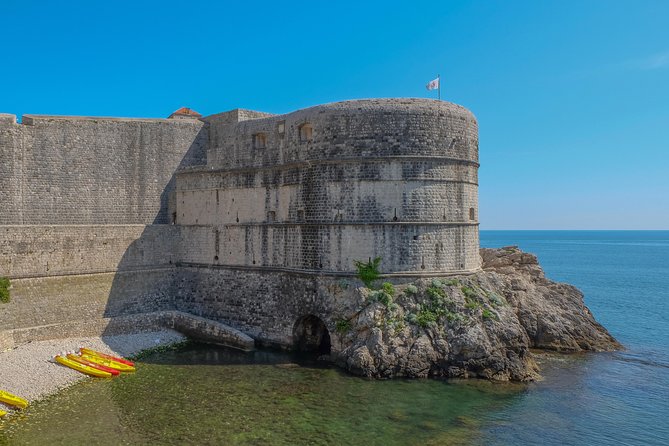
- Fort Lovrijenac (seen in the distance, with visiting access included via the ticket)
You’ll also learn about the blend of defense and politics—how Dubrovnik handled repeated invasions, and how defensive fortifications worked alongside diplomacy to keep independence for years.
When to Go for Comfort
Here’s practical advice that matters: start early if you can. When it’s hot, this tour becomes harder simply because you’re in open air and stone. Even with railings and guided pacing, you’ll feel the stairs. A light breeze can help, but hold onto hats if it’s windy.
Also, there can be breaks in shade. The good news is that the walls circuit typically offers opportunities to pause and reset your footing, but you should plan on steady walking the whole way.
The Real Work on the Ground: Steps, Shoes, and Weather

Old Town sounds flat on a map, and it can be fairly easy compared to the walls. Still, you’re on stone streets. Wear shoes with grip.
Then there are the walls. One of the most repeated practical themes: expect over 1,000 steps and a nearly two-mile walk. You don’t need to be an athlete, but you do need to be comfortable climbing and descending—especially with wind and uneven footing.
Weather matters a lot here. This experience requires good weather, and if it’s canceled due to poor conditions you’re offered a different date or a full refund. If conditions are borderline, don’t assume you’ll magically be dry. Even with ponchos, strong wind and rain can make the walls part less enjoyable.
Price and Value: What $52 Buys, and How to Budget for the Walls
At $52 per person, the combo pricing mostly covers the guiding, the combined planning, and the structure. What it doesn’t cover is the city walls entrance fee of €40 per person. So your real spend is the combo price plus the ticket.
Is it worth it? Usually, yes—if you value a guided explanation and want a time-efficient plan. The Old Town walk is built around major monuments you could theoretically visit on your own, but the guiding is what turns those stops into a coherent story about port power, governance, and how Dubrovnik stayed standing.
For the walls, the extra ticket is a standard reality of the experience. What you get for that money is the ability to walk the full fortifications and also access Fort Lovrijenac. If you’re the type who hates paying for separate timed entries and would rather only pay for one thing, this might feel like a letdown. But if you want the full Dubrovnik wow factor at street and wall level, it’s a straightforward add-on.
One more value tip: if you’re also planning museum visits, check whether the Dubrovnik Pass fits your calendar. The pass covers one city walls visit, but you must purchase and collect it in advance.
Who This Combo Tour Fits Best
This tour is a good match if:
- You want an efficient overview that covers both Old Town and the walls.
- You prefer not to coordinate routes and tickets by yourself.
- You like guided storytelling tied to what you’re seeing—Onofrio’s Fountain, the monastery details, Stradun landmarks, then the defensive logic of the walls.
- You’re okay with walking in stone streets and handling stairs.
It may be less ideal if:
- You have limited mobility or know you’ll struggle with a lot of steps.
- You want a lighter day with fewer climbs and more free time to wander without a set route.
- You hate paying separate fees and wish the walls entry were included in the base price.
Should You Book This Dubrovnik Combo Tour?

Yes, if your goal is to cover Dubrovnik’s essentials in one focused day and you like the idea of hearing the city’s story while you walk it. The audio headsets, the clear landmark route, and the way the walls turn views into context make this combo feel more than the sum of its parts.
If you’re unsure, decide based on one question: can you handle the walls? If the answer is yes, book it and plan your day around comfort—early timing helps a lot. If the answer is no, you might still enjoy the Old Town portion alone, but this combo is built for walkers who want the full circuit.
FAQ
How long is the Dubrovnik combo tour?
It runs for about 3 hours 30 minutes in total.
What language is the tour offered in?
The tour is offered in English.
Are audio headsets included?
Yes. Audio headsets are included, and they’re used in groups of 4+ people.
Where do I meet the guide?
You meet at Dubrovnik Walks under the orange umbrella on Brsalje ul. 8, Dubrovnik.
Does the price include the city walls entrance fee?
No. The Dubrovnik City Walls entrance fee is €40 per person, and it is not included in the tour price.
Is a Dubrovnik Pass accepted for the city walls?
Yes. The Dubrovnik Pass covers 1 visit to the city walls, but you need to purchase and collect it in advance.
How long is the Old Town walking part?
The Old Town walking tour is about 1.5 hours.
How long is the city walls part?
The city walls tour is about 2 hours.
Is this a walking tour or does it include sitting?
It’s a walking tour. You’ll walk through the Old Town and then follow the city walls circuit, which includes many steps.
What happens if the weather is bad?
This experience requires good weather. If it’s canceled due to poor weather, you’ll be offered a different date or a full refund.