REVIEW · KAMAKURA
Kamakura Heritage Bike or Walk Tour with ex-Rickshaw guide
Book on Viator →Operated by Ichi · Bookable on Viator
Kamakura gets easier when you ride. This private 4-hour Kamakura bike or walk tour links the city’s biggest spiritual sights with quieter corners, led by ex-rickshaw guide Ichi.
You’ll see the Great Buddha of Kamakura up close, then keep moving through shrines, graves, bamboo, and the seaside road without spending your time figuring out logistics.
I love the way Ichi turns temple-and-shrine facts into clear, human stories as you go. I also love that the tour includes photos and gives you a real bike-or-walk choice so your pace stays comfortable.
One consideration: biking works best if you can ride an adult-sized bike, and the tour notes it isn’t recommended for kids under 13 who can’t.
In This Review
- Key highlights
- A 4-hour Kamakura day that feels personal
- Meet at Kamakura Station and get moving right away
- Kotoku-in’s Great Buddha: the stop that sets the tone
- Tsurugaoka Hachimangu Shrine: power, samurai, and a walkable pace
- The graves of Minamoto no Sanetomo and Hojo Masako: quick, but memorable
- Hokoku-ji bamboo grove: where the tour finally slows down
- Yuigahama Beach: bike or walk by the sea
- Hase-dera in Hase area: a huge Kannon and big coastline views
- Egara Tenjin Shrine: learning deity in a short stop
- Getting photos without turning it into a chore
- Price and value: what you’re paying for
- Who this tour fits best
- Should you book this Kamakura bike or walk tour?
- FAQ
- How long is the Kamakura bike or walk tour?
- Is this tour private or shared?
- Do I get to choose between biking and walking?
- Which major stops are included?
- Are admission fees included?
- Is matcha included?
- Where do we meet, and where does the tour end?
- Is there a mobile ticket?
- What if the weather is poor?
- Is it suitable for children?
Key highlights
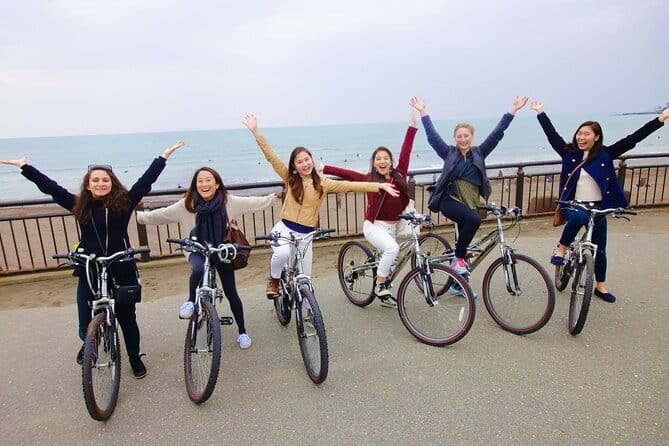
- Ichi’s ex-rickshaw guide background shows in the route flow and practical pacing
- Great Buddha (Kotoku-in) and Hokoku-ji admissions are included, so fewer stops cost you extra time
- You can choose bike or walking, and adjust your plan within the 4-hour window
- Hokoku-ji’s bamboo grove gives you a calm break right in the middle of the sightseeing
- Yuigahama Beach adds a seaside reset, especially on a pleasant weather day
- Short shrine and grave stops help you cover more without turning the tour into a marathon
A 4-hour Kamakura day that feels personal
Kamakura has a reputation for being “easy” to explore, but once you start hopping between temples, you can burn time fast. This tour fixes that by building a tight route that still leaves breathing room. You’ll be back at the meeting point when it’s done, so you don’t have to plan a second transport step.
The vibe is private and flexible. It’s just your group, and you can pick biking or walking, then adjust within the allotted time. That matters here because Kamakura’s famous sights are spread out enough that a one-size-fits-all schedule can feel like a chase.
Ichi’s background matters too. He guides people through the same streets like a rickshaw driver would, so turns, crossings, and the flow between stops feel planned rather than improvised. The result is a day that moves fast, but not frantic.
You can also read our reviews of more tours and experiences in Kamakura.
Meet at Kamakura Station and get moving right away
You start at Kamakura Station (1-chōme-1-15 Onarimachi). That’s a smart choice because it keeps the tour accessible and lets you arrive without complicated transfers. The tour runs about 4 hours, so you get a serious chunk of Kamakura without losing the whole day.
There’s also a practical benefit to the mobile ticket. Less paper, less fuss. You spend your energy on the sights, not on checking details.
If you’re someone who likes to get your bearings quickly, this is a good way to do it. You’ll cover central-to-eastern Kamakura in a single loop, so you understand how the areas connect by the time you’re done.
Kotoku-in’s Great Buddha: the stop that sets the tone
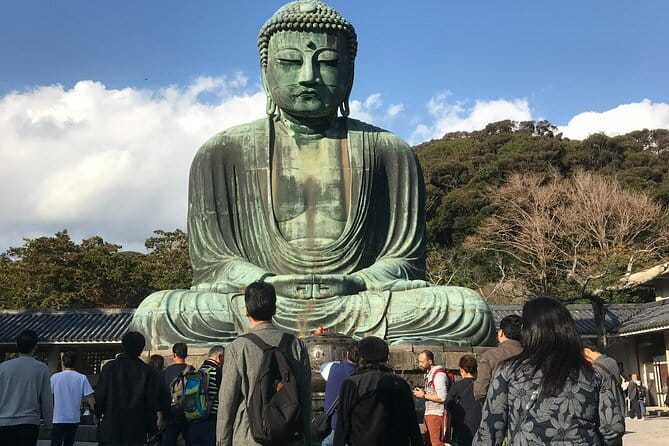
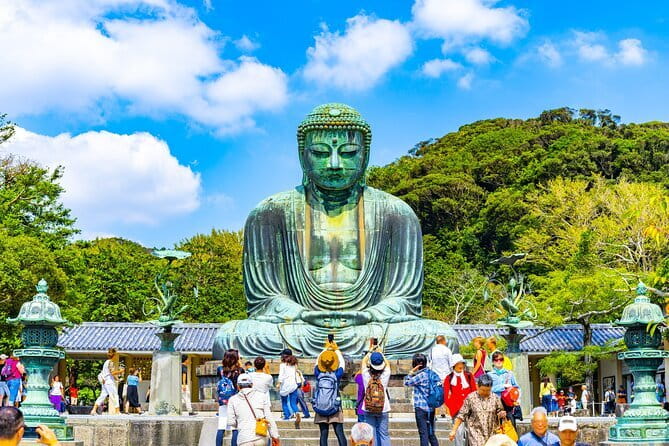
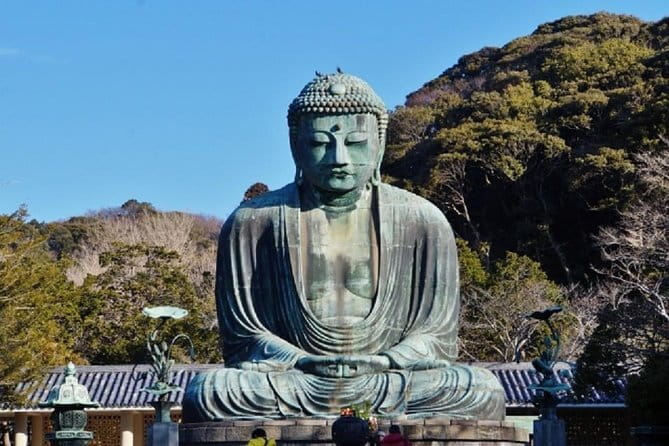
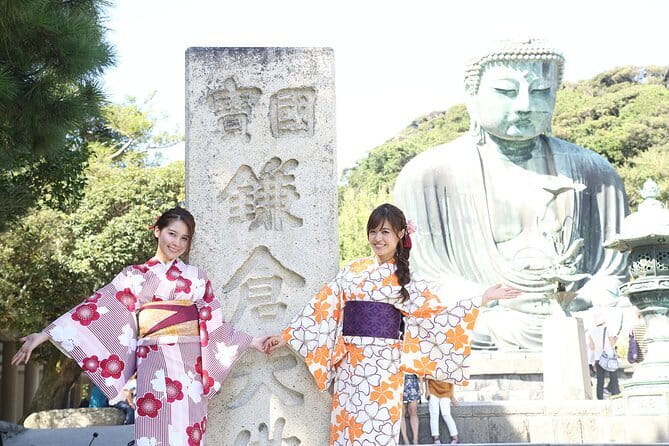
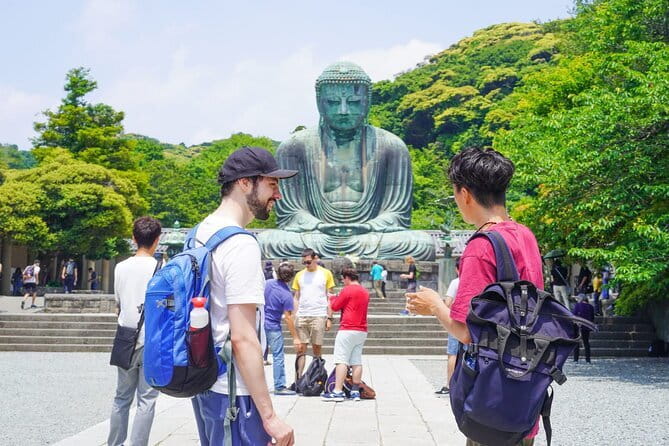
You’ll begin with Kotoku-in (the Great Buddha of Kamakura) for about 30 minutes, with the admission fee included. This is the kind of landmark that looks impressive on photos, but even better in person because you feel the scale and the stillness around it.
What I like about starting here is how it frames the entire day. Kamakura’s other sites start to feel like parts of one story after you’ve seen the city’s most famous icon first.
Time is tight enough that you don’t get stuck waiting around, but long enough to absorb the atmosphere and let the guide explain what you’re looking at. A short stop can feel rushed in some tours, yet here the first landmark is big enough that 30 minutes works well.
Watch for crowds and weather. The tour notes it works best with good weather. If it’s rainy, you’re still out and about, and you’ll want to keep your gear simple.
Tsurugaoka Hachimangu Shrine: power, samurai, and a walkable pace
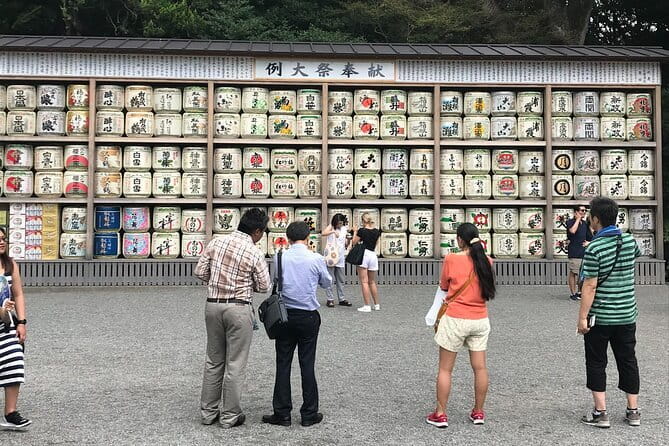
Next comes Tsurugaoka Hachimangu Shrine for about 30 minutes. This one is free, and it’s a classic Kamakura experience: you stroll through the grounds, soak up the shrine setting, and learn how it connects to samurai culture.
I like this stop because it’s a change of pace from temple crowds. Instead of one towering object, you get space to move and look. The guide can point out the details that you’d otherwise miss, and a walking stretch helps your legs after biking.
If you’re short on energy, 30 minutes is usually the right length. It gives you enough time to feel the place without eating the rest of your tour.
The graves of Minamoto no Sanetomo and Hojo Masako: quick, but memorable
After that, you’ll make a brief visit to the grave of Minamoto no Sanetomo and Hojo Masako for around 10 minutes. This stop is also free, and it’s short by design.
Here’s the trade-off: it’s enough time to understand who these figures were, but not enough for a long, slow wander. If you love history and could happily spend an hour on graves and tomb stories, you might wish this were longer. Still, as a “chapter break” in a half-day tour, it works.
This is also where Ichi’s storytelling stands out. Several descriptions emphasize that he keeps the complex shogunate story clear, not academic. Even if you don’t know the names ahead of time, the guide connects them to the bigger picture of Kamakura’s role.
Hokoku-ji bamboo grove: where the tour finally slows down
Then you hit Hokoku-ji, known for its bamboo grove. You’ll spend about 30 minutes, and this stop includes admission fees. This is one of the most calming sections of the whole tour.
I find bamboo groves work because they’re visual and emotional, not just informational. You can stand, look up, and feel the shift from “big landmark sightseeing” into something quieter. The guide can talk through what you’re seeing, but you don’t have to stay in lecture mode; the place carries its own mood.
There’s also an optional matcha break nearby at a cafe inside the temple area. The tour notes it’s 500 yen (about $3). If you want one small treat to anchor the experience, this is an easy spot.
In busy times, bamboo can still feel crowded. The good news is that the route flow is designed so this stop doesn’t become your bottleneck.
Yuigahama Beach: bike or walk by the sea
One of the smartest add-ons here is Yuigahama Beach. You’ll ride or walk along the seaside road for a relaxing reset.
This is the kind of segment that makes the rest of the tour feel better. After temples, shrines, and stone stories, you get sea air and open space. It’s also visually satisfying, which helps when you’re thinking about photos.
The tour does flag one seasonal reality: summer is more crowded. If you’re sensitive to crowds, consider choosing a time outside peak summer heat, or simply treat this as a quick scenic stretch rather than a long beach hang.
Even on an active day, this stop helps you breathe.
Hase-dera in Hase area: a huge Kannon and big coastline views
Next is Hase Temple (Hasedera) for about 20 minutes, and it’s free. This is where Kamakura shows you its “togetherness” with nature, because the temple area gives you views toward the coast.
A specific detail I like a lot: you’ll get to see a 9.18-meter tall wooden statue of Kannon (Goddess of Mercy). That’s not a subtle attraction. It gives you a physical sense of scale fast, even in a shorter visit.
The 20-minute window is realistic. You’ll get the key sights and the views, but you won’t be wandering for hours. If you like to take extra time at temples, you’ll have to stay focused here or ask the guide to prioritize what you care about most.
Also, temple areas often mean some walking on uneven surfaces. If your plan includes biking earlier, switch your mindset here to “slow steps and good shoes.”
Egara Tenjin Shrine: learning deity in a short stop
You finish with Egara Tenjin Shrine (also called Egara Tenjin). You’ll spend about 10 minutes. Admission is noted as included for this stop, so this part of the day doesn’t add a “pay again” headache.
This shrine is dedicated to Sugawara no Michizane, the deity of scholarship and learning. That theme gives a nice balance to the day: war and samurai associations at one end, then scholarship at the other.
Because it’s only 10 minutes, it won’t feel like a full “main attraction” stop. But as a closing note, it works. It leaves you with a different emotional flavor than you started with.
And if you’re collecting a variety of cultural cues—faith, power, learning, and then seaside breathing space—that variety is the point.
Getting photos without turning it into a chore
A standout from the tour descriptions is that your guide takes plenty of photos. That’s not a small thing. In Kamakura, many of the best angles are hard to frame when you’re alone or constantly switching between sightseeing and camera duty.
A private guide helps here because you’re not waiting for your group to line up. You move, you stop, you shoot, you learn, you go. And since your route is built around time windows, photo stops tend to feel intentional rather than accidental.
If you’re the type who likes to document the trip, you’ll probably appreciate that effort.
Price and value: what you’re paying for
The price is $150.24 per person for a tour lasting about 4 hours. That’s not a budget outing, so you should judge it by what’s included and what it replaces.
You are getting:
- a private guide for your group
- admissions for the Great Buddha (Kotoku-in) and Hokoku-ji
- a route that covers major sites in a single loop, with time for a beach reset
- flexibility between bike and walking
So the value isn’t just ticket cost. It’s the saved time of figuring out the best order, the guide’s explanations, and the fact you get a structured “Kamakura sampler” that hits the big names plus a calmer bamboo moment.
If you’re traveling solo, it can still be worth it if you want someone else to handle the plan and you enjoy storytelling. If you’re in a small group, it can feel even better because the private pacing becomes the main benefit.
One more practical note: the tour is booked about 44 days in advance on average, which is a signal it fits well into popular half-day Kamakura schedules.
Who this tour fits best
I think this tour is ideal if you want:
- a compact day covering the essentials of Kamakura
- a guide who explains connections, not just names
- the choice to bike or walk based on how you feel that day
It’s also a good match for people who want a “story-driven” sightseeing day. Multiple comments highlight Ichi as a careful explainer who keeps the complex history understandable and ties it to what you’re standing in front of.
If your goal is a super long, slow, wandering temple day, this may feel like a sprint. The stops are timed, and the day stays focused.
Should you book this Kamakura bike or walk tour?
Book it if you want a stress-free half-day with a private guide, clear explanations, and a route that actually includes both the big iconic sites and calmer moments like Hokoku-ji bamboo and the Yuigahama seaside road. You’ll leave with a coherent sense of Kamakura, not just a pile of photos.
Skip it only if you know you don’t want structured timing, or if biking isn’t realistic for your group (especially for younger kids who can’t handle an adult-sized bike). Also, if weather is a major concern for you, remember the tour requires good conditions and may shift if the day turns ugly.
If you like your travel days guided, efficient, and human, this one is a strong pick for Kamakura.
FAQ
How long is the Kamakura bike or walk tour?
The tour lasts about 4 hours.
Is this tour private or shared?
It’s private. Only your group participates.
Do I get to choose between biking and walking?
Yes. You can choose a leisurely bike ride or a walking tour, and you can adjust your schedule within the tour time frame to match your pace and interests.
Which major stops are included?
You’ll visit Kotoku-in (Great Buddha), Tsurugaoka Hachimangu Shrine, the graves of Minamoto no Sanetomo and Hojo Masako, Hokoku-ji, Yuigahama Beach (seaside road), Hase Temple (Hasedera), and Egara Tenjin Shrine.
Are admission fees included?
Admission fees are included for the Great Buddha (Kotoku-in) and Hokoku-ji Temple. Other stops listed are free, based on the tour details.
Is matcha included?
Green tea at the cafe in Hokoku-ji is optional and costs 500 yen.
Where do we meet, and where does the tour end?
You meet at Kamakura Station (1-chōme-1-15 Onarimachi, Kamakura) and the tour ends back at the meeting point.
Is there a mobile ticket?
Yes, the tour uses a mobile ticket.
What if the weather is poor?
The tour requires good weather. If it’s canceled due to poor weather, you’ll be offered a different date or a full refund.
Is it suitable for children?
It’s not recommended for young travelers or children under age 13 who cannot ride an adult-sized bike.