REVIEW · LISBON
City Tour, wonders of ancient Lisbon through the monuments
Book on Viator →Operated by Experience Tour · Bookable on Viator
Lisbon rewards curiosity, and this tour is built for fast wins. You’ll bounce between classic monuments, viewpoint terraces, and church stops that tell the city’s story from Romanesque beginnings to earthquake-era rebuilds. Two things I like a lot are the private format (your group sets the pace) and the smart mix of free-entry sights packed into 1 hour 45 minutes. One thing to consider: the route is heavy on views and photo stops, so it moves quickly if you prefer long, slow museum time.
A standout feature is how the tour uses the city’s natural “up and down” shape to your advantage. You get to see Eduardo VII’s garden, then get religion and history at Lisbon Cathedral and Santa Engrácia, before sliding into Alfama’s maze of atmosphere. If you’re traveling with parents or you’re jet-lagged, this structure helps you get your bearings fast without burning your legs on steep climbs.
The main trade-off is time. With only about 1 hour 45 minutes, you won’t linger like you would on a self-guided day. It’s ideal for first-time orientation and big-picture understanding, but not the choice if you want to fully explore each building at length.
In This Review
- Key Things You’ll Notice On This Tour
- Getting Started With Pickup That Actually Helps
- Parque Eduardo VII: A Peaceful Start Before the Haze of History
- Lisbon Cathedral: From Mosque to Cathedral (And Why It Matters)
- Santa Engrácia’s Baroque Grandeur and the Panteão Nacional Connection
- Alfama and the Fado Connection: Street Mood Plus a Quick Taste
- Miradouro Das Portas do Sol: A Tagus View Worth Stopping For
- Miradouro Da Senhora Do Monte and the Highest Point Play
- The Royal Palace Square Site: Lisbon Before and After 1755
- The Marquis Reconstruction Monument: Why Leaders Matter in the Story
- Praça Dom Pedro IV (Pedro I in Brazil): A Square With Big Meaning
- The Historic Station by Rossio Square: Lisbon’s Daily Drama in Stone
- What Makes the Tour Feel Special (And Not Just Convenient)
- Price and Value: $36.05 for a Private, Free-Entry Highlights Route
- Who This Tour Is Best For
- Should You Book This Lisbon Wonders Tour?
- FAQ
- How long is the tour?
- What is the price per person?
- Is pickup included?
- Is the tour private?
- What language is the tour offered in?
- Do you need an admission ticket for the stops?
- Will I receive a ticket on my phone?
- How soon will I get confirmation after booking?
- Are service animals allowed?
- Is there free cancellation?
- Closing Thought
Key Things You’ll Notice On This Tour
- Private group time with a guide who can flex the plan for photos and pacing
- Free admission at each listed stop, so you control your budget
- Big-city viewpoints in short order, including two miradouros with Tagus views
- Alfama + fado lore, plus a chance to taste ginjinha around the neighborhood vibe
- Earthquake-era Lisbon sites, including the royal palace square and the reconstruction-era monument
- Lisbon’s classic photo sequence, from cathedral to balconies to major squares and a famed station
Getting Started With Pickup That Actually Helps
This tour works best when you let it do the logistics. Pickup is offered in a comfortable vehicle with air conditioning, Wi‑Fi, and water—exactly the sort of setup that matters in Lisbon, where you can go from bright sun to chilly shade quickly. The goal here isn’t comfort for comfort’s sake; it’s time-saving. In a city with steep streets and tight corners, hopping between stops cuts out a lot of stair-and-sweat work.
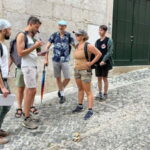
The tour is also private, meaning it’s only your group. That may sound like a marketing line, but it changes what the guide can do. If someone needs extra minutes for photos or you want to slow down on a viewpoint, you’re not competing with a large bus group.
Most travelers can participate, and service animals are allowed. If you’re already comfortable walking on uneven sidewalks and adapting to slopes, you’re in the right category for this kind of sightseeing.
You can also read our reviews of more tours and experiences in Lisbon.



Parque Eduardo VII: A Peaceful Start Before the Haze of History
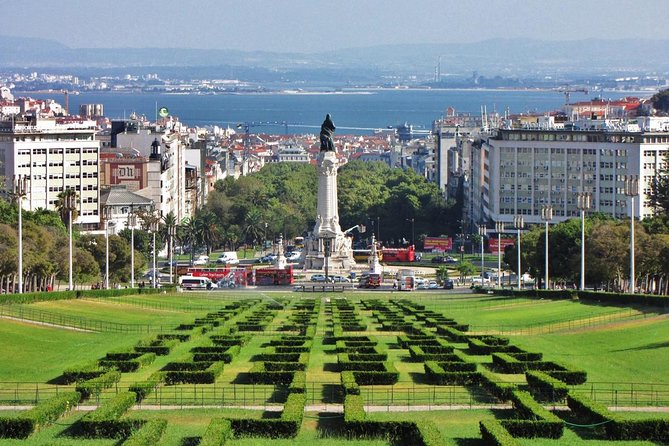
You kick things off at Parque Eduardo VII, a contemplative green space built in honor of the King of England. This is a smart warm-up stop because it’s calmer than the historic core and gives you a visual breather before the churches and neighborhoods start stacking up.
What I like about starting here is the contrast. You get a garden setting, then you move quickly toward the medieval and baroque Lisbon that most people come to see. Even if you only take a few minutes to look around, it helps you reset your brain so you’re not overwhelmed the moment you hit the oldest streets.
Lisbon Cathedral: From Mosque to Cathedral (And Why It Matters)
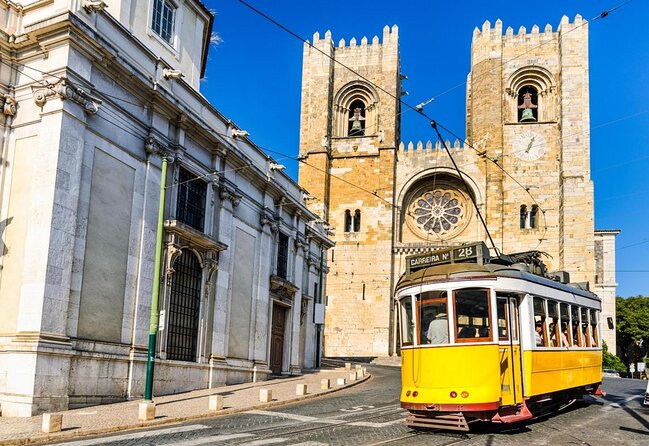
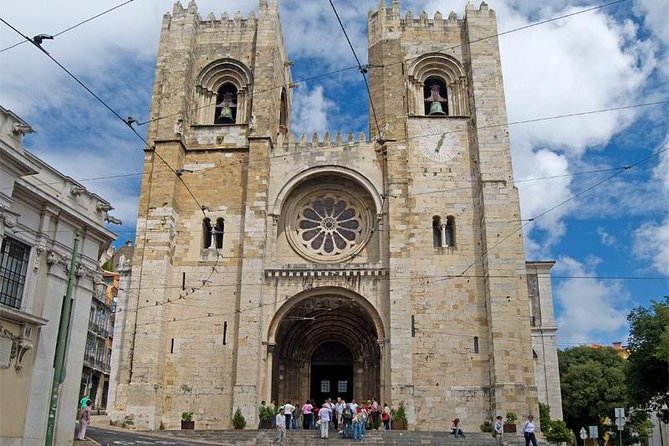
Lisbon Cathedral began construction in 1147, after there had already been a Muslim mosque on the site. That one detail is a big part of why this stop feels meaningful. Lisbon didn’t develop in a straight line; it layered. Each era left marks in the same “important location,” and the cathedral is one of the clearest examples.
You’ll spend around ten minutes here, which is about right for an orientation visit. If you love architecture, you’ll likely want more time than the schedule allows—but for most people, this is the right amount to understand the timeline without turning the tour into a full-day building project.
Because entry is free at this stop, you don’t have to decide on the spot whether it’s worth it. You just go in and absorb the significance.
Santa Engrácia’s Baroque Grandeur and the Panteão Nacional Connection
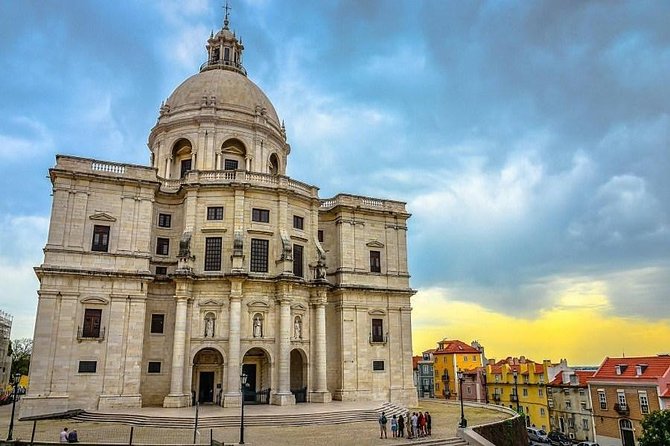
Next comes Santa Engrácia, known for its baroque architecture. It was designated Panteão Nacional in 1966, which gives the stop more than just pretty-building value. It’s also about how Lisbon honors national memory and identity in dramatic, ceremonial spaces.
Ten minutes is enough to appreciate the scale and the visual style, especially if your guide points out what to look for. If you’re the kind of traveler who likes architecture and symbolism, this is one of the stops where a good guide can turn a quick visit into a memorable one.
The practical upside: you’re not paying admission here either, so you’re spending time, not money, on the moments that shape your understanding of the city.
Alfama and the Fado Connection: Street Mood Plus a Quick Taste
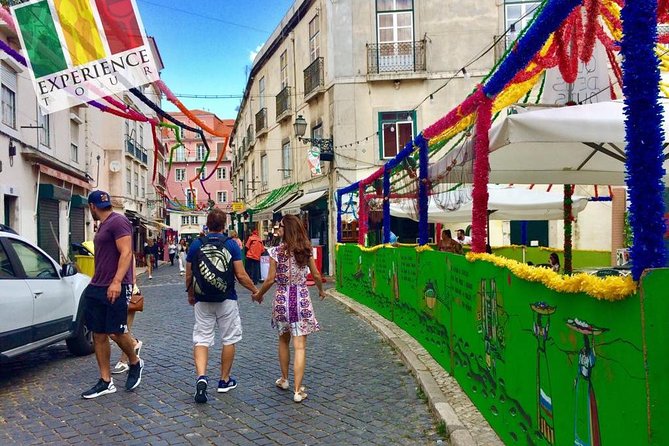
Then you slide into Alfama, Lisbon’s older, bohemian quarter. This is where the atmosphere changes. The streets feel tighter, the colors more textured, and the whole place seems designed for walking slowly—even when you’re moving quickly on a tour.
You’ll head toward an area tied to fado lore, often described as the place where fado was born, near a fountain. It’s not a concert hall stop. It’s a cultural context stop. The point is to connect the music tradition to the neighborhood that shaped it.
And yes, you’ll get a suggestion to taste ginjinha. That’s a small thing, but it fits the experience style: practical, local, and low-pressure. If you’re new to Lisbon, ginjinha is one of those “try it once” experiences that helps the city feel real.
Because this neighborhood is known for hills and twists, the time slice matters. Around fifteen minutes is a good balance to feel the vibe, take a few photos, and not get lost.






Miradouro Das Portas do Sol: A Tagus View Worth Stopping For
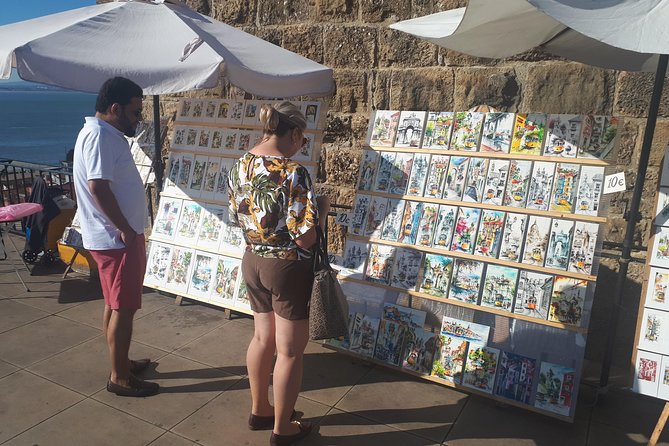
From Alfama, you’ll reach Miradouro das Portas do Sol. This is a big balcony-style viewpoint with a privileged view of the Tagus. Even if you’ve seen photos of Lisbon’s river before, the live view hits different. From up there, you get a sense of how the city “clings” to its surroundings.
Ten minutes is the sweet spot for a miradouro on a schedule like this. You get enough time for the classic shots and to look around for patterns—river lines, roofs, and the way streets funnel toward landmarks.
If you’re trying to decide between spending your time chasing viewpoints or doing more church interiors, this is where the tour makes its case. A viewpoint gives you instant context for everything you’ve already seen.
Miradouro Da Senhora Do Monte and the Highest Point Play

Next is Miradouro da Senhora do Monte, the highest point in Lisbon, right by São Jorge Castle’s shores and overlooking the old city. This stop is one of the strongest “wow-per-minute” parts of the entire experience.
You’re not just looking at a pretty panorama here. You’re seeing Lisbon’s shape. From this height, the old city’s layout makes more sense. Streets stop being random and start being a map.
You’ll also be in a zone that tends to reward patience—if your guide offers a moment for photos and positioning, take it. The viewpoint is high enough that the angles matter.
The Royal Palace Square Site: Lisbon Before and After 1755
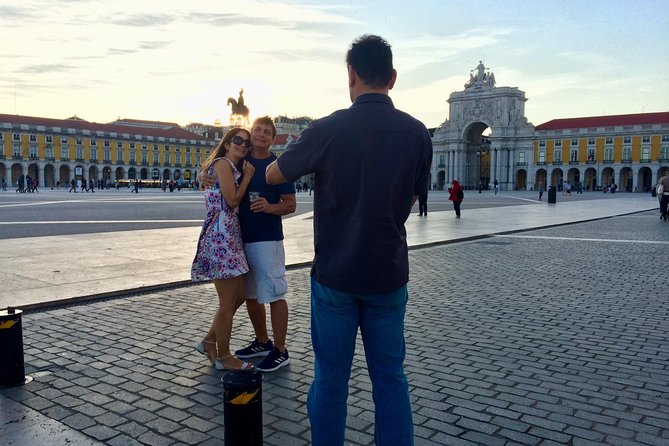
Then you move to a major open square where the Royal Palace was located before the 1755 earthquake. Today, that space is a large square surrounded by 18th and 19th century buildings, and it’s hard not to feel the weight of the site.
Even in a short stop, this location helps you understand Lisbon’s modern form. The earthquake didn’t just damage buildings; it changed how the city rebuilt, and it changed what people expected from their public spaces.
This stop is useful if you like a clear narrative thread. You see a key royal-era location, then you shift to a monument tied to the reconstruction story. It keeps the tour from feeling like unrelated photo stops.
The Marquis Reconstruction Monument: Why Leaders Matter in the Story
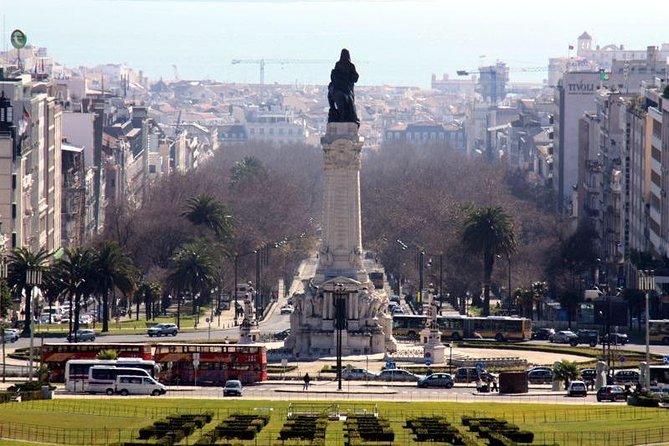
Right after that comes a monument honoring the Marquis who mentored the reconstruction of Lisbon after the 1755 earthquake. Again, you’re not here for a long lecture. You’re here for meaning.
This part works because it connects the big historical event to a specific figure. It gives the earthquake story a human face. And if you’re the kind of traveler who likes understanding who made the decisions that shaped what you see today, this stop pays off.
Praça Dom Pedro IV (Pedro I in Brazil): A Square With Big Meaning
A short hop brings you to a beautiful central square with the statue of Pedro IV or Pedro I in Brazil. This is one of the tour’s subtle lessons: Lisbon’s identity doesn’t stop at Portugal’s borders.
You don’t need a long stay to appreciate the power of a public statue. It anchors the square, and the surrounding buildings provide instant context for Lisbon’s urban style in different periods.
If you want a good photo spot, this square is one of the easiest to frame—statue in the center, city edges in the background.
The Historic Station by Rossio Square: Lisbon’s Daily Drama in Stone
The final stretch includes one of the most beautiful train stations, inaugurated at the end of the 19th century, located on the outskirts of Rossio Square. This is a great closing move because it gives you Lisbon’s “working city” feel. Churches and viewpoints are iconic, but a station shows how everyday movement connects to grand architecture.
You don’t need to be a train nerd to enjoy it. What matters is scale and design. If you’ve only seen Lisbon as a postcard, this helps you see it as a lived-in place.
What Makes the Tour Feel Special (And Not Just Convenient)
The highest praise here isn’t just about hitting famous spots. It’s about how the guide handles the flow. In past tours, Carlos has been highlighted for caring attention and excellent viewpoint timing, plus the ability to keep things moving without making you feel rushed. Andre has been noted for photo-friendly guidance—helping people get shots and even sending them by email with permission.
That matters because Lisbon is a photo city, but it’s also a city where the best angles often require patience. A flexible guide can shift a stop a few minutes and improve your results.
Also, being able to see the city from different angles is a real value. You’re not repeating the same view five times. You’re getting a storyline: garden calm, cathedral meaning, Alfama mood, river panoramas, and then the earthquake-and-rebuild thread through squares and monuments.
One more practical note from how this tour is described: it’s an especially good first-day choice if you feel jet-lagged. You get lots of landmarks without the physical grind of trying to walk and climb your way through everything solo.
Price and Value: $36.05 for a Private, Free-Entry Highlights Route
At $36.05 per person for about 1 hour 45 minutes, this is priced like a compact “orientation package,” not a museum crawl. The value comes from three things working together:
First, you’re paying for private guidance and vehicle support. That’s what you’d otherwise spend time (and energy) figuring out on your own.
Second, the stops are free to enter, at least for the listed monument entries. That matters for budgeting. When sightseeing includes admission fees, the math can get messy fast.
Third, you get a route that’s built around photos and viewpoints rather than long indoor time. For many visitors, that’s the best use of a short visit window. You come away feeling like you understood Lisbon’s main themes, not just that you took pictures.
If you’re trying to compare, don’t just compare price. Compare effort. This tour reduces planning stress and physical strain.
Who This Tour Is Best For
This is a strong fit if you want:
- A first-time Lisbon overview in a short window
- A private experience where you can pause for photos
- A mix of church stops, viewpoints, and earthquake-era city context
- Help navigating Lisbon’s steep parts without turning it into a workout day
It may not be the best fit if you want to spend an hour inside each major site. But for most people, it’s a very practical way to start.
Should You Book This Lisbon Wonders Tour?
Yes, if your goal is to see the city’s key monuments, viewpoints, and major historical story beats in a tight time window. The biggest reason to book is the pairing of private time with free-entry stops and a guide who helps you hit the best angles without turning it into a marathon.
I’d especially recommend it if you’re traveling with family members who can’t do a lot of steep, long walking, or if you want a confident first day that helps Lisbon start making sense. If you’re the type who loves long museum time, pair this with an extra day of slower exploring afterward.
FAQ
How long is the tour?
The tour runs about 1 hour 45 minutes.
What is the price per person?
The price is $36.05 per person.
Is pickup included?
Pickup is offered. The transfer is in a comfortable vehicle with air conditioning, Wi‑Fi, and water.
Is the tour private?
Yes. It’s a private tour/activity, so only your group participates.
What language is the tour offered in?
It’s offered in English.
Do you need an admission ticket for the stops?
The stops listed on this tour show admission tickets as free.
Will I receive a ticket on my phone?
A mobile ticket is provided.
How soon will I get confirmation after booking?
Confirmation is received within 48 hours of booking, subject to availability.
Are service animals allowed?
Yes, service animals are allowed.
Is there free cancellation?
Yes. You can cancel up to 24 hours in advance for a full refund.
Closing Thought
Lisbon can overwhelm you with stairs, colors, and history all at once. This tour helps you sort it quickly—garden calm, cathedral meaning, Alfama mood, two major miradouros, then the earthquake-rebuild story through squares and landmarks. It’s short, efficient, and built for seeing the city in a way you can actually remember.