REVIEW · KUTAISI
Kutaisi: Bagrati & Motsameta Religious Heritage Tour
Book on Viator →Operated by Megobari Tours Georgia · Bookable on Viator
Three monasteries in one easy loop. This is a compact religious heritage tour that mixes worship sites, history, and stop-and-stare panoramas, all with a guide who keeps the story moving. I especially like the small group size and that admissions are free at every main stop. The one real consideration: Gelati’s complex can be shut for restoration, so your exact final visit may shift depending on the day.
You also get practical perks that matter in real life: pickup anywhere in Kutaisi and a meeting point at the Colchis fountain area, plus a mobile ticket you can show on your phone. And if you’re curious, the guide angle is strong. I’ve seen guides like Teona, Michael, and Eva come across as genuinely talkative about culture and history, including small questions you’ll want to ask while you’re inside.
Since the total time ranges from about 2 to 4 hours, plan your day with a little breathing room. If you’re the type who needs an exact schedule down to the minute, the changing Gelati situation might be the part you have to mentally flex.
In This Review
- Key Points at a Glance
- A Simple Way to Understand Kutaisi’s Sacred Sites
- Pickup, the Colchis Fountain Start, and How the Day Flows
- Motsameta Monastery: Georgian Faith with a View Over the Greenery
- Bagrati Cathedral: A Fast Stop That Pays Off Big in Sightlines
- Gelati Monastery Complex: Restoration Days and a Plan B That Still Feels Worth It
- The Guide Makes It Feel Like a Story, Not a Checklist
- Price and Timing: Why $19.22 Can Make Sense Here
- Who Should Book This Tour (and Who Might Want Something Else)
- Should You Book the Kutaisi Bagrati & Motsameta Tour?
- FAQ
- How long is the Kutaisi Bagrati & Motsameta Religious Heritage Tour?
- Where does the tour start and end?
- What stops will I visit?
- Is admission included?
- Why might Gelati be different on my day?
- Do I get picked up in Kutaisi?
- What language is the tour in, and how many people are in a group?
- Is there free cancellation?
Key Points at a Glance
- Small-group tour (max 7 travelers), so it doesn’t feel like you’re being herded
- Free admission for Motsameta, Bagrati, and Gelati on the days they’re open
- Pickup anywhere in Kutaisi, not just a fixed stop across town
- English-speaking guide who explains what you’re seeing, not just where it is
- Gelati may be closed, with an alternate church visit on some days
A Simple Way to Understand Kutaisi’s Sacred Sites
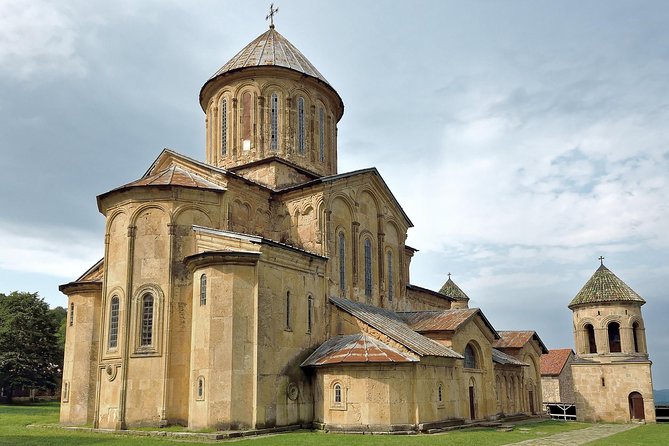
Kutaisi doesn’t just have one famous church. It has a whole cluster of spiritual landmarks tied to the region’s identity. This tour is built to help you connect the dots quickly: you start outside the city at Motsameta, return for the city-scale view at Bagrati Cathedral, then aim for Gelati if it’s open.
The time window is part of the value. Even when you take the full 3-hour feel (it’s listed as roughly 2–4 hours), you’re not stuck on the road all day. You’re moving between places where the setting tells a story, from monastery hills to a church viewpoint over the city.
Because the group is capped at 7, your questions have a chance to land. That’s not just a comfort thing. It changes what you notice. When your guide is chatty and responsive, you tend to look closer at symbols, carvings, and the visual language inside.
You can also read our reviews of more tours and experiences in Kutaisi.
Pickup, the Colchis Fountain Start, and How the Day Flows
You meet at the Megobari Tours meeting point by the Colchis fountain in Kutaisi (4600), and the tour ends back there. The big convenience is pickup: you can get picked up anywhere in Kutaisi to start, which saves you from figuring out local transport right at the start of your sightseeing day.
You’ll use a mobile ticket, and the tour is marked as offered in English. It also notes that it’s near public transportation, which is helpful if you’re combining this with other plans around town.
One small but important detail: since Gelati’s access depends on restoration days, the tour’s flow is designed to stay flexible. Your guide isn’t just reading a script. They’re adapting so you still get a full heritage experience even if one stop changes.
Motsameta Monastery: Georgian Faith with a View Over the Greenery
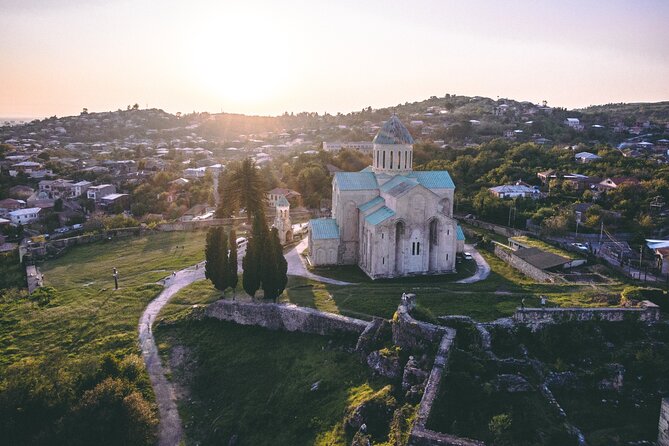
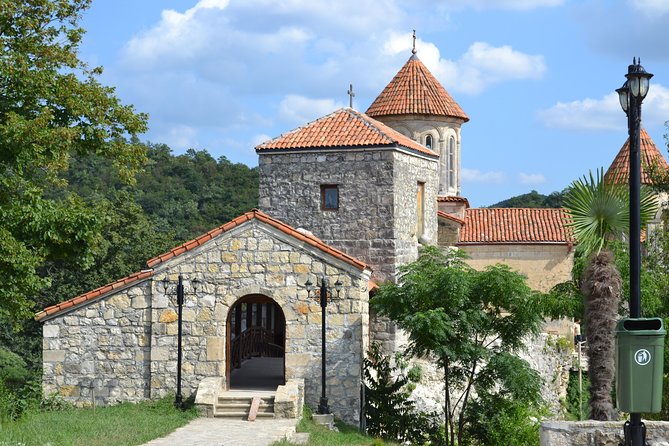
Motsameta Monastery is your first stop, and it’s here for a reason. It’s described as another important monastery in the Imereti region and a symbol of Georgian faith. Expect around 1 hour here, with free admission.
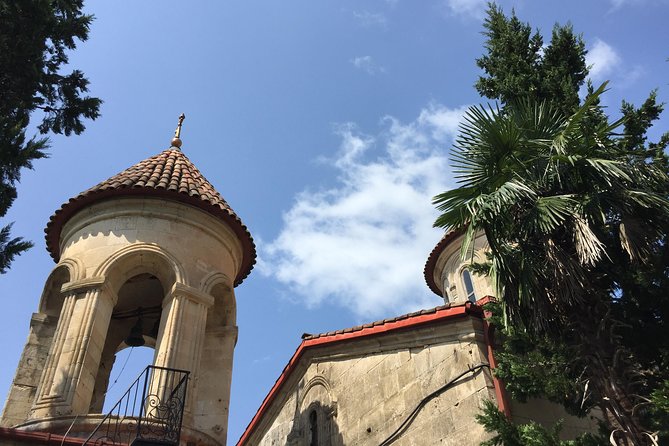
What makes Motsameta worth your time is how the landscape works with the site. You’re not just walking into a church space; you’re stepping into a viewpoint position. From what I learned through guides and the way the experience is framed, Motsameta is strongly tied to outdoor perspectives, including memorable views over greenery and toward the river.
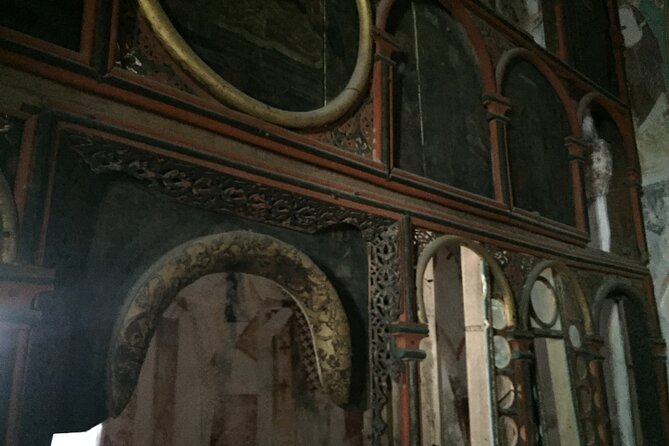
That outdoor-to-indoor rhythm is great for many travelers. You get a moment to breathe and orient yourself, then you can shift into quieter attention once you’re inside. If you like religious art and symbolism, this is also a good place to slow down. Even without any special planning, ask your guide what the icons and details are communicating, then use their answers as your lens for the rest of the day.
Bagrati Cathedral: A Fast Stop That Pays Off Big in Sightlines
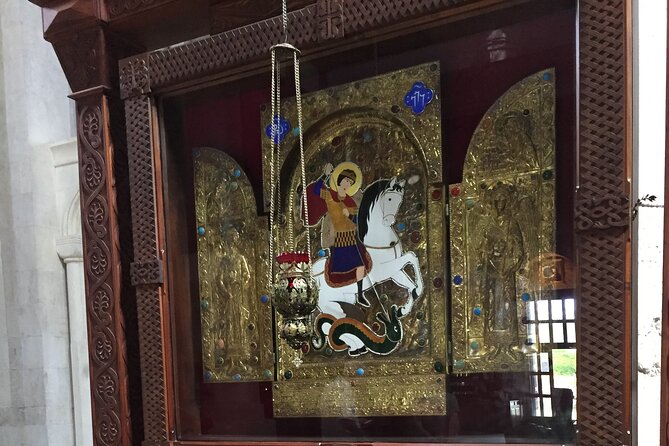
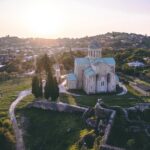
Next comes Bagrati Cathedral, a famous Kutaisi church with a 30-minute visit time and free admission. This is the stop where you feel the city scale. You’re there not only to see the architecture, but to catch the panorama over Kutaisi.
Short timing can sound rushed, but it works here. Bagrati is a practical “hit the highlight” stop. You get the main viewing payoff without losing half your day to a site that’s slower on foot. It’s also a nice contrast after Motsameta’s more countryside feel.
If your day includes other sights later, Bagrati is a smart anchor. You’ll leave it with a clear sense of how Kutaisi sits in its landscape, which makes the rest of your wandering make more sense.
Gelati Monastery Complex: Restoration Days and a Plan B That Still Feels Worth It
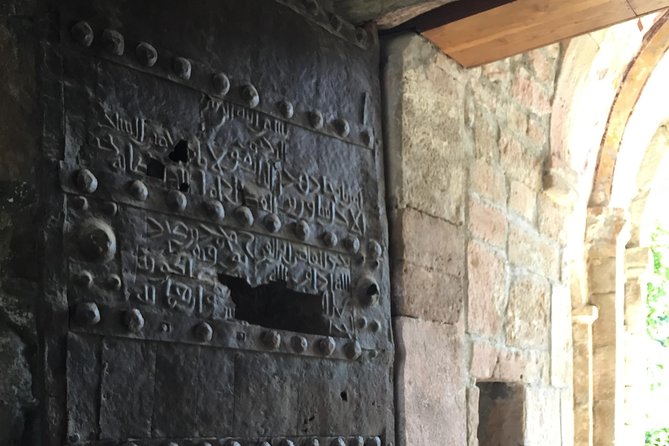
The plan then aims for Gelati Monastery Complex. Admission is listed as free, and it’s typically around 1 hour. Here’s the key detail: Gelati is currently under construction, and visitors can access it only on Sundays and on some occasional days.
On days when Gelati isn’t open, the tour doesn’t leave you stuck. It replaces that stop with another church in Kutaisi. One example from a day when Gelati wasn’t accessible: the guide Teona led guests to other churches and even pointed out an old hospital viewpoint that gave a great look back over the area.
That kind of flexibility matters. You still get the religious heritage theme, you still get guided context, and you still get at least one strong viewpoint moment. But it does mean you should treat Gelati as the goal, not as a guaranteed checkbox.
The Guide Makes It Feel Like a Story, Not a Checklist
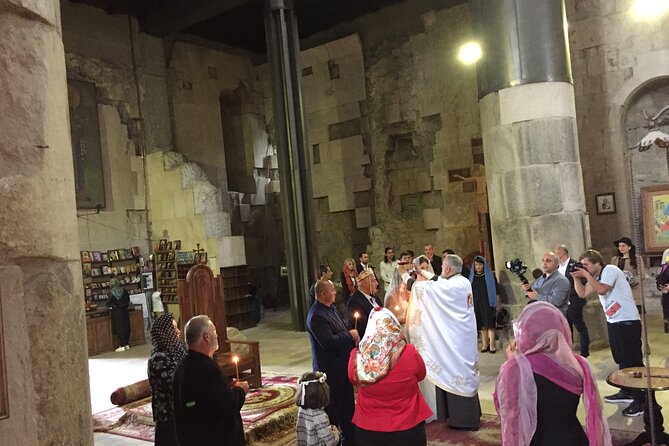
This tour’s real strength is the guidance. The places are meaningful on their own, but the difference is how your guide ties them together for you.
I’ve seen Michael described as very informative, explaining details of the history of each place and what you were passing through on the way. That “on the way” part is underrated. It helps you understand why the geography feels the way it does, and why these sites were placed where they are.
I’ve also heard Eva praised for being talkative and knowledgeable about culture, with a way of encouraging curiosity. One of the most memorable themes that came through was how the guide didn’t pretend to know everything. In places with complex history and symbols, that honesty creates a better experience: you can speculate, ask questions, and even learn what staff members share on-site.
If you like religious art, don’t just look at the church. Look at the details your guide points out—especially icons and symbols. Then ask what they might mean in the Georgian context. This is exactly the kind of tour where those questions feel natural instead of forced.
Price and Timing: Why $19.22 Can Make Sense Here
At $19.22 per person, this is positioned as a budget-friendly heritage experience. The value isn’t just the price. It’s what’s included and what’s avoided.
You’re getting:
- Pickup anywhere in Kutaisi
- A guided route through three spiritual landmarks
- Free admission at the listed stops
- A small group experience (maximum 7)
So yes, the ticket looks low. But the bigger point is that you’re not paying extra for museum-style entry fees at each stop, which is where a lot of “cheap” tours quietly lose value.
Timing also matters. A typical visit block fits into a half-day window. That’s useful if you’re juggling a busy Kutaisi itinerary or you want an early plan before moving on to other regions.
The possible trade-off is day-to-day variability with Gelati. If you’re traveling on a weekday and you’ve set your heart on Gelati specifically, you may end up on the alternate church plan. Still, the tour is designed so the day doesn’t fall apart.
Who Should Book This Tour (and Who Might Want Something Else)
This works especially well if you:
- Want a guided heritage experience without spending hours researching each site
- Care about views and setting, not just indoor sightseeing
- Prefer small groups where questions are welcome
- Want an affordable way to see Kutaisi’s spiritual landmarks in a few hours
It may be less ideal if you:
- Need a totally fixed itinerary with no changes (Gelati’s open days can shift)
- Are short on time but also set on seeing Gelati specifically on a specific weekday
As a practical note, the experience states that most travelers can participate and service animals are allowed. If you’re traveling with a companion who needs flexibility, pickup-anywhere helps a lot.
Should You Book the Kutaisi Bagrati & Motsameta Tour?
I think you should book it if you want an efficient, low-stress way to understand Kutaisi through its religious landmarks. The mix of Motsameta’s faith-and-landscape feel, Bagrati’s city panorama in a tight time slot, and Gelati’s restoration-aware flexibility gives you a strong “Kutaisi in a few hours” experience.
Book it especially if you like a guide who talks history and symbols in plain language, the way Michael and Eva were described, or the way Teona handled a Gelati-closed day with smart substitutions and viewpoints.
The only reason to pause is if Gelati is your one must-see and your travel dates don’t align with its open days. If that’s you, check your schedule carefully, because the tour can swap in another church when Gelati isn’t accessible.
FAQ
How long is the Kutaisi Bagrati & Motsameta Religious Heritage Tour?
It’s listed as about 2 to 4 hours (approx.).
Where does the tour start and end?
The tour starts at the Megobari Tours Meeting Point at Colchis fountain, Kutaisi 4600, Georgia, and ends back at the same meeting point.
What stops will I visit?
The tour includes Motsameta Monastery, Bagrati Cathedral, and Gelati Monastery Complex. If Gelati is closed, the tour visits another church in Kutaisi.
Is admission included?
Yes. The tour information lists admission tickets as free for Motsameta, Bagrati, and Gelati.
Why might Gelati be different on my day?
Gelati Monastery Complex is under construction and is open to visitors only on Sundays and on some occasional days. On other days, the tour will visit another church instead.
Do I get picked up in Kutaisi?
Yes. The tour highlights that you can be picked up anywhere in Kutaisi to start.
What language is the tour in, and how many people are in a group?
The tour is offered in English, and it has a maximum group size of 7 travelers.
Is there free cancellation?
Yes. There is free cancellation, and you can cancel for a full refund up to 24 hours in advance of the experience start time.