REVIEW · GOA
Fontainhas Heritage Walk With Guide Mario
Book on Viator →Operated by Exotic Goan Excursions · Bookable on Viator
Fontainhas is a walk through postcard Goa. This 2-hour heritage walk in Panaji follows guide Mario through narrow lanes, old Portuguese-style buildings, and key neighborhood landmarks—built for people who want context, not just photos.
I especially like the small-group feel (max 15) and the English-speaking guidance that keeps the story clear from stop to stop. I also like that it’s a true walking route, so you can spot details you’d miss from a car.
The main consideration: the bakery snack is only on Monday–Saturday tours, since the bakery is closed on Sunday, and the experience really depends on decent weather for an easy stroll.
In This Review
- Key Highlights You’ll Actually Feel on the Ground
- Fontainhas Heritage Walk: Why This Part of Panaji Matters
- Meet Guide Mario on MG Road and Get Oriented Fast
- Stop 1: Patto Colony and the Old Patto Bridge Area (First 30 Minutes)
- Stop 2: India Post Panjim Head Post Office and São Tomé Chapel Streets (Next 30 Minutes)
- Stop 3: Confeitaria 31 de Janeiro Bakery Stop (15 Minutes)
- Stop 4: St Sebastian Chapel, 100+ Year Houses, and a Portuguese Community Well (15 Minutes)
- Stop 5: Fontainhas and the Phonte de Phoenix Fountain (About 20 Minutes)
- Price and Value: What $13.50 Actually Buys You
- What the Guide Style Feels Like (And Why People Keep Praising It)
- Best For: Who Should Book This Walk
- Book It or Skip It: My Take
- FAQ
- How long is the Fontainhas Heritage Walk with guide Mario?
- Where does the tour start?
- How big is the group?
- Is the tour fully walking?
- What’s included in the price?
- Is the bakery snack available every day?
- Are admission tickets needed for the stops?
- What if the weather is bad?
Key Highlights You’ll Actually Feel on the Ground
- Max 15 people means you’re not shouting over a crowd.
- Guide Mario (Mario Archangelo Monteiro) tells the Fontainhas story in a way that stays easy to follow.
- Walking route through narrow lanes where cars can’t go (and you wouldn’t see anyway).
- Bakery snack at Confeitaria 31 de Janeiro included on Monday–Saturday only.
- Chapel + house architecture stops including St Sebastian Chapel and homes dating back 100+ years.
- Most sights are free to enter, so your money goes mainly to the walk and the explanations.
Fontainhas Heritage Walk: Why This Part of Panaji Matters
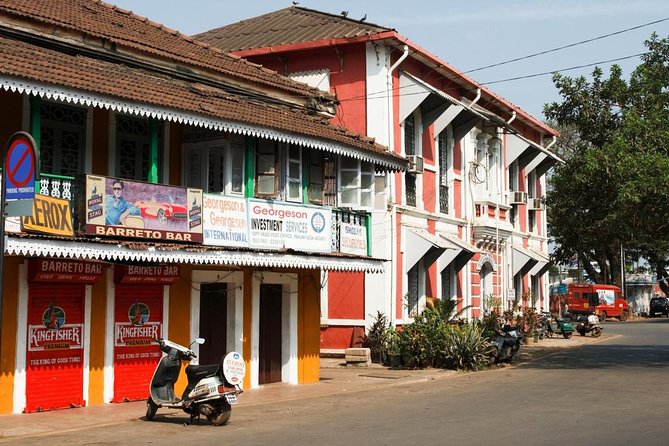
Fontainhas is Panaji’s Latin quarter, and it has that rare feel of being lived-in, not staged. Expect tight streets, colored house fronts, and Portuguese-era touches like balconies and red-tiled roofs that make the neighborhood look designed for slow wandering.
What I like about doing this as a guided walk is the pacing. You move block by block, and each stop gives you a reason for what you’re seeing—so the area doesn’t blur into one pretty street after another.
You can also read our reviews of more tours and experiences in Goa.


Meet Guide Mario on MG Road and Get Oriented Fast
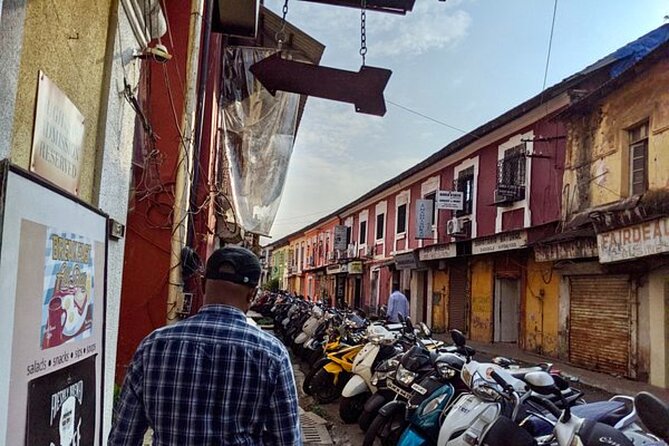
Your walk starts at the meeting point near MG Road, Patto Colony, Panaji (the listed spot is down the road from the Old Patto Bridge area). The tour ends back at the same place, which is handy when you want to keep the rest of your day flexible.
You’ll be with an English-speaking guide, and guide Mario is repeatedly described as professional, on-time, and good at turning history into something you can understand quickly. For me, that matters because Fontainhas can look like a jumble of houses until someone points out what connects the buildings, chapels, and public spots.
Stop 1: Patto Colony and the Old Patto Bridge Area (First 30 Minutes)
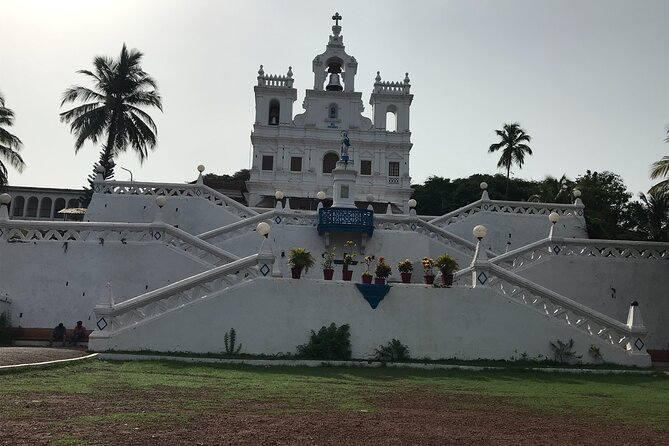
You start near Old Patto Bridge, heading into Patto Colony, a classic introduction to Fontainhas. This is where the neighborhood’s visual signature shows up right away: narrow lanes and colorful Portuguese villas with balconies and red-tiled roofs.
The benefit of starting here is orientation. You learn how to read the street layout—where the lanes pull you forward, where you’ll want to look up, and how the architecture creates natural “frames” for photos. There’s no ticket cost at this stop, so you’re spending your time on the walking and the stories instead of queuing.
A practical consideration: these streets are narrow. On a hot day, you’ll feel it—so wear shoes you’re comfortable in for a steady 2-hour walk.
Stop 2: India Post Panjim Head Post Office and São Tomé Chapel Streets (Next 30 Minutes)
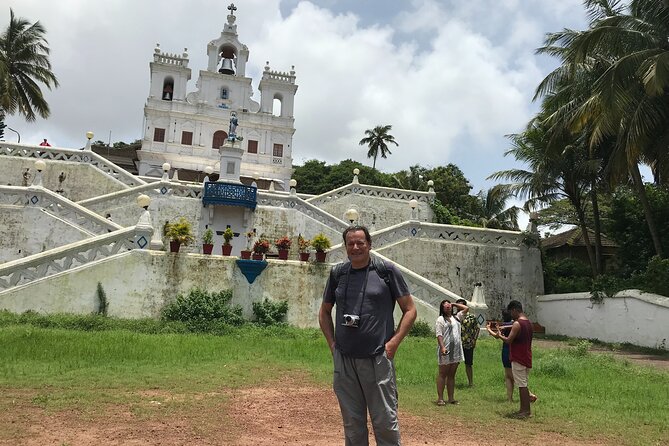
From Patto Colony, the walk continues toward India Post Panjim Head Post Office, then on through the area around São Tomé Chapel along 31st January Street. This section helps balance the tour: you’re not only seeing private homes and religious buildings—you’re also seeing the neighborhood’s civic pulse.
It’s a smart change of pace. Post offices and street chapels tell you how people organized daily life and community space during different eras. Even if you don’t read much on walls, Mario’s explanations help you connect what you see with why the neighborhood grew the way it did.
Admission is free for this stop, so you’re paying for guidance and time on your feet, not for entry fees.
Stop 3: Confeitaria 31 de Janeiro Bakery Stop (15 Minutes)
Then comes the food stop: Confeitaria 31 de Janeiro. This is the short, high-reward moment on the route—about 15 minutes focused on tasting local Goan bakery delicacies.
This is included, but only on Monday–Saturday tours. If your visit falls on Sunday, you should plan for the fact that the bakery is closed, which means you’ll miss the included tasting.
Quick tip: this is a snack, not a full meal. Treat it like a cultural break that keeps your energy up for the rest of the walk—especially if you’re sightseeing later in Panaji.





Stop 4: St Sebastian Chapel, 100+ Year Houses, and a Portuguese Community Well (15 Minutes)
Next is St Sebastian Chapel, where the walk shifts into “look closer” mode. You’ll pass through quaint lanes and stop to take in colorful houses that date back more than 100 years.
This is also where the tour’s architecture angle really pays off. The neighborhood’s charm isn’t just paint jobs—it’s the combination of old building styles, community spaces, and the way the area was shaped over time. You’ll also stop by a community well provided by the Portuguese. That kind of detail is exactly why this tour works better than wandering alone: it points you toward the story behind a small feature you might otherwise ignore.
Admission is free here, so again, you’re focused on understanding the place rather than managing tickets.
Stop 5: Fontainhas and the Phonte de Phoenix Fountain (About 20 Minutes)
To wrap up, the walk heads toward Fontainhas and then to Phonte de Phoenix, described as the fountain and water source from which this part of the city was built—also tied to the name Fontainhas.
This stop gives the neighborhood a “root system.” Instead of ending with a scenic view, the tour ends with the practical idea of water shaping settlement. When you connect water sources to where Portuguese-era builders and local communities placed homes and institutions, the neighborhood stops being only pretty. It becomes logical.
Admission is free for this portion, and the tour finishes back at the meeting point.
Price and Value: What $13.50 Actually Buys You
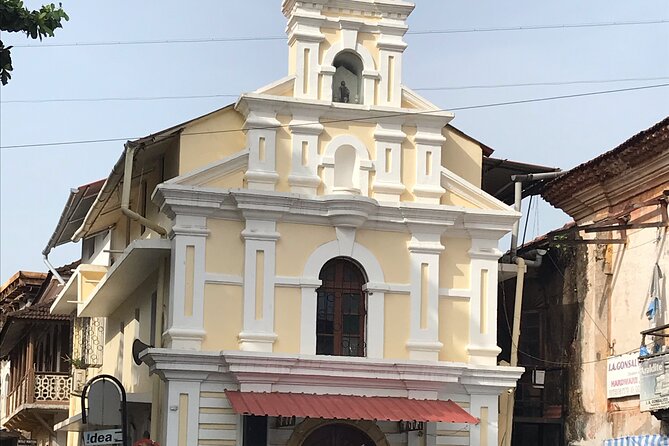
At $13.50 per person, the big value isn’t just the low price tag—it’s what’s included in that time.
For one, you’re getting an English-speaking guide for about 2 hours with a small group (max 15). That’s the type of setting where questions actually get answered, instead of being lost in the shuffle.
Second, the route includes a bakery snack on Monday–Saturday, and most of the sights on the route are free to enter. So you’re paying mainly for the guide’s local context and storytelling, plus the food break, rather than a pile of entry fees.
If you’re trying to do “just one thing” in Panaji that connects architecture, community life, and Portuguese influence, this is a straightforward way to get it without a long day out.
What the Guide Style Feels Like (And Why People Keep Praising It)
Guide Mario comes across as the kind of host who cares about two things: accuracy and clarity. In multiple accounts, people highlight his professionalism, his story-telling ability, and how he keeps the group engaged even when you’ve got a mix of backgrounds in the same walk.
One practical bonus: he’s described as helpful with questions beyond the tour itself. That matters because once you’re in Fontainhas, you’ll naturally wonder where to eat, what else to see, and how to get your bearings. A guide who can point you in the right direction saves time and reduces guesswork.
Also, there’s a theme of adaptability. One review noted enjoyment despite heavy downpour. That doesn’t mean you should count on rain, but it suggests the tour can stay structured when weather gets messy—so you’re not left scrambling for an unplanned plan.
Best For: Who Should Book This Walk
This is a great fit if you:
- Enjoy walking and want the narrow lanes of Fontainhas on foot, not by taxi.
- Like history tied to real buildings—chapels, old homes, community features like wells.
- Want an easy “first Panaji” experience that doesn’t require museum stamina.
- Appreciate a short food stop, especially on Monday–Saturday.
If you strongly dislike walking, or you’re visiting on a Sunday and your main goal is the bakery snack, you might want to weigh whether you’d prefer another activity that day. The walking route is the core of the experience.
Book It or Skip It: My Take
I’d book this if you want a high-signal introduction to Fontainhas—Portuguese-era architecture, chapels, and the neighborhood’s water connection—delivered by a guide who’s clearly at home in the streets.
I’d hesitate only if Sunday timing matters a lot for you, because the bakery is closed and the included snack won’t happen. Also, if your trip has poor weather odds, plan to keep this as a flexible option since the experience calls for good weather for comfortable walking.
If you’re planning Panaji for the first time, this is one of the easiest ways to turn Fontainhas from a colorful area you pass by into a place you actually understand.
FAQ
How long is the Fontainhas Heritage Walk with guide Mario?
It lasts about 2 hours.
Where does the tour start?
The meeting point is listed near MG Road, Patto Colony, Panaji, Goa 403001, India, down the road from the Old Patto Bridge area. The tour ends back at the meeting point.
How big is the group?
The tour has a maximum of 15 travelers.
Is the tour fully walking?
Yes. It’s an ideal option for active travelers because it’s a walking tour.
What’s included in the price?
You get an English-speaking guide and a bakery snack (included on Monday–Saturday tours only).
Is the bakery snack available every day?
No. The bakery is closed on Sunday, so there’s no included tastings on Sunday tours.
Are admission tickets needed for the stops?
Most stops on the walk have admission marked as free, while the bakery tasting is included.
What if the weather is bad?
The experience requires good weather. If it’s canceled due to poor weather, you’ll be offered a different date or a full refund.