REVIEW · LIVERPOOL
Liverpool: Heritage, History & Culture Guided Walking Tour
Book on GetYourGuide →Operated by Liverpool Famous Walking Tours- Purple Tours · Bookable on GetYourGuide
Liverpool can feel like music and monuments—but it is also trade routes. This 2-hour guided walking tour stitches together docks, streets, and landmark buildings so you understand how the city got built, rebuilt, and remembered. I love how the walk connects famous names (The Fab Four) to harder history (Liverpool’s role in the slave trade), not just photo stops.
Two things I really like: the guide keeps the pace easy while still packing in major sights like Royal Albert Dock and the Three Graces, and you get personal storytelling that makes the buildings feel earned instead of just viewed. If your guide is someone like Mike, Karl, Pam, Alan, Carl, Colleen, or George, you’re in for lots of facts plus straight talk and plenty of questions.
One drawback to plan for: you’ll be walking in busy city areas and you may hit cobbles and uneven pavement, so it can be less friendly if you have significant mobility limits.
In This Review
- Key highlights you should care about
- Liverpool in two hours: what you’re really paying for
- Bluecoat Chambers start: a simple meeting point with a plan
- Early city-center stops: Derby Square, Liverpool Castle, and street-level history
- Liverpool One and the route logic: seeing the city’s modern face
- Royal Albert Dock: where maritime power becomes visible
- The Three Graces and Exchange Flags: architecture with a job to do
- The Beatles Statue, Mathew Street, and Cavern Quarter: music history you can point at
- Town Hall finish notes: from older predecessors to Eleanor Rigby
- The LIVERPOOL sign and waterfront details you’ll actually use
- Pace, comfort, and what to bring so you enjoy it fully
- Which guide you get can change the vibe
- Who should book this Liverpool heritage walk
- Should you book this tour of Liverpool’s docks, Beatles spots, and landmarks?
- FAQ
- How long is the Liverpool heritage walking tour?
- How much does the tour cost?
- Where do I meet the guide?
- Where does the tour end?
- Is there food or drink included?
- What language is the tour guide?
- Is the tour wheelchair or stroller accessible?
- Is the walking tour easy?
- What should I bring?
- Are dogs allowed?
- Is there a cancellation option?
Key highlights you should care about
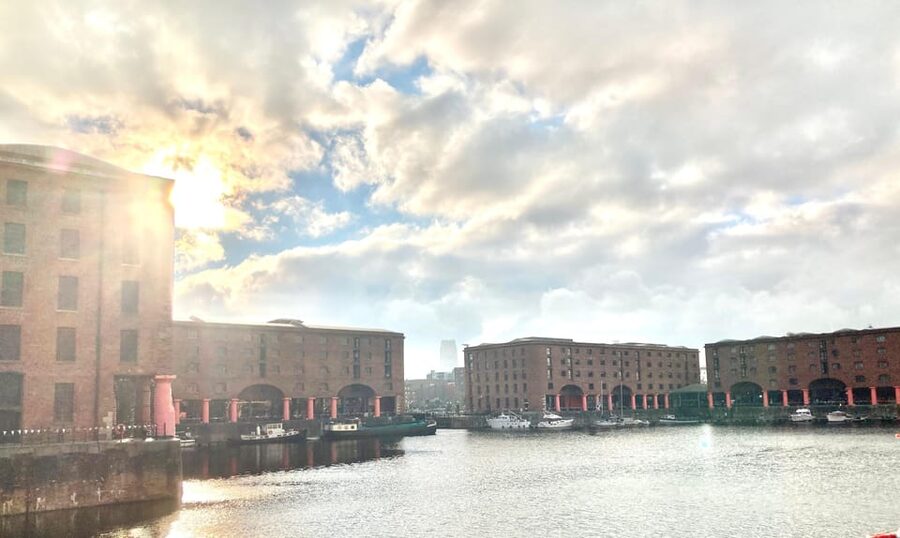
- Royal Albert Dock: You’ll connect the docks to Liverpool’s maritime role, including the Titanic thread.
- The Three Graces: Grade II listed buildings that show how the city traded power and prosperity in stone and glass.
- Mathew Street to Cavern Quarter: The music stops are real sights, not just generic Beatles talk.
- Derby Square and Liverpool Castle site: You’ll learn what used to be here, and what replaced it.
- Cavern Club area photo moments: You get time to pause, aim your camera, and move on.
- A guide who answers: Recent guides (like Mike, Karl, Alan, Pam, and Carl) are praised for clear, confident storytelling.
Liverpool in two hours: what you’re really paying for
At $31 per person for 2 hours, this tour is good value if you want orientation plus context. Liverpool’s waterfront, town center, and music streets can look like separate worlds. The guide’s job is to connect them—how the docks shaped the city, how architecture records that growth, and how cultural icons grew from the same streets and crowds.
You’ll cover enough ground to feel like you did something real, but not so much that it turns into a marathon. You can also treat this as a fast primer: you’ll leave with a mental map of where to return later for deeper exploration.
A big part of the value is the mix of stops. You won’t just glance at famous buildings—you’ll hear why they matter. And you’ll get to the places where Liverpool’s identity shows up in plain sight, from dock infrastructure to music heritage.
You can also read our reviews of more tours and experiences in Liverpool.
Bluecoat Chambers start: a simple meeting point with a plan
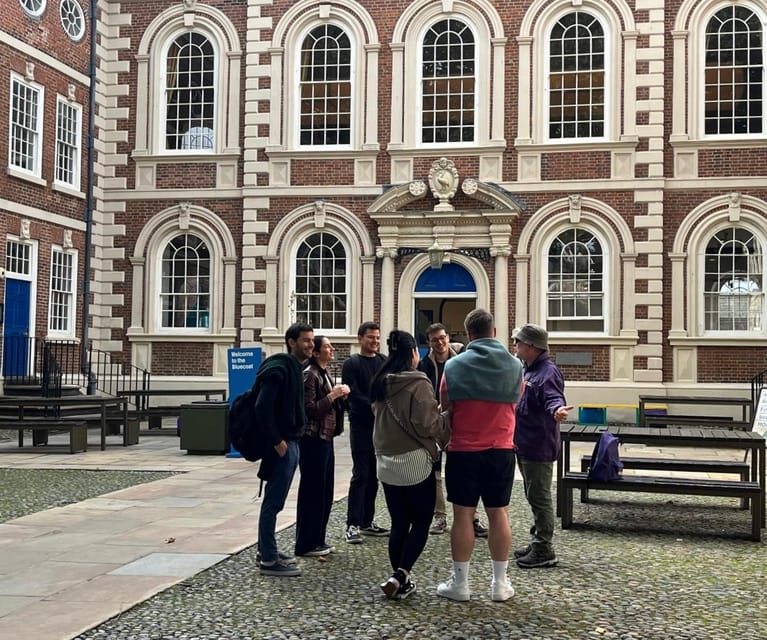
You start outside the black metal railings/gate at the main front entrance of Bluecoat Chambers, 8 School Lane, Liverpool L1 3BX. The key detail that helps you find it fast is that there’s a Castle Fine Art art gallery-shop opposite you, and the three-word location cue is Soccer Trial Cuts.
The Bluecoat Chambers building itself matters for practical reasons: it’s open Tuesday–Saturday from 10am, and you’ll find a café and toilets inside. Since the tour departs from outside the gates, this gives you a reliable pre-walk buffer if you need a quick coffee or restroom before you set off.
This start location also makes sense for the route. You’re already near the central core of the city, so you can move into Liverpool’s civic history and then down toward the waterfront without losing time.
Early city-center stops: Derby Square, Liverpool Castle, and street-level history
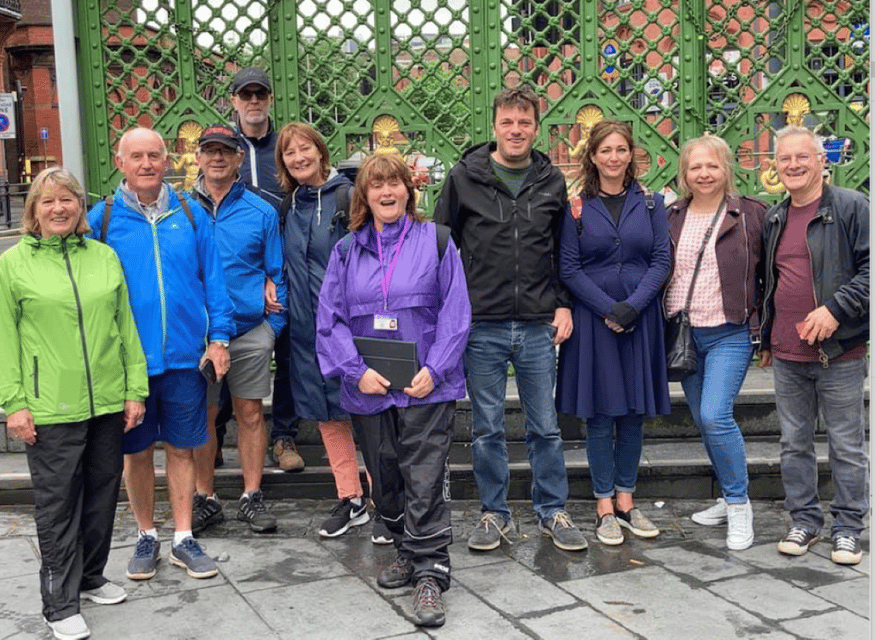
Right after you begin at the Bluecoat, you’ll get an initial run of city-center storytelling—think of it as your fast grounding in how Liverpool changed. The tour mentions stories that go back to King John and then moves through the city’s development toward more modern landmarks.
One of the most interesting moments is the stop around Derby Square. Here, you’ll hear about Liverpool Castle, which once stood in this area and is now replaced by an imposing Queen Victoria monument. This is the kind of stop that makes walking tours worth doing: you learn that the current square is basically a palimpsest—layers of power and planning replaced over time.
You’ll also pass through areas that help you understand how Liverpool grew outward and inward. Even when you’re just looking at streets and facades, the guide ties it back to what the city was doing—trading, shipping, governing, and building prestige.
Liverpool One and the route logic: seeing the city’s modern face
The tour also includes time in Liverpool One, which is handy for two reasons. First, it breaks up the day visually with modern streets and shopping architecture. Second, it anchors what you’ve been hearing: Liverpool didn’t freeze in dock glory or Beatles fame. It kept changing.
That matters because some visitors arrive expecting only one Liverpool. This tour trains your eyes to see both. You’ll be moving between eras while you learn how the city’s identity kept evolving.
You don’t get lost in details that won’t help you later. Instead, the guide keeps pulling you back to big themes: the maritime economy, the civic buildings, and the cultural magnetism that brought people into these streets.
Royal Albert Dock: where maritime power becomes visible
This is one of the tour’s core moments. When you reach Royal Albert Dock, you get a photo stop plus guided sightseeing (around 30 minutes). The big takeaway is how the guide explains Liverpool’s maritime history through what you can still see on the ground.
You’ll learn about Liverpool’s first dry dock site, including the story captured by the large water fountain. That’s a subtle but smart touch: instead of only pointing out buildings, the guide tells you what the landscape used to be for, and how it signals old working infrastructure.
And then comes the Titanic thread. The tour specifically notes how the Titanic story became an internal part of Liverpool’s maritime history. Even if you know the headline history already, you’ll likely appreciate how the guide connects that global story to the local dock network and the city’s shipbuilding and shipping world.
One more practical detail: the docks area is where you’ll likely want your camera ready, because you’re moving into a stretch loaded with architectural angles and water-adjacent views. This is also where a good guide helps you notice what you’d normally walk right past.


The Three Graces and Exchange Flags: architecture with a job to do
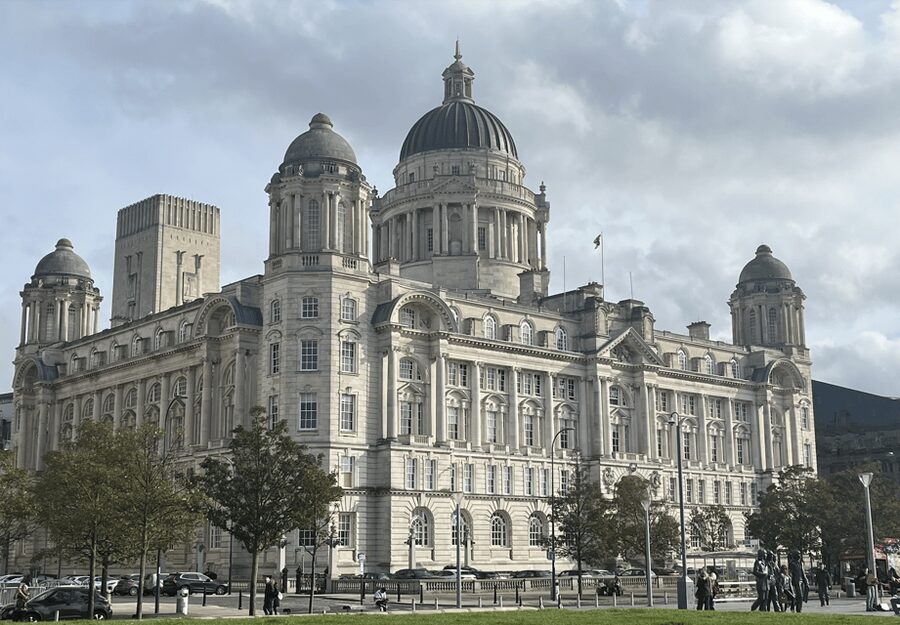
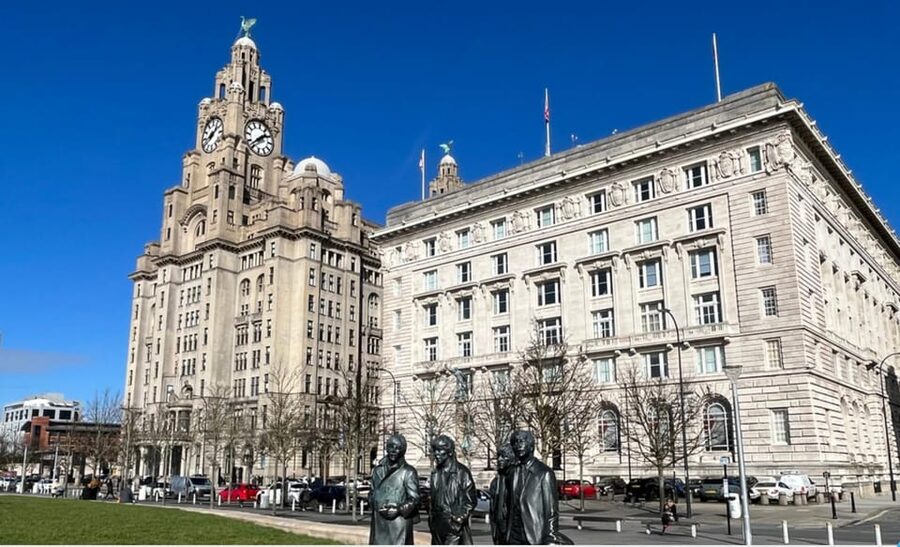
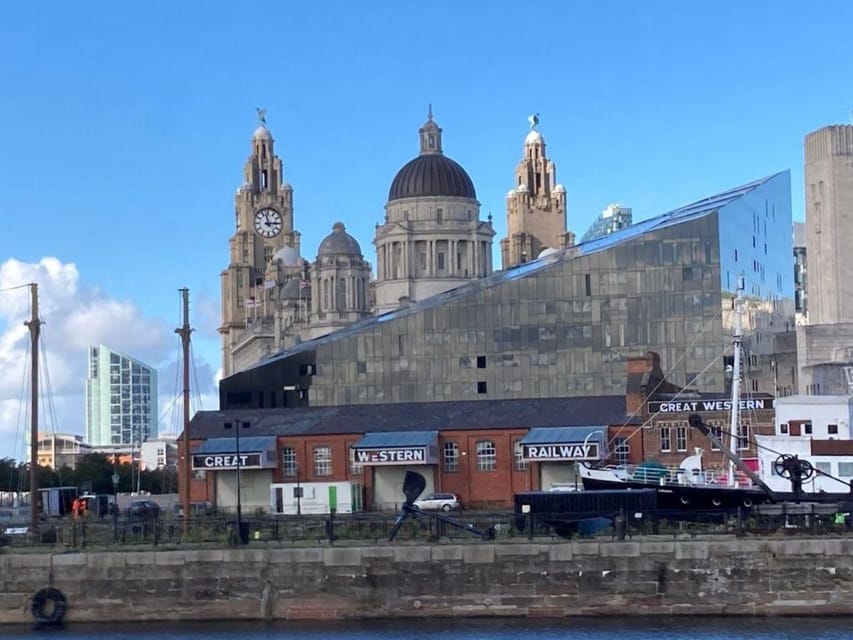
After the dock stop, you’ll head toward the iconic waterfront skyline area known as the Three Graces. You’ll spend about 15 minutes there with a photo stop and guided context.
The name matters because the tour explains the buildings as a group: Cunard Building, Port of Liverpool Building, and the Liver Building. All are Grade II listed, and the point isn’t just that they look impressive. It’s that they represent how the port economy turned into identity—shipping companies, trade administration, and civic pride all sharing the same streets and sky.
Then you’ll connect that to Exchange Flags. The tour says Exchange Flags is also Grade II listed, and its buildings form a courtyard facing the Town Hall. This gives you a strong sense of the city’s layout: commerce and governance aren’t hidden—they’re designed to face each other.
If you care about architecture beyond pretty photos, this section is for you. The guide uses the buildings like evidence, showing how Liverpool projected authority and credibility as it grew.
The Beatles Statue, Mathew Street, and Cavern Quarter: music history you can point at
Here’s where Liverpool becomes personal and familiar fast.
You’ll stop for a photo moment with the Beatles Statue, built by sculptor Andrew Edwards. It’s short, around 10 minutes, but it works as a landmark reset. After the dock architecture, the statue reorients you back to Liverpool’s cultural gravity.
Then you’ll walk through Mathew Street, where the guide frames what you’re seeing in terms of street-level music legend. The tour highlights Mathew Street as one of the most famous streets in the world and places it in the orbit of the Cavern Club and other musical icons, especially The Beatles.
Next is Cavern Quarter, including time for a photo stop and guided sightseeing (around 20 minutes). This is where the tour’s storytelling style really pays off. You’ll get more than trivia; you’ll hear stories that make the music scene feel connected to Liverpool’s everyday life—crowds, nightlife energy, and the stubborn identity of a city that turned cultural output into a global brand.
There’s also a chance for a selfie with The Fab Four as you pass the Beatles Statue, so you can match memories to the exact location. It’s a small moment, but it helps make the tour feel concrete.
Town Hall finish notes: from older predecessors to Eleanor Rigby
As you move back toward the city’s civic center, you’ll hear about the Town Hall area. The tour says you’ll reach the current Grade I listed Town Hall, recognized as one of the finest surviving 18th-century town halls in England, and that the predecessors date back to the 1500s.
That time depth is worth pausing on. It helps you understand that Liverpool’s waterfront identity didn’t exist alone. The city ran on decisions, institutions, and long-term planning—some of which still physically sits in front of you.
The tour ends at the Eleanor Rigby Statue. That ending choice is smart for visitors, because it ties your last step to a song-level Liverpool identity rather than only to docks or government buildings. It gives the walk a clean emotional close: story meets street.
The LIVERPOOL sign and waterfront details you’ll actually use
One small but fun feature is the oversized LIVERPOOL selfie sign. The tour notes the colors change with the season or events, so if you’re there at a different time than someone else, your photo won’t look the same.
Also, you’ll learn about the LIVERPOOL sign and the waterfront fountain area through the guide’s context. That turns casual sightseeing into a kind of scavenger hunt for meaning. It’s not just a photo prop; it’s part of how Liverpool curates public identity.
Pace, comfort, and what to bring so you enjoy it fully
This is an easy walking tour, but easy does not mean friction-free. You’ll want to bring comfortable shoes, a camera, and water—and I’d add a layer for the weather since the waterfront can feel cool even on mild days.
Even though the route is described as accessible for strollers/wheelchairs, the notes also warn about uneven surfaces such as cobbles and busy areas at times. So think of accessibility as situation-dependent: if your mobility needs are flexible, you’ll probably manage fine. If not, plan extra caution.
Also bring patience for photo stops. The stops aren’t long, but you’ll want time to frame shots at the Royal Albert Dock, the Beatles Statue, and the Cavern Club area.
If you’re walking with a well behaved dog, the tour notes dogs are welcome, but you’ll still be in a group in crowded places.
Which guide you get can change the vibe
The overall guide quality is a major reason this tour scores high. In recent feedback, guides such as Colleen and Michael are praised for being both informative and entertaining. Mike and Mike D are praised for clear delivery—plus the fact they’ll answer questions.
Other guides named include Karl, Alan, Allan, Pam, and Carl, with repeated praise for passion, humor, and keeping a steady pace so the group covers everything on time. One consistent theme is that guides make the history feel relevant to modern life, including parts of Liverpool’s past that can shock you.
That’s a big deal. A walking tour can be “facts on the sidewalk,” or it can be meaning. This one leans toward meaning.
Who should book this Liverpool heritage walk
You’ll get the most from this tour if you:
- Are visiting Liverpool for the first time and want a fast, organized map of key areas
- Like history connected to real buildings, docks, and streets—not just museum panels
- Want a Beatles-focused walk that also includes the city behind the music
- Prefer a guided experience that answers questions and keeps energy up
You might want to skip it (or check in carefully) if you have mobility limitations that make cobbles and busy crossings hard. The information lists wheelchair accessible, yet it also says the experience is not suitable for wheelchair users. That contradiction is exactly why you should think it through before booking.
Should you book this tour of Liverpool’s docks, Beatles spots, and landmarks?
I’d book it if you want a practical introduction that covers both Liverpool’s glamorous face and its harder truths. For $31 and 2 hours, you get a guided route that links maritime history, dock architecture, civic landmarks, and music sites into one coherent storyline. The repeated praise for guides like Mike, Karl, Pam, Alan, Carl, and Colleen also signals strong on-the-ground delivery.
I wouldn’t book it if you need a low-cobble, low-crowd route or if you can’t comfortably handle uneven surfaces. In that case, ask first and plan alternatives.
If you’re choosing just one structured walk to understand Liverpool quickly, this is a solid pick.
FAQ
How long is the Liverpool heritage walking tour?
It lasts 2 hours.
How much does the tour cost?
The price is $31 per person.
Where do I meet the guide?
Meet outside the black metal railings/gate at the main front entrance of Bluecoat Chambers, 8 School Lane, Liverpool L1 3BX. There is a Castle Fine Art shop opposite the meeting point, and the tour departs from outside the front gates.
Where does the tour end?
The tour finishes at the Eleanor Rigby Statue.
Is there food or drink included?
No. No food or drink is included.
What language is the tour guide?
The live tour guide speaks English.
Is the tour wheelchair or stroller accessible?
The information says locations are accessible for strollers/wheelchairs, but it also warns about uneven surfaces such as cobbles and busy areas. It also lists that it is not suitable for wheelchair users, so it’s best to consider your specific mobility needs carefully.
Is the walking tour easy?
It’s described as an easy walking tour, but you will still be walking in busy areas.
What should I bring?
Bring comfortable shoes, a camera, and water.
Are dogs allowed?
Yes. Well behaved dogs welcome, but you’ll be walking in a group and through busy areas.
Is there a cancellation option?
Yes. There is free cancellation up to 24 hours in advance for a full refund, and you can also reserve now & pay later.