REVIEW · NEW ORLEANS
New Orleans French Quarter Walking and History Tour
Book on Viator →Operated by Historic New Orleans Tours · Bookable on Viator
New Orleans rewards slow wandering, if you have a map. This small-group French Quarter walking and history tour ties the river, the buildings, and the stories into one smart route. You’ll get insider facts and sight-spotting so the Quarter makes sense fast.
I love the personal, max-9 group setup. It keeps the pace easy, gives you chances to ask questions, and makes it feel like you’re walking with a local friend instead of being rushed through a checklist.
One thing to consider: you are walking about 2 miles in about 2 hours, and most of the sights are outdoors, so wear comfortable shoes and dress for the weather.
In This Review
- Key things you’ll notice on this walk
- Starting at Cafe Beignet and Musical Legends Park: Your French Quarter “base layer”
- The Mississippi Riverbank: Levees, steamboats, and why New Orleans exists
- French Market time: the oldest open-air market feel, with real browsing energy
- Jackson Square and the landmark cluster: the political heart and the balcony view
- St. Louis Cathedral: where the fire story lands, plus an interior view
- Pirate’s Alley and the literary trail: Tennessee Williams, Faulkner, and the Creole courtyard story
- The old Ursuline Convent exterior: a quieter ending with big time depth
- Price and value: is $29 worth it for a French Quarter history walk?
- Should you book this French Quarter history walk?
- FAQ
- Where does the tour start?
- How long is the tour?
- How far do you walk?
- Is it a small group tour?
- What language is the tour in?
- What’s included in the price?
- Is food or hotel pickup included?
- What are the main places you visit?
- Do you go inside any buildings?
- Is the tour canceled for bad weather?
- What is the cancellation window?
Key things you’ll notice on this walk
- Small-group feel (up to 9 people): easier questions, better attention to your pace
- Levee system story by the river: you’ll understand how swamp became farmland and a city
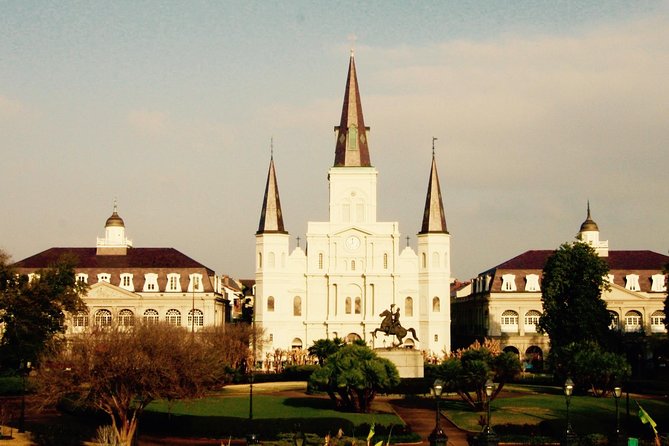
- Old-school New Orleans landmarks: Jackson Square, Cabildo, Presbytere, and St. Louis Cathedral
- Literature and film locations: Tennessee Williams and William Faulkner stops
- Creole courtyard history at Pirate’s Alley: including the placage system and Quadroon Ballroom story
- Efficient route for first-timers: you’ll cover major sites without a car or long transit
Starting at Cafe Beignet and Musical Legends Park: Your French Quarter “base layer”
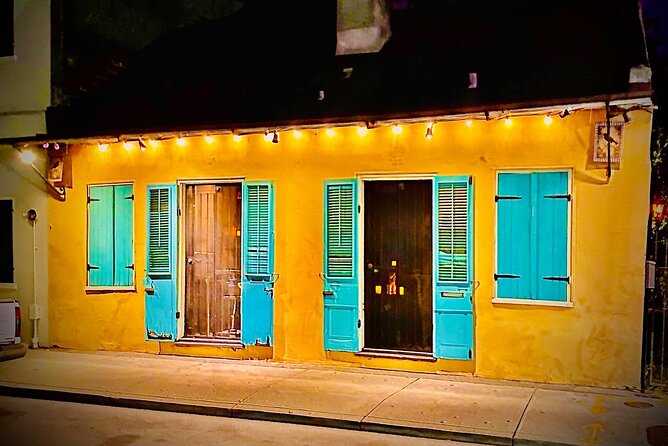
Good tours start with orientation, not just walking. Here, you meet at Cafe Beignet on Royal Street and then begin your history promenade near Musical Legends Park. That matters because the French Quarter can feel like a maze on Day 1—this route gives you a structure so you can enjoy the weird, wonderful details without getting lost.
This is also a good length for a first visit. With about 2 hours and roughly a 2-mile walk at a leisurely pace, you’re not stuck doing an all-day grind. You’ll still hit the core landmarks that most visitors want, plus a handful of points you’d likely miss on your own.
You’ll want to arrive a few minutes early. In real life, mornings and evenings in the Quarter can move fast—street musicians, crowds around Jackson Square, and people stopping for pictures. Starting on time makes the whole experience smoother.
You can also read our reviews of more tours and experiences in New Orleans.



The Mississippi Riverbank: Levees, steamboats, and why New Orleans exists
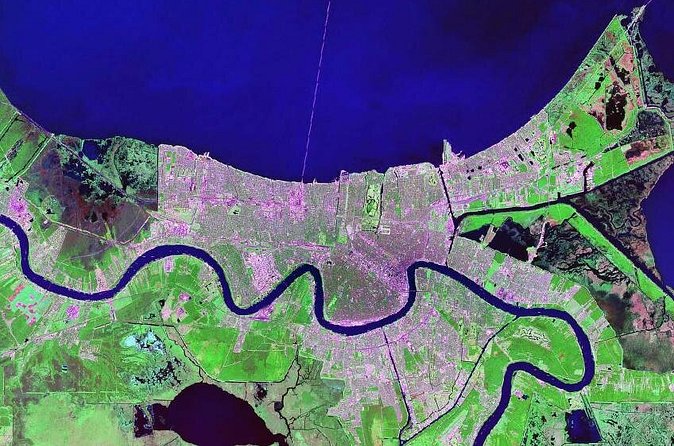
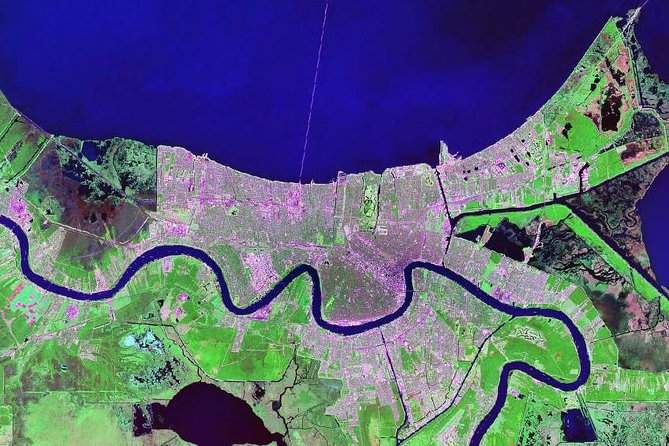
The tour’s story engine is the river. Your walk begins with a Mississippi River focus—looking out at paddlewheel steamboats drifting past the waterfront. Then your guide connects that view to a big idea: the levee system that turned sea-level swamp into livable land.
That history changes how you read everything else in the Quarter. Instead of seeing New Orleans as just pretty streets and balconies, you start seeing it as an engineered place—built by design, risk, and rebuilding. It’s a practical story, too. When you understand why the city had to adapt to flooding and elevation, the whole area feels more real.
You also get a gentle “warm-up” pacing move: you learn outside, you look out across the water, and you settle into the tour rhythm before the famous squares and churches. It’s a nice balance of scenery and context.
French Market time: the oldest open-air market feel, with real browsing energy
Next comes the waterside French Market, described as the oldest open-air market in the United States. It’s a key stop because it’s not just a photo spot—it’s a living commercial street where New Orleans shows its everyday side.
You’ll wander through the stalls and your guide will point you toward what people actually come for, like local produce, fish, and Creole delicacies. Even if you don’t buy anything, it helps you understand how the Quarter feeds itself, historically and now. Markets are where history gets practical: trade routes, food supply, and the culture of selling and sharing.
Timing here is short, so think of it as a browse window, not a full food crawl. If you like tasting, you can plan a post-tour snack stop nearby. If you’d rather keep costs down, this segment still works because the main value is learning what the market is and why it matters.
Jackson Square and the landmark cluster: the political heart and the balcony view
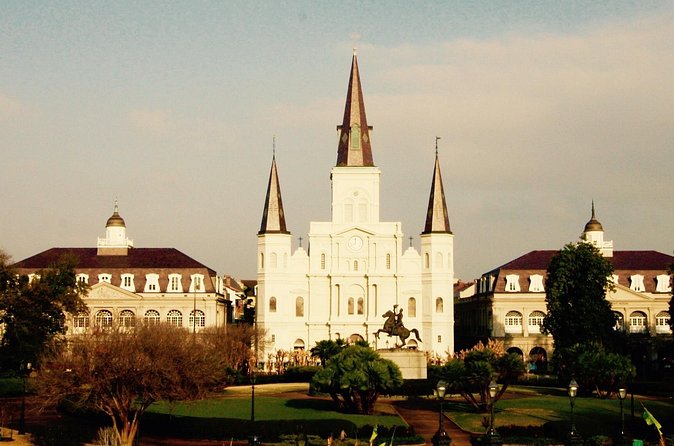
Jackson Square is the Quarter’s central stage, and you go there with a guide who helps you read what you’re seeing. You’ll spend time in the square area and learn how it connects to Place d’Armes, plus how the buildings around it shaped civic life.
From here, you’ll see key landmark faces: the Cabildo and Presbytere museums, and the Pontalba Apartments, known as the oldest apartment buildings in the United States. Your guide also ties in the Great New Orleans Fire of 1788 as you move toward St. Louis Cathedral, helping you understand why this corner looks the way it does today.
This stop is where first-timers get a big payoff. Once you know the roles of these buildings—government, resilience, and rebuilding—you start noticing details you’d otherwise pass right by. And because you’re on a guided walk, you’re not stuck guessing which facade is important.
St. Louis Cathedral: where the fire story lands, plus an interior view
The tour’s Cathedral segment is one of the best “why it looks like this” moments. You’ll go to St. Louis Cathedral, and your guide brings you inside. That interior time is valuable because it turns architecture into something you can experience, not just read on a postcard.
Your guide also explains how the Great New Orleans Fire of 1788 connects to this area, and how rebuilding after the fire shaped what people now call classic French Quarter style. That’s the kind of context that makes your photos better. You’re not photographing randomly—you’re photographing the aftermath of a major turning point.
Practical note: interiors can feel cooler than the street, and you’ll likely want to keep your phone ready but not in hand the whole time. Let your guide lead, then slow down for a second round of looking.






Pirate’s Alley and the literary trail: Tennessee Williams, Faulkner, and the Creole courtyard story
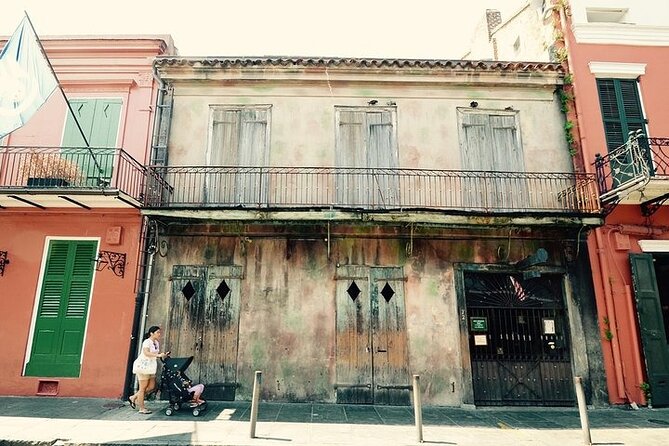
This is where the tour gets extra fun. You’ll pass film and literary haunts, including the building tied to Tennessee Williams and the William Faulkner home. If you’ve read even a little of their work, these stops make the Quarter feel like a living stage set.
Then you’ll move into the area around Pirate’s Alley, learning about Creole society and the harsh realities tied to slavery in South Louisiana. Your guide brings up the system known as placage and connects it to stories linked with the Quadroon Ballroom balcony. The history here isn’t meant to be “light”—it’s presented in a way that helps you understand the social structure behind the romance people sometimes project onto old streets.
You’ll also hear local legend material, including stories about prison escapes and dueling. And while the tour stays history-forward, you’re still in the real French Quarter—street musicians often provide background music as you walk, which makes the experience feel less like a lecture and more like a guided stroll through a storybook.
One small downside: because these segments combine literature, architecture, and social history, it helps to keep an open mind. If you only want surface-level fun, this part might feel heavy. But if you want the Quarter’s full personality, it lands well.
The old Ursuline Convent exterior: a quieter ending with big time depth
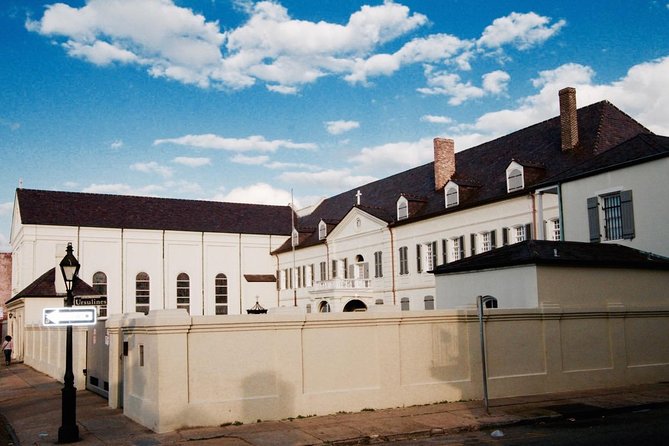
You finish the walk near the Old Ursuline Convent Museum, standing outside the Mississippi River Valley’s oldest building. The focus here is early colonization efforts in Louisiana—another reminder that the Quarter’s identity didn’t start with the nineteenth-century look most visitors expect.
This stop works as a calm landing after the busier square and alley areas. It gives your brain a moment to reset, and it helps you connect the dots between early settlement patterns and the later city growth you learned by the river.
Even if you don’t go inside, the exterior history makes the whole tour feel more grounded. It’s a simple, reflective cap to the route.
Price and value: is $29 worth it for a French Quarter history walk?

At $29 per person for about 2 hours, this tour is positioned as a solid value for what you get: a local guide, a small group (max 9), and a tight route that covers major landmarks plus more specific story stops. You’re paying for interpretation, not just access.
The value is strongest if you’re:
- on a short schedule and want the “core route” done right
- the type who likes facts with context (river engineering, rebuilding, social history)
- a first-timer who wants to understand the layout so the rest of your trip is easier
It’s less of a bargain if you already know French Quarter history deeply and just want wandering time. In that case, you might prefer self-guided walking and spend your money on a museum ticket or a guided food stop.
A final practical point: it doesn’t include hotel pickup or drop-off, and it doesn’t include food or drinks. Plan on arriving at the meeting point on your own, and if you want beignets or coffee, grab them early—then you’ll feel calm instead of rushed.
Should you book this French Quarter history walk?
If you want the French Quarter to make sense quickly, this is a smart pick. The mix of river-to-architecture-to-literature storytelling helps you connect landmarks into one big picture, and the small-group format makes it feel personal without dragging.
Book it if you’re traveling with limited time, you care about history beyond the basics, and you’re comfortable walking around 2 miles. Skip it only if you strongly prefer a no-history strolling vibe, or if you have a hard time with outdoor walking and uneven streets.
If the weather is good and your schedule can fit the start time (morning or afternoon), this tour is one of the easiest ways to turn the Quarter from random sights into a memorable story you can retell.
FAQ
Where does the tour start?
You meet at Cafe Beignet on Royal Street (334 Royal St, New Orleans, LA 70130).
How long is the tour?
It runs about 2 hours.
How far do you walk?
Expect about a 2-mile (3.2 km) walk at a leisurely pace.
Is it a small group tour?
Yes. The maximum group size is 9 travelers.
What language is the tour in?
The tour is offered in English.
What’s included in the price?
A local guide is included.
Is food or hotel pickup included?
No. Hotel pickup/drop-off and food and drinks are not included.
What are the main places you visit?
You’ll go through areas including Musical Legends Park, the Mississippi Riverbank, the French Market, Jackson Square, the Cabildo and Presbytere area, St. Louis Cathedral, Pirate’s Alley, and the Old Ursuline Convent Museum area.
Do you go inside any buildings?
Yes. The tour includes time inside St. Louis Cathedral.
Is the tour canceled for bad weather?
It requires good weather. If it’s canceled due to poor weather, you’ll be offered a different date or a full refund.
What is the cancellation window?
Free cancellation is available if you cancel at least 24 hours before the experience start time.