REVIEW · NEW ORLEANS
Jewish History Tour of New Orleans
Book on Viator →Operated by NOLA Tours · Bookable on Viator
Jewish New Orleans has a story you can walk. In just about two hours, this guided route connects major sites—from the Agam Holocaust Memorial by the river to the Confederate-era figure Judah Benjamin—with clear explanations as you go. I love that it’s taught by local guides who can turn street corners into context fast, without turning it into a lecture.
Two things I especially liked: the stop at the Agam Holocaust Memorial (you’ll understand what you’re looking at, not just where it is), and the way the tour uses the French Quarter’s streets to tell Jewish stories you’d never guess were there. Expect big takeaways like how Jewish New Orleanians helped protect music through preservation and how Jewish connections show up in unexpected places like pirate lore.
One consideration: it’s a walking tour with no air-conditioned vehicle included. If you’re heat-sensitive or expect frequent indoor stops, plan for standing and shade breaks.
In This Review
- Key highlights worth your attention
- Jewish History in the French Quarter: why it feels like more than a “tour”
- The $40 question: value, pacing, and what’s actually included
- Start at PJ’s Coffee on Canal Street (and get moving fast)
- Stop 1: Woldenberg Riverfront Park and the Agam Holocaust Memorial
- Stop 2: Jackson Square and the shadow of the inquisition
- Stop 3: Madame John’s Legacy and the influence of a Jewish philanthropist
- Stop 4: Royal Street to Pirates Alley—Jewish ties in pirate stories
- Stop 5: Preservation Hall area—how Jewish preservationists helped save the music
- Stop 6: Omni Royal Orleans and Judah Benjamin’s complicated legacy
- Walking comfort: how the tour fits a vacation day
- What the guide quality really changes
- Should you book this Jewish History Tour of New Orleans?
- FAQ
- What is the duration of the Jewish History Tour of New Orleans?
- How much does the tour cost?
- What language is the tour offered in?
- Where do you meet, and where does the tour end?
- Is admission included for the stops?
- What is included in the price, and what is not?
- Is there free cancellation, and what if the weather is bad?
Key highlights worth your attention
- Agam Holocaust Memorial at Woldenberg Riverfront Park with a close, guided look at what’s on the site
- Madame John’s Legacy, tied to a Jewish philanthropist and a building you’ll keep noticing after
- Royal Street to Pirates Alley, where pirate stories include Jewish names you probably won’t find on your own
- Preservation Hall area, focusing on how music was saved by Jewish preservationists
- Judah Benjamin at Omni Royal Orleans, connecting a major U.S. senator to the Confederate government and slavery
Jewish History in the French Quarter: why it feels like more than a “tour”
This is the kind of walking tour that changes how you see a place. You’re not just collecting facts; you’re learning how Jewish life and influence threaded through New Orleans in multiple eras—public memory, business and philanthropy, cultural life, and even darker chapters tied to politics and slavery.
I also like the scale. The group is limited to 14 people, and the pacing stays readable instead of rushed. At 2 hours, you’ll finish with a tighter understanding of the city rather than leaving with a pile of notes and no connections.
And because it’s in the French Quarter zone, you don’t need special logistics to fit it into a day of sightseeing. You start near Canal Street and end by St. Louis Cathedral, which makes it easy to roll right into other nearby stops afterward.
You can also read our reviews of more tours and experiences in New Orleans.


The $40 question: value, pacing, and what’s actually included
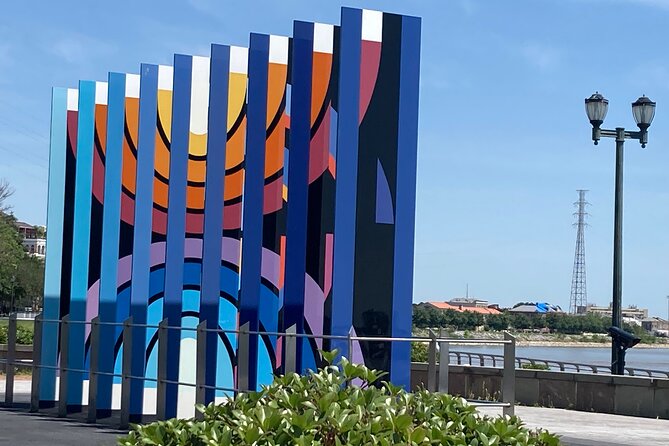
At $40 per person, you’re paying mainly for the guide. This experience includes a licensed, insured, local guide with extensive knowledge of the area, and every stop’s on-foot structure keeps your time focused.
What helps the value: many key moments here are paired with free admission access at the sites themselves. You’re not paying extra to enter buildings at each turn; you’re using local interpretation to get the meaning out of what you’re seeing.
What’s not included is just as important. There’s no air-conditioned vehicle, so the tour is designed for walking in open-air sections. That’s usually fine in the French Quarter—just be honest with yourself about heat, sun, and how long you can comfortably stand.
Start at PJ’s Coffee on Canal Street (and get moving fast)
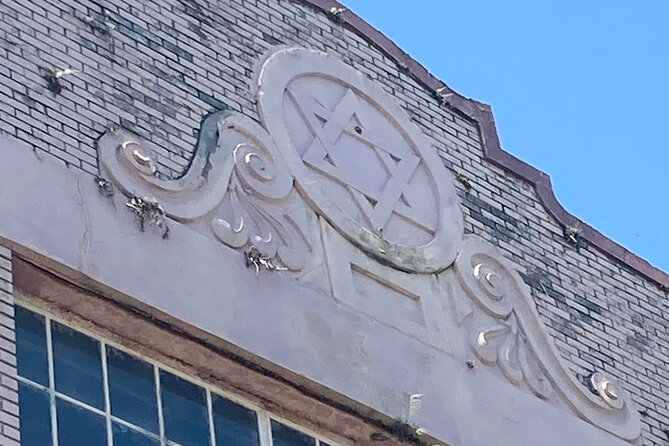
The meeting point is PJ’s Coffee, 333 Canal St, with a 10:00 am start. This is a practical setup: Canal Street is easy to reach, and it helps you begin your walk without wasting time figuring out where to go.
You also get a mobile ticket, which is exactly what you want on a vacation day—no paper hunt, no lost QR code drama. And it’s in English, so you won’t be guessing what the guide is emphasizing.
Stop 1: Woldenberg Riverfront Park and the Agam Holocaust Memorial
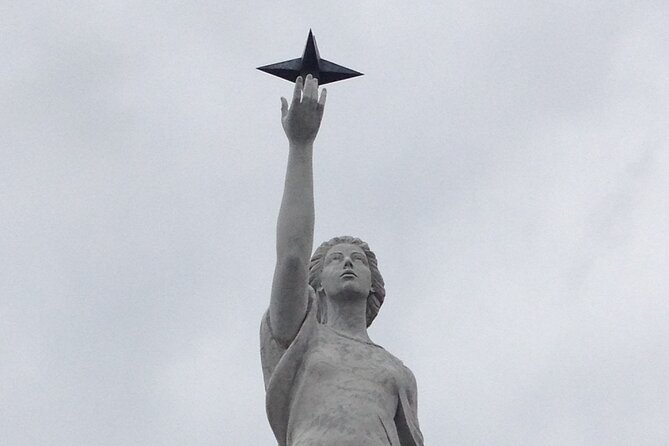
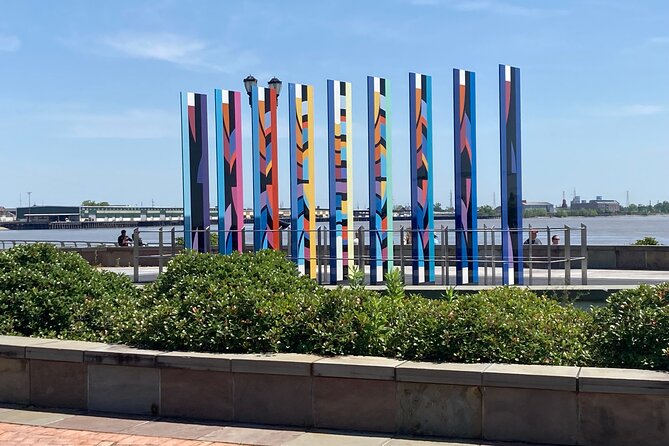
The tour begins with the kind of site that makes you lower your voice. At Woldenberg Riverfront Park, you’ll have a chance to see the Holocaust Memorial and also the statue of Malcolm Woldenburg.
What I like about doing this early: it sets the tone. You’re shown that Jewish history in New Orleans isn’t only about culture and celebration; it also includes memory, survival, and how communities choose to honor trauma in public space.
A calm moment here pays off later. After this, the rest of the tour makes more sense because you’re picking up the theme of remembrance—how the past stays visible in the built environment.
Stop 2: Jackson Square and the shadow of the inquisition
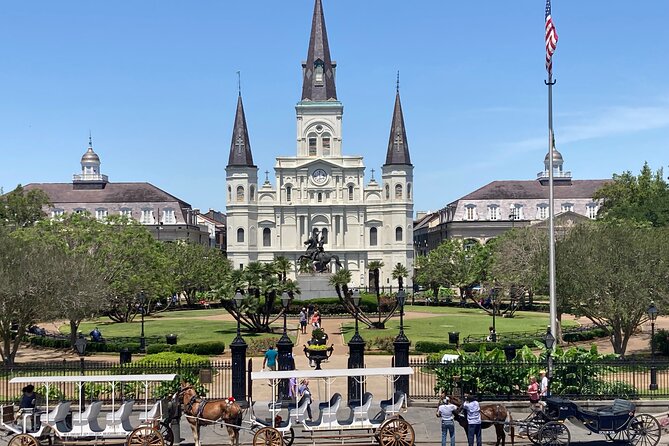
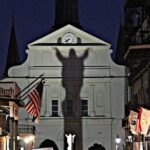
Next, you head toward Jackson Square. The guide doesn’t just give you general New Orleans background; you get an intro to the earliest colony days and discussion of the threat of inquisition.
This matters because it adds a layer most visitors miss. People often think of the French Quarter as mostly “romance and music.” Learning about religious pressure and fear gives you a clearer sense of why minority communities navigated life carefully—and why certain stories about Jewish presence can be both visible and contested depending on the era.
It’s also a smart timing choice. Jackson Square is familiar to almost everyone, so the history feels grounded instead of abstract.





Stop 3: Madame John’s Legacy and the influence of a Jewish philanthropist
Then you shift to Madame John’s Legacy, an old building tied to a Jewish philanthropist. You’ll get a quick, guided explanation of why the structure matters and how ownership connects to the story of the city.
I like this stop because it teaches you to look harder at buildings. New Orleans has a lot of historic architecture, but not every facade comes with an easy-to-spot reason for its importance. Here, the explanation makes the name and the place click together.
You also get a reminder that philanthropy isn’t just a modern concept. This is one of those moments where you see how wealth and community support shaped opportunities and social life.
Stop 4: Royal Street to Pirates Alley—Jewish ties in pirate stories
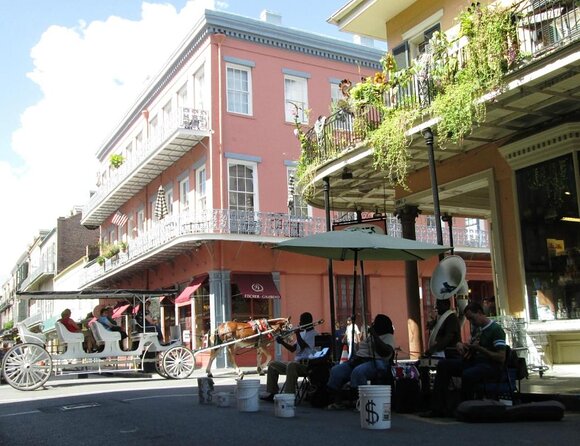
Walking further along Royal Street, the guide shares stories from Dumaine to Pirates Alley, including New Orleans’ famous pirates—some of which were Jewish.
This stop is fun, and it’s also useful. Pirate stories are colorful on their own, but with a Jewish thread added, it becomes a lesson in how stereotypes can erase real complexity. You’re learning that Jewish involvement in the city wasn’t limited to a single job, neighborhood, or reputation.
Practical tip: expect the guide to point out details along the route that you might otherwise walk right past. If you like “street-level archaeology,” this part is right up your alley.
Stop 5: Preservation Hall area—how Jewish preservationists helped save the music
At Preservation Hall, you’ll hear about how music was preserved by Jewish preservationists. It’s positioned right by the storied Jazz Hall, so you get a natural connection between place and purpose.
I like that the tour treats music as something people protected—not just something that happened. When a guide explains the preservation angle, the city’s musical identity feels less like luck and more like effort.
Even if you’re not a hardcore music historian, you’ll leave with a better sense of why Preservation Hall matters. And if you are a music person, this stop gives you a new lens to use when you walk into the rest of the Quarter.
Stop 6: Omni Royal Orleans and Judah Benjamin’s complicated legacy
The final discussion happens at the Omni Royal Orleans, and it centers on Judah Benjamin—a U.S. senator and cabinet member of the Confederate government—plus slavery in the state before the Civil War.
This part can hit harder than the lighter, story-driven pirate section. It’s where the tour refuses to keep things neat or comfortable. You get to see how Jewish influence and political power can exist alongside morally brutal systems.
Why I think this stop is valuable: it prevents a one-note version of history. Learning only the pleasant cultural contributions would give you an incomplete picture. This brings the “public history” stakes into view—who held power, and what that meant on the ground.
It’s not there to shock you; it’s there to help you understand how history actually works.
Walking comfort: how the tour fits a vacation day
This is a walking tour in the French Quarter, and that means you’ll want decent shoes. The route is spread across popular areas, so you’ll likely be stopping and starting frequently, which can feel easy if you’re comfortable with a steady stroll.
Also, it’s built for most people who can walk at a leisurely pace. The experience is described as manageable for guests who take a relaxed approach and don’t need a bus ride every 10 minutes.
If you’re traveling with kids, mobility limitations, or you know you tire quickly, plan an exit strategy. You’re in a compact area, so it’s usually possible to step out and continue independently—but the tour itself is meant to stay together.
What the guide quality really changes
A big reason this tour rates so well is simple: the guide makes the connections. The tour highlights include sites that could be overwhelming or too broad on your own. With a good guide, you get the “why this matters” layer immediately.
I’ve seen local-style guiding like this work best when the guide can explain both the visible object and the invisible context. That’s exactly what you get here: Holocaust memorial meaning, early colonial religious threat, philanthropy behind a named building, music preservation efforts, pirate lore with surprising names, and political power connected to slavery.
And if you’re lucky enough to have a guide like Janet or Suzanne, expect an engaging, structured explanation—plus a helpful recap that makes it easier to remember what you saw after you step back into the street noise.
Should you book this Jewish History Tour of New Orleans?
Book it if you want a focused Jewish history thread through the French Quarter, and you like tours that connect specific places to specific stories. For $40, the guide-led value is strong, especially because the highlights are built around free-access sites and a manageable 2-hour timeframe.
Skip it—or adjust expectations—if you’re hoping for mostly indoor time, an air-conditioned experience, or a long museum-style format. This is a street walk with meaning. Bring water, wear comfortable shoes, and plan to slow down just enough to absorb what’s being pointed out.
FAQ
What is the duration of the Jewish History Tour of New Orleans?
It lasts about 2 hours.
How much does the tour cost?
The price is $40.00 per person.
What language is the tour offered in?
The tour is offered in English.
Where do you meet, and where does the tour end?
You meet at PJ’s Coffee, 333 Canal St, New Orleans, LA 70130 and the tour ends at St. Louis Cathedral, 615 Pere Antoine Alley, New Orleans, LA 70116.
Is admission included for the stops?
The tour includes free admission ticket access for the listed stops.
What is included in the price, and what is not?
Included: a licensed, insured, local guide. Not included: an air-conditioned vehicle.
Is there free cancellation, and what if the weather is bad?
Cancellation is free if you cancel up to 24 hours in advance for a full refund. The tour requires good weather; if it’s canceled due to poor weather, you’ll be offered a different date or a full refund.