REVIEW · ROME
Percy Jackson and Ancient Myths Tour at the Capitoline Museums with Alessandra
Book on Viator →Operated by Alessandra Tours · Bookable on Viator
Mythology comes alive in a museum. This Percy Jackson and Ancient Myths tour at the Capitoline Museums turns hard-to-love art time into something kids want to do, using stories, games, and real artifacts.
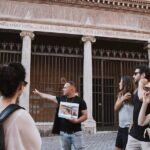
I love the way Alessandra (and the team of museum pros) blends myth details with kid-friendly interaction, so everyone stays engaged. I also like that you get professional guidance that doesn’t treat the museum like a babysitting stop.
One possible drawback: it’s aimed at kids age 6+, and the pace inside the galleries can feel like a lot if your child needs frequent breaks.
In This Review
- Key things that make this tour worth your time
- Capitoline Museums plus myth stories: why this tour fits Rome so well
- Piazza del Campidoglio meet-up: start easy, not stressful
- The 2.5-hour plan: games first, art second (but in a good way)
- Inside the galleries: Percy Jackson energy meets real Roman objects
- Romulus and Remus, plus the Lupa you can actually see
- The Cyclops moment: a fun monster hunt with real museum context
- Views and pacing: what to do with your time during and after
- Price and value: what you’re paying for in plain terms
- Who this tour is best for (and who should think twice)
- Should you book the Percy Jackson and Ancient Myths Tour with Alessandra?
- FAQ
- FAQ
- How long is the Percy Jackson and Ancient Myths Tour at the Capitoline Museums?
- Where does the tour start and end?
- What age is the tour recommended for?
- Is the tour offered in English?
- What’s included in the ticket price?
- Is the tour private for your group?
Key things that make this tour worth your time
- Percy Jackson tie-ins that connect famous characters to actual Roman and Greek art you can point at
- Interactive scavenger hunts and mini-quests, with questions that keep kids moving instead of wandering
- Wolf origins of Rome with the story of Romulus and Remus and an up-close look at the authentic Lupa
- A “wait, that’s a Cyclops?” museum moment built around recognizable myth themes
- Built for families, with a guide who uses energy, not lectures, to hold attention
Capitoline Museums plus myth stories: why this tour fits Rome so well
The Capitoline Museums sit right at the top of Rome’s civic “power zone.” You’re not just looking at pretty statues. You’re learning how Romans used Greek myths and heroes to explain their own origin stories, politics, and identity.
What makes this tour work is the way it treats mythology as a map. Instead of memorizing dates, you follow a story thread: Jupiter and the gods, heroes and monsters, and the Rome origin tale tied to the Lupa (the she-wolf). That structure helps kids connect what they see to what they already love—whether they’ve read Percy Jackson or just know the characters.
Also, the tour doesn’t ignore the adults. The museum is serious art and archaeology, and the guidance includes a professional art historian component. You get explanations you can actually use when you walk through the rest of the museum later on your own.
You can also read our reviews of more tours and experiences in Rome.

Piazza del Campidoglio meet-up: start easy, not stressful
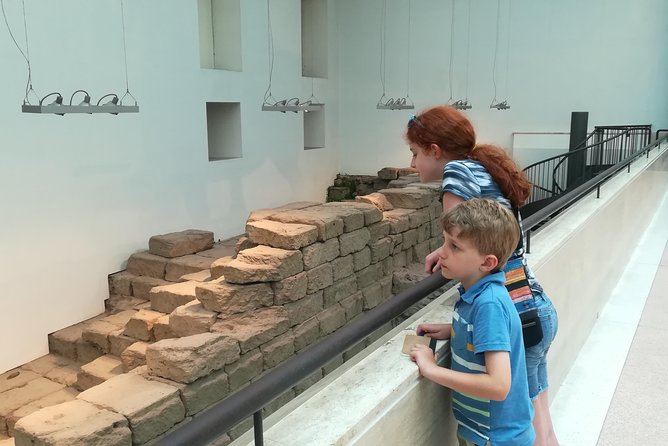
You meet at Piazza del Campidoglio (00186 Roma RM), and the tour ends back at the same spot. That matters because Rome’s museum areas can feel like a maze, especially if you’re tired from travel or you’re dealing with a stroller.
Check-in is also designed to be straightforward. You’ll use a mobile ticket, and the meeting area is near public transportation, so you’re not stuck with a long walk just to start. The tour is also scheduled with flexibility in mind, with morning and afternoon options.
One more practical note: this is set up as a private tour/activity, meaning it’s only your group. That usually helps families a lot. Kids can ask questions without being squeezed between other parties, and the guide can adjust the tempo when attention drifts.
The 2.5-hour plan: games first, art second (but in a good way)
This experience runs about 2 hours 30 minutes, and it’s built around turning museum viewing into an activity. You don’t spend the whole time listening at the front. Instead, you’ll do things like questions, scavenger hunts, and short challenges that guide you to specific works.
That approach is especially helpful at the Capitoline Museums, where there’s plenty to look at and it’s easy for kids to go into “museum coma.” With a structured quest, kids have a job. They’re not just waiting for the tour to be over.
The tour also adapts to the age and needs of the kids in your group. The plan is designed for children 6 and up, and the guidance is kid-friendly by design—not watered down, just paced correctly.
And yes, the “adults get involved” part can be fun. One review highlights families playing a competition-style element where parents could actually earn points. That’s a great sign: it means the guide understands that families don’t want an all-kid program where adults feel sidelined.
Inside the galleries: Percy Jackson energy meets real Roman objects

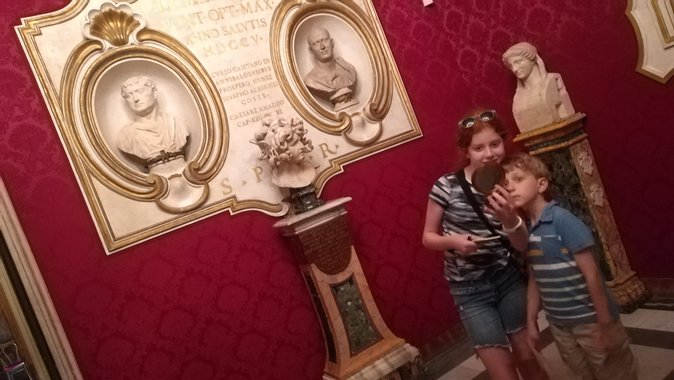
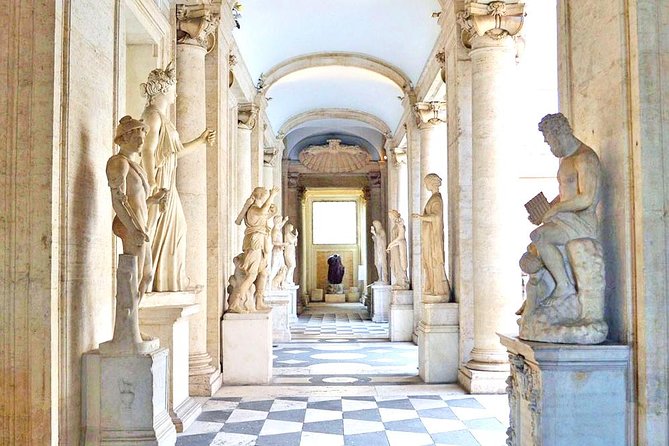
You’ll step into the museum and meet Percy Jackson and his friends in a way that’s more useful than it sounds. The tour uses the themes from the books—gods, heroes, monsters—and then anchors them to what you can see in the collections.
You’ll move through statues and artworks that tie into the stories, including references connected to:
- Hercules
- Satyrs and Centaurs
- figures connected to Love and Psyche
- and more myth-linked pieces that help explain why these stories show up again and again in Roman art
Here’s the value for you: kids learn to “read” visual clues. They start noticing how symbols repeat—attributes, creatures, and storytelling choices. Adults get the added payoff of better context, because you’re not just standing in front of an item thinking, What is this supposed to mean?
The guides in this kind of format tend to do well because they use art history language without turning it into homework. You should expect explanation plus interaction, not a lecture with occasional questions at the end.
Romulus and Remus, plus the Lupa you can actually see
One of the most memorable parts of the tour is the Rome origin story. You’ll learn the wolf-inspired origins of ancient Rome, including the story of Romulus and Remus, and you’ll get a look at the authentic Lupa.
This is where the tour gives you real historical traction. The Lupa isn’t just a cute myth prop. It’s tied to how Romans thought about legitimacy and beginnings—how stories build identity. When you connect myth to a specific object in front of you, it stops being a bedtime tale and starts being cultural evidence.
For kids, it’s concrete. For adults, it’s satisfying because you’re seeing how a legendary narrative gets “fixed” into art.
If your kids are Percy Jackson fans, this part often hits harder because the books frequently borrow Rome-and-Greece myth vocabulary. Seeing the actual imagery in a museum makes it click.



The Cyclops moment: a fun monster hunt with real museum context
Yes, you really can find a Cyclops in the Capitoline Museums. This tour leans into that with a specific myth exploration: you’ll be encouraged to look for the Cyclops and understand what it represents within the larger myth world.
The payoff isn’t just the monster factor (though that helps). The payoff is learning how ancient cultures treated monsters as part of a storytelling system. Monsters weren’t random; they were roles in the narrative—tests, warnings, symbols, and sometimes reflections of human fears.
That’s why this tour feels “kid-friendly” without being shallow. Kids get the fun. Adults get meaning.
And if you’ve ever walked through a museum with kids who want action every ten seconds, you’ll appreciate that the guide is steering that energy toward something real, not just “look at this, move on.”
Views and pacing: what to do with your time during and after
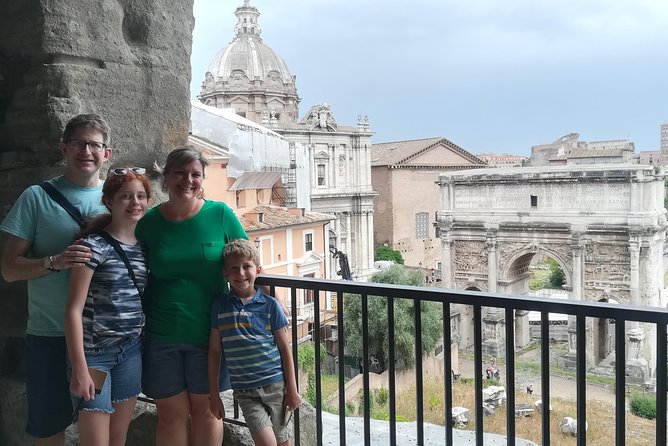
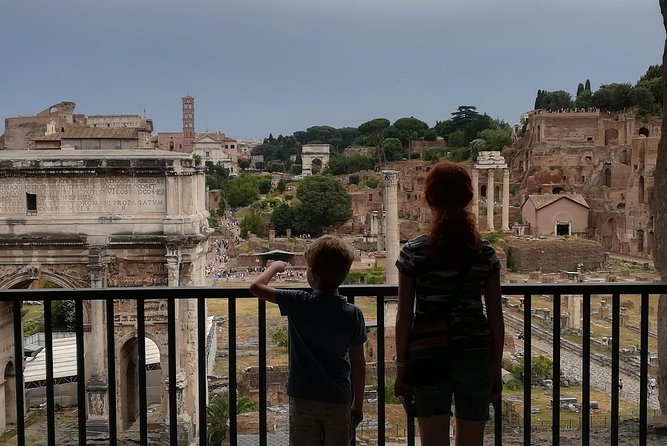
The Capitoline area has one big advantage: the museum program pairs well with Rome’s big-picture views. One of the practical bonuses noted is that the museum provides some of the best views of the Forum.
Even if the tour keeps you busy inside, that view is something you can use to connect the dots. When you can see the Forum area from up high, the idea of Rome as a place built on stories and power stops feeling abstract.
Timing matters here. With about 2.5 hours, you’re unlikely to also do a full second museum wing unless you’re traveling with older kids who naturally handle museums longer. If you want extra time, plan it by arriving a bit early at the meeting point so you’re not rushing.
After the tour, you’ll likely have enough energy to explore nearby at street level. That’s the best use of the tour: you come away with names and themes, and then your wandering becomes smarter.
Price and value: what you’re paying for in plain terms
The price is $239.38 per person for a tour lasting about 2 hours 30 minutes. That’s not cheap, so you should judge value by what’s included and what kind of experience you’re buying.
Here’s what improves the value equation:
- Admission ticket is included, so you aren’t stacking extra costs right at the start.
- You get multiple layers of guiding, including a Blue Badge guide plus a professional art historian guide and a professional kid-friendly guide.
- The tour is designed as private for your group, which is often more satisfying than a large mixed crowd when you’re traveling with children.
- You get interactive activities, not just a walking route.
In other words, you’re paying for expertise and for turning museum visits into a family-friendly “program,” not a DIY museum struggle.
If your group includes a serious mythology kid, this can be a very efficient use of time. If you just want general museum access with no structured learning, you might decide it’s too pricey. But if your goal is to make the museum memorable for a kid who might otherwise drag, this kind of guided format tends to be worth it.
Who this tour is best for (and who should think twice)
This works best if you’re traveling with:
- kids 6+ who like mythology, gods and monsters, or Percy Jackson themes
- families who want an organized, interactive museum experience that keeps energy up
- adults who still want context, not a purely theatrical tour
It may be less ideal if:
- your child is under 6 or needs constant breaks (the tour is interactive, but it still moves through galleries)
- you hate competitive or game-like moments (it’s part of the structure)
- you’re looking for maximum free time to wander without guidance
Also, if you’re a family that loves museums but your kids don’t handle long indoor stretches well, this tour’s game format is a strong match. One review specifically called out how accommodating the guide was when the party was tired after flying—this kind of adaptability matters more than people think.
Should you book the Percy Jackson and Ancient Myths Tour with Alessandra?
If your top priority is getting your kids interested in art and archaeology without turning it into a chore, I’d book it. The strongest reasons are the high energy, interactive mini-quests, and the way the guide connects mythology directly to objects like the Lupa and the myth themes around the Cyclops.
If your group is mostly adult-focused and not that interested in Percy Jackson or kid interaction, you might still enjoy it, but you’ll want to make sure you’re okay with a family-optimized pace.
For many families, this is the kind of tour that turns a “we should see that museum” item into a real story you’ll remember on the walk to the next stop.
FAQ
FAQ
How long is the Percy Jackson and Ancient Myths Tour at the Capitoline Museums?
It runs for about 2 hours 30 minutes.
Where does the tour start and end?
You meet at Piazza del Campidoglio, 00186 Roma RM, Italy, and the tour ends back at the same meeting point.
What age is the tour recommended for?
The tour is recommended for children aged 6 and over, and children must be accompanied by an adult.
Is the tour offered in English?
Yes, it is offered in English.
What’s included in the ticket price?
The tour includes an admission ticket and guiding support, including a Blue Badge guide and professional art historian and kid-friendly guidance.
Is the tour private for your group?
This is listed as a private tour/activity, meaning only your group participates.