REVIEW · BARCELONA
Private Jewish Heritage Journey by Barcelona Dreaming
Book on GetYourGuide →Operated by BARCELONA DREAMING · Bookable on GetYourGuide
Barcelona has a Jewish pulse you can feel. This private 2-hour heritage walk in Barcelona’s medieval streets takes you into one of Europe’s oldest synagogues and points you to a secret mikveh you’d miss on your own. It’s also a family-friendly way to understand how Jewish life shaped the city, long before most people think to look.
I especially like the custom pace. The route is structured, but your guide steers the focus based on your interests and questions, which makes it work well for multi-generational families and guests who need a slower rhythm.
One consideration: it’s a walking tour on cobblestones, and synagogue entry involves a few steps. If mobility is an issue, you’ll want to plan for uneven surfaces and a short stair moment inside.
Private expert-led walk through the Call
Ancient Synagogue entry plus a hidden medieval mikveh
Big names of learning (Ramban and Rashba) brought to street level
Family pace control, including time for questions
Small-group feel with one clear meeting point in the Gothic area
In This Review
- The Jewish Quarter at Sant Jaume: why this walk feels different
- Meeting at Conesa Entrepans: how you get oriented fast
- Plaça de Sant Jaume: where civic power and Jewish life meet
- King’s Square and the medieval city logic
- Entering the Ancient Synagogue: one of Europe’s oldest rooms
- The secret mikveh: why this is more than a curiosity
- Casa Adret and the symbols you’ll actually notice
- Ramban, Rashba, and the scholars behind the alleyways
- The value question: what $94 per person buys you in Barcelona
- How to make it work for your family (and your feet)
- Who should book this Jewish Heritage Journey
- Should you book? My straight answer
- FAQ
- What is the duration of the Private Jewish Heritage Journey by Barcelona Dreaming?
- Where does the tour start?
- What does the tour cost?
- Is this a private tour?
- What’s included in the price?
- What languages are offered?
- Is the tour wheelchair accessible?
- Do you need to bring tickets for the synagogue?
- What should I wear or bring since it’s a walking tour?
- Who might find the tour unsuitable?
The Jewish Quarter at Sant Jaume: why this walk feels different
If you’ve been to Barcelona’s Gothic Quarter, you’ve seen the postcard lanes. What you might not see is the older layer underneath: the medieval heart people called the Call. This tour is designed to help you read that layer like a map, not just pass through it.
You’ll start near Plaça Sant Jaume, where the center of civic and religious life in the city often gets attention from tourists. The trick here is that you’re not only learning dates. You’re learning how Jewish communities lived, studied, and left traces in stone, street patterns, and local memory.
And yes, the tour includes a few spots that most casual sightseeing never hits—especially the synagogue interior and the mikveh story. The result is that your Barcelona photos look the same on the surface, but you understand what you’re looking at.
Meeting at Conesa Entrepans: how you get oriented fast
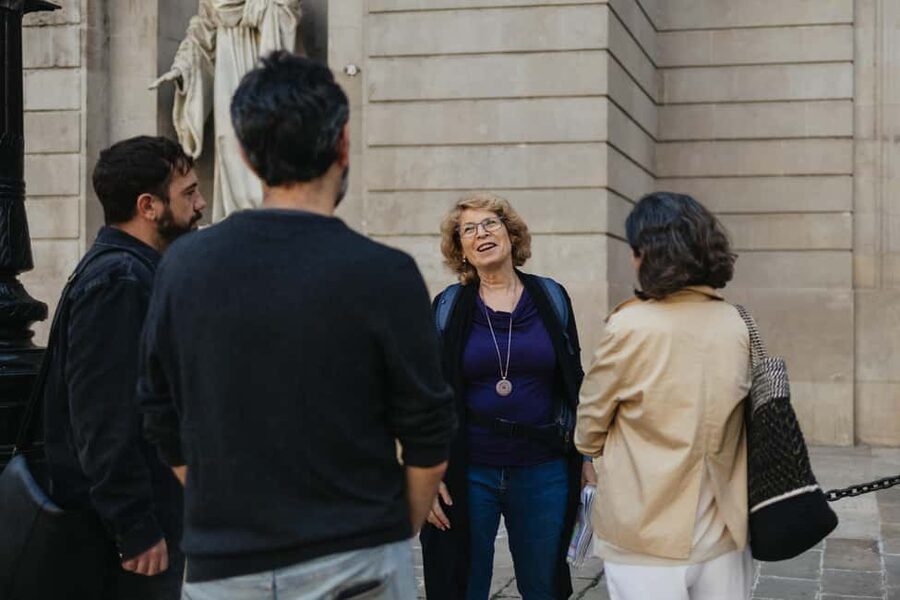
The meeting point is at Conesa Entrepans | Gòtic, just by Plaça Sant Jaume. You’re not sent to a far-off museum entrance or a random side street. You meet in the heart of the action, then your guide gets you oriented right away.
That first phase matters more than it sounds. In dense old towns, people waste energy trying to figure out where they are. With a guide, you get the context first, then the walk becomes a guided narrative instead of a scavenger hunt.
The tour runs about two hours, and the pacing is built for conversation. You’ll get plenty of chances to ask questions and get more than one answer—exactly the kind of flow you want if you’re connecting this to family roots or personal curiosity.
You can also read our reviews of more tours and experiences in Barcelona.



Plaça de Sant Jaume: where civic power and Jewish life meet
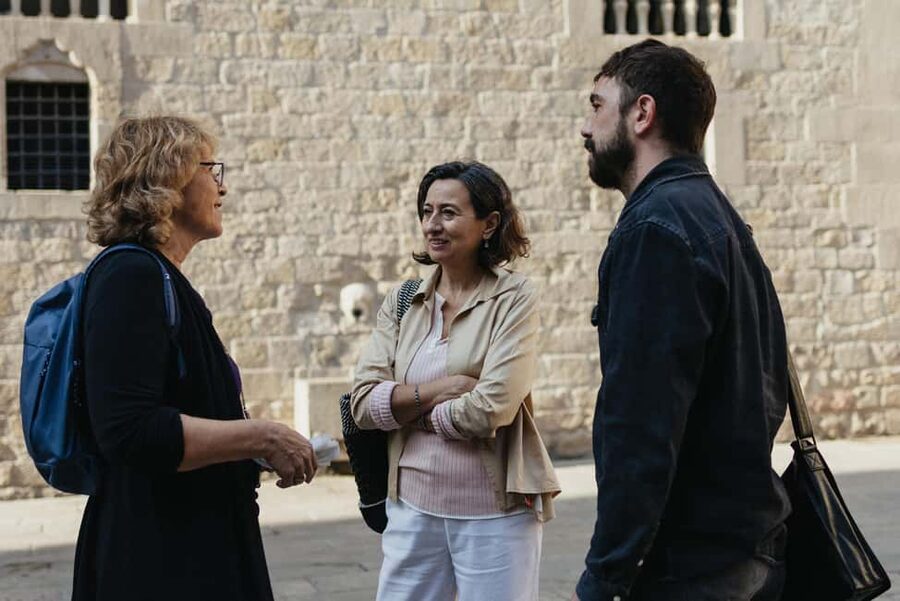
The first stop is Plaça de Sant Jaume, a short walk that sets the stage. This square is one of those places where Barcelona’s layers overlap: civic identity, old architecture, and the kinds of streets that once carried everyday life.
From here, your guide starts connecting the dots between location and influence. Instead of treating the Jewish Quarter as a sealed-off historic section, you’ll hear how it sat inside the larger city world—how commerce, law, and scholarship shaped what people did day to day.
Even though this segment is brief, it acts like the warm-up. If you come in expecting only dramatic persecution stories, this stop helps you understand the other side too: daily life, learning, and local impact.
King’s Square and the medieval city logic
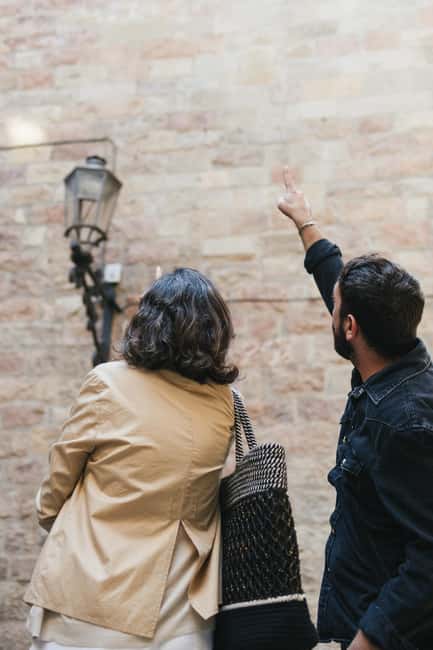
Next comes King’s Square (Plaça del Rei, Barcelona), a longer about 30-minute walking and storytelling segment. This is where the walk expands from “old streets” to “why these streets matter.”
King’s Square is a strong choice for a heritage tour because it helps you feel how medieval Barcelona worked. When you understand the geography of power and movement, the Jewish story stops feeling like a disconnected chapter and starts feeling like part of the city’s operating system.
You’ll also likely pick up practical observation skills here: what to notice on walls, what street geometry can imply, and how symbols could appear in everyday environments. This tour leans into that kind of street-reading, so you don’t just hear history—you learn how to spot it.
Entering the Ancient Synagogue: one of Europe’s oldest rooms
Then you reach the centerpiece: the Ancient Synagogue of Barcelona. You’ll have entry included, so you’re not stuck figuring out tickets while the group waits.
This stop is special for one clear reason: you’re not touring from the outside. You’re stepping into a historic interior tied to Jewish worship and community life. The guide’s job here is to explain what you’re seeing and why it mattered, instead of treating the synagogue like a static photo backdrop.
There’s a practical note. The tour is listed as wheelchair accessible, but entry to the synagogue involves a few steps. If stairs are a dealbreaker for you, plan accordingly and tell your guide when you meet so they can help you manage the moment smoothly.
This is also the part of the tour where the storytelling often lands hardest. When you can stand in a real space, scholarship and tradition feel less like textbook terms and more like lived reality.
The secret mikveh: why this is more than a curiosity
One of the big highlights is the hidden medieval mikveh. Even if you’ve read about mikva’ot before, the value here is the guide’s ability to connect the mikveh to community rhythms and Jewish practice in a place where physical reminders can be scarce.
A mikveh isn’t just a detail. It’s part of how communities handled daily spiritual discipline and life-cycle rhythms. When you learn what it meant, the idea of hidden space starts to click: why some elements weren’t meant to be shouted about, and how they could be tucked into the city’s fabric.
This is also where the “expert local eye” matters. Without context, you’d walk past things and assume they’re just architectural leftovers. With a guide, those remnants start to feel intentional—placed, protected, or remembered for a reason.



Casa Adret and the symbols you’ll actually notice
After the synagogue segment, the tour ends with Casa Adret (around 15 minutes). This is another stop that’s easy to miss on your own, partly because it doesn’t scream tourist landmark energy.
Casa Adret works well for this kind of heritage tour because it’s about interpretation. Your guide will point out how Jewish influence showed up in Catalan life and how you can read meaning into the street and building traces.
One thing I like about this tour is that it doesn’t pretend the evidence is plentiful. It helps you work with what remains: small clues, symbols on ancient stone, and the stories people preserved even when physical proof was limited.
And if you enjoy asking questions—especially questions that connect the past to what you see today—this is a good place to do it. A guide can tie the stop back to the larger arc: coexistence, later pressure, and the way communities changed under the Inquisition’s long shadow.
Ramban, Rashba, and the scholars behind the alleyways
A major theme across the walk is hearing the stories of major Jewish scholars linked to the area, including Ramban and Rashba. Instead of dropping names and moving on, the guide uses these figures as anchors for how scholarship shaped community life.
This is one of those experiences where “history” isn’t only about events. It’s about thought, study, legal tradition, and how those ideas traveled through networks of people who lived close enough to argue, teach, and build.
If you’re bringing Sephardic curiosity into the conversation, this is the segment that helps you connect “genealogy” with geography. You’re not just chasing ancestors—you’re understanding the intellectual world those ancestors would have grown up around.
The value question: what $94 per person buys you in Barcelona
At $94 per person for 2 hours, this tour isn’t a cheap add-on. But it also isn’t overpriced for what you actually get.
Here’s where the value shows up clearly:
- Private guidance: you’re not competing with other people’s questions or getting rushed by a group schedule.
- Real access: entry to the Ancient Synagogue is included, which changes the whole experience compared to exterior-only walks.
- Answer-rich conversation: the tour format pushes beyond surface storytelling, with time for follow-ups and discussion.
The best “value” is intangible: you leave with mental links. You can look at the Gothic Quarter and understand why certain streets felt different to Jewish residents, why certain symbols could matter, and how scholars shaped social life.
Also, the guide provides personalized recommendations afterward, including kosher or local dining ideas. That’s practical. Old-city tours often end and throw you back onto the street with no next step. Here, you get a plan for dinner while the history is still fresh.
How to make it work for your family (and your feet)
This is best for people who enjoy walking and listening. The streets include cobblestone and uneven surfaces, so comfortable shoes are a must. Bring water and expect to walk rain or shine, since the tour runs in all weather.
For families, this can be a great choice because it’s private. Kids and teens often tune out on lectures, but a guide who can adjust the pacing can keep everyone involved—especially if you lean into stories and ask questions as you go.
If you’re older or have mobility limits, the tour is wheelchair accessible, but remember the synagogue entry includes a few steps. There’s also a practical review-based takeaway here: plan for possible short pauses, since it’s still a walking route.
And if you’re planning a visit around religious holidays or specific synagogue access rules, keep your expectations flexible. If any building access ever changes day-to-day, the guide can often shift the storytelling focus—but you’re still in a living city, not a studio set.
Who should book this Jewish Heritage Journey
I’d book this if you want:
- A private Jewish Quarter experience with expert guidance
- Access to the Ancient Synagogue and the story behind a hidden mikveh
- A tour that can connect to family roots or broader world-history curiosity
- A guide who will answer questions without making you feel silly for asking
I’d skip it if you:
- Need lots of sitting time during a tour (this is a walking format)
- Have significant stair limitations due to the synagogue entry
- Are not up for uneven old-city surfaces
It also fits well as a first activity in Barcelona. When you start with a heritage lens, the rest of your sightseeing reads differently.
Should you book? My straight answer
Yes, book it if your goal is to understand Barcelona beyond architecture. The tour’s strongest features are exclusive synagogue access, the hidden mikveh story, and the fact that your guide can slow down for you and focus on what you care about.
Two quick tips for getting the most from it:
- Come with 2 or 3 questions ready, especially if you’re exploring Sephardic roots. The guide’s explanations get much more meaningful when you steer the conversation.
- Wear shoes you don’t mind getting a little uncomfortable in. The payoff is worth it, but the old streets won’t change for anyone.
If you want Barcelona to feel human—messy, scholarly, and complicated—this is one of the best ways to do it in a couple hours.
FAQ
What is the duration of the Private Jewish Heritage Journey by Barcelona Dreaming?
The tour lasts 2 hours.
Where does the tour start?
You meet at Conesa Entrepans | Gòtic, just next to Plaça Sant Jaume.
What does the tour cost?
The price is $94 per person.
Is this a private tour?
Yes. It’s a private group walking tour.
What’s included in the price?
Included are a guided walking tour, a professional Jewish English-speaking guide, entry to the Ancient Synagogue of Barcelona, historical context and maps, and all entrance fees to the synagogue. You also get tips for exploring Jewish life in today’s Barcelona and personalized recommendations for kosher/local dining.
What languages are offered?
The live tour guide is available in English, Hebrew, and Spanish.
Is the tour wheelchair accessible?
It is listed as wheelchair accessible. However, entry to the Ancient Synagogue involves a few steps and may not be accessible for all.
Do you need to bring tickets for the synagogue?
No. All entrance fees to the Ancient Synagogue are included, and the tour also notes skip the ticket line.
What should I wear or bring since it’s a walking tour?
You should wear comfortable shoes for cobblestones and uneven surfaces. Bring water, and check the weather since the tour runs rain or shine.
Who might find the tour unsuitable?
It is marked as not suitable for people over 95 years.