REVIEW · BARCELONA
Barcelona: 2.5-Hour Bike or E-Bike Historical Tour
Book on GetYourGuide →Operated by City Tours on Bike-eBike-Segway · Bookable on GetYourGuide
Gaudí in one ride is a smart shortcut. I especially love the e-bike boost for cruising between neighborhoods, and I love how the tour zooms in on Barcelona Modernism with stops that actually matter. You’ll see major works without spending your day herding yourself from one ticket line to the next.
This is also an experience with real practical value. I like that the tour is small-group (2 to 15) and guided in multiple languages, so you’re not just following a route on your own. One potential drawback: you’ll share the streets with traffic at points, and it’s not suitable for people with heart problems.
If you can handle a bike ride for a couple of hours, this is an efficient way to get oriented in Barcelona and learn why Gaudí’s style looks the way it does. You start at Passeig de Lluís Companys 10 near the Arc de Triomf, then end back there after hitting the architecture crown jewels.
In This Review
- Gaudí in 2.5 Hours: The Best Bits
- Where You’ll Start (and How to Find It Without Stress)
- E-Bikes, Helmets, and What the Ride Feels Like
- Arc de Triomf: The Neo-Mudéjar Opening Act
- Parc de la Ciutadella: The Fountain and a Young Gaudí Thread
- El Born and Mercat del Born: Medieval Streets, Modern Energy
- St. Mary of the Sea Cathedral and Plaça Sant Jaume: Two Anchors of Old Barcelona
- Casa Calvet and Gràcia: Catalan Modernism You Can Actually See
- Casa Vicens and Passeig de Sant Joan: Setting Up the Sagrada Familia Reveal
- Sagrada Familia: The Unfinished Masterpiece, Up Close
- The Guide Factor: Small Groups, Real Flexibility, and Quick Fixes
- Price and Value: How $28 Turns Into More Than a Ride
- Who This Gaudí Bike Tour Suits Best (and Who Should Skip)
- Should You Book This Gaudí E-Bike Tour?
- FAQ
- Where is the meeting point for the Barcelona Gaudí bike tour?
- How long is the tour?
- What does the tour cost?
- What bike options are available?
- What’s included in the price?
- What languages do the guides speak?
- Is the tour suitable for children?
- Is the tour suitable if I have heart problems?
- How do I get there by metro?
Gaudí in 2.5 Hours: The Best Bits
- E-bike help keeps your energy for photo stops and views
- Icon hits: La Pedrera and Casa Batlló, plus the unfinished Sagrada Familia
- Real Barcelona neighborhoods: El Born and Gràcia, not just one “tourist loop”
- Small group feel (2–15 people) and guides who can adapt to your pace
- Photo stops + guided time so you get both context and the best angles
- On-ride support if something goes wrong (including quick bike help in past tours)
Where You’ll Start (and How to Find It Without Stress)
You’ll meet at Passeig de Lluís Companys, 10. It’s near the Arc de Triomf, one of those Barcelona landmarks that’s easy to spot and easy to use as your anchor point.
Getting there is straightforward:
- By metro: Arc de Triomf (L1, red line). Exit and walk about 3 minutes along Passeig de Lluís Companys toward Passeig de Sant Joan, with the office on the left.
- By bus: lines 39, 40, 51, or H14 stop near Arc de Triomf, then it’s about a 3-minute walk.
- On foot: from Ciutadella Park it’s about 2 minutes along the same avenue.
This matters because the tour is only 2.5 hours. You want to arrive early enough to get your helmet, meet your guide, and feel settled before the first riding segment.
You can also read our reviews of more tours and experiences in Barcelona.

E-Bikes, Helmets, and What the Ride Feels Like
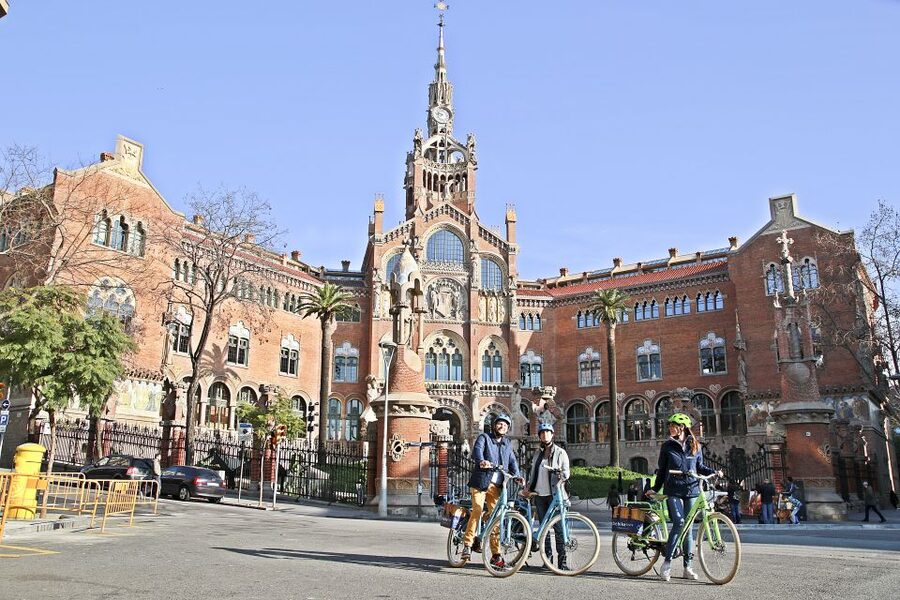
The tour includes a regular bike or an electric bike depending on the option you choose, plus helmet, bottle of water, and insurance. That package is part of the value: you’re paying for transportation support, not just a lecture.
In terms of effort, the ride is designed to be manageable. The route is mostly easy, and even guides who note a few uphill sections also emphasize that it stays enjoyable. If you’re comfortable biking in general, you’ll likely be fine—especially on the e-bike, which takes the edge off any steeper moments.
Two notes to keep it realistic:
- It’s not suitable for people with heart problems.
- Kids can join in specific ways: under 6 years can ride free in a child safety seat on a parent’s bike, and children up to 20 kg and 130 cm can ride at no cost in the same style of seat.
If you want the most relaxing experience, the e-bike option is the easiest way to spend your attention on architecture and street life instead of pedaling.
Arc de Triomf: The Neo-Mudéjar Opening Act
Your first architectural “wow” comes right away at the Arc de Triomf. You’ll have a photo stop and a guided look at its neo-Mudéjar style, which is a strong way to begin the tour because it sets up the broader theme: Barcelona’s design world is a mix of influences, not one single look.
Why this stop works early: it gives you a visual reference point before you move through neighborhoods. When the guide later connects Gaudí’s style to the city’s evolving taste, you’ll have something concrete to picture.
From here you ride toward Parc de la Ciutadella, keeping momentum without turning the day into a long walking tour.
Parc de la Ciutadella: The Fountain and a Young Gaudí Thread
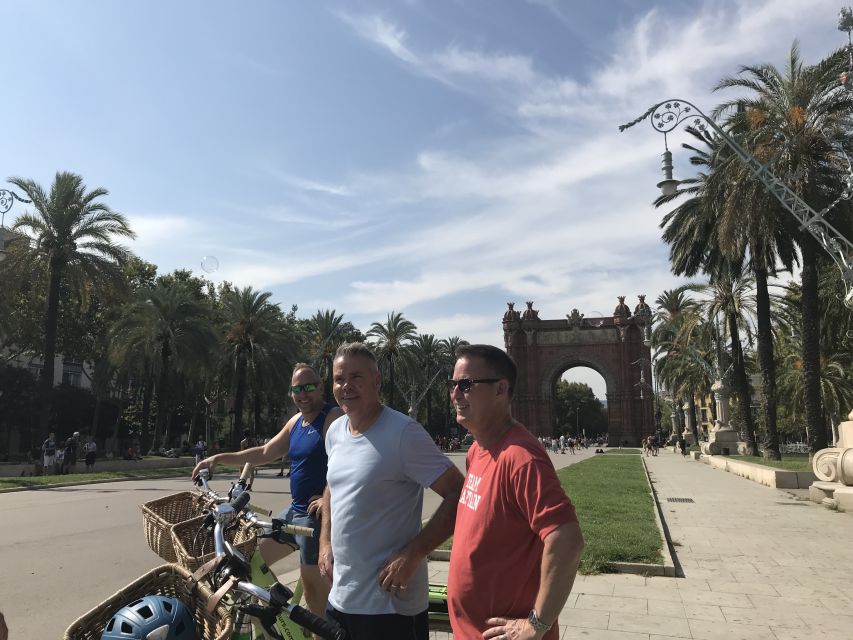
In Parc de la Ciutadella, you’ll get another photo stop and guided time, plus some free time. The highlight is an Italian-inspired fountain, and the tour also points out possible contributions from a young Gaudí.
This is one of those moments where the guide’s storytelling matters. Seeing a fountain inside a major park helps you understand how Barcelona’s culture shaped design long before the famous buildings reached their final form.
The practical takeaway: parks are where you can reset your legs. Even if you’re riding an e-bike, you’ll appreciate a calmer stretch and a break where you can stand, look, and take photos without rush.
El Born and Mercat del Born: Medieval Streets, Modern Energy
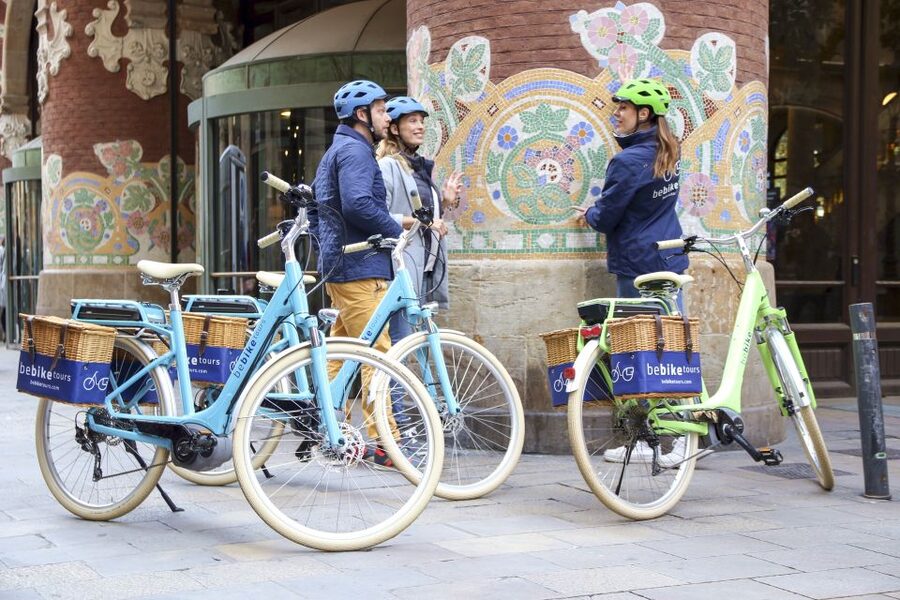
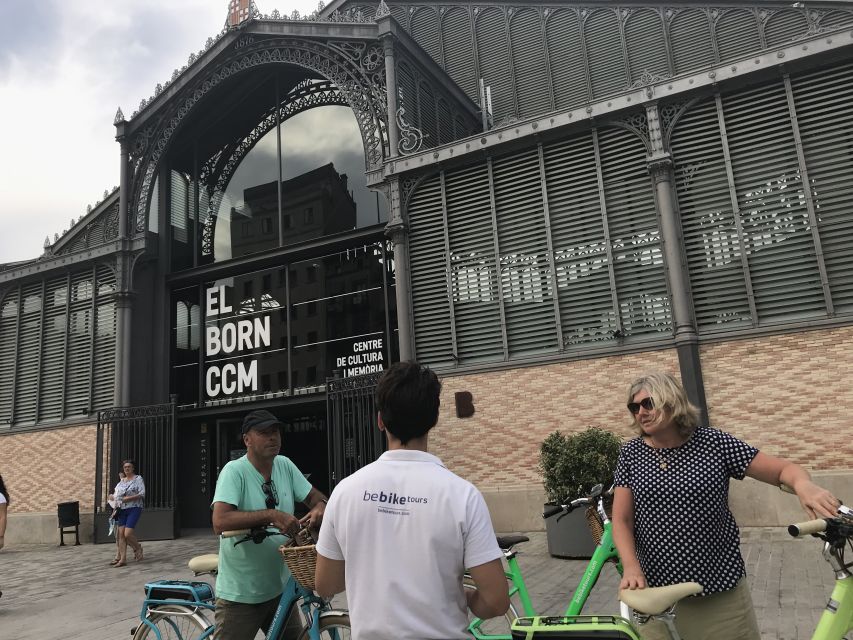
El Born is colorful and compact—perfect for a bike tour because you can move quickly while still making frequent stops. You’ll have a photo stop and guided time here, then a focused look near Mercat del Born.
What I like about including this area: it’s not only about what’s famous. It’s also about what Barcelona feels like at street level. El Born used to be a seaside resort for medieval aristocracy, and even when you’re just riding through now, that past helps explain why the neighborhood developed into an arts-and-culture magnet.
Mercat del Born adds a sensory layer. Markets are where you see daily rhythms. Even without a long food stop built into the tour, being near the market keeps your tour from feeling like a museum route only.


St. Mary of the Sea Cathedral and Plaça Sant Jaume: Two Anchors of Old Barcelona
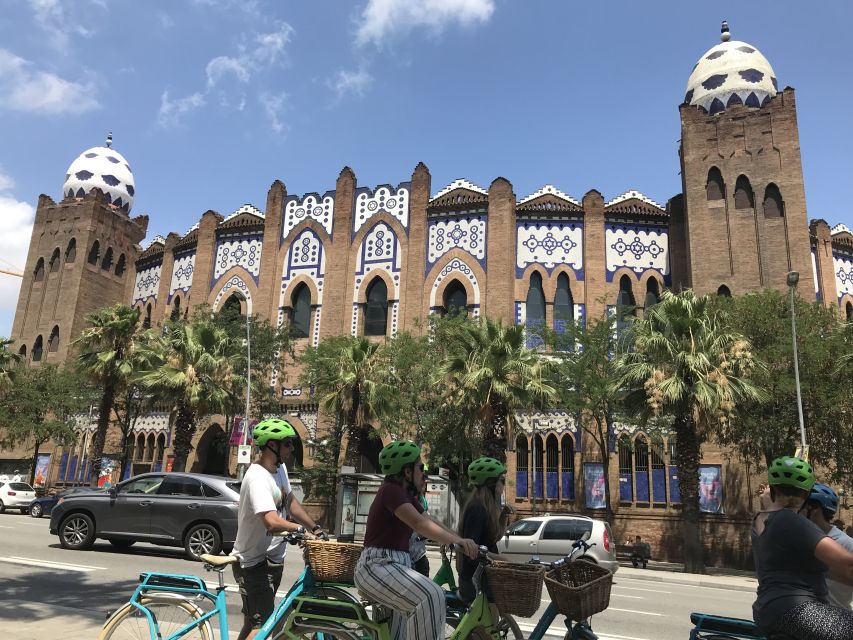
As the ride continues, you’ll pass by St. Mary of the Sea Cathedral and then Plaça Sant Jaume. Each stop is a photo moment with guided context.
These squares and churches matter because Gaudí’s work doesn’t exist in a vacuum. Barcelona’s older political and religious centers shape the city’s layout, and your brain starts to map how everything connects. On a bike, you can cover distance fast but still take in key “orientation landmarks.”
Small-group pacing helps here. With 2 to 15 people, you’re not constantly waiting for a long line to move. You’re more likely to get quick explanations at each stop without the guide feeling rushed.
Casa Calvet and Gràcia: Catalan Modernism You Can Actually See
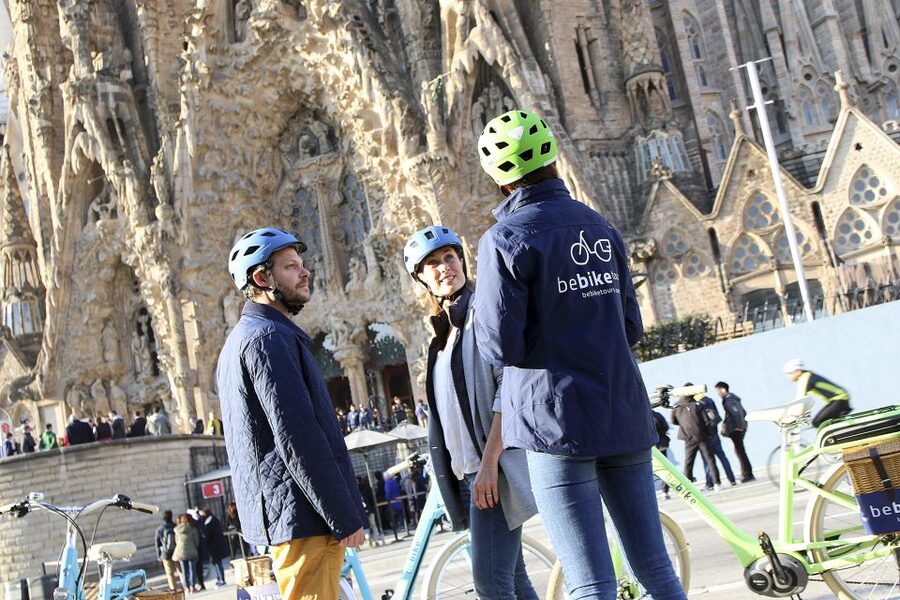
One of the most interesting parts of the tour is how it shifts into Gràcia and Catalan Modernism. You’ll visit Casa Calvet, designed by Gaudí and declared a Place of Cultural Interest in 1969.
Casa Calvet is valuable because it’s not just another famous facade in a list. It helps you see how Gaudí’s approach to ornament and structure plays out in residential design, not only in the “big ticket” sites that grab headlines.
Then the tour moves deeper into Gràcia, where you’ll learn about its unique Catalan Modernism style and ride through Vila de Gràcia, described as Barcelona’s cool suburb and its true administrative and commercial center.
A highlight here is the bell tower: it’s 33 meters tall and crowned with the famous bell of the Marieta. That’s the kind of detail that makes the tour feel specific rather than generic—something you’d miss if you were just walking past.
Casa Vicens and Passeig de Sant Joan: Setting Up the Sagrada Familia Reveal
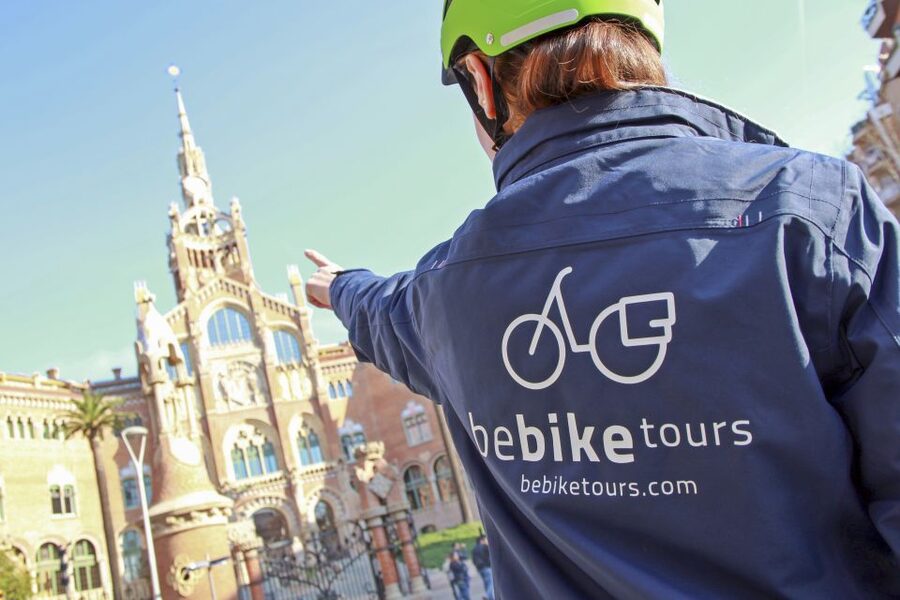
You’ll also get views of Casa Vicens, considered one of the first buildings of the Art Nouveau movement and the first house designed by Gaudí. Even if you’re only seeing it from the road, it’s a helpful comparison point: it shows where Gaudí’s language begins to form.
Then you’ll head along Passeig de Sant Joan toward the Sagrada Familia. This stretch is more than a commute. It acts like a build-up.
When the city’s architecture starts shifting toward Gaudí’s most famous work, your eyes read the street differently. Instead of seeing random buildings, you start noticing patterns: the shapes, the rhythm, the way the city’s geometry guides the imagination.
Sagrada Familia: The Unfinished Masterpiece, Up Close
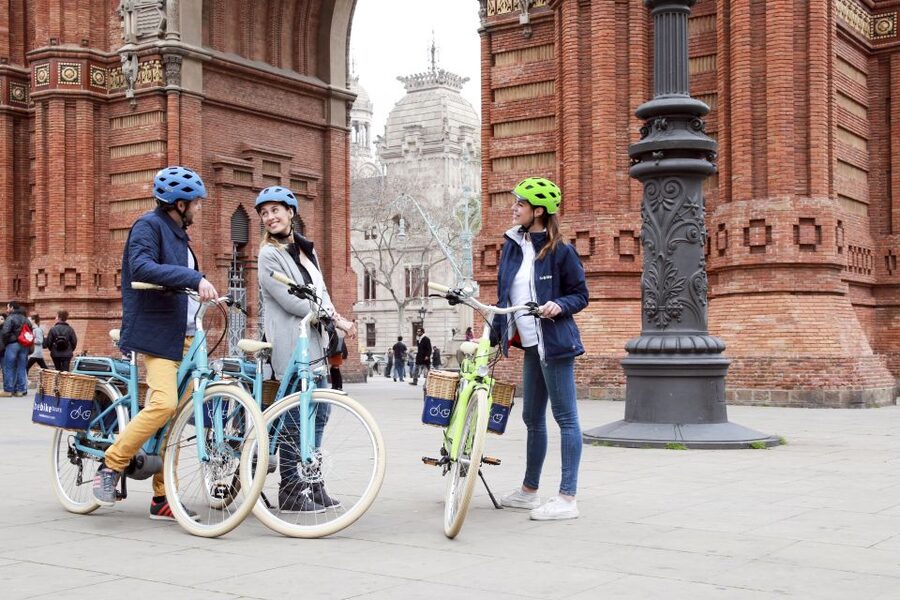
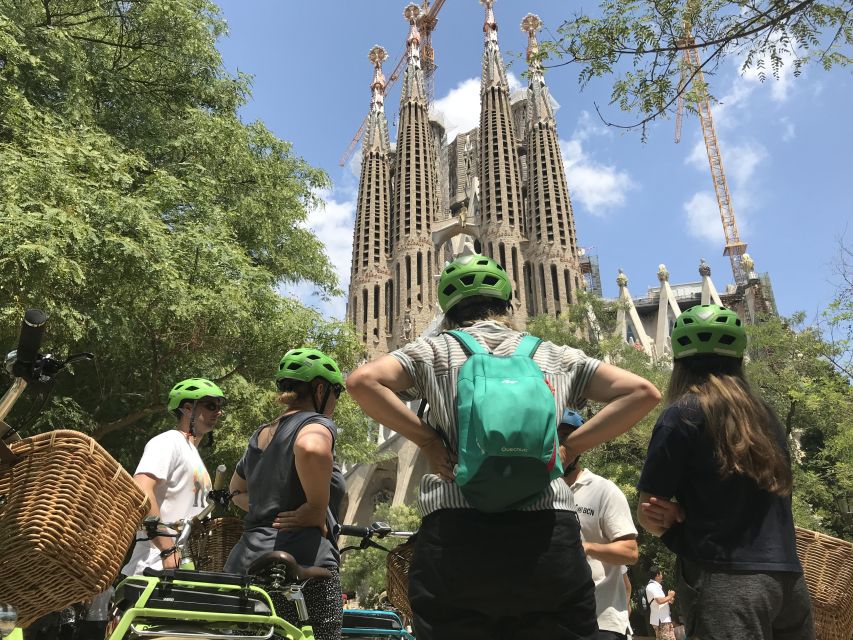
Your final big architecture stop is the Sagrada Familia. You’ll have a photo stop and guided visit, plus some free time.
The key fact on this stop is that it’s been under construction since 1883. That alone changes how you experience it. You’re not just looking at a finished building; you’re seeing a long-running design project and getting a sense of how ideas evolve over decades.
What I like about having both guided time and free time here: the guide can frame what you should notice (spires and facades are the main focus), then you can spend your own moments finding the angles that click for you.
One practical note: you’ll come off a bike ride, so take a minute before photographing. Look first, breathe second, then shoot. It keeps your time from turning into a frantic checklist.
The Guide Factor: Small Groups, Real Flexibility, and Quick Fixes
This kind of tour lives or dies on the guide. The good news: the guide roster includes names you’ll recognize from past participants, including Sergio, Peter, Sergey, Liuba, Alex, Marina, and Maria.
And the difference shows up in details:
- You get explanations you can actually follow rather than a rapid-fire monologue.
- Some guides tailor questions and pacing to biking skill level, including suggestions like biking toward the beach when it fits the group.
- Bikes are maintained well, and when issues happened, support was fast. In one case, a mechanic was sent out quickly after a bike problem, and the group still got back to enjoying the ride.
That last point matters more than it sounds. If you’re on a short, timed tour, getting stuck without help can ruin the day. Having a setup that responds quickly is a big quality signal.
Also, you’ll ride with small groups (2 to 15). That’s why the tour can feel more personal. You’re not trapped listening to someone talk at a wall of strangers; you can ask questions and get answers that match what you care about.
Price and Value: How $28 Turns Into More Than a Ride
At $28 per person for 2.5 hours, you’re paying for a bundle: bike (regular or electric), helmet, bottle of water, insurance, and a local guide.
Here’s the practical value math I care about on city tours:
- The guide saves time by choosing the right streets and stops.
- The bike saves effort and keeps you from spending half your day on logistics.
- Insurance reduces the stress factor. You’re covered as part of the deal.
If you tried to DIY this route, you’d spend time figuring out transportation and safe navigation, and you’d still need to pay for guided context if you care about Gaudí’s why. This tour gives you a focused route in a short window, which is exactly when $28 feels like a bargain rather than a gimmick.
Who This Gaudí Bike Tour Suits Best (and Who Should Skip)
This tour is a strong fit if:
- You want an efficient introduction to Gaudí across multiple neighborhoods.
- You like architecture but don’t want to pace yourself like you’re doing a full-day museum crawl.
- You want a bit of story with your photos, especially around Modernism and Sagrada Familia.
It’s probably not the right fit if:
- You have heart problems (explicitly not suitable).
- You want a purely pedestrian experience with lots of wandering and unstructured stops.
- You’re uncomfortable riding near traffic at points, even though the tour is designed to keep the ride manageable.
Kids can join with the child seat setup described above, but the tour still requires adult bike handling and coordination. If you’re traveling with kids, the e-bike option can make things easier for the adult rider.
Should You Book This Gaudí E-Bike Tour?
If you’re visiting Barcelona for a first time and you want Gaudí without turning your trip into a full-day logistics puzzle, I think you should book this. The best reasons are simple: you get major architecture in a tight timeframe, and the e-bike option makes the ride comfortable enough to enjoy the city instead of measuring your energy every block.
I’d book it with the e-bike if you’re even slightly unsure about hills or longer rides. I’d also book it if you like a guide who can answer questions in multiple languages and keep the group moving at a calm pace.
If you’re someone who strongly prefers long, slow walking tours only, you might find the bike time limits your wander-style. But for most people, this is a smart, practical way to see Barcelona’s Gaudí side with momentum and context.
FAQ
Where is the meeting point for the Barcelona Gaudí bike tour?
Meet your guide at Passeig de Lluís Companys, 10.
How long is the tour?
The tour lasts 2.5 hours.
What does the tour cost?
The price is $28 per person.
What bike options are available?
You can choose a regular bike or an electric bike, depending on the option selected. Helmets are included.
What’s included in the price?
Included items are the bike (regular or electric), a local guide, helmet, insurance, and a bottle of water.
What languages do the guides speak?
The tour is available with live guides speaking Spanish, English, French, German, Italian, Russian, Dutch, and Portuguese.
Is the tour suitable for children?
Kids under 6 can join for free and ride in a child safety seat on their parent’s bike. Children up to 20 kg and 130 cm can also take part at no cost in the child seat on a parent’s bike.
Is the tour suitable if I have heart problems?
No. The tour is not suitable for people with heart problems.
How do I get there by metro?
The nearest station is Arc de Triomf (L1, red line). Exit and walk about 3 minutes along Passeig de Lluís Companys toward Passeig de Sant Joan; the office will be on the left.