REVIEW · BARCELONA
Barcelona Gothic Quarter History Tour
Book on Viator →Operated by WONDER WANDER · Bookable on Viator
Old streets, new stories. This Barcelona Gothic Quarter History Tour takes you through the layers of the city—Roman burial grounds, medieval churches, and power struggles—guided by Andrea in English. You’ll also get the kind of local detail that makes the dark alleyways feel less spooky and more like a living textbook.
What I liked most? Two things: the small group size (max 8) and Andrea’s talent for spotting the details you’d totally miss on your own. The walk also strings together a surprising range of topics—from Roman forums to the Spanish Civil War—without turning the whole trip into a lecture.
One thing to consider: it’s a 2-hour walking route with short stops (often 5–15 minutes each), and the tour depends on good weather. If you hate being on your feet or you want long, slow museum-style time, you may feel a bit rushed.
In This Review
- Key Highlights You’ll Actually Feel
- Why the Gothic Quarter Works Best With a Guide
- Meeting at Carrer de Duran i Bas (and Finishing at Plaza Reial)
- The 2-Hour Pace: How Short Stops Keep It Fun
- MUHBA Via Sepulcral Romana: Roman Burial Grounds in Modern Barcelona
- Plaza del Pi and Santa María del Pi: Catalan Gothic With Real Clues
- Barcelona Cathedral: Not Just a Landmark, a Story Engine
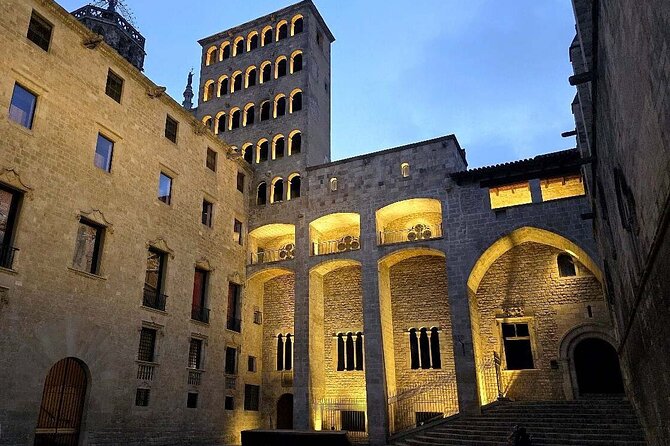
- Placa del Rei: Roman Past, Crown of Aragon, and the Inquisition
- MUHBA Temple d’August: A Roman Forum Clue You’ll Notice Later
- Placa Sant Felip Neri and the Spanish Civil War
- Catalan Judaism: Stories That Don’t Get Told by Default
- Plaza Reial: A 200-Year-Old Finish With Evening Energy
- Price and Value: What $57.99 Really Covers
- Who This Tour Is Best For (and Who Might Skip It)
- Should You Book This Barcelona Gothic Quarter History Tour?
- FAQ
- How much is the Barcelona Gothic Quarter History Tour?
- How long is the tour?
- What time does the tour start?
- Where does the tour start and where does it end?
- What is the group size?
- Is the guide available in English?
- Are admission tickets included for the stops?
- What happens if the weather is bad or I need to cancel?
Key Highlights You’ll Actually Feel
- MUHBA Via Sepulcral Romana: Roman burial-site atmosphere in the middle of the city.
- Plaza del Pi + Santa Maria del Pi: Catalan Gothic context plus quick stops for visual clues.
- Barcelona Cathedral + Placa del Rei: How medieval Barcelona fits into the bigger European story.
- MUHBA Temple d’August: A Roman-Forum link you’ll see in the urban layout.
- Placa Sant Felip Neri: Spanish Civil War stories in a place that looks timeless.
- Plaza Reial at the end: A long, classic evening-facing square to wrap up your bearings.
Why the Gothic Quarter Works Best With a Guide
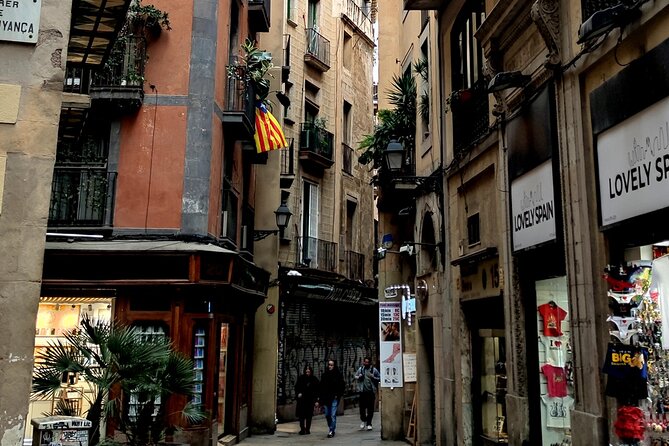
The Gothic Quarter looks dramatic on its own. Narrow streets. Heavy stone facades. Corners that feel like they were designed for secrets. But that same drama can trick you—without context, a lot of it just becomes scenery.
With Andrea guiding you, the neighborhood starts behaving like a map of time. You see how Roman Barcelona leaves clues in the modern street grid, how medieval rulers shaped what you stand in front of, and how later events still echo in place names and monuments. You won’t just look up—you’ll know what you’re looking at.
This is also the kind of tour where your brain stays busy in a good way. Andrea brings fun facts and local insider points, and the pace is light enough that you can keep absorbing new info without feeling exhausted. In the walk, I especially liked the way she connects stories to visible details, like coats of arms, street patterns, and the mood of each square.
You can also read our reviews of more tours and experiences in Barcelona.



Meeting at Carrer de Duran i Bas (and Finishing at Plaza Reial)
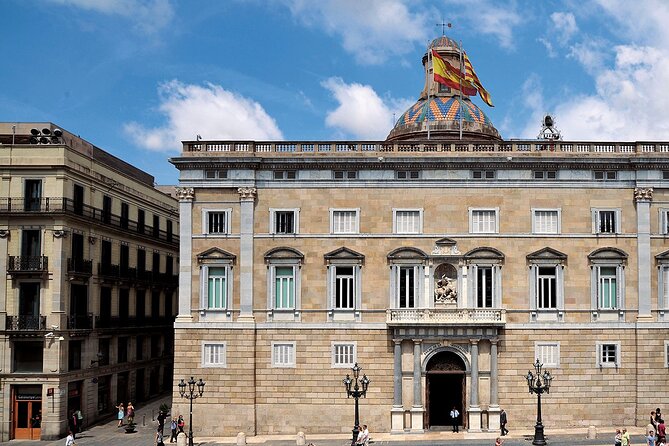
The tour starts at Carrer de Duran i Bas, 11, in Ciutat Vella, and finishes at Plaça Reial. The start time is 4:00 pm, which is smart here: you get late-day lighting on old stone, then end in a square that’s made for lingering.
Because it ends at Plaza Reial, you can smoothly transition into your own evening plans. That matters. Many tours dump you back in the middle of nowhere. Here, you’re left in a real public space with plenty of atmosphere and an easy next step.
A couple practical notes I’d plan around:
- It’s a walking tour with multiple short stops, so wear shoes that handle uneven sidewalks.
- The tour is near public transportation, which helps if you’re coming from another part of Barcelona.
- It’s offered in English (with the guide also speaking Spanish), so language shouldn’t be a headache.
The 2-Hour Pace: How Short Stops Keep It Fun
This is an approximately 2-hour experience, and the time is distributed in small chunks—often 5 to 15 minutes at a place. That might sound quick, but it’s a good match for the Gothic Quarter. If you tried to slow everything down, you’d spend the whole day just arriving at the next corner.
Instead, you get focused stops that answer a real question: What is this place, and why should I care? Andrea’s explanations are timed to what you can actually see right then, not just facts thrown at you. And because the group is capped at 8, the Q&A and pacing stay human.
One extra perk: I found that shorter stops make it easier to keep energy up. After a few minutes of story, you’re back outside, moving, seeing, and resetting your eyes. It’s a tour that keeps the neighborhood alive instead of turning it into a single long, heavy moment.
MUHBA Via Sepulcral Romana: Roman Burial Grounds in Modern Barcelona
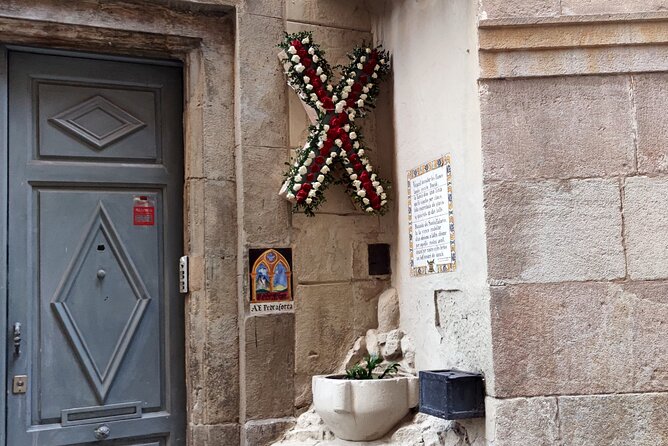
Your first meaningful stop is MUHBA Via Sepulcral Romana, a Roman cemetery area. Standing near Roman burial spaces changes how you read the streets around you. This isn’t just architecture—it’s a reminder that people lived, worked, and died here long before today’s Gothic Quarter look.
Andrea’s focus at this stop is the “how” and the “why,” not just the label. You’ll hear how the Roman presence shaped the city’s footprint and how archaeological areas fit inside Barcelona’s urban life. Even if you’ve visited other ruins in other cities, I think the surprise here is scale: it feels like the Roman world got folded right into modern streets.
The stop is listed as about 5 minutes, so treat it as your opening key. Don’t expect a slow, museum-style visit. You’re meant to take a few strong impressions, then carry them forward into the next stops.
Plaza del Pi and Santa María del Pi: Catalan Gothic With Real Clues
Next up is Plaza del Pi, with a focus on Catalan Gothic and Santa María del Pi. This area is perfect for a guided explanation because the style can be subtle if you don’t know what to notice. Andrea helps you connect the church’s look to the bigger Catalan Gothic story—what makes it distinct, and why the details matter.
There’s also time to talk about the “treasures” of Petrixol street. Even without wandering for hours, that’s the kind of pointer that pays off later. When you’re told what to look for, you don’t just walk past pretty streets—you start hunting for meaning.
If you’re the type who likes to keep a short list in your head—Roman, medieval, power, faith—this stop is where that list becomes tangible. The church setting gives you a clear anchor point while the surrounding streets offer your next cues.




Barcelona Cathedral: Not Just a Landmark, a Story Engine
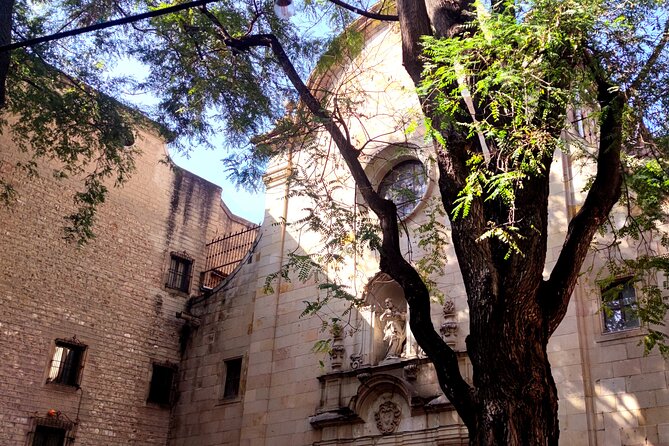
At Barcelona Cathedral, the emphasis is on the history of the cathedral itself. That’s a bigger deal than it sounds. Cathedrals can blur together in travel photos, but on foot—especially with an explanation—you start seeing why this building mattered to the city’s identity and politics.
The cathedral stop is about 10 minutes, which again means it’s a “focus window,” not a full interior deep dive. Use it to get your bearings: what era you’re looking at, what role the cathedral played, and how it connects to the rest of the neighborhood you’ll cover.
If you want more time inside the cathedral after the tour, you’ll know what to look for first, because Andrea gives you the story spine. That’s one of the quiet advantages of a guided walk: it helps you decide where you want to spend your own extra hour.
Placa del Rei: Roman Past, Crown of Aragon, and the Inquisition
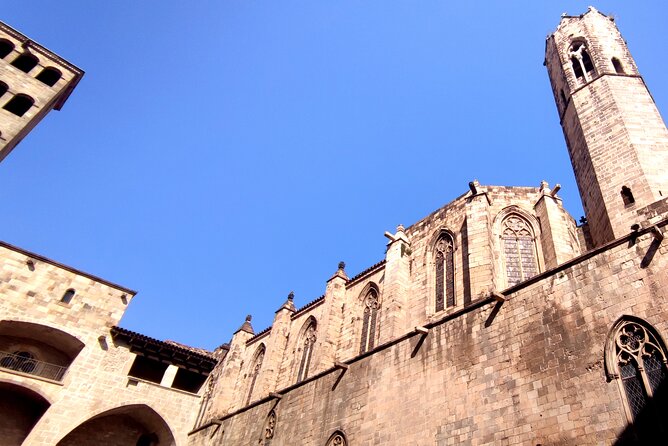
Placa del Rei is where the tour’s tone shifts into bigger power struggles. Here you’ll talk about the Roman past and then jump into medieval authority, including the Crown of Aragon and the inquisition.
This is the stop I’d think of as the “politics intersection.” It’s not just about who built what. It’s about how different eras used the same city space for control. When you understand that, the square feels less like a pretty stop and more like a stage.
One practical thing: the meaning of a place like this is easier to grasp if you look around. Andrea’s approach works because you’re not stuck facing one wall. You’re taking in the layout and letting the story explain the geometry.
MUHBA Temple d’August: A Roman Forum Clue You’ll Notice Later
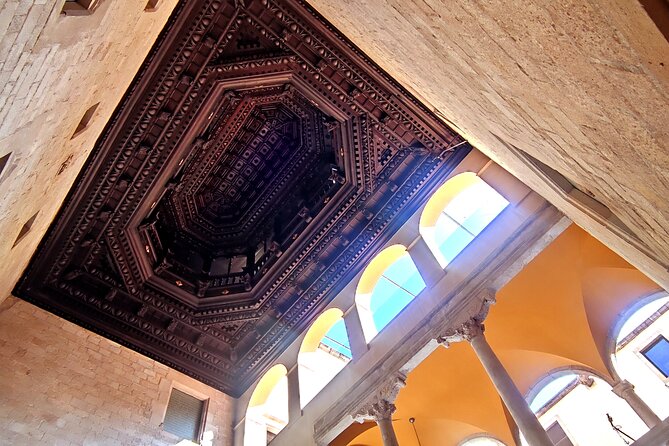
Then you head to MUHBA Temple d’August, a temple that was part of the Roman forum complex. Even if you’ve heard of Roman forums in general, it’s different seeing how it fits into real city space.
This stop is short—about 10 minutes—but it’s powerful because the city structure is your reference point. Andrea helps connect what you’re standing near to how Roman civic life was organized. You’ll start recognizing the “forum logic” in the way the area opens up and how paths lead you through the district.
Think of this as a bridge moment. After Placa del Rei and its medieval power stories, the Roman forum perspective adds depth: you see continuity and change at the same time. That’s what makes the tour feel more than a checklist.
Placa Sant Felip Neri and the Spanish Civil War
At Placa Sant Felip Neri, the story turns to the Spanish Civil War. This is where the tour becomes emotionally real. It’s not always easy to link a modern-looking square to 20th-century conflict unless someone gives you the bridge.
Andrea handles that connection by anchoring the event in the place. The square stops being just a photo spot and becomes a point in time where history landed on everyday life.
This stop is listed as about 10 minutes, so don’t expect a long narrative. Expect clear, focused context that helps you understand why people remember and how public spaces can carry memory forward.
Catalan Judaism: Stories That Don’t Get Told by Default
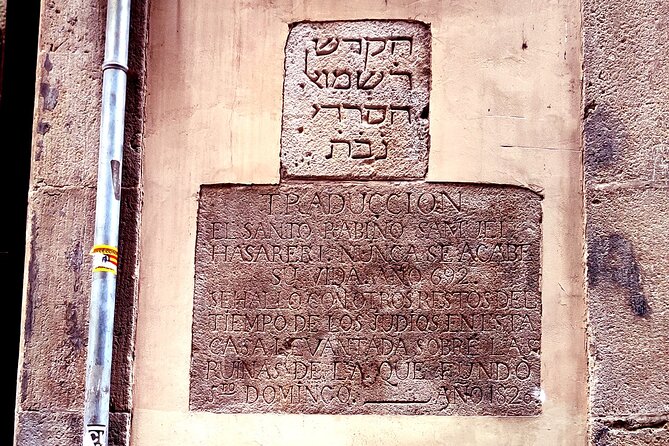
There’s also a dedicated pause for Catalan Judaism during the walk. Since no specific named landmark is listed in the tour info you provided, I’d treat this as a guided segment where Andrea explains heritage, community presence, and how that history fits into the Gothic Quarter.
What I like about including this is that it broadens the tour beyond the usual cathedral-and-castle route. The Gothic Quarter is often framed only through medieval Christian architecture. Adding Catalan Judaism gives you a more complete picture of who lived in the area and how layers of culture shaped the neighborhood.
If this topic interests you, you’ll likely want to do a bit more independent reading afterward. But even without that, the guided stories make the district feel more accurate.
Plaza Reial: A 200-Year-Old Finish With Evening Energy
The tour closes at Plaça Reial, where you’ll discover the history of this amazing plaza and finish around 10 minutes of focused time there. Plaza Reial is a great ending choice because it’s the kind of place where you can slow down after the walk.
From a practical standpoint, it also gives you an easy handoff to your own plans. You can continue exploring, grab a drink, or just watch people. The tour gives you the historical context; Plaza Reial gives you the atmosphere to decompress.
I also liked the way this ending felt like a reward. After Roman traces, Gothic details, and darker stories, stepping into a public square with a classic Barcelona vibe feels like a reset for your senses.
Price and Value: What $57.99 Really Covers
The tour costs $57.99 per person, runs about 2 hours, and includes all fees and taxes. You’re also getting an in-person guide in English (and Spanish), with a mobile ticket.
Here’s how I’d judge value: you’re paying for interpretation. Several stops are listed with admission ticket free, including MUHBA Via Sepulcral Romana, Plaza del Pi, Barcelona Cathedral, Placa del Rei, MUHBA Temple d’August, and the plazas that follow. That means your main “cost” is the guided time—not extra ticket fees piled on mid-tour.
Is it worth it for everyone? If you love history but hate sorting it out yourself, yes. If you only want photos and don’t care about context, it may feel like you’re paying for talk. But if you tend to enjoy stories tied to real place details, this price lands in a sensible spot.
One more value point: the max group size of 8 makes your money work harder. You’re less likely to get lost in the noise of a big crowd.
Who This Tour Is Best For (and Who Might Skip It)
This tour is a strong fit if:
- You want a guided orientation to the Gothic Quarter without spending half your day on it.
- You like walking tours but prefer short, structured stops over one long grind.
- You enjoy connecting different time periods in one neighborhood—Roman, medieval, and 20th century.
It may be less ideal if:
- You want lots of time inside buildings rather than quick exterior context and plaza storytelling.
- You dislike walking or being outdoors for the full 2 hours.
- Weather matters a lot to you—this experience requires good weather.
Based on what I’ve seen from Andrea’s style in the feedback you provided, the experience also suits people who appreciate a guide who is patient and detail-focused. Andrea’s enthusiasm and the way she shares fun facts can make the tour feel more like a conversation with a smart local than a scripted presentation. One note from that same spirit: some comments mention delightful bites, so if food stops appeal to you, this walk tends to offer more than just sight-seeing.
Should You Book This Barcelona Gothic Quarter History Tour?
If you’re aiming to understand the Gothic Quarter fast—without reducing it to random landmarks—I think this is a smart booking. The combination of small group size, a guide with real energy, and a route that spans Roman to Civil War to Catalan Judaism is what makes it different from the basic “walk and point” style tours.
Book it if you want your first Barcelona Gothic Quarter experience to come with context you can carry into the rest of your days. Consider skipping or pairing it with extra independent time if you’re the kind of visitor who wants long stays inside major monuments.
Either way, start with good shoes, bring a bit of curiosity, and let Andrea do what guides do best here: turn stone and street names into a story you can actually follow.
FAQ
How much is the Barcelona Gothic Quarter History Tour?
It costs $57.99 per person. The price includes all fees and taxes and an in-person guide (English and Spanish). Private transportation is not included.
How long is the tour?
The tour lasts about 2 hours.
What time does the tour start?
The start time is 4:00 pm.
Where does the tour start and where does it end?
You meet at Carrer de Duran i Bas, 11, Ciutat Vella (08002). The tour ends at Plaça Reial (Pl. Reial, Ciutat Vella, 08002).
What is the group size?
The tour has a maximum of 8 travelers.
Is the guide available in English?
Yes. The tour is offered in English, and the guide is listed as speaking English and Spanish.
Are admission tickets included for the stops?
The tour info lists admission ticket free for the stops included, and the price covers all fees and taxes.
What happens if the weather is bad or I need to cancel?
The experience requires good weather. If it’s canceled due to poor weather, you’ll be offered a different date or a full refund. Free cancellation is available up to 24 hours in advance for a full refund.