REVIEW · SPLIT
Private Split History Tour with Local Wine & Food Tasting
Book on Viator →Operated by Black Apple Tours · Bookable on Viator
Split slows your day fast. This private History Tour with Local Wine & Food Tasting strings together the best walking highlights in the center of Split, from the Riva harbor to the famous palace parts, and finishes with a regional wine tasting at Zinfandel. I especially like how the tour gives you fast clarity on the Roman world through Diocletian’s substructures, and then switches gears to a satisfying food-and-wine stop with prosciutto, cheese, olive oil, and bread. One drawback to consider: it relies on good weather, and some of the palace areas are best enjoyed at a casual walking pace.
You’ll meet at the Brass Gate (Porta Aenea) and end at People’s Square (Pjaca), so you won’t feel trapped in a loop. It’s a private setup, offered in English, and with pickup available you can make this feel like a low-effort way to learn the city without spending your whole afternoon checking maps.
In This Review
- Key Highlights You’ll Actually Feel on the Ground
- A 2-Hour Split Story From Palace Stones to Zinfandel Wine
- Starting at the Riva: Split’s Living Room, Not Just a Waterfront View
- Entering Diocletian’s Palace Substructures Without Getting Lost in Details
- Peristyle and the Roman Main Square: Columns, Temples, and Power
- The Golden Gate and Gregory of Nin: The Palace’s Most Recognizable Entrance
- Narodni Trg (Pjaca): Where Split’s Medieval Heart Still Shows Up
- Zinfandel Food & Wine Bistro: Regional Wine Tasted With Real Local Bites
- Pickup, English, and a Private Group That Keeps the Day Flexible
- Price and Value: $140.77 Per Person for a Two-Part Day
- Who This Tour Fits Best (and Who Might Prefer a Different Plan)
- A Quick Practical Reality Check Before You Book
- Should You Book This Private Split History Tour With Local Wine?
- FAQ
- Is this tour private, or will I be grouped with other people?
- How long is the tour?
- Where do I meet, and where does the tour end?
- Can you arrange pickup?
- Is the tour offered in English?
- What’s included in the wine and food tasting at Zinfandel?
- Are service animals allowed?
- What happens if the weather is poor, or I need to cancel?
Key Highlights You’ll Actually Feel on the Ground
- Riva Harbor start: a real local-style introduction to Split, not a lecture from a distance
- Diocletian’s substructures: Roman engineering explained through how the palace controlled temperature
- Peristyle + Golden Gate: you see the palace’s main power layout in a short, focused walk
- People’s Square (Narodni Trg / Pjaca): medieval civic space that still works as a public meeting point
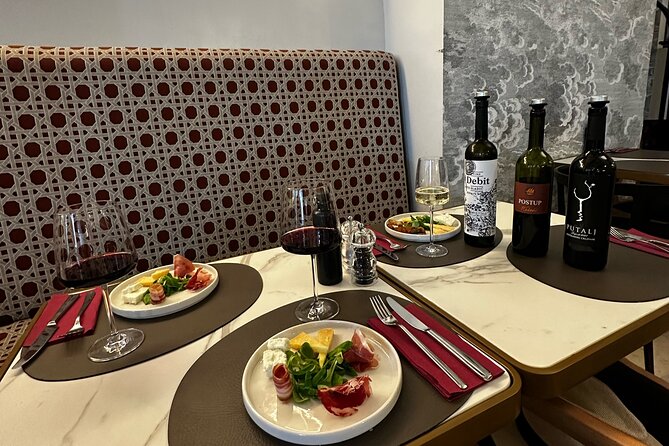
- Zinfandel wine tasting: regional wines paired with simple, classic bites
A 2-Hour Split Story From Palace Stones to Zinfandel Wine
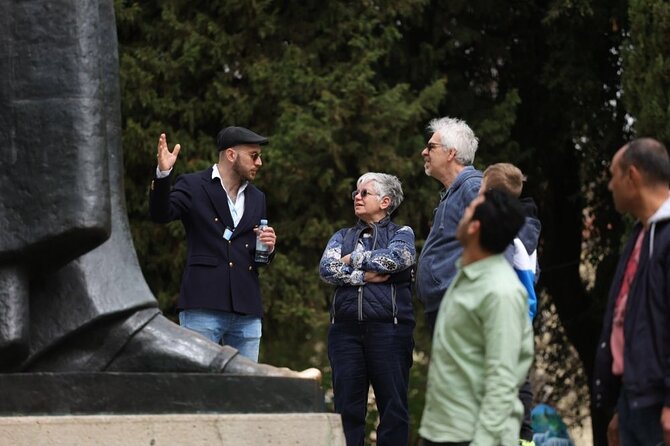
This is the kind of private walking tour that keeps your day from turning into random wandering. You get a structured route through Split’s most recognizable historical layers, but the pace stays friendly: about 2 hours 15 minutes total, with time built into each stop so you’re not rushing past the good parts.
The big win is how the tour balances two cravings at once. You’ll spend the first part reading the city through Diocletian’s Palace, then you shift into a relaxed finale at Zinfandel Food & Wine Bistro, where the tasting is paired with local bites and regional wines.
You can also read our reviews of more tours and experiences in Split.
Starting at the Riva: Split’s Living Room, Not Just a Waterfront View
The tour kicks off at the Riva Harbor, Split’s central waterfront promenade. Locals treat this spot like a social hub, a place to sit, talk, and do almost nothing on purpose. That matters because it sets the tone: you’re not only sightseeing, you’re learning how the city breathes.
You’ll likely feel the atmosphere immediately. Even if you’re only there for a short stop, the Riva gives you something practical: it helps you orient yourself so the rest of the walk makes sense. This is also a nice first stop because it’s easy to picture daily life here, before you step into the heavier Roman stuff.
Entering Diocletian’s Palace Substructures Without Getting Lost in Details
Next comes Diocletian’s Palace substructures, where the tour focuses on the Roman engineering behind the palace. You’ll go into the under-level spaces and learn how the complex was designed to act like a natural cooling system for food supplies like water, wine, and olive oil.
This stop is especially valuable if you’ve ever looked at old ruins and wondered what they were built for. Here, the payoff is immediate: the stones aren’t just decoration. They were part of a working system, designed to keep goods stored properly.
At around 10 minutes, you won’t be stuck inside for ages. You get the key concept, a sense of the space, and enough context to understand what you’re seeing when the story shifts back above ground.
Peristyle and the Roman Main Square: Columns, Temples, and Power
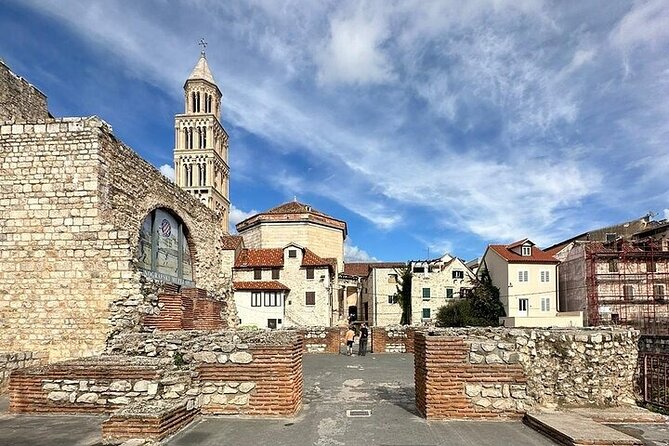
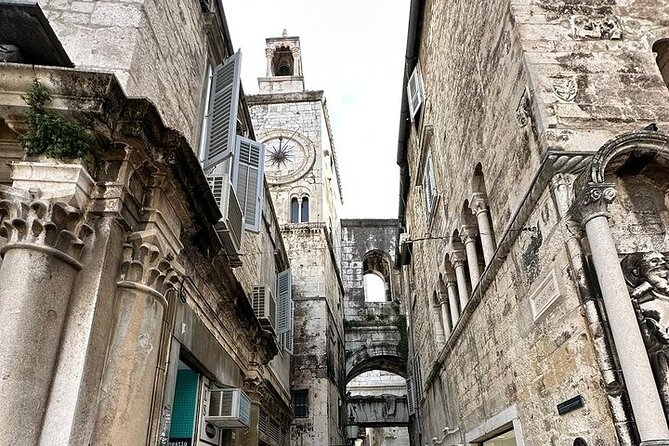
From the substructures, the route moves to the Peristyle of Diocletian’s Palace. This is the emperor’s main square, ringed by Egyptian columns and a sphinx. Nearby, you’ll also notice a bell tower and an ancient Roman temple dedicated to Jupiter.
What I like about this stop is that it’s visually dramatic without being complicated. In a few minutes, you can grasp that Diocletian’s palace wasn’t just a home. It was a governing space, built to project authority through architecture.
The Peristyle also functions as a reference point. Once you’ve seen it, you can better understand why the later entrances and landmarks feel so intentional.
The Golden Gate and Gregory of Nin: The Palace’s Most Recognizable Entrance
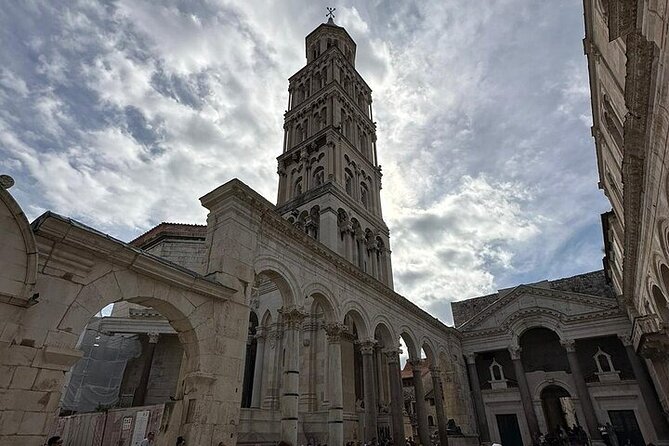
Then you’ll head to the Golden Gate, the palace entrance that most people can recognize. It’s described as the most recognized and luxurious approach, and the tour frames it as a strategic route into the palace world.
Right across from this gateway, you’ll find a major statue: Gregory of Nin by local sculptor Ivan Meštrović. That pairing is a great example of why Split feels layered. Roman power and later cultural identity sit side by side, and you can see how the city keeps reusing its most important spaces.
This is a short stop too, about 10 minutes. It’s ideal if you want the highlights, not a long detour.

Narodni Trg (Pjaca): Where Split’s Medieval Heart Still Shows Up
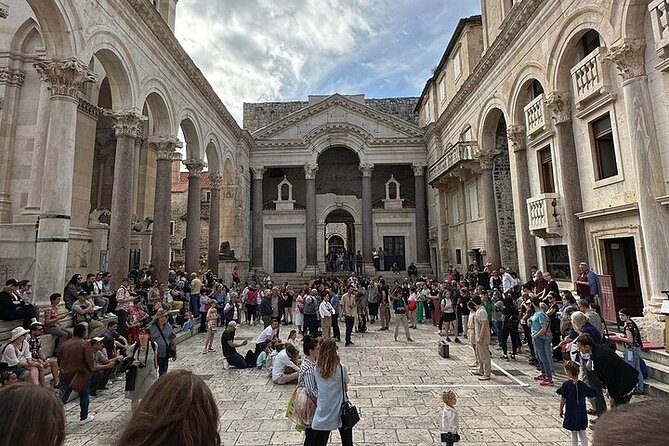
After the palace stops, you shift to Narodni Trg, also called People’s Square or Pjaca. This Venetian medieval square has a Gothic city hall, and the place still functions as a center for daily life.
I like ending or passing through a civic square like this because it makes the historical story feel grounded. You’re not only inside ancient structures. You’re stepping into a space that continues to host people in motion—locals meeting friends, sitting down, and treating the square like a living room.
It’s also a nice transition before the food and wine part. Your brain gets a break from Roman terms and starts digesting what matters most: where you’ll eat next.
Zinfandel Food & Wine Bistro: Regional Wine Tasted With Real Local Bites
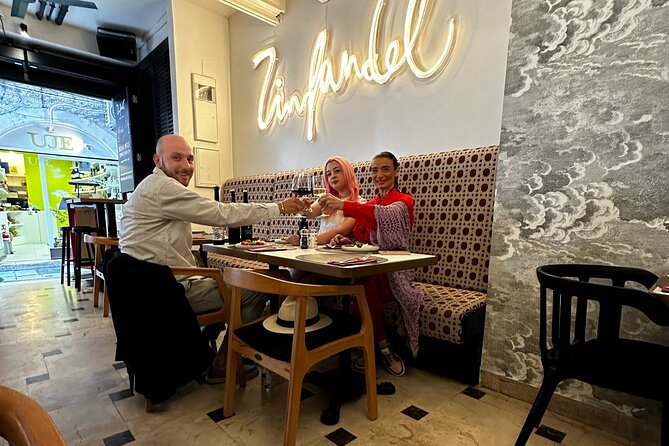
The final hour is the best kind of payoff: a local wine tasting at Zinfandel Food & Wine Bistro with Croatian wines exclusively from this region. The tasting comes with stories about where the wines come from, which helps you connect the flavors to something specific rather than tasting for tasting’s sake.
The food pairing is simple and believable: prosciutto, cheese, olive oil, and bread. This is the kind of spread that actually works well with wine because it doesn’t try to outshine the glass. And if you like to eat your way through a country, this stop gives you a small sample of Croatian staples without turning the evening into a full meal plan.
One practical note: this is a concentrated tasting moment. If you’re sensitive to alcohol, take it slow, drink water if offered, and don’t feel like you have to finish everything at once.
Pickup, English, and a Private Group That Keeps the Day Flexible
Because this is a private tour, your timing and attention can stay on your group. The route is set, but the guide can usually shape the pace to your interest level—more questions on the palace, or more focus on the wine story, depending on what you care about most.
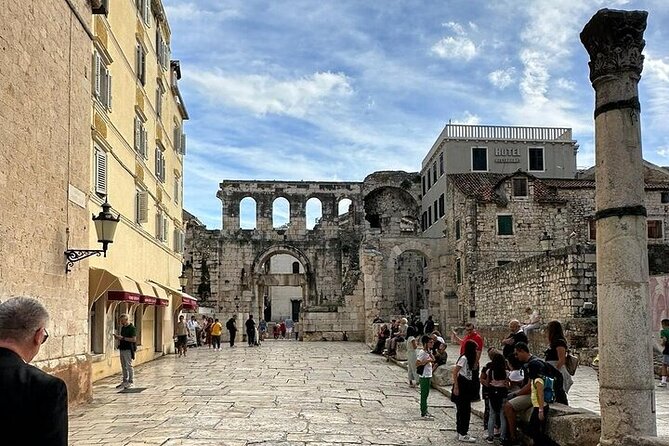
Pickup is available, which is a big deal in Split’s tight center. Meeting at Brass Gate (Porta Aenea) and ending at People’s Square also works well because you’re finishing near one of the city’s main pedestrian zones.
The tour is offered in English, and you’ll get a mobile ticket, which makes the start easier.
Price and Value: $140.77 Per Person for a Two-Part Day
At $140.77 per person, this isn’t a cheap “wander for an hour” option. You’re paying for two things that cost time and expertise: a guided history walk through high-impact sites and a structured wine-and-food tasting with regional wines.
Here’s how I judge the value. If you’re the type who wants the context (why these rooms matter, what the palace design accomplished), a guided route saves you effort. And if you’re the type who wants to taste Croatian wine in a way that feels guided and local—not a random drink order—then the Zinfandel segment justifies the price.
If you’re traveling with a smaller group or you want a relaxed afternoon instead of stitching together sights on your own, a private setup can be worth it. If you don’t care about history details and you mainly want wine, you could also compare against simpler wine-tasting options. But for a “start in the Roman core, end with a tasting,” this is a direct fit.
Who This Tour Fits Best (and Who Might Prefer a Different Plan)
This tour is a great match if you want:
- a structured way to see Diocletian’s Palace highlights without getting overwhelmed
- a wine tasting that includes both regional wines and classic Croatian bites
- a private format that keeps the walk comfortable and the pace adjustable
It might be less ideal if you dislike walking on uneven historic surfaces, or if your trip schedule is tight enough that a good-weather requirement could strain your plans.
Also, if your main goal is only beach time, this may feel too culture-forward. But if you want a day with two satisfying halves—history and food—this one hits the sweet spot.
A Quick Practical Reality Check Before You Book
Before you book, decide what you want your afternoon to do. This tour is designed to give you a coherent story of Split’s center, not to cover every single palace corner. The stops you’ll hit are the ones that help you understand the big picture fast, then you end with wine to reward that effort.
And because it runs through a compact central route, it’s best when you can accept a moderate walking rhythm. Put comfortable shoes on your packing list. It’s not a hike, but your feet will notice you did something.
Should You Book This Private Split History Tour With Local Wine?
Yes, if you want a guided Split that doesn’t waste time. I’d book it if you’re the kind of person who likes explanations that connect architecture to real life—like how those substructures were built to manage storage and temperature—and then you want a finale that tastes like Croatia, not just a sip and a shrug.
Skip it if you only want a loose self-guided stroll and don’t care about the story behind Diocletian’s Palace. Also reconsider if your schedule is fragile and you can’t handle weather-dependent changes.
If you do book, you’ll finish your walk in People’s Square with a clearer understanding of Split’s layers and a satisfied stomach from the wine-and-bites portion.
FAQ
Is this tour private, or will I be grouped with other people?
It’s a private tour/activity. Only your group participates.
How long is the tour?
It runs for about 2 hours 15 minutes.
Where do I meet, and where does the tour end?
You start at the Brass Gate (Porta Aenea) on Obala Hrvatskog narodnog preporoda 22, Split, and you finish at People’s Square (Pjaca).
Can you arrange pickup?
Pickup is offered. The tour also notes that you can speak by phone beforehand to set an easy meeting point.
Is the tour offered in English?
Yes, it’s offered in English.
What’s included in the wine and food tasting at Zinfandel?
The tasting includes local wine from this region, along with small bites such as prosciutto, cheese, olive oil, and bread.
Are service animals allowed?
Yes, service animals are allowed.
What happens if the weather is poor, or I need to cancel?
The experience requires good weather. If it’s canceled due to poor weather, you’ll be offered a different date or a full refund. You can also cancel for a full refund up to 24 hours in advance.