REVIEW · SPLIT
Split: History and Heritage Walking Tour
Book on GetYourGuide →Operated by Ancient Tours Split · Bookable on GetYourGuide
Split history hits fast, and this walk through Diocletian’s Palace makes 1700 years feel close. I love how the licensed guides turn Roman power, later centuries, and even today’s shops into clear, human stories. One watch-out: even with a small-group format, crowding can slow the pace if your group runs large.
You’ll see a rare mix of Roman architecture plus medieval fortifications and Gothic details, all inside Split’s core old-town maze. You also get bonus Game of Thrones pointers for show fans who want to spot the references in real streets.
This is an all-weather, all-ages walk, but it does involve steady walking on uneven ground. If you have high blood pressure or hearing limitations, this may not be the best fit.
In This Review
- Key highlights that make this tour worth your time
- From Peristil Square into Diocletian’s original city
- Price and value: $18 for the palace and the story behind it
- The real star: Diocletian’s Palace (and what’s still standing)
- Romanesque churches and the medieval layers that followed
- Fortifications and Gothic palaces: why Split looks the way it does
- Peristil Square moments: how to orient yourself quickly
- Game of Thrones bonuses in the old streets
- Guide quality: storytelling that makes the past usable
- What to bring (and what to avoid) so the walk stays pleasant
- Who should book this Split history walk?
- Should you book this Split: History and Heritage walking tour?
- FAQ
- Where is the meeting point for the Split History and Heritage walking tour?
- What sites and themes will the tour cover?
- Is admission or food included in the tour price?
- How much does the tour cost?
- Does the tour run in bad weather?
- What should I bring and wear?
- Is the tour suitable for everyone?
Key highlights that make this tour worth your time
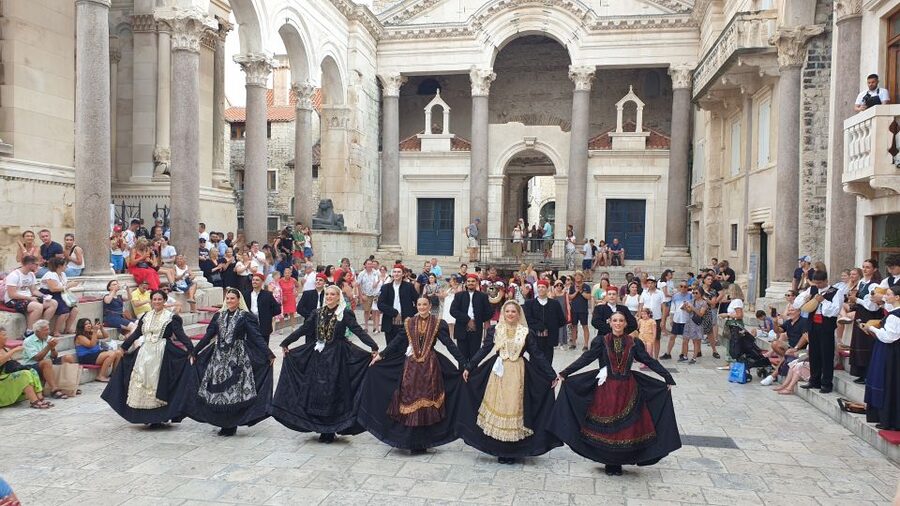
- UNESCO protected Roman palace: Diocletian’s world is the main stage, and you’ll learn what’s still here and why.
- 1700-year-old context, explained simply: from a nobody to absolute power, then what came after.
- Romanesque churches, medieval fortifications, and Gothic palaces: you get the big architectural shifts, not just one era.
- Show-fan bonus stops: Game of Thrones locations get pointed out as extra fun, not the whole mission.
- Guides with real teaching energy: reviews call out storytelling, laughs, and answers to questions.
- Easy start at Peristil Square: look for the yellow T-shirt or yellow umbrella under the north arch.
From Peristil Square into Diocletian’s original city
Split feels like it has layers. This tour gives you the map for those layers fast.
You start at Peristil Square, under the old Roman arch on the north side of the square, next to the Tourist Information Office. The easiest way to find the group is simple: look for the guide wearing a yellow T-shirt or holding a yellow umbrella. The tour ends back at the same meeting spot, so you don’t need to worry about tracking your way afterward.
Why this matters: when you’re dropped into Split’s old streets on your own, you can see impressive stone without knowing what you’re looking at. With a guide, you learn what belonged to Diocletian’s palace, what got modified later, and how everyday life grew right inside Roman walls.
And yes, it runs rain or shine, so bring real walking comfort (shoes) and weather protection (a hat helps even on sunny days).
You can also read our reviews of more tours and experiences in Split.

Price and value: $18 for the palace and the story behind it
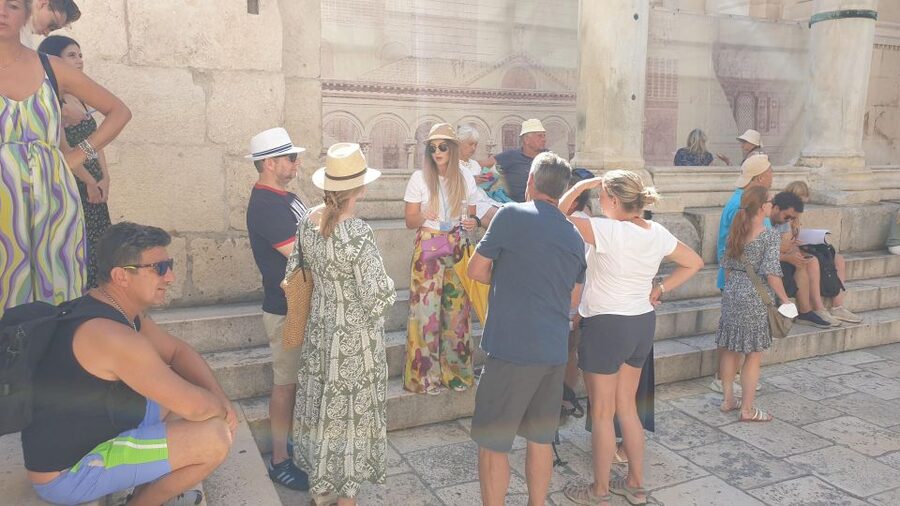
At $18 per person, this is priced like a “first orientation” experience. That’s exactly what it is: an efficient way to understand the central attraction—Diocletian’s Palace—plus the surrounding architecture that explains how Split evolved.
What makes the value feel strong is the combo:
- You get a guided explanation (not just standing near monuments).
- You cover multiple architectural periods in one walk: Roman, Romanesque, medieval, and Gothic.
- You’re not paying for admission or food inside the tour price—so your money mainly goes toward the guide and the time saved by not figuring it out yourself.
Big-picture tip: if Split is on a tight schedule, a history walk early in your trip tends to pay off. Once you understand the palace layout and the city’s timeline, everything else you choose to do afterward gets easier.
The real star: Diocletian’s Palace (and what’s still standing)
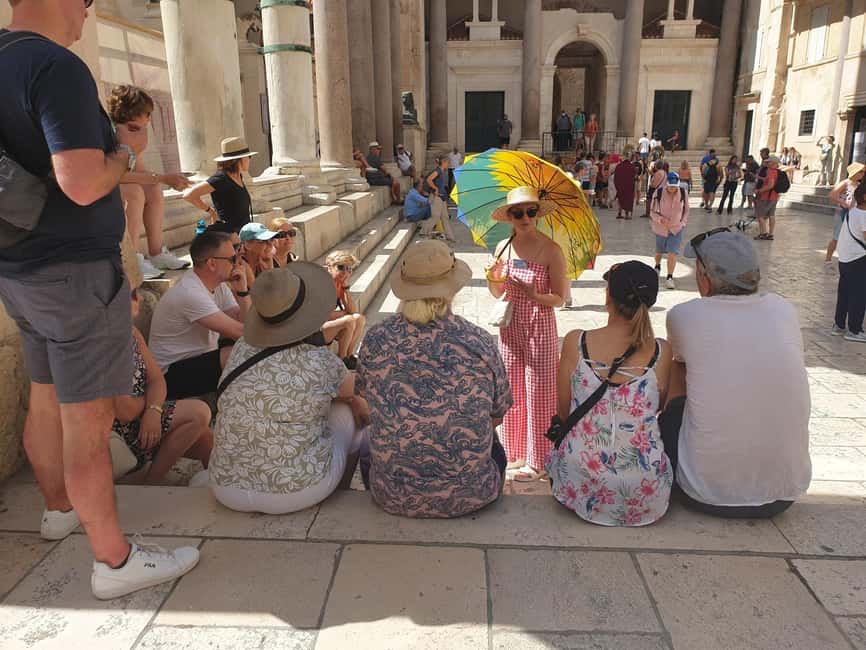
The center of the tour is the Palace of Diocletian, a 1700-year-old Roman complex and part of UNESCO-protected Split. The guide’s job is to help you see palace pieces as palace pieces—rather than as random stone fragments you pass by quickly.
You’ll learn how this was once a powerful man’s base, not just ancient ruins. One of the most compelling threads here is the story arc: Diocletian going from a nobody to the most powerful man in the world. The guide connects that rise to the kind of monumental architecture the Romans built.
What you’ll get out of it in practical terms:
- You’ll understand how palace space worked—what visitors and residents likely moved through.
- You’ll know what remains and what the changes over time mean.
- You’ll learn to read architectural clues: openings, walls, structural choices, and how later centuries reused older spaces.
This is also where the tour’s tone shines. Multiple reviews emphasize storytelling that keeps even non-history buffs engaged. If you’re the type who likes your sightseeing to come with characters and context, this one fits.
Romanesque churches and the medieval layers that followed
After the palace foundation, the walk shifts into how Split kept growing. You’ll see Romanesque churches and learn about the transition from the Roman world into later Christian and medieval life.
This part matters because Roman ruins alone can feel like a museum. But Romanesque churches and medieval architecture show what happened next: the city didn’t stop. People built on top of earlier structures, adapted spaces, and kept using key areas.
What to watch for as you walk:
- Look for church details the guide points out, since the differences can be subtle from street level.
- Notice how the old palace boundaries still influence the way streets feel today.
- Pay attention to how the city’s story is framed as a sequence, not as unrelated stop-by-stop facts.
If you love architecture, this is satisfying. If you don’t, it still works because the guide explains the “why” in plain language—less textbook, more real-world meaning.
Fortifications and Gothic palaces: why Split looks the way it does
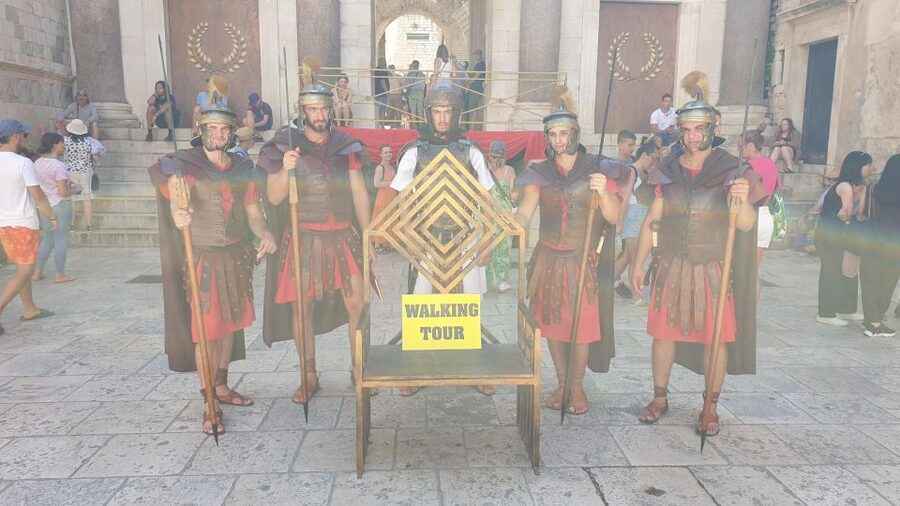
Split’s medieval fortifications and Gothic palaces give you the next step in the city’s evolution. This is where you start to feel how geography and history shape a place.
Fortifications aren’t just walls; they’re a response to risk, power, and control. Gothic palaces, on the other hand, show refinement and the influence of later European styles. Put together, they help you understand Split as a city that stayed important long after Rome.
This section is also where you’ll likely slow down a bit, because the architecture gives you more “visual hooks” than a single landmark. When the guide explains what you’re looking at, those hooks turn into a coherent story.
Practical note: Split’s center is compact, but streets and walkways can be crowded. Even though this is described as a small group, one review flagged that on at least some days the group felt bigger than expected and the pace slowed due to crowding. If you’re sensitive to waiting, keep that in mind and plan for a relaxed mindset.



Peristil Square moments: how to orient yourself quickly

Peristil Square isn’t just the start—it’s also your orientation checkpoint. The tour begins under the old Roman arch on the north part of Peristyle square, and you spend enough time in this area that you start recognizing the palace layout in your head.
Here’s what I like about starting with orientation:
- You learn where key spaces are in relation to each other.
- Later, when you wander on your own, you don’t feel lost.
- The rest of Split makes more sense because the palace stops act like anchors.
Even if you’ve visited cities with big monuments, Split has a special challenge: everything is close together, and the story is layered. Orientation from a guide is the difference between snapping photos and actually understanding what you’re seeing.
Game of Thrones bonuses in the old streets
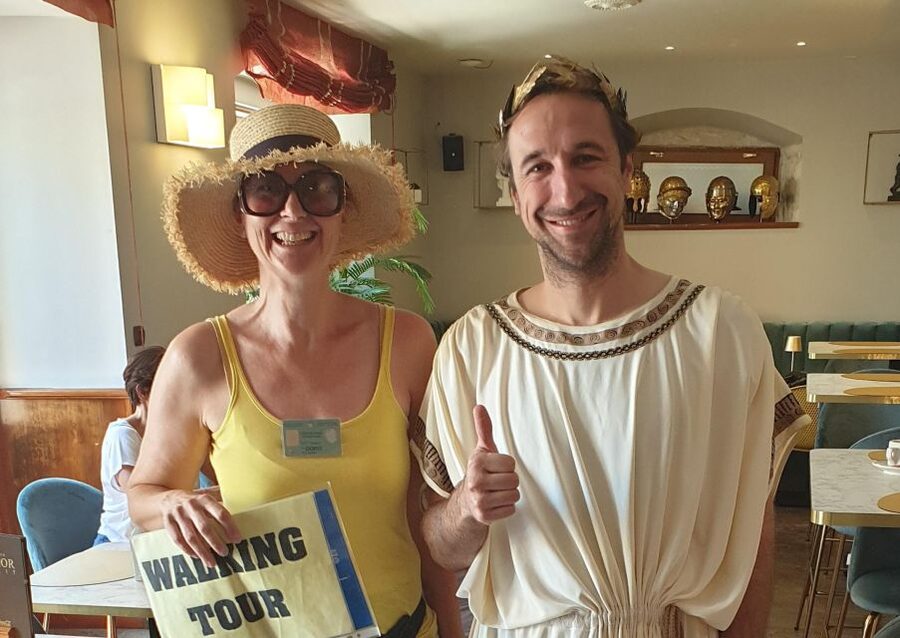
For show fans, the tour adds Game of Thrones locations as a bonus layer. The smart way to treat this is as a fun extra: your main value is still the history and architecture of Diocletian’s Palace and the city around it.
How this helps you: once you know the real landmarks, the show references land differently. It becomes less about guessing and more about recognizing places with a strong timeline behind them.
If you’re traveling with someone who loves the series, this is a great way to keep them entertained without turning the tour into a pure fandom exercise.
Guide quality: storytelling that makes the past usable
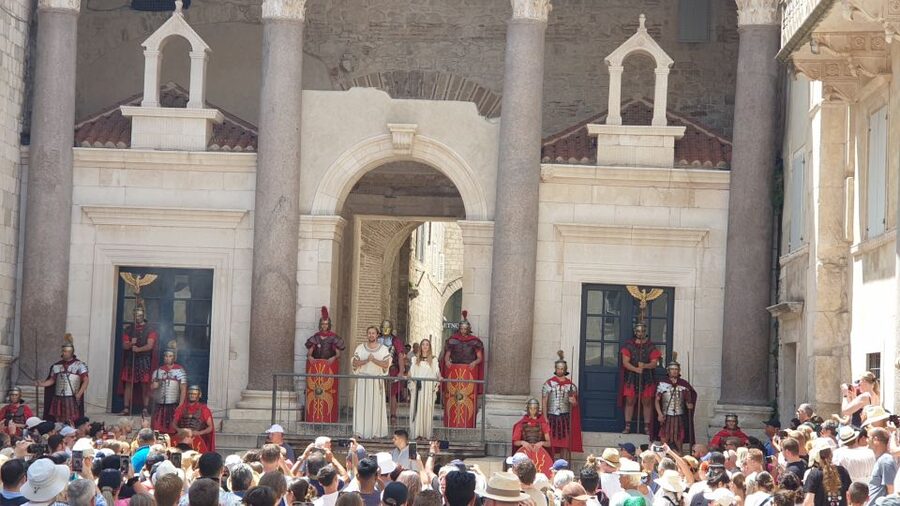
The best tours don’t just list facts; they teach you how to look. This one seems to be strong on that front.
The review notes keep pointing to guides like Antonela, Nikolas, Doris, and Antonela/Antoletta variations of the same name across different mentions. Common praise themes include:
- clear explanations that don’t talk down
- enthusiasm that keeps attention up
- a storytelling style that makes history feel like a sequence of choices and consequences
I also like that guides are described as licensed and educated. That matters in a palace like Diocletian’s, where it’s easy for explanations to get wobbly. You want someone who can connect architectural features to real historical reasons.
One extra plus: some reviews mention extra touches like traditional singing along the way. Even if that isn’t guaranteed on every departure, it points to a tour approach that aims to feel local rather than mechanical.
What to bring (and what to avoid) so the walk stays pleasant
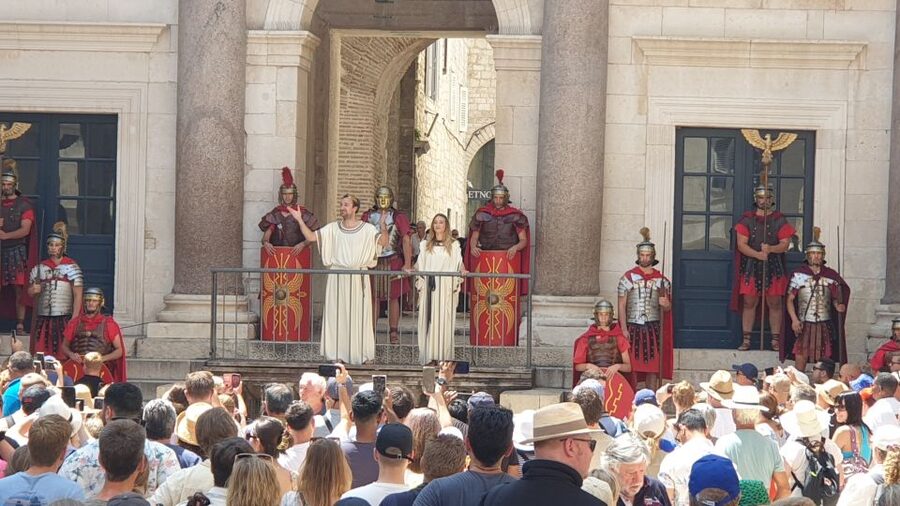
This is an easy checklist, but it makes a difference:
Bring:
- Comfortable shoes (old-town surfaces can be uneven)
- Hat (sun can be strong)
- Comfortable clothes for walking
Not allowed:
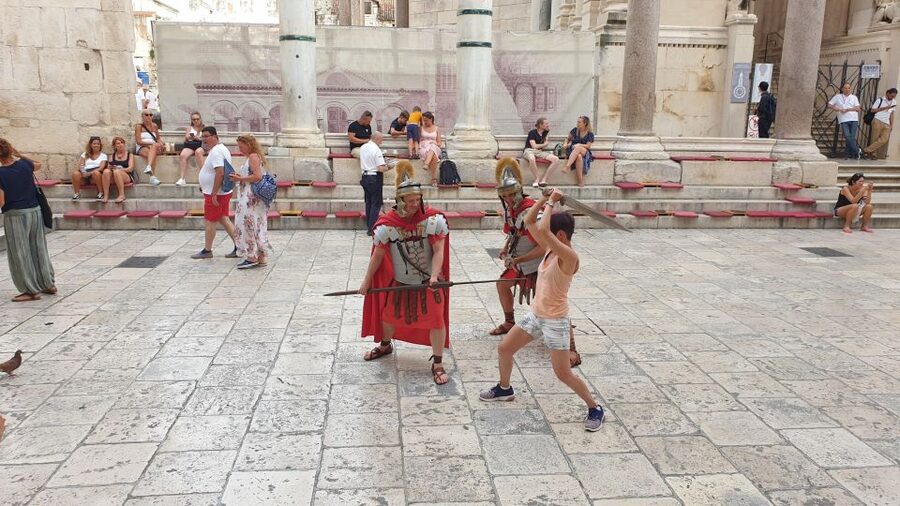
- Costumes (keep it simple)
If you’re planning your day around this tour, treat it like a real walking block. You’ll be happier if you don’t plan to rush immediately afterward into something that requires lots of standing in the same shoes.
Who should book this Split history walk?
Book it if:
- you want to understand Diocletian’s Palace quickly
- you like your history with story and context
- you’re short on time and want the main architectural eras in one morning/afternoon
- you’re traveling with a mix of history lovers and people who need entertainment as well
You might skip it if:
- you have high blood pressure (the tour isn’t suitable)
- you’re hearing-impaired (the tour isn’t suitable)
- you hate crowds and feel anxious about possible pacing slowdowns when groups are larger than expected
Languages offered are Russian, English, German, and French, so you should be able to find your comfort zone.
Should you book this Split: History and Heritage walking tour?
If you want a smart, efficient first pass through Split’s core—especially the UNESCO Roman palace—this tour is a strong pick for the price. With a rating of 4.9 from 650 reviews, it’s clearly landing for people who want more than a photo walk.
My call: book it early so the rest of Split clicks into place. Come with comfortable shoes, a hat, and the mindset that you’re learning how to read a city built in layers.
If you’re sensitive to crowds or pacing, pick your departure time thoughtfully and plan for a relaxed, flexible experience. For most people, though, this is one of the easiest ways to turn Split from impressive stone into a story you can follow.
FAQ
Where is the meeting point for the Split History and Heritage walking tour?
The meeting point is on Peristil Square, under the old Roman arch at the north part of Peristyle square next to the Tourist Information Office. Look for a guide wearing a yellow T-shirt or holding a yellow umbrella.
What sites and themes will the tour cover?
You’ll explore Split’s historical complex, focusing on Diocletian’s Palace (UNESCO protected), plus Romanesque churches, medieval fortifications, and Gothic palaces. You’ll also get fun history context from Roman times to today, with Game of Thrones locations as bonus info.
Is admission or food included in the tour price?
No. The tour includes a small-group walking tour and a tour guide, but admission tickets, food, and drinks are not included.
How much does the tour cost?
The price is $18 per person.
Does the tour run in bad weather?
Yes. The tour will take place no matter the weather (rain or sun).
What should I bring and wear?
Bring comfortable shoes, a hat, and comfortable clothes. Costumes are not allowed.
Is the tour suitable for everyone?
It’s appropriate for all ages, but it is not suitable for people with high blood pressure and it is not suitable for hearing-impaired people.