REVIEW · RIO DE JANEIRO
Ancient Rio and Santa Teresa Tour with Hotel pick-up and drop-off
Book on Viator →Operated by Rio Carioca Tour Ltda · Bookable on Viator
Ancient Rio has a way of sneaking up on you. This 4-hour small-group tour strings together Santa Teresa’s hillside charm and Rio’s old downtown landmarks, with hotel pickup and drop-off and lots of photo-and-walk time. I especially like that you get both neighborhoods in one go, so you’re not just ticking sights—you’re seeing how Rio’s story changes from hill to harbor city.
Two stand-out wins for me: you spend real time around Santa Teresa’s mansions and the 1897 tram line (even if you don’t ride it), and the downtown stretch is built around major urban-era buildings like Praça XV, Cinelândia, and the Teatro Municipal area. The main drawback to plan around is pacing and access: you’ll cover uneven cobblestones in Santa Teresa, and the time at each stop can feel tight—plus the tram ride is not part of this specific tour.
In This Review
- Key highlights worth clocking
- What you’re really buying for $55
- Hotel pickup and how the route flows
- Santa Teresa: mansions, painters, and the tram you see (not ride)
- Parque das Ruínas: a short art-and-patron stop
- Arcos da Lapa: from water channel to neighborhood icon
- Praça XV de Novembro: the harbor-era crossroads of Rio
- Arco do Teles and the small-street food-and-bar vibe
- Cinelândia: squares and grand facades for your camera roll
- Museu Nacional de Belas Artes, Theatro Municipal, and Biblioteca Nacional: look close, but don’t enter
- The guides make the difference: examples from the field
- When the city calendar changes your experience
- Walking, comfort, and who this tour suits best
- Price check: what you get vs. what it costs
- Should you book Ancient Rio and Santa Teresa?
Key highlights worth clocking
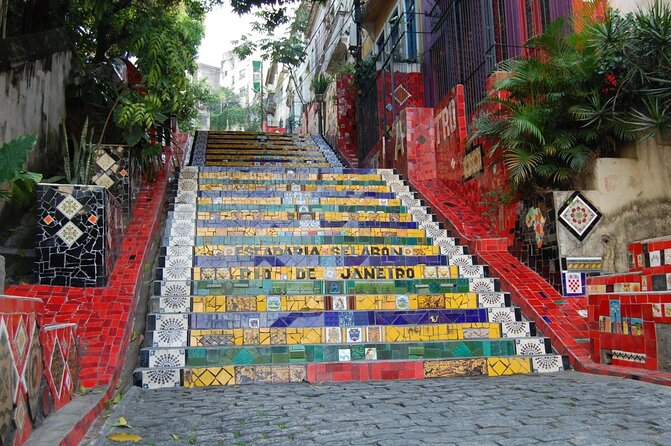
- Santa Teresa + the historic tram line (built in 1897): See it in the neighborhood, but don’t expect a ride during this tour’s timeframe.
- Arcos da Lapa and Praça XV: Two classic anchors for how people moved and lived in older Rio.
- Centro cultural and art-history stops: Brief but meaningful stops tied to artists and patrons in the city’s past.
- Downtown architecture viewing: The tour takes time to look at exterior grandeur at places like the Biblioteca Nacional and Theatro Municipal without going inside.
- Small-group feel (minivan max 19): Better control and flexibility than big-bus tours, especially with the right guide.
What you’re really buying for $55
At $55 per person for about 4 hours, this tour is good value if you want a focused orientation to Rio’s older neighborhoods without spending extra money on admissions. You’re paying for logistics (round-trip hotel pickup/drop-off, plus an air-conditioned vehicle) and for the guide’s ability to connect the dots between neighborhoods that can feel worlds apart.
There’s also a smart built-in tradeoff: you won’t be stuck paying entrance fees all morning. Several stops are listed as free, and even when admission exists for major sites, the tour emphasizes architecture from the outside rather than museum time. That makes the tour easier on your schedule and budget—just don’t expect “museum full experience” inside these buildings.
You can also read our reviews of more tours and experiences in Rio de Janeiro.



Hotel pickup and how the route flows
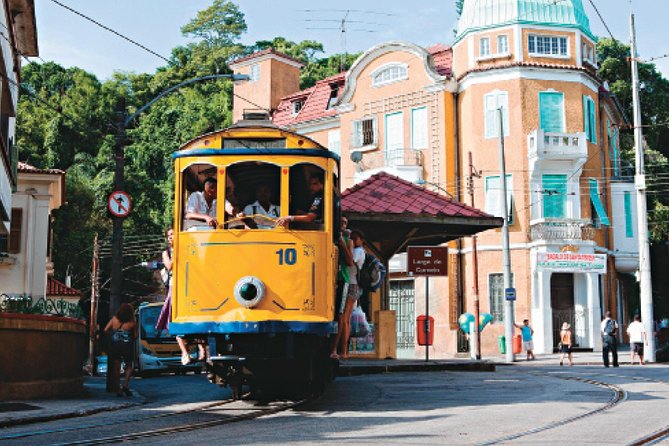
This tour starts at Hotel Rio Othon Palace in Copacabana, and it ends back at that same meeting point area. After pickup, you head into two zones: Santa Teresa first, then the Centro / downtown belt.
Why this order works: Santa Teresa is best when you can move through it while the streets are calmer and you’re still fresh for photo stops and short walks. Then downtown gives you the “big city” frame—squares and grand facades that show how Rio modernized as the capital influence grew.
One practical thing: it’s a shared group experience with a maximum of 19 travelers per minivan. That’s usually enough for a friendly group vibe, but you’ll still be in “tour mode,” meaning quick transitions, not long sit-down hangs.
Santa Teresa: mansions, painters, and the tram you see (not ride)
Santa Teresa is a bohemian hillside neighborhood known for artists and older architecture. Your first stop is built around its 20th-century mansions and the neighborhood’s ongoing link to the tram system. The tour description notes the tram that was built in 1897 still exists there—what you’re seeing is the historic infrastructure and the neighborhood’s shape, not a theme-park ride.
What I like about this stop: Santa Teresa’s streets change your perspective. You go from the wide, modern city feeling to a slower, more human scale—tucked streets, older homes, and a vibe that feels shaped by craft and creativity.
The likely consideration: Santa Teresa streets can be uneven. One review specifically calls out uneven cobblestones and warns it’s not ideal if you have walking problems. If that’s you, you may want to ask how much of this route is walk time versus viewpoints from the vehicle—because this isn’t listed as a fully accessible stroll.
Parque das Ruínas: a short art-and-patron stop
You’ll also stop at Centro Cultural Municipal Parque das Ruínas. This former home belonged to Laurinda Santos Lobo, a major female art supporter, and today it functions as a cultural center that preserves her legacy.
Even though this is a brief stop, it’s one of those moments that makes the whole Santa Teresa and downtown story click. The tour isn’t just pointing at buildings; it’s hinting that Rio’s art world didn’t appear out of nowhere—it was powered by people funding artists and creating spaces where culture could survive.
Arcos da Lapa: from water channel to neighborhood icon
Next up is Arcos da Lapa. Historically, the arches helped transport water. Today, they’re also part of the Santa Teresa-to-city rhythm and show how old infrastructure became everyday life.
Plan for a shorter photo-and-stroll moment here (the schedule lists about 30 minutes). The arches are photogenic, but the bigger value is what your guide will connect: how Rio reused structures as the city’s needs shifted.
Also note: the tour lists Arcos da Lapa admission not included. You’re likely not paying for an entrance experience here, but it’s a reminder that not every stop is a free-for-all.

Praça XV de Novembro: the harbor-era crossroads of Rio
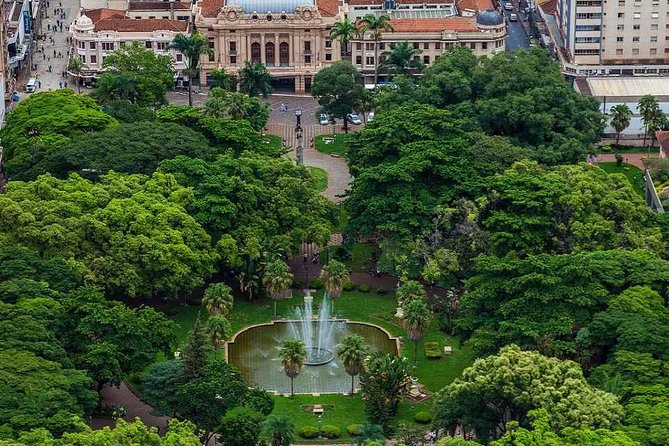
Then you head to Praça Quinze de Novembro (Praça XV), in Rio’s historical center. This square sits near major government-era buildings like Palácio Tiradentes and Paço Imperial, and it’s also by a ferry terminal that connects destinations within Rio and to Niterói.
This is a good stop if you want context for Rio as a working city, not just a sightseeing one. Squares like this are where the city’s everyday choreography happens—movement, arrivals, official power, and public life.
The schedule sets about 30 minutes, and the square is also an easy spot to pause, reset your feet, and take pictures without needing an entrance ticket.
Arco do Teles and the small-street food-and-bar vibe
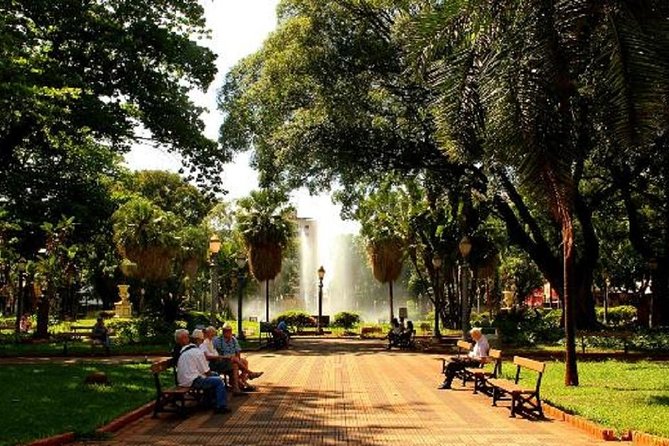
From Praça XV, you’ll go to Arco do Teles, located where a downtown market used to be. The area around it is known for small streets and alleys, with bars and small restaurants.
The stop is shorter (around 20 minutes), so think of it as a taste of the old downtown texture. It’s less about a single monument and more about how Rio’s older commercial areas still feel alive in street level.
If you like hunting for quick snack options later, this is the kind of stop that gives you useful orientation for where to roam after the tour.
Cinelândia: squares and grand facades for your camera roll
Next comes Cinelândia, one of downtown Rio’s famous squares, framed by historical buildings and a spot that’s naturally built for photos.
Expect this to feel more “centro monumental” than Santa Teresa. You get to see how Rio’s early-1900s modernization shows up in scale and design—wide streets, major civic architecture, and big public-space energy.
Time on this stop is about 30 minutes, which is enough to take photos and walk a bit, but not enough to linger for hours.
Museu Nacional de Belas Artes, Theatro Municipal, and Biblioteca Nacional: look close, but don’t enter
Three of your downtown stops focus on exterior architecture rather than interior visits:
- Museu Nacional de Belas Artes (designed in 1908 by architect Adolfo Morales de los Rios): you’ll enjoy the building’s look and its connection to the National School of Fine Arts lineage.
- Theatro Municipal do Rio de Janeiro: inaugurated in 1909, it’s one of Brazil’s major theaters in Latin America. The tour doesn’t enter, but you’ll take time with its impressive facade.
- Biblioteca Nacional: founded in 1810 by D. João VI, and described as the biggest library in Latin America, with an enormous collection. Again, you’re viewing the building’s presence rather than stepping inside.
The key practical detail: admission for these is listed as not included, and the tour description indicates no interior entry. That’s fine if your goal is city orientation and architectural appreciation. If your goal is “museum time,” you’ll need a different tour or a separate visit on your own.
The guides make the difference: examples from the field
This is one of those tours where the guide can make or break your day. The best outcomes tend to sound like this: a guide who’s energetic, explains the why behind the where, and keeps the group moving at a human pace.
I’d pay special attention to the names that came up with strong feedback:
- Renato: described as passionate and able to connect history with the bigger picture.
- Roger: praised for fluency and tying stories together, with pride in Rio while addressing complicated colonial-to-modern history.
- Dario and Wagner: repeatedly called out as strong communicators who made the time feel worthwhile.
- Wanessa and Monica: noted for punctuality and for caring about comfort—Monica’s approach was specifically mentioned as helpful for someone with difficulty walking.
On the flip side, there are also reviews noting rushed pacing and moments when there wasn’t enough time for photos or for a longer pause at a café. So if you’re the type who likes to slow down and absorb, I recommend booking for a day when you’re flexible and not trying to squeeze this between other big plans.
When the city calendar changes your experience
Two big realities can affect your day:
1) Holiday closures. One review mentioned a tour happening on New Year’s Day, with shops closed in the city center and Santa Teresa. That doesn’t ruin the architecture and sightlines, but it does change the street-level feel.
2) Traffic disruptions like Carnival. Another review described delays because of Carnival congestion, including a late start and a less smooth ride back. This tour is time-sensitive, so your best bet is to plan extra buffer around major events.
Also, the experience is described as requiring good weather. If it gets canceled due to poor conditions, you should expect rescheduling or a refund offer.
Walking, comfort, and who this tour suits best
This tour works best for you if:
- you want a short “best of old Rio” layout in one outing,
- you like historical context and architecture,
- you can handle some walking on older street surfaces.
It’s less ideal if:
- you need step-free access throughout Santa Teresa (uneven cobblestones were specifically flagged),
- you get frustrated by schedules where each stop is quick,
- you’re expecting a tram ride.
Speaking of that: even though Santa Teresa is where the historic tram line is visible, the tour does not include a tram ride. If that’s your top must-do, look for a version that explicitly includes riding—or plan the tram separately after this tour.
Price check: what you get vs. what it costs
For $55, you’re essentially buying:
- hotel pickup and drop-off,
- an air-conditioned shared ride,
- a guided route through Santa Teresa and downtown old-city Rio,
- multiple stops where admissions are listed as free.
What you’re not buying:
- lunch,
- museum or theater interior tickets (the major cultural buildings are exterior-view focused),
- tram ride time.
That’s a fair deal if you treat this like orientation and storytelling time, then use your remaining hours for independent meals and optional add-ons.
Should you book Ancient Rio and Santa Teresa?
Yes, you should book it if you want a smart first taste of Rio’s older neighborhoods—especially if you’re curious about how Santa Teresa’s hillside identity connects to downtown’s civic and cultural power. The tour is also a good fit if you like architecture and want a guided explanation without a long museum day.
Skip or adjust your expectations if you:
- need lots of wheelchair-friendly surface space (uneven streets in Santa Teresa are a known issue),
- want long, slow museum time (this tour keeps you outside buildings),
- are specifically chasing a tram ride (this tour includes seeing the historic tram presence, not riding it).
If you go, bring comfortable walking shoes, accept that some stops are quick, and choose your day wisely. With the right guide—people like Renato, Roger, Wagner, Dario, Wanessa, and Monica come up for a reason—this tour can make Rio’s “old city” feel understandable fast.