REVIEW · ROME
Rome Colosseum & Forum Guided Tour – Small Group or Private
Book on Viator →Operated by Towns of Italy · Bookable on Viator
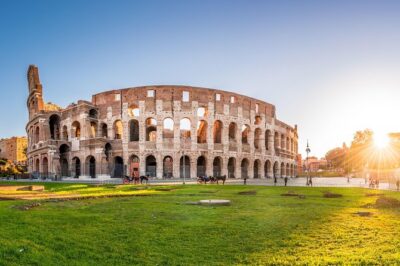
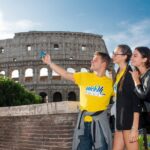
The Colosseum feels huge until you learn how it worked. This small-group guided visit links the Roman Forum with the Colosseum, so you get the story from politics and crowds to the engineering that made spectacles possible.
I like two things a lot: the Colosseum time is long enough (about 2 hours) to cover more than the usual photo stops, and the guide adds context you can use right away, like why Hollywood misses key details. In the small-group setup (max 25), I also appreciate that you can ask questions without the whole tour turning into a loud lecture.
One consideration: the entry rules are strict. You must show a valid passport or ID that matches the names you provide in advance, or you may be denied entry, so double-check before you go—especially if you have a middle name or nickname on your booking.
In This Review
- Key highlights to know before you go
- Roman Forum: where politics, law, and spectacle met
- Arch of Constantine: the quick photo stop with real meaning
- Entering the Colosseum: engineering, not just gladiators
- What you can expect on the Arena Floor (if your option includes it)
- How the pacing works in a 2.5–3 hour plan
- Small group size, earphones, and what that means for your experience
- Tickets, mobile entry, and what you must bring
- Don’t get tripped up at the gate
- Price and value: what $58.41 buys you
- Finding the meeting point and avoiding stress
- Who this tour suits best
- Should you book this Colosseum & Forum guided tour?
- FAQ
- FAQ
- How long is the Rome Colosseum and Forum guided tour?
- What languages are the tours offered in?
- Is the Colosseum ticket included?
- Does the tour include Arena access?
- Where do we meet and where does the tour end?
- Do I need to bring ID that matches my booking?
- Are there baggage restrictions?
- What’s the cancellation policy?
Key highlights to know before you go
- Roman Forum guide focus: about 50 minutes at the heart of ancient public life, not just a quick walk-by.
- Short, useful Arch of Constantine stop: around 10 minutes with clear historical context.
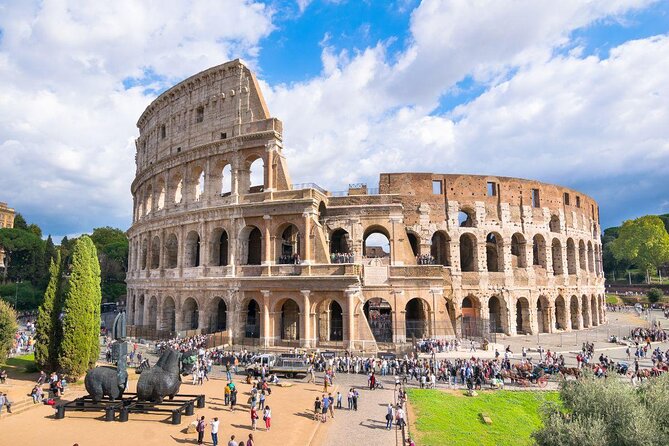
- Colosseum visit time: about 2 hours, with option for Arena access depending on your ticket type.
- Mobile ticket: less hassle at the gate once everything is matched to your ID.
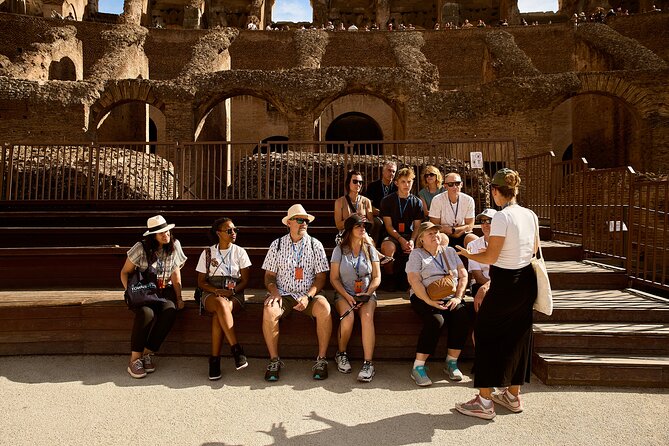
- Small group cap (25): easier pacing, and earphones used for groups over 5.
- Guides with strong follow-through: Eleanor and Mario are two names that have stood out for being clear, relaxed, and answer-friendly.
Roman Forum: where politics, law, and spectacle met
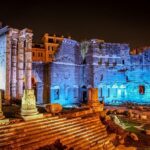
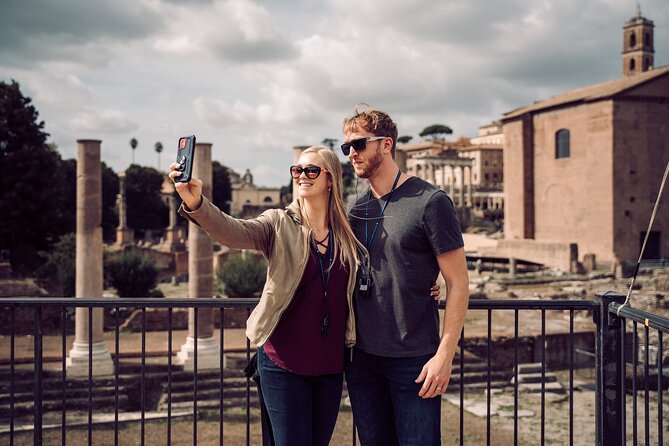
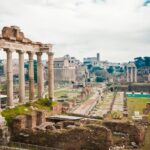
The Roman Forum sits in a low basin between the Palatine and Capitoline hills, and this tour uses that fact to your advantage. You spend roughly 50 minutes here with a guide who explains what this place meant during the republican era—public meetings, legal proceedings, and even the kind of high-stakes drama that later got turned into entertainment.
What makes this stop feel worth it is the way the guide connects the geography to the story. You’re not just looking at columns and broken walls. You’re hearing how the forum functioned as the city’s civic “hub,” with commerce all around it—shops and open-air market activity at the edges of the political center.
Practical note: the Forum can feel visually repetitive if you’re wandering on your own. With a guide, you get the signposts: what you’re seeing, what happened there, and why it matters. If your goal is to understand Rome rather than just photograph Rome, this is where that payoff starts.
You can also read our reviews of more tours and experiences in Rome.
Arch of Constantine: the quick photo stop with real meaning
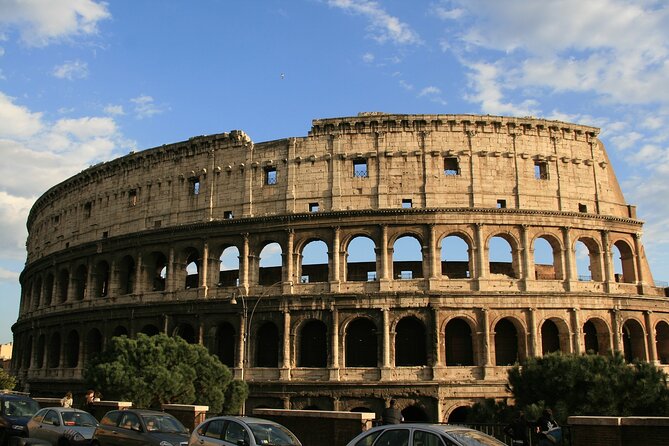
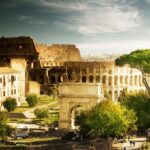
Next comes a short 10-minute stop at the Arch of Constantine, one of the biggest surviving triumphal arches in Rome. The tour doesn’t overstay here, which is good. The arch is essentially a visual shortcut into a bigger theme: victory, power, and the way rulers used stone to make their message last.
You’ll also learn where it sits in the bigger urban picture. The arch is placed between the area around the Circus Maximus and the Arch of Titus—so even in a brief pause, the guide can help you place it along the kinds of routes ancient Romans would have recognized.
If you’re the type who hates slow pacing, you’ll like this stop. If you want long museum-style storytelling at every stop, you might wish it were longer—but you’re trading time for more time at the Colosseum.
Entering the Colosseum: engineering, not just gladiators
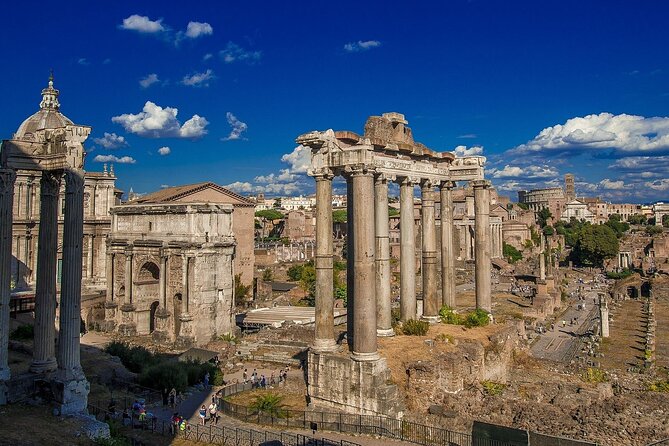
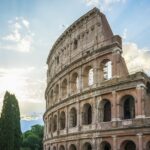
The Colosseum is the obvious draw, but the smartest part of this tour is how it frames what you’re about to see. You don’t get stuck in the “Gladiator movie version” of Rome. The guide explains both physical and political conflicts behind the scenes, then ties them back to what happened inside this arena.
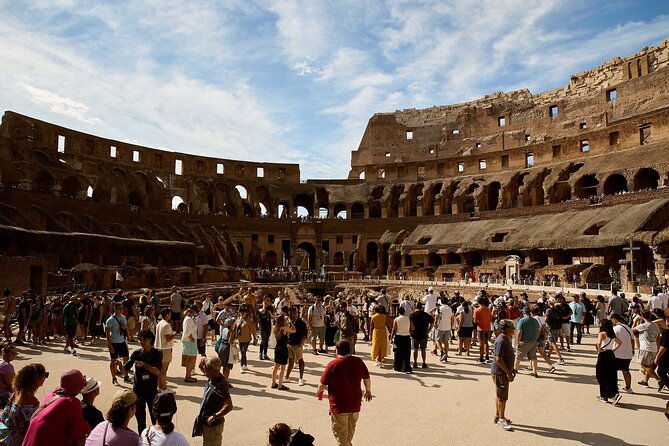
The timing helps. You’ll spend about 2 hours at the Colosseum, which is enough for a real guided walk through the key parts without feeling like you’re being herded through. And if you choose the option that includes Arena access, the focus gets even more concrete—because the Arena Floor is where the spectacle became real.
What you can expect on the Arena Floor (if your option includes it)
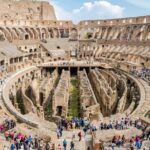
When you’re allowed onto the Arena Floor, it’s easier to grasp the logistics of ancient shows. The arena floor was not just a flat “stage.” It originally sat on an immense wooden platform resting on a network of masonry corridors beneath. That structure mattered because it made it possible to stage dramatic effects—like the idea behind reenactments that some people associate with naval battles.
Even if you don’t have Arena access, you’ll still benefit from the engineering explanation because it changes how you look at the building. Suddenly the Colosseum isn’t only an iconic ruin—it’s a machine designed for crowd control, visibility, and repeatable performance.
How the pacing works in a 2.5–3 hour plan
This experience runs about 2 hours 30 minutes to 3 hours. That range matters because it reflects a realistic approach: you’re splitting your time between three major areas (Forum, Arch, Colosseum), with Colosseum holding the largest chunk.
Here’s why that pacing is smart:
- The Forum needs time to make sense.
- The Arch is a quick context stop.
- The Colosseum is the heavyweight, so it gets the long guided portion.
You also get a walking tour feel, but with structure. Rome can be confusing—street layouts, crowd flow, and confusing entry points. A guided route keeps you from wasting energy on guesswork.
One heads-up: schedules can change based on Colosseum management, and during the Jubilee some monuments may be under restoration. The tour notes that the guided tour is always guaranteed, but the exact path and timing can shift slightly. Build a little slack into your day.
Small group size, earphones, and what that means for your experience
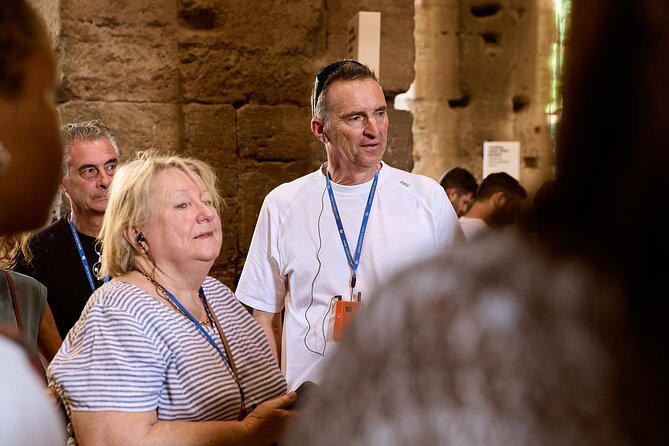
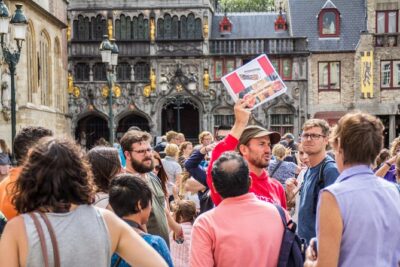
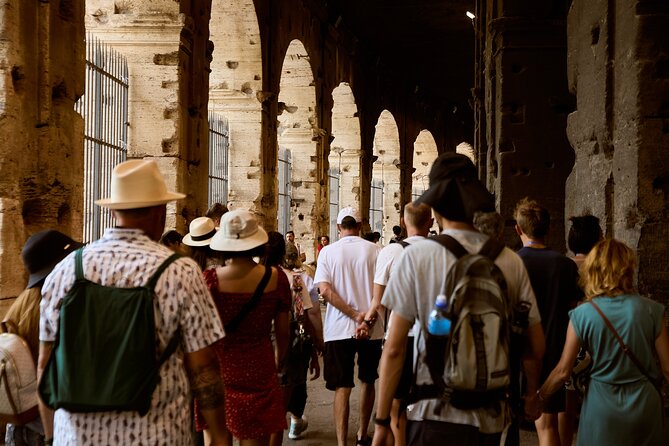
This tour caps at 25 travelers. That number is doing real work for you. It helps the guide manage the group more easily, especially at the Forum and in the Colosseum where pathways and viewpoints can get tight.
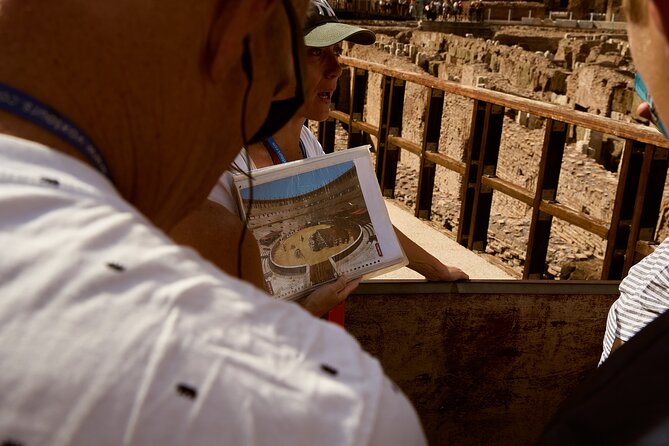
If your group is larger than 5 people, you’ll use earphones, which helps a lot in open-air areas where voices carry unevenly. You’re not always straining to hear, and you can follow the guide’s explanation without stepping into someone else’s personal space.
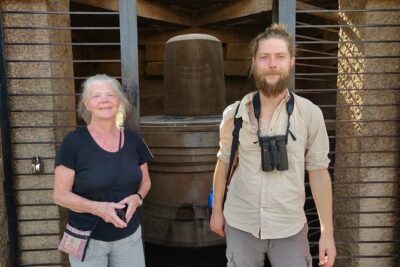
Also, the guide style seems to land well: Eleanor is called out in one account for being excellent and knowledgeable, and Mario is praised for a relaxed pace with time for questions. I’d take that as a sign that the tour aims to balance information with breathing room, not speed-walking.
Tickets, mobile entry, and what you must bring
This tour uses a mobile ticket, which is convenient if you hate paper slips. Still, the real key is matching names to your ID.
You must provide the full names of all travelers when booking, and for Colosseum entry you’ll need the names in advance so tickets can be issued properly. On the day, each person must present a valid passport or ID document that matches what was provided.
Don’t get tripped up at the gate
Two practical rules to take seriously:
- Big bags, umbrellas, and liquid bottles aren’t allowed inside the museums.
- You need to check your ID name accuracy before you arrive.
If you’re traveling with a lot of stuff, plan to keep it minimal. Wear comfortable shoes too; the tour involves walking through historic sites.
Price and value: what $58.41 buys you
The price is $58.41 per person, and the important detail is that it’s not just a narration fee.
Included in the value:
- A professional guide (English or Spanish depending on your option)
- Guided visits of the Roman Forum and Colosseum
- Colosseum entrance ticket (and a reservation fee)
- Optionally, Arena access depending on your chosen ticket type
The Colosseum ticket value is listed as €18 per person, or €24 per person if Arena access is included, plus a €2 reservation fee. Even though pricing structure differs by currency and timing, the point is clear: a big chunk of your cost is tied to the actual entry and reservation, not just someone walking you through.
So this is usually worth it if you want:
- clearer context than a self-guided visit,
- the right sites at the right time,
- and a guided approach that helps the Colosseum feel understandable instead of chaotic.
If you’re the kind of traveler who loves reading quietly with a map and doesn’t care about structured explanations, you might compare costs and decide to go independent. But if you want the “how it worked” story, you’re paying for more than a ticket.
Finding the meeting point and avoiding stress
You start at Palazzo Colonna, Via Quattro Novembre, 139, 00187 Rome, and you finish at Colosseum, Piazza del Colosseo, 1, 00184.
That first location is not the Colosseum itself. So I strongly recommend arriving early enough to locate your guide and get oriented before the group is ready.
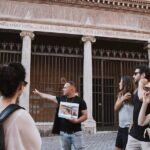
One review detail that’s useful: Eleanor was easy to miss because she was holding a sign on her chest, and it took someone extra time to find her. That’s a small thing, but it’s exactly the kind of thing that causes unnecessary stress at the start. Give yourself a buffer and look for the person holding the tour sign.
Who this tour suits best
This works especially well for:
- First-time visitors who want the big two—Forum and Colosseum—in one efficient outing.
- People who like their Rome with explanations: politics, social life, and engineering details.
- Anyone who wants a moderate physical fitness level plan without climbing mountains.
It may be less ideal if:
- You want very long free time inside each site.
- You have very large luggage, since big bags and liquids aren’t allowed.
- You have trouble matching ID names to your booking (do the name check first).
Should you book this Colosseum & Forum guided tour?
Book it if you want a structured, time-aware route that turns two famous landmarks into one connected story. The best value comes from the guided Forum context plus the long Colosseum walkthrough, and if your schedule allows it, the Arena access option is usually the step that makes the Colosseum feel most real.
Skip or reconsider if you dislike strict entry rules and name matching, or if you’re traveling with items that are likely to violate the bag and liquids restrictions. Also, give yourself extra time at the start—Rome can be unpredictable, and being late to the meeting point can undo the whole plan.
FAQ
FAQ
How long is the Rome Colosseum and Forum guided tour?
It’s about 2 hours 30 minutes to 3 hours.
What languages are the tours offered in?
This tour is offered in English (and the guide can also be Spanish depending on the purchased option).
Is the Colosseum ticket included?
Yes. The Colosseum entrance ticket is included, with a stated value of €18 per person, or €24 per person if Arena access is included.
Does the tour include Arena access?
It depends on the option you choose. The guided visit of the Colosseum Arena is included depending on the purchased option.
Where do we meet and where does the tour end?
You start at Palazzo Colonna, Via Quattro Novembre, 139 and end at Colosseum, Piazza del Colosseo, 1.
Do I need to bring ID that matches my booking?
Yes. Each traveler must present a valid passport or ID document matching the name provided at booking. The tour also notes full names are required in advance for ticket purchase.
Are there baggage restrictions?
Yes. Big bags, umbrellas, and liquid bottles will not be allowed inside the museums.
What’s the cancellation policy?
You can cancel up to 3 days in advance for a full refund, and cancellations made less than 3 full days before the start time aren’t refunded.