REVIEW · ROME
The Labyrinth of Rome between catacombs and ancient quarries
Book on Viator →Operated by Underground Rome · Bookable on Viator
Rome has a literal underworld.
This Labyrinth of Rome tour takes you from a peaceful stretch of Caffarella Park into the Sotterranei di Roma—miles of underground tunnels where you can still spot the chisel marks left by the workers who carved them. I also love how the guides (from Riccardo to Giuseppe, Daniela, and Maurizio) turn the story into something you can picture, with hands-on moments like crossing the dark using ancient-style lamps.
There is one thing to plan for: the walk can feel long in the heat.
You’ll cover about 1 kilometer through the park before you get underground, and once inside it gets cold and damp, so pack for indoor weather even when Rome is sweltering.
In This Review
- Key things to know before you go
- The Labyrinth of Rome: what you’re really exploring underground
- Caffarella Park walk: peace above ground, then you go dark
- Sotterranei di Roma tunnels: chisel marks, seats, and the work behind the walls
- Catacombs and early Christian burial tunnels
- Crossing the dark with ancient-style lamps
- The WWII fungus remains and why “odd finds” belong here
- A pagan temple and the story behind Christianity’s spread
- Guides in small groups: how hosts like Riccardo and Daniela shape the visit
- Price and value: is $114.14 per person worth it?
- Practical tips: what to wear, how to pace, and what to expect
- Should you book the Labyrinth of Rome tour?
- FAQ
- How long is the Labyrinth of Rome tour?
- Where does the tour start and end?
- Is the tour offered in English?
- Do I get a mobile ticket?
- What’s included in the price?
- How big is the group?
- Is there walking before you go underground?
- What should I wear or bring for the underground portion?
- Is the tour dependent on weather?
- Can I cancel for a full refund?
Key things to know before you go
- Caffarella Park first: a about 1 km regenerating walk gives you a calm start before the underground section
- Quarry tunnels, not just catacombs: you’ll see Roman-made passages reused over time, including an area tied to WWII
- Small group size: maximum 10 travelers helps keep the pace comfortable and the explanations personal
- Darkness is part of the show: you’ll move through dim spaces using an ancient Roman lamp style experience
- You’ll connect pagan and Christian Rome: the tour includes a pagan temple area tied to the spread of Christianity
The Labyrinth of Rome: what you’re really exploring underground
Think less of a tourist tunnel and more of a layered system under Rome. You’ll move through underground spaces that began as practical quarry work for building materials, then took on new uses across centuries. The result is a place where you see how people re-used what was already carved out, instead of starting from scratch.
What makes this tour special is the variety under one roof. You’re not only shown burial areas—you’re also guided through tunnels, catacomb-style passages, and a section connected to a pagan temple dug into the ground. It’s the kind of setting where history feels physical, because the walls show tool marks and wear from real work.
Also, you get more than “stand and look.” The experience includes a moment where you cross the darkness using an ancient Roman lamp and then reach a WWII-related fungus remnant. That helps the whole thing stick in your head, because you’re not just reading labels.
You can also read our reviews of more tours and experiences in Rome.

Caffarella Park walk: peace above ground, then you go dark
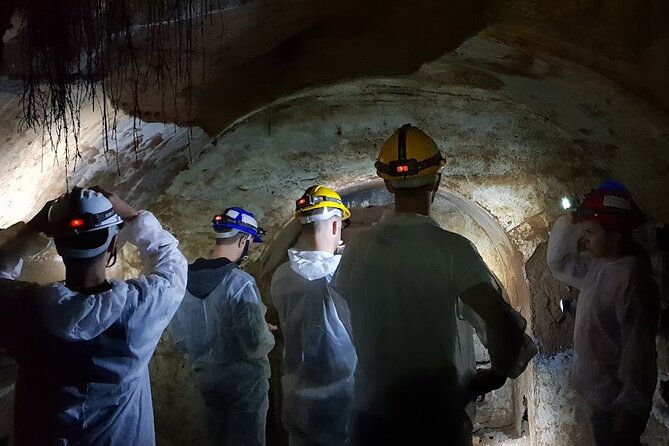
Most Rome sights cram you into crowds right away. Here, you start with a short outdoor breather: you cross Caffarella Park on a walk of about 1 kilometer (just over half a mile). It’s a nice reset, and it makes the later underground contrast feel stronger.
The trade-off is time and heat. A review noted a longer slog to the entrance, around 45 minutes, so I’d plan your day like you might need extra buffer before the first underground step. If you’re arriving already tired, a taxi or Metro ride to the meeting area can save you from doing more walking than you want.
Once you drop underground, the air and temperature change fast. Expect cold and damp, and bring something light but warm. Even if you hate packing, this is one case where it pays off.
Sotterranei di Roma tunnels: chisel marks, seats, and the work behind the walls
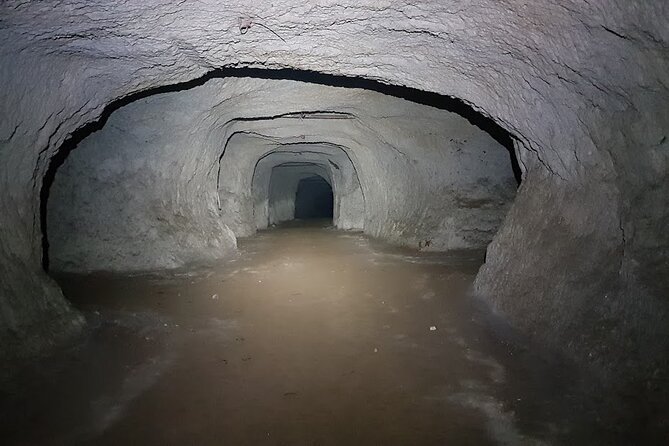
The underground section is centered on Sotterranei di Roma, a network of tunnels carved beneath Rome. You’ll learn that these passages were dug to obtain materials for the imperial city, and that the walls still preserve details of how the job was done.
One of the most striking parts is the focus on tool work. The tour points out chisel marks from the workers who dug these places, described as ancient slaves who carved out the tunnels under harsh conditions. Standing inside those walls changes the story from vague Rome trivia into something concrete.
In addition to the overall tunnel maze, you may also notice features like little seats and inspection wells—details that help you picture what workers needed while digging and shaping the space. And as you move along, you can spot where walls or ceilings have collapsed over time, which is a reminder that these structures are still evolving.
Catacombs and early Christian burial tunnels
Next comes the catacomb-style area. This is where you shift from quarry work to burial practices, including the idea that early Christians used tunnels to bury loved ones in the network for dozens of kilometers.
Even if you’ve seen photos of catacombs before, the setting here helps you understand why people chose places like this. Underground passageways create privacy, quiet, and a sense of continuity—important when a community wants to honor the dead without the public square.
You’ll also hear about burial traditions as you travel deeper. One review described a powerful moment of turning off torches and standing in pitch-black darkness while the guide explained Roman burial ideas. That kind of technique makes the history feel less like a lecture and more like an experience.
Crossing the dark with ancient-style lamps
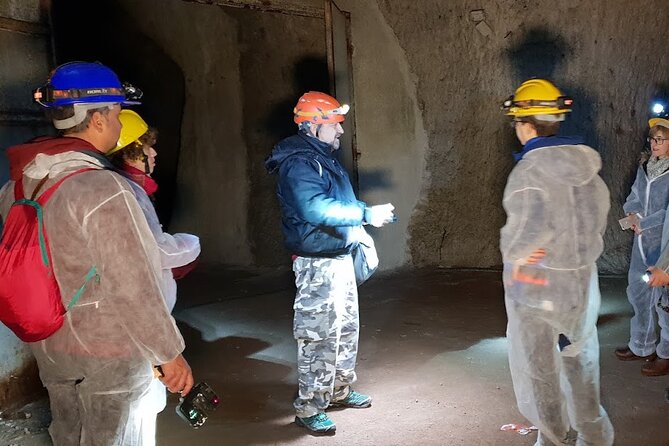
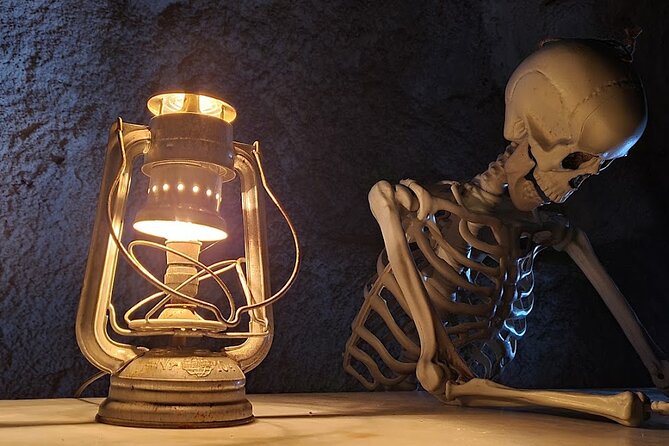
A standout feature is the lighting approach. Instead of only walking under bright coverage, the tour includes crossing the darkness with an ancient Roman lamp experience. You get to feel the way low light changes your sense of space, distance, and direction.
This matters because it helps you see the environment as it would have felt. In a normal daylight visit, underground sites can look like simple corridors. In this format, shadows and damp air become part of the story, not background noise.
If you’re the type who gets restless on long museum tours, this section is a good reset. The lighting moment creates a natural pause in the pacing, and the guide uses it to teach.



The WWII fungus remains and why “odd finds” belong here
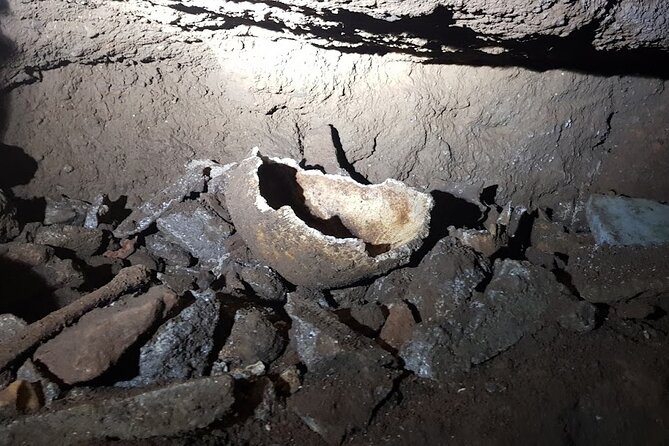
Some stops sound unusual at first, but that’s part of the point. After the darker crossings, you reach what remains of a fungus dating back to World War II. It’s the kind of detail that reminds you the site wasn’t frozen in time after ancient Rome.
This is where the labyrinth concept becomes real. The underground spaces have kept getting used, repurposed, and reinterpreted. The fungus stop isn’t random trivia; it connects the underground story across eras.
One review also mentioned a rock quarry and an old mushroom farm. The way to interpret that is: you may be seeing the results of the underground system being re-used in later periods, including food production. The Roman-made passages are the base layer, even when later use changes what you see.
A pagan temple and the story behind Christianity’s spread
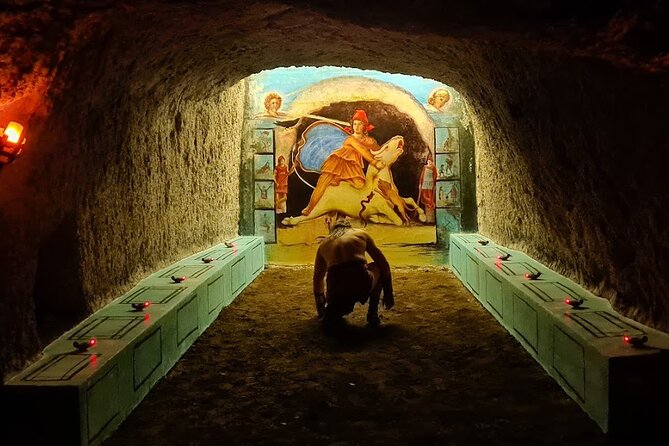
The tour doesn’t end at burial. It includes a pagan temple dug into the ground, where you’ll learn about secrets tied to the spread of Christianity in ancient Rome.
This part is valuable because it forces the conversation beyond “early Christians hid underground.” You get a more complicated view of religion and space—how sacred places overlapped, how beliefs shifted, and how Rome’s underground world held different types of meaning at different times.
Guides tend to bring this section alive with specific storytelling. I’ve seen how hosts like Giuseppe and Maurizio approach the explanations with clear structure and multilingual delivery, so you’ll likely walk away with a better sense of how the pieces connect, not just a checklist of locations.
Guides in small groups: how hosts like Riccardo and Daniela shape the visit
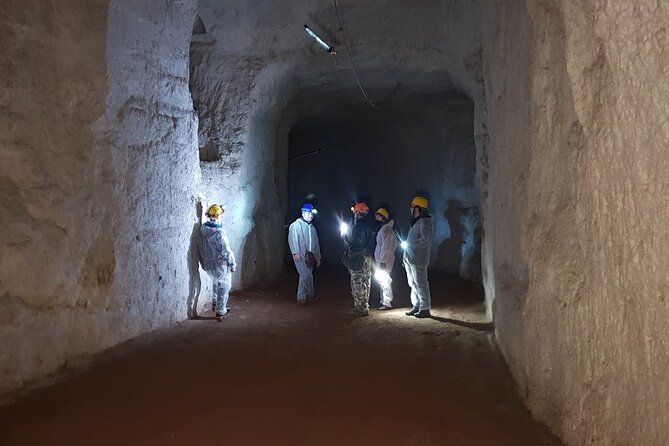
Group size is capped at 10 travelers, and it makes a noticeable difference. You’re not just a body in a line; you can ask questions and keep a steady pace without the usual herd pressure.
The guides are also a major part of the value. Reviews highlighted how Riccardo handled the tour interactively and how Giuseppe and Daniela made the visit feel exciting rather than stiff. Daniella and Roberto were praised for being knowledgeable and for making the time feel special, while Joseph was described as bringing ancient life into focus in a way that felt like you could imagine working and living there.
A good guide matters here because the site is dark and repetitive-looking if you’re not being pointed to the right details. When someone explains what you’re seeing—tool marks, collapse points, burial practices, and the religious layers—the “labyrinth” becomes understandable.
Price and value: is $114.14 per person worth it?
At $114.14 per person for about 2 hours 30 minutes, you’re paying for a guided, admission-included underground experience. The ticket includes admission, and the small-group size helps you get more time with your guide.
In practical terms, this price feels fair if you want something different from Rome’s top-shelf crowd magnets. You’re trading famous daylight views for a low-light, high-context visit where you learn how Rome was built and how it was used afterward. If your priority is photos of the skyline, this won’t scratch that itch. But if your priority is understanding Rome’s hidden layers, it’s a strong deal for the time on site.
One more value point: the tour is done in English, uses a mobile ticket, and the meeting point is near public transportation. That lowers the friction cost of fitting it into a busy day.
Practical tips: what to wear, how to pace, and what to expect
This is an underground tour with damp air and a colder temperature than street level. Wear layers and bring a light jacket or jumper. If you hate carrying things, at least bring something thin you can stow in a day bag.
Plan for some walking before you reach the entrance—about 1 kilometer through Caffarella Park, and potentially more depending on pace. If you’re traveling with older family members or anyone who gets overheated, it’s worth arriving early or taking a quick ride to the meeting area so you don’t start the tour already drained.
Also, if you’re sensitive to air quality, note that one review mentioned poor air during part of the experience. I can’t predict how it will feel on your day, but it’s wise to be cautious if you have respiratory issues and ask ahead if there are any ventilation considerations.
Finally, the tour involves darkness and close quarters. If you’re claustrophobic, think carefully. This is not a casual stroll through a well-lit underground attraction.
Should you book the Labyrinth of Rome tour?
Book it if you want Rome that most visitors never see: quarry tunnels, catacombs, and a pagan temple in one compact 2.5-hour guided outing. I especially think it works well for people who like real archaeology storytelling—where the wall details matter and the guide helps you read what you’re looking at.
Skip it if your idea of fun is bright, open-air sightseeing or if you need very flexible pacing. The walk through Caffarella Park and the cool, damp underground environment are part of the experience, not extras. And while many people love the labyrinth-like feel, some felt the underground spaces looked similar from section to section—so be ready for a site that rewards attention more than spectacle.
If you do book, pack for the temperature shift, plan extra time for getting to the entrance, and show up ready to follow your guide into the dark.
FAQ
How long is the Labyrinth of Rome tour?
It runs for about 2 hours 30 minutes.
Where does the tour start and end?
It starts at Via Amedeo Crivellucci, 8, 00179 Roma RM, Italy, and ends back at the same meeting point.
Is the tour offered in English?
Yes, the experience is offered in English.
Do I get a mobile ticket?
Yes, you’ll receive a mobile ticket.
What’s included in the price?
The admission ticket is included.
How big is the group?
The maximum group size is 10 travelers.
Is there walking before you go underground?
Yes. You’ll cross Caffarella Park for about 1 kilometer before reaching the underground areas.
What should I wear or bring for the underground portion?
Bring a jumper or jacket for the colder, damp conditions underground.
Is the tour dependent on weather?
Yes. It requires good weather. If it’s canceled due to poor weather, you’ll be offered a different date or a full refund.
Can I cancel for a full refund?
You can cancel for a full refund if you cancel at least 24 hours before the experience’s start time.