REVIEW · GUANGZHOU
All Inclusive Kaiping Diaolou Heritage Private Day Trip from Guangzhou
Book on Viator →Operated by SilkRoadTrips · Bookable on Viator
Castle-towers hide in Guangdong fields. This private day trip is an easy way to see diaolou watchtowers up close while riding out of busy Guangzhou for village scenes and garden time. I especially like how Zili Village is treated as more than a photo stop, with time to explore interiors and viewpoints, and I also like that Liyuan (Li) Garden turns the afternoon into a calm walk with canals, bridges, and that birdcage-shaped pavilion. One thing to plan for: the day is long and the drive adds up, with about two hours each way to reach Kaiping.
The trade-off is worth it for the architecture. You’ll learn how these multi-story towers were built as flood refuges, forts, and residences, and you’ll spot the influence of overseas Chinese returning with Western-inspired touches. Just be ready for lots of steps and stair climbing inside the towers, plus a schedule that keeps moving.
In This Review
- Key highlights you should care about
- Kaiping diaolou: why these watchtowers still feel strange (and cool)
- The 8:00am rhythm: how the day actually flows
- Zili Village watchtower group: UNESCO views you can walk through
- Liyuan (Li) Garden in Kaiping: the calm break you’ll remember
- Ma-Xianglong Village and Jingjiangli old houses: quiet bamboo-time
- Lunch and the included extras: where the tour price makes sense
- Private guide attention: why it feels different from a bus day
- Practical tips that make the day smoother
- Who should book this Kaiping diaolou day trip?
- Should you book it?
- FAQ
- How long is the Kaiping diaolou day trip?
- What’s included in the price?
- Is this a private tour or shared with other people?
- How far is the drive from Guangzhou?
- Do I get a mobile ticket?
- Can I cancel for free?
Key highlights you should care about

- Hotel pickup and drop-off from Guangzhou, plus a private air-conditioned vehicle
- Zili Village watchtowers with time to go inside and take in rooftop views
- Liyuan (Li) Garden with canals, bridges, and the birdcage-shaped pavilion
- Ma-Xianglong Village and nearby Jingjiangli old houses among bamboo and quiet lanes
- Lunch, entrance tickets, and bottled water included in the price
Kaiping diaolou: why these watchtowers still feel strange (and cool)
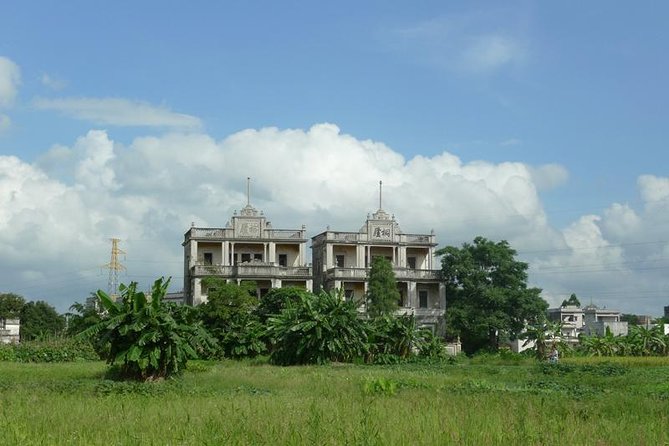
Kaiping’s diaolou (multi-story watchtowers) look like something you’d expect to find in a fantasy novel. In real life, they’re built for hard problems: floods, protection, and daily living. The oldest examples date back to the Ming dynasty era (14th to 17th centuries), and the towers came in different forms—communal refuges shared by multiple families, residential fortresses for a single family, and watchtowers used to alert locals about danger.
What makes Kaiping especially fascinating is what changes over time. Later towers reflect returning overseas migrants, and you can see Western-inspired architectural elements showing up in the design. So you’re not just sightseeing old buildings; you’re watching one region’s story shift from local defense to a bigger, international influence.
This tour works because it doesn’t dump you in one place and hope you figure it out. A local guide keeps the buildings in context while you move between villages and gardens.
You can also read our reviews of more tours and experiences in Guangzhou.



The 8:00am rhythm: how the day actually flows
The tour starts at 8:00am with hotel pickup in Guangzhou. Then you head into rural Guangdong by private vehicle, with a typical total day length of about 8 to 9 hours. From real on-the-ground experience, plan on roughly two hours per way driving to Kaiping—so yes, you will spend time in the car.
That’s not automatically bad. It’s often what makes the day feel like an escape: you leave the city early, arrive before the main crowds, and get time to wander with breathing room. Still, because the schedule is tight, it helps to pack for comfort—especially if you’re sensitive to long sitting time.
A good trick: treat the morning as your “thinking time.” On the drive, the guide’s anecdotes about why diaolou were built this way can make the first village stop click faster once you arrive.
Zili Village watchtower group: UNESCO views you can walk through
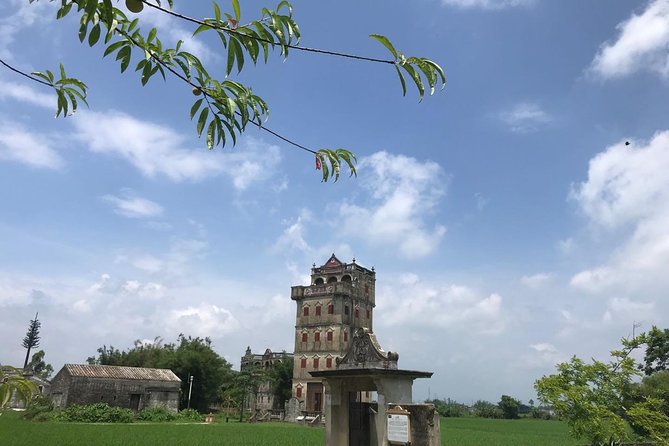
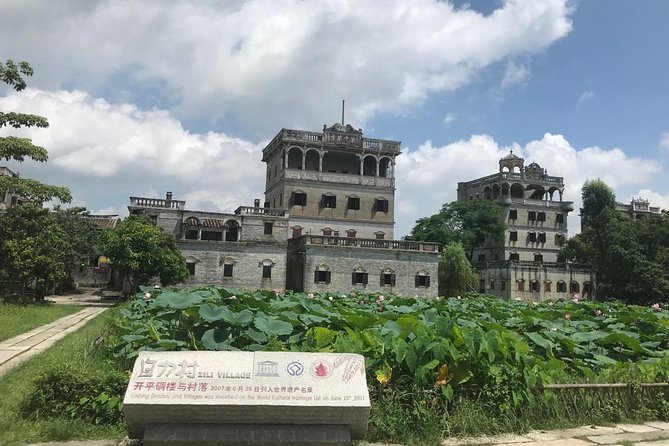
Zili Village is the first major cultural site you’ll tackle. It’s one of the best preserved diaolou villages, and it’s listed as a cultural heritage site by UNESCO (in 2007). When you arrive, the focus is clearly on the watchtowers: you’ll see the multi-story structures in their village setting, and you’ll get time to go inside.
This matters because the diaolou aren’t just exterior art pieces. You can absorb the interior layout and then—when permitted—look out from rooftops for bird’s-eye views over the village and surrounding fields. If you like architecture, you’ll probably notice how the towers relate to daily life: space, height, protection, and sightlines all blend into one design problem.
If you’re up for a little effort, this is where you’ll get the best payoff. One earlier experience involved climbing to the top of some towers for standout views. Even if you choose not to push all the way up, you still get the sense that these buildings were made for watching and waiting.
Good to know for comfort: towers are tower-towers, meaning stairs. Wear shoes that work well on steps and uneven surfaces.
Liyuan (Li) Garden in Kaiping: the calm break you’ll remember
After Zili Village, the tour shifts gears toward elegance. You’ll head to Liyuan Garden, also known as Li Garden, often described as the best of Kaiping’s gardens. This is a different kind of experience: less defense, more pleasure.
The walk is full of small highlights that fit together like a puzzle. You’ll see features such as a birdcage-shaped pavilion, plus garden elements like watchtowers, bridges, and canals. The mix is the key: even in a garden setting, you can still feel how diaolou culture shaped the built environment around daily life.
I like gardens on day trips because they prevent “architecture overload.” After the village towers, you get a slower pace and a chance to stand, look, and take photos without constantly moving. It also gives your legs a chance to reset—though there’s still walking involved.
If you’re traveling with someone who isn’t obsessed with buildings, this stop often wins them over because it’s pleasant even if you skip every detail and just enjoy the scenery and water.
Ma-Xianglong Village and Jingjiangli old houses: quiet bamboo-time
In the afternoon, the tour continues to Ma-Xianglong Village, where old houses spread out amid bamboo groves. Think of this as the village-side version of what you saw in the watchtowers: more everyday residential feel, more lanes, more quiet.
Then you’ll also spend time around Jingjiangli village, where you view older houses and well-designed architecture in the village setting. This is a good point in the day to pay attention to how the buildings sit in their environment rather than treating each stop as a separate attraction. The diaolou culture wasn’t isolated—it shaped how families built, lived, and protected themselves in the countryside.
Timing-wise, you’ll want to keep your energy for wandering. The afternoon is when people sometimes rush because they’re thinking about the return drive. Try not to. The best moments here tend to come when you slow down and look at the spacing between houses, the use of walls, and the way structures frame views.



Lunch and the included extras: where the tour price makes sense
The price is $269 per person for a private day trip, with hotel pickup and drop-off, a local guide, lunch, entrance tickets, private transport, and bottled water included.
For value, the big point is what you don’t have to juggle:
- Entrance fees are included, so you won’t have to figure out ticketing on your own.
- Lunch is included, which matters on countryside days where options can be limited.
- Hotel pickup and drop-off reduces friction. You’re not spending time on local transfers or negotiating anything day-of.
- Private vehicle keeps your schedule controlled. You go where the guide plans, when it’s planned.
For pricing logic: $269 can feel steep if you’re traveling solo and comparing it to a generic public tour. But if you’re in a small group, the “private” element can start to feel more fair—especially since the day runs tightly and includes admissions. Also, the tour offers group discounts, which can help if you’re coordinating with others.
The booking rhythm is worth noting too. The average booking time is 72 days in advance, so if you have a specific date, don’t leave it to the last minute.
Private guide attention: why it feels different from a bus day
Because this is a private tour, your group stays together and you get guide attention built for your pacing. That matters in Kaiping, where the details can get lost if you just wander around. A guide can point out why different diaolou types exist and how the Western-inspired features tie into later migration patterns.
Even if your language skills are limited, the architecture itself tells a story. The guide’s job is to help you read it faster: why these towers were built, how they functioned, and what you should notice when you’re standing in the doorway or looking up at rooftops.
Practical tips that make the day smoother
A few things that help you get more from the day without turning it into a chore.
- Start the day with a good breakfast and bring water. Bottled water is included, which is a nice touch.
- Expect stairs and uneven surfaces in tower interiors. If you’re not comfortable with climbing, keep that in mind while planning which spots to go up to.
- Bring a light layer. You’ll be in a vehicle for a while, then walking in villages and gardens.
- Plan to shoot photos with some restraint. The best experiences happen when you spend a minute looking first, then photographing second.
- Go with comfortable shoes that can handle steps. This is not a sneaker-on-a-soft-path kind of day.
Who should book this Kaiping diaolou day trip?
This private tour is a strong fit if you want:
- Architecture and cultural context, not just quick sightseeing
- A straightforward countryside day with pickup, admissions, and lunch handled
- Time in two of Kaiping’s key experiences: Zili Village and Liyuan Garden, plus village time at Ma-Xianglong and Jingjiangli
It’s also a good option when you have limited time in Guangzhou and want a full day away from the city without building a transportation plan from scratch.
Should you book it?
Yes, if you want a focused, guided day built around Kaiping’s most meaningful diaolou locations. The mix of watchtowers, UNESCO-listed Zili Village, and Liyuan Garden gives you variety, and the included lunch and entrance tickets lower the stress factor.
Skip it or rethink if you hate long drives and prefer to move slowly at each stop. The day runs for 8 to 9 hours, and the ride into the countryside is a real chunk of your time.
If you’re deciding between “private but pricier” and “cheaper group options,” this one earns its cost by doing the heavy lifting—admissions, logistics, and guide interpretation—so you can focus on the buildings and the village atmosphere.
FAQ
How long is the Kaiping diaolou day trip?
It runs about 8 to 9 hours, starting at 8:00am.
What’s included in the price?
Lunch, a local guide, hotel pickup and drop-off, private vehicle transport, entrance tickets, and bottled water are included.
Is this a private tour or shared with other people?
This is a private tour/activity. Only your group participates.
How far is the drive from Guangzhou?
The drive takes about 2 hours per way.
Do I get a mobile ticket?
Yes, the tour offers a mobile ticket.
Can I cancel for free?
Yes. Free cancellation is available up to 24 hours in advance for a full refund.