REVIEW · GUANGZHOU
UNESCO Watchtowers World Heritage Ancient Villages Private Tour
Book on Viator →Operated by Guangzhou Local Tours · Bookable on Viator
Fortress towers rise above Kaiping farmland. This private UNESCO day trip from Guangzhou takes you into the Kaiping countryside to see the diaolou watchtowers, fortified village life, and the gardens built by returnees with overseas ties.
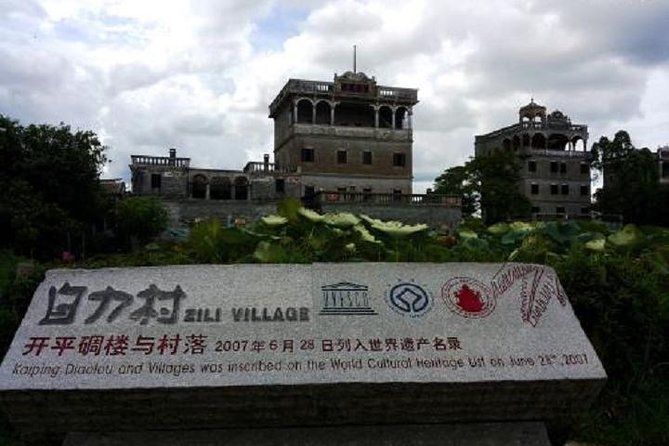
I especially love the chance to walk through the diaolou clusters at Zili and Majianglong, where these tower-houses really look built for defense, not decoration. I also like that the plan mixes architecture with a classic garden stop—Li Garden—so you get more than just towers.
One consideration: it’s a long day. Driving to the Kaiping area takes about two hours each way, and admission tickets and lunch aren’t included, so you’ll want to budget for those and keep your schedule flexible.
In This Review
- Key highlights to look forward to
- Fortress Watchtowers and Overseas Stories: Why Kaiping Matters
- The Private Car Setup From Guangzhou (and Why It’s Worth It)
- Price and Value: How $255 Per Person Adds Up
- Stop-by-Stop: Kaiping Watchtowers and Garden Highlights
- Stop 1: Kaiping Diaolou and Villages (Zili cluster + Majianglong cluster + Li Garden)
- Stop 2: Watchtower Group of Zili Village (Anheli, He’anli, Yong’anli)
- Stop 3: Jinjiangli Village (farm paths, water, and rural rhythm)
- Stop 4: Kaiping Garden (Li Garden details and Dream of the Red Chamber inspiration)
- Stop 5: Ma-Xianglong Towers Group (Majianglong Village and Tanjiang River setting)
- Stop 6: Chikan Movie Town (Qilou streets and Western influences)
- Best Time to Go and How to Keep the Day Enjoyable
- Who This Tour Fits Best
- Should You Book This Kaiping Diaolou Private Tour?
- FAQ
- How long is the Kaiping UNESCO Watchtowers and Ancient Villages private tour?
- Does the tour include hotel pickup in Guangzhou?
- Is admission or lunch included in the price?
- Is this a private tour or a shared group?
- What transport is provided during the day trip?
- How far in advance should I book?
Key highlights to look forward to
- Diaolou clusters in Zili and Majianglong: fortified tower-houses tied to overseas Chinese migration history
- Li Garden (Kaiping Garden): early 20th-century garden design inspired by Dream of the Red Chamber
- A countryside route through farmland and water: you’ll see the rural setting that shaped village life
- Qing-era Chikan Movie Town: Cantonese Qilou street buildings with Western-style influences
- Private car with English-speaking guide: less stress, more time at each site
Fortress Watchtowers and Overseas Stories: Why Kaiping Matters

Kaiping’s UNESCO sites aren’t famous just because they’re old. They’re famous because the structures tell a specific story: emigrants sent money home, then built these tall, fortress-like tower-houses as status symbols and protective homes. The result is a landscape where rural villages feel designed for both daily life and long-distance uncertainty.
The drive out of Guangzhou matters too. Even before you reach the main stops, you’re moving from big-city speed to farm roads with livestock sheds, fishponds, and farmland. That shift helps the architecture make sense. These towers weren’t built in a vacuum—they’re part of a working countryside.
This is the kind of day trip where your guide’s job is more than translation. An English-speaking guide can point out what to look for in the towers’ placement, why certain villages were grouped, and how garden design fits the same “return-and-build” theme.
You can also read our reviews of more tours and experiences in Guangzhou.


The Private Car Setup From Guangzhou (and Why It’s Worth It)
This tour runs as a private day trip with hotel pickup and drop-off in downtown Guangzhou, plus a dedicated car and professional driver. For a UNESCO day outing, that kind of door-to-door service is a practical win: you’re not juggling local transport changes, and you can spend your time where it matters.
The tour duration is listed as 5 to 11 hours, which is a wide range on purpose. In practice, the timing depends on your chosen sites, how quickly you move through each village cluster, and whether you stop for quick photo breaks. The itinerary is built around several separate locations, so a private vehicle keeps transitions smooth.
English-language guidance is included, with full escort. That helps a lot on days like this because many of the details—village names, historical references, and architectural cues—make more sense with context rather than guesswork. I also like that the operator is Guangzhou Local Tours, and their team connection is visible in the way they follow up with travelers; Damon, associated with Guangzhou Local Tours, is listed by name in their responses.
Price and Value: How $255 Per Person Adds Up
At $255 per person, this isn’t the cheapest way to see Kaiping. It’s also not trying to be. You’re paying for four main pieces of value:
1) Private transportation out of Guangzhou
Kaiping is about two hours away by car, and a private car saves time versus piecing together buses and taxis.
2) An English-speaking guide with full escort
UNESCO sites can feel like “look at the building” if you don’t have context. A guide turns the day into something you can actually remember.
3) Multiple UNESCO-focused stops in one outing
Instead of just hitting one watchtower cluster, the plan includes several village groups plus Li Garden and Chikan Movie Town.
4) Hotel pickup and drop-off
This matters more than it sounds on a long day. You avoid the awkward “how do I get back?” problem.
What’s not included is also clear: admission fees and lunch (for you and the guide). So your real cost depends on entry ticket pricing and what you choose to eat. If you want a straightforward day with fewer logistics headaches, this price starts to feel reasonable.
Stop-by-Stop: Kaiping Watchtowers and Garden Highlights
Here’s what the day is built around, plus what to expect and how to get the most out of each stop.
Stop 1: Kaiping Diaolou and Villages (Zili cluster + Majianglong cluster + Li Garden)
This first segment is where your eyes learn the “diaolou language.” You’ll start with the Diaolou cluster connected to Zili Village, and you’ll also be looking at the UNESCO watchtower villages tied to Majianglong Village. The overall idea: these are tower-houses grouped by village, designed for defense and community identity.
At the same time, you’ll visit Li Garden, often described as a “masterpiece” of garden building by overseas Chinese returnees. The big value of pairing Li Garden with the diaolou experience is contrast. Towers show outward-looking protection and status. A garden shows domestic taste, planning, and cultural education.
Practical note: the tour indicates admission tickets aren’t included, so if you’re the type who likes to plan down to the minute, budget for tickets before you go in.
Stop 2: Watchtower Group of Zili Village (Anheli, He’anli, Yong’anli)
Next comes a focused walk into Zili Village’s watchtower group. This portion is specifically tied to a Qing Dynasty reference: the founding is linked to the 17th year of Daoguang’s reign, which is 1837.
What you’ll get out of this stop is a clearer sense of how village clusters worked. The plan names three unincorporated villages—Anheli, He’anli, and Yong’anli—and notes they share the surname Fang. Even if you don’t remember the names perfectly, this kind of detail helps you understand how these communities were organized, not just how individual towers looked.
What to watch for during your visit: tower placement relative to the village layout, the defensive “feel” of the complex, and how the group forms a visual barrier rather than scattered structures.
Stop 3: Jinjiangli Village (farm paths, water, and rural rhythm)
After the watchtower-heavy sections, Jinjiangli Village shifts your pace. This stop is described as surrounded by mountains, with crisscross paths through farmland and a river running through the area.
This is one of those “small” stops that often becomes a favorite because it shows daily village reality. The description also mentions water buffaloes and geese, which is a useful reminder that these watchtower villages weren’t abandoned museum sets. People and animals were part of the rhythm, and the architecture grew around that life.
If you like photography, this is a good place for it because the paths and water give your shots depth. If you prefer speed, you can still enjoy it without turning it into an hour-long wandering session.
Stop 4: Kaiping Garden (Li Garden details and Dream of the Red Chamber inspiration)
Now you’ll spend focused time on Kaiping Garden, which is also tied to Li Garden. The background given here is specific: it was built in the early 20th century by Mr. Xie Weili, who is described as a US-based Chinese.
The garden’s design inspiration is also explicit. It’s based on the Grand View Garden from Dream of the Red Chamber, and the description notes it combines classical garden features.
Why this stop is worth it: it turns the day from “towers and defense” into “taste and culture.” For many visitors, the diaolou are the headline. The garden explains how returnees expressed wealth and identity inside everyday space.
Tip for your timing: don’t rush the garden portion. Even if you’re not a “garden person,” take it slowly enough to understand the layout and how the water/visual lines work.
Stop 5: Ma-Xianglong Towers Group (Majianglong Village and Tanjiang River setting)
Your itinerary then moves to the Ma-Xianglong Towers Group in Majianglong Village. The description places this on flatland along the eastern coast of the Tanjiang River, with administration under Baihe Township.
The tour also describes the structure of the village cluster: it includes five villages, including Yong’an and Nan’an Village of the Huang family. That’s useful context because it suggests you’re not just looking at one landmark tower—you’re seeing a cluster of connected communities with shared heritage and planning.
This stop is where the river setting matters. The flatland location makes the towers feel more “visible” in the broader rural setting, and it’s easier to connect what you’re seeing with the geography that influenced settlement patterns.
Stop 6: Chikan Movie Town (Qilou streets and Western influences)
The last major stop is Chikan Movie Town, described as established in the early Qing Dynasty. It’s located next to the Tan River and is noted for convenient transportation for surrounding rural villages.
Here the architecture focus shifts again. Chikan Movie Town is famous for Cantonese Qilou street buildings and also includes Western style elements. For a day that begins with fortified towers, ending with mixed-style street architecture gives your brain a “whole-picture” feeling: Kaiping and nearby rural areas weren’t isolated. They absorbed outside influences and expressed them in local forms.
This is also a good place to slow down for a final walk and let your photos catch up with your memory.
Best Time to Go and How to Keep the Day Enjoyable
The tour runs all day, and the itinerary is packed enough that weather and pacing can make a difference.
If you want a calmer vibe, go on weekdays when possible. One review response specifically noted quiet countryside atmosphere on weekdays and a total trip time around eight hours. Your personal schedule may vary, but that feedback lines up with what I’d plan for: fewer crowds mean more time around villages and gardens without constant foot traffic.
Also, wear shoes that handle uneven village paths. Even when you’re not doing long hikes, you’ll be walking between village clusters, crossing garden areas, and moving along street settings.
Who This Tour Fits Best
This is a good match if you want:
- UNESCO sites that feel like real villages, not just a single photo stop
- A private, guided day out of Guangzhou rather than DIY logistics
- Architecture lovers who also appreciate cultural context (diaolou plus Li Garden)
- People interested in overseas Chinese migration influence on home-building and community planning
It may be less ideal if you’re only looking for a short, low-effort outing. The drive time, multi-stop itinerary, and ticket/lunch budget make it a full-day experience.
Should You Book This Kaiping Diaolou Private Tour?
If you value convenience, context, and getting multiple UNESCO sights into one day, I think this is a smart booking. The private car plus hotel pickup reduces stress, and the mix of Zili/Majianglong diaolou clusters, Li Garden, and Chikan Movie Town gives you variety across architecture and daily village life.
Book it if your priority is learning what you’re looking at, not just taking quick snapshots. Consider skipping (or shortening your expectations) if you hate long driving days or you’re trying to keep costs ultra-low since admissions and lunch aren’t included.
FAQ
How long is the Kaiping UNESCO Watchtowers and Ancient Villages private tour?
The duration is listed as 5 to 11 hours, depending on the flow of the day and how time is spent at each stop.
Does the tour include hotel pickup in Guangzhou?
Yes. The tour includes hotel pick up and drop off in downtown Guangzhou.
Is admission or lunch included in the price?
No. Admission fee and lunch are not included for you and the guide.
Is this a private tour or a shared group?
This is a private tour/activity, and only your group participates.
What transport is provided during the day trip?
You get a private car with air-con and a professional driver, with full escort from a local English-speaking guide.
How far in advance should I book?
On average, it’s booked about 6 days in advance, and confirmation is received within 48 hours of booking subject to availability.