REVIEW · ROME
Ancient Appian Way PRIVATE Bike Tour
Book on Viator →Operated by Roma STARBIKE · Bookable on Viator
You can feel Rome loosen its grip. This private e-bike tour trades downtown traffic for the Via Appia Antica and the parks, ruins, and waterworks along one of the most famous roads in the Roman world. I especially like the mix of major monuments and quieter greenery, and the way the route hits both city-edge gateways and deep countryside segments. One thing to weigh: parts of the ride run through busy streets, so if you’re nervous sharing the road, plan carefully.
Here, the “ancient sights” aren’t scattered across half a day of buses. You cover a lot of ground by bike—about 4 hours—while still stopping often enough to really read the stones, not just speed past them. It’s also a strong family option because child seats are available and the pace is guided, not frantic.
English is offered, you’ll have a mobile ticket, and the tour uses e-bikes with practical extras like a helmet and phone/handlebar holders. Just make sure you’re comfortable pedaling a bike well before you arrive, because the e-bike is pedal-assisted rather than a throttle ride.
In This Review
- Key highlights and what they mean for you
- Entering the Via Appia Antica from Porta San Sebastiano
- E-bike reality check: 4 hours, pedal assist, and where effort shows up
- Parco della Caffarella: Rome’s green edge with ancient fragments
- Ninfeo di Egeria: a myth-shaped pause on the way to the waterworks
- Parco degli Acquedotti: where ancient engineering still runs
- Villa dei Quintili and the mile-marker feeling of the Appian Way
- Cecilia Metella’s mausoleum and Castrum Caetani: big, preserved, and readable
- Circus of Maxentius and Baths of Caracalla: the Roman scale hits
- Circus of Maxentius
- Terme di Caracalla
- Private guide value: why the stories feel personal
- Family fit: child seats, trailer bikes, and age/height details
- Price and value at $147.54: what you’re actually paying for
- Should you book this Ancient Appian Way private bike tour?
- FAQ
- What’s the duration of the Ancient Appian Way PRIVATE Bike Tour?
- Where does the tour start and end?
- What’s included with the e-bike?
- Is the tour private?
- Do you need to speak Italian?
- Are there child options and any restrictions?
- Is the e-bike pedal assisted or does it have a throttle?
- What’s the cancellation rule?
Key highlights and what they mean for you
- Private guide attention: You get history explained at your pace, with time to ask questions (and not get swept along).
- Aqueduct park time: You’ll ride and stop in major green space around the ancient water network near the Parco degli Acquedotti.
- Iconic Appian Way stops: Porta San Sebastiano, the Circus of Maxentius, and the Baths of Caracalla are all on the route.
- Well-placed photo pauses: Most stops are short but deliberate, so you’re not stuck for long at each monument.
- Family-friendly setup: Child seat included, plus a child discount with a height condition (because some kids ride in a trailer setup).
- Easy to feel the emptiness: Several guides earned praise for showing people how to experience this stretch away from the loudest crowds.
Entering the Via Appia Antica from Porta San Sebastiano
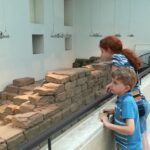
Your ride starts at Via dei SS. Quattro, 58, near public transportation, and then heads south to one of Rome’s most dramatic gateways: Porta San Sebastiano. This is part of the Aurelian Walls built around 275 AD, and it also marks the beginning of the historic road that made Rome feel connected to the rest of the empire.
The vibe here is instant. You’re not starting in a museum room—you’re starting at a city wall threshold with medieval graffiti that shows how people have used this corridor for centuries. Even the “short” stop feels meaningful because the location carries layers: late Roman defense, medieval pilgrim traffic, and the Appian Way spirit all in one view.
Small practical note: this first stretch sets the rhythm. If you arrive unprepared to mount and control a bike, you’ll lose time early—so double-check your comfort with the bike before you roll.
You can also read our reviews of more tours and experiences in Rome.
E-bike reality check: 4 hours, pedal assist, and where effort shows up
This tour is built around e-bikes, but they’re not magic buses on wheels. The e-bike is pedal assisted, and at least one guide’s riders flagged that there’s no throttle. That means you still do real pedaling, just with help when the road asks more of you.
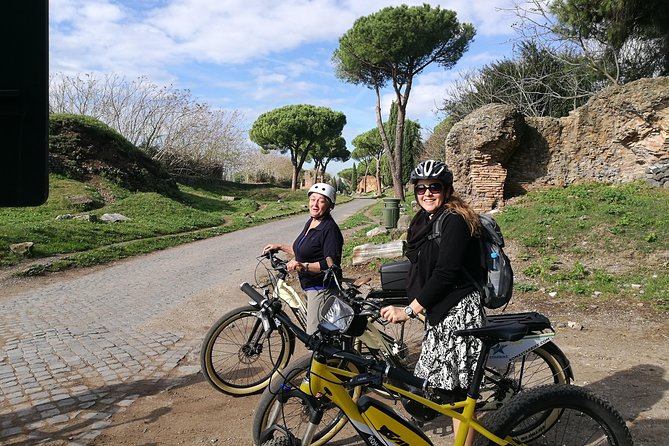
The good news: reviews repeatedly describe the bikes as easy and manageable, especially once you’re fitted properly. Helmets and practical holders (including a phone/handlebar setup) help you focus on the ride and photos, not gear juggling.
You should also plan around the physical side of things:
- The tour is listed for moderate physical fitness.
- You must know how to ride a bike well.
- Expect a mix of cobblestones and park paths, plus some segments that go through heavily trafficked streets.
In other words: it’s not a hardcore training ride, but it isn’t a lazy cruise either. If you can ride confidently in mixed conditions, you’ll likely find it smooth.
Parco della Caffarella: Rome’s green edge with ancient fragments
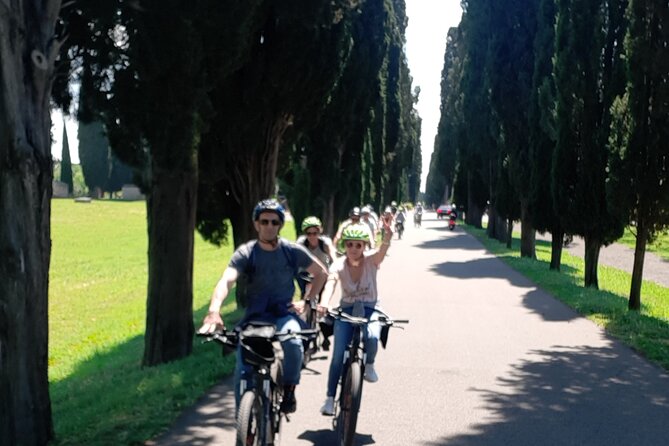
After the gateway, the route slips into a big breathing space: Parco della Caffarella. This park is tied to the Appia Antica Regional Park and is one of the largest green areas in Rome and Europe, which you’ll feel fast. The air and the sound change. Instead of traffic noise, you get paths, groves, and the kind of open sightlines that make ruins feel less like isolated objects.
Here’s what makes this stop work: you’re seeing history embedded in lived-in nature. Paths guide you toward remains of ancient structures, but the park setting keeps it from feeling like a fenced-off theme area. You can also enjoy the “wide Rome” effect—big skies, long views, and a calmer pace than central streets.
Possible drawback: parks still get hot and dry. If you’re going in summer, bring water and plan for heat breaks when your guide offers them.
Ninfeo di Egeria: a myth-shaped pause on the way to the waterworks
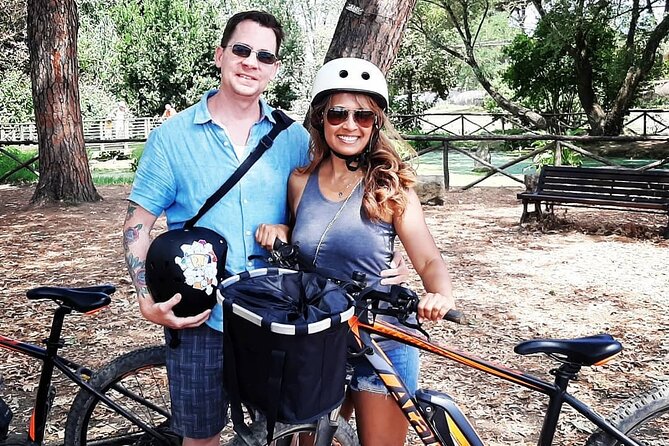
Next you’ll stop at Ninfeo di Egeria, a sacred place connected to the story of the nymph Egeria and Numa Pompilius. It’s the kind of stop that sounds poetic in a headline and then becomes surprisingly tangible when you’re standing there, in the same landscape that helped carry the myth.
This pause is short, but it adds an important layer to your ride. The Appian Way isn’t only about stone monuments. It’s also about how Romans explained nature—especially water—through stories. That theme shows up again later with the aqueducts.
If you like your history tied to place, you’ll appreciate this moment. If you prefer nonstop riding, you might treat it as a quick scenic reset rather than a long interpretation stop.
Parco degli Acquedotti: where ancient engineering still runs
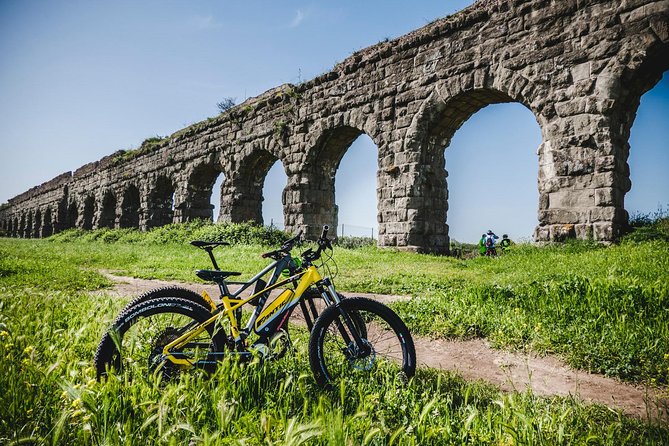
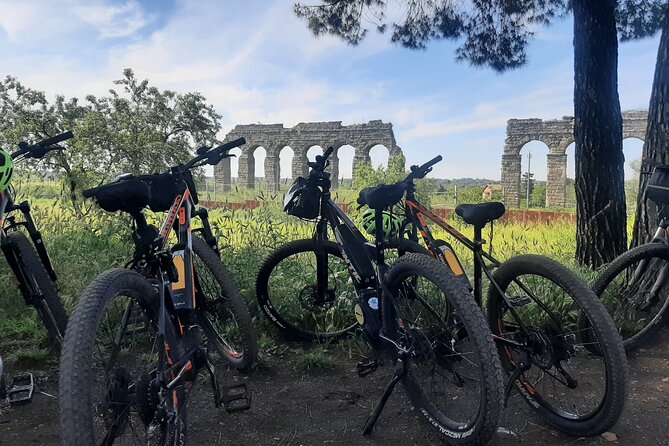
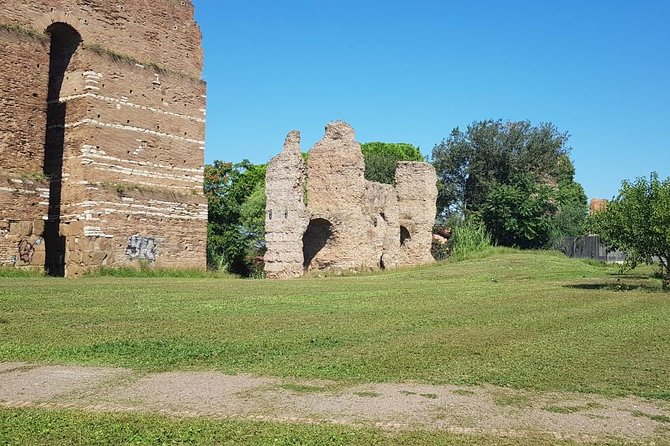
Then comes the main “wow” stretch for many first-time Appian Way fans: Parco degli Acquedotti (Parco Archeologico dell’Appia Antica). This is where you see the remains of Roman aqueducts and understand the scale of the water network that fed the ancient city.
One of the best details here is that some ancient water still operates in parts of the system. That makes the experience feel less like archaeology-only and more like ongoing infrastructure with history layered on top.
You’ll ride through this immense green area crossed in ancient times, and the route helps you do something cars never can: move at a speed where you can actually take in the architecture. You’ll also likely notice how the ruins repeat in a pattern—stone lines, arches, and engineering logic—until the place clicks into a single system.
Consideration: aqueduct parks can mean more exposure to sun. If it’s a bright day, sunglasses and sun protection are worth it. Your guide can also help you choose the best viewing angles while staying safe on the ride.
Villa dei Quintili and the mile-marker feeling of the Appian Way
As you continue, you reach a stop that feels like a “you are here” moment on the road: Villa dei Quintili and Santa Maria Nova. You’ll learn about the Quintili brothers—Sesto Quintilio Condiano and Massimo Valerio—consuls in the second century AD, and how Commodus later confiscated the villa and turned it into imperial property.
This is one reason I like this tour for people who want more than one big monument. Villa remains can be less dramatic than a coliseum-scale structure, but the Appian Way context makes them powerful. You’re seeing wealth and power positioned along a road that mattered.
You’ll also likely appreciate the mile-marker feeling of the route—each stop acts like a historical marker, and the short stops keep you from getting “ruin fatigue.”
Cecilia Metella’s mausoleum and Castrum Caetani: big, preserved, and readable
One of the most striking stops is Mausoleo di Cecilia Metella and the Castrum Caetani area. This mausoleum is a pagan tomb dating to the 1st century BC, and it’s described as one of the best-preserved mausoleums on the Via Appia Antica. That matters because preserved details help you interpret what you’re looking at without guessing.
Your view here also connects different eras. The mausoleum was incorporated into the Castrum Caetani complex, and you can also see traces of a medieval house from the Caetani family. There’s even mention of the church of San Nicola with perimeter walls still standing, which gives you a layered timeline rather than a single-era snapshot.
Practical note: mausoleums draw attention fast. If you’re traveling with kids, a shorter stop here can work best—ask your guide for the story angle that keeps younger listeners engaged.
Circus of Maxentius and Baths of Caracalla: the Roman scale hits
The route then shifts into two heavy-hitter structures that feel made for bike access: Circus of Maxentius and Terme di Caracalla.
Circus of Maxentius
The Circus of Maxentius is described as the best example of a Roman circus surviving to today. You’ll see the remains of the oval arena space, and the spina still visible. One standout detail you’ll likely hear is that the Agonale obelisk was moved during the Renaissance to the Fountain of the Four Rivers in Piazza Navona. That kind of connection is a real payoff because it ties the Appian Way to the Rome you already know.
Terme di Caracalla
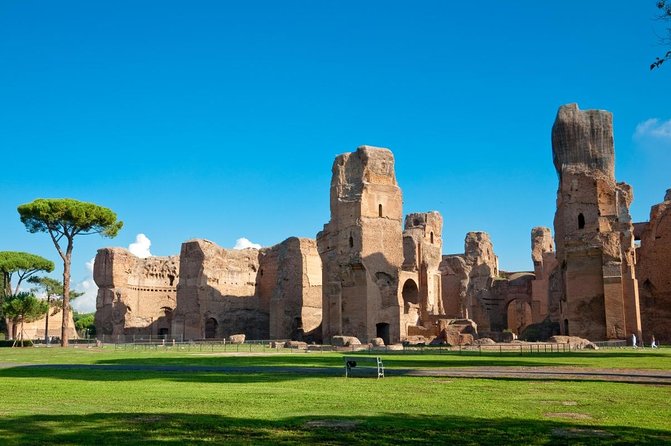
Then it’s Baths of Caracalla, built by Emperor Caracalla. For about a century, these were the largest public baths ever built, and much of the structure is preserved. You’ll also learn about water supply: a branch of the Aqua Marcia brought water to the baths through the Antoninian aqueduct. Even the mention of small remains you can admire at Porta San Sebastiano gives the water theme a full-circle feel.
Consideration: these stops are architecture-heavy. If you’re tired from pedaling, ask your guide to focus your attention on the most important elements first—then you can wander a bit after.
Private guide value: why the stories feel personal
A private tour changes the whole texture of a day. You’re not fighting for a spot at the front, and the guide can slow down when you want to take in a detail or speed up when you’re itching to keep moving.
The best feedback in the group comes down to the guides themselves—people like Chris, Alex, Valerio, Iman/Imon, Nico, Claudio, Sara, and Marco. Several riders highlighted guides for being warm, patient, and engaging, with the kind of history explanations that connect details you’d otherwise miss. One guide, Valerio, was specifically praised for being knowledgeable and patient, and Nico was celebrated for studying ancient Greek and Latin plus having an ancient history degree. If you like your history tied to language and context, that sort of expertise shows.
You’ll also benefit if you travel with kids. One family route was praised for working smoothly across ages from 11 down to 5, with child seats available and the day organized so children didn’t feel dragged.
Family fit: child seats, trailer bikes, and age/height details
This is a tour that explicitly supports families. A child seat is included up to 25 kg. There’s also a child discount for kids age 6 to 10, but it only applies if they’re below 4/7 feet (143 cm) because they’ll ride in a trailer bike setup rather than a standard bike alone.
That height rule is important. If your child is close to the cutoff, double-check before booking so you don’t end up with surprises on the day.
Also keep in mind: you must know how to ride a bike well. That requirement is for participants in general, even with e-assistance and child seats. For kids, the tour structure helps, but it still expects basic bike comfort for the people riding.
Price and value at $147.54: what you’re actually paying for
At $147.54 per person for a 4-hour private e-bike tour, you’re paying for four things that add up:
- High-quality e-bikes with helmets and practical mounts (phone and handlebar holders).
- A private guide who can pace the day and explain what you’re seeing.
- Time on foot-free terrain—parks and archaeological areas are easier and more enjoyable by bike.
- Multiple major stops without transit stress.
Also, each listed stop is marked as free admission, which matters because it means most of what you’re buying isn’t ticket cost—it’s the guided experience and the bike access.
Where the price can feel more or less worth it:
- Great value if your group wants a calm, story-focused day and you’ll actually use the private attention.
- Less value if you’re the type who prefers solo wandering and don’t want interpretation.
Should you book this Ancient Appian Way private bike tour?
Book it if you want a Rome day that feels like stepping outside the city without giving up real ancient monuments. The Appia Way stops—from Porta San Sebastiano to aqueduct parks, Cecilia Metella, Maxentius, and the Baths of Caracalla—are exactly the kind of “connected history” that becomes more enjoyable when you’re moving under guidance.
I’d skip it or be cautious if:
- You’re uncomfortable riding in mixed traffic.
- You don’t like riding unless you’re mostly coasting (because it’s pedal-assisted, not throttle).
- Your group isn’t ready for a moderate fitness day with sun exposure and a few structured stops.
If you’re a confident rider and you want a private, English-led way to see the Via Appia Antica without a bus-and-rush scramble, this tour is a strong choice.
FAQ
What’s the duration of the Ancient Appian Way PRIVATE Bike Tour?
It runs about 4 hours.
Where does the tour start and end?
It starts at Via dei SS. Quattro, 58, 00184 Roma RM, Italy and ends back at the same meeting point.
What’s included with the e-bike?
You get a high-quality e-bike, a helmet, and holders for a mobile phone and the handlebar. A child seat is also included (up to 25 kg).
Is the tour private?
Yes. It’s a private tour, so only your group participates.
Do you need to speak Italian?
The tour is offered in English.
Are there child options and any restrictions?
Yes. Child seats are available up to 25 kg. A child discount for ages 6 to 10 applies only if the child is below 4/7 feet (143 cm) because they will ride in a trailer bike setup.
Is the e-bike pedal assisted or does it have a throttle?
The provided information and ride feedback indicate it is pedal assisted, not a throttle ride.
What’s the cancellation rule?
Free cancellation is available up to 24 hours before the experience start time for a full refund.