Street-level London history is right on your route. This City of London walk makes big time periods feel close up, with Vivienne turning Roman walls, medieval churches, and WWII discoveries into a clear story you can follow. I like the way she keeps the group engaged, and I like that one booking covers a lot of ground without wasting time hunting for sights.
The pace works because the route is built for real foot traffic. It’s wheelchair and stroller accessible, and it’s the kind of walk where you can ask questions and not get swept along. One thing to consider: most stops are brief, so if you want long, slow photo sessions at every location, this may feel like a sprint.
You get a tight loop through the City’s most instructive corners. The payoff is how the places connect: Romans, church builders, modern architects, and WWII archaeology all show up along the same route.
In This Review
- Key highlights you’ll care about
- A 2-hour route through Roman, Wren, and WWII London
- St. Alphage London Wall: where the Roman line still shows
- St Alban Wood Street: Wren’s church tower versus modern neighbors
- Noble Street Roman ruins: WWII revealed what was hiding
- Postman’s Park and the Watts memorial: sacrifice in a quiet corner
- Old Bailey’s Christchurch shell garden: war damage turned into a courtyard lesson
- Smithfield Market: a 1,000-year meat market and the events around it
- St Bartholomew the Great: a 900-year church with time inside
- Price and group size: what you’re really paying for
- Who this walk is best for (and when to skip)
- Should you book this tour?
- FAQ
- Where does the tour start?
- Where does the tour end?
- What time does the tour begin?
- How long is the tour?
- What language is the tour offered in?
- Will I receive a mobile ticket?
- Is the tour suitable for wheelchairs and strollers?
- Are service animals allowed?
- Can I get a full refund if I cancel?
Key highlights you’ll care about
- A guide-led story route that links Roman, medieval, and WWII layers without changing plans every few minutes
- Stairs-light design: wheelchair and stroller accessible for a street-level historic walk
- Free entry stops at each listed site, so you’re paying for the walk and explanations, not museum tickets
- Roman London Wall remnants right at St. Alphage London Wall
- WWII bombing archaeology at both Noble Street and the Christchurch shell garden near the Old Bailey
- A real church visit at St Bartholomew the Great, with time inside (about 20 minutes)
A 2-hour route through Roman, Wren, and WWII London
This tour is built for people who want the City of London to make sense. Not just to see famous landmarks, but to understand why this area looks the way it does now. In about two hours, you move through a string of stops where each one adds a different layer to the story: ancient Roman defenses, medieval faith sites, and the post-war remains that turned ruins into history lessons.
The value here is simple. The listed admissions are free at the stops, so your money goes toward one thing you can’t buy at a ticket window: a guided explanation that connects the dots. And the group size stays small, with a maximum of 25. That matters because you can actually hear what’s going on and not just stand at the back hoping the guide speaks loud enough.
One more practical note: this is an efficient walking loop with short viewpoints. Expect quick stops at most locations, then a longer moment inside the last church. If you enjoy “here’s what you’re looking at and why it matters” on the go, you’ll have a great time. If you prefer to linger for ages in one place, plan to come back later on your own.
You can also read our reviews of more tours and experiences in London.

St. Alphage London Wall: where the Roman line still shows
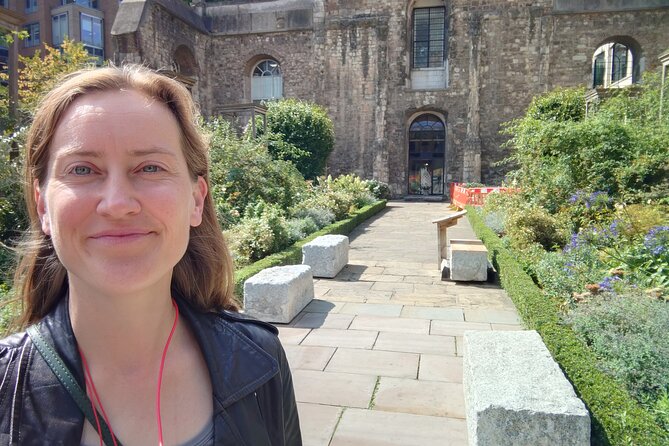
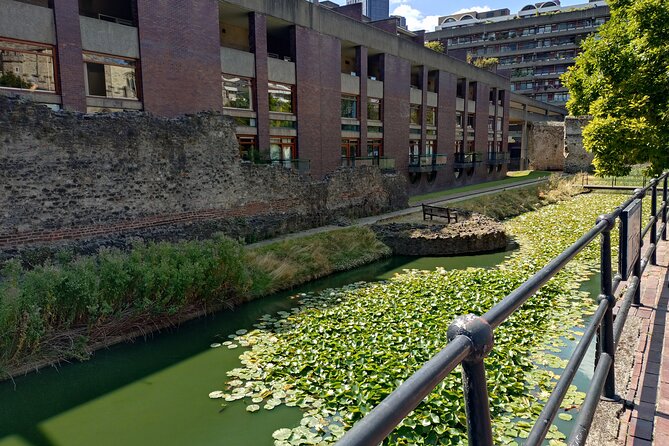
Your walk starts at 101 Moorgate at 11:00 am, and the first stop sends you straight into the Roman-to-medieval timeline. At St. Alphage London Wall, you can see medieval church remains alongside a section of the ancient London Wall, originally built by the Romans.
This is the kind of sight that’s easy to miss when you’re rushing. The power of this stop is the contrast: the Romans made a defensive line meant to last, and the later city built around it. Even if you’re not a “walls and dates” person, you’ll get the visual logic fast. You’re not looking at a museum model; you’re looking at a survival piece of infrastructure that shaped the street grid and the city’s defensive thinking.
Time here is brief (about 5 minutes), so go in with an intention. Spend that short window looking for the junction between what’s clearly older fabric and what’s later church-related remains. Then listen for how the guide frames the wall as the City’s backbone—because once you hear that, everything else on the route clicks into place.
St Alban Wood Street: Wren’s church tower versus modern neighbors
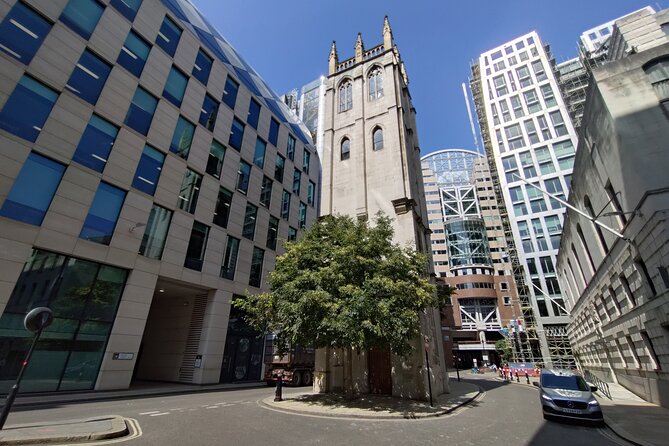
Next up is St Alban Wood Street Church Tower, where you get a sharp contrast between centuries. This is a surviving tower associated with Sir Christopher Wren, sitting alongside modern architecture by Norman Foster, Lord Rogers, and Terry Farrell.
I like this stop because it’s not just about the old. It’s about how London keeps stacking eras in the same small space. The guide’s perspective here is useful: when you stand at ground level, you can see how a Wren tower holds its own visually even with sleek, contemporary buildings nearby. That’s not a small point. It’s a reminder that the City isn’t a frozen historic theme park. It’s a working urban area where new shapes are literally built next to old ones.
This stop is also about 5 minutes, so it’s best treated like a “look and learn” pause. If you’re the type who loves architecture comparisons, keep your eyes open for how the tower’s form reads differently when surrounded by modern lines and materials. If you’re not, don’t worry—the story connection is what makes this moment worth your time.
Noble Street Roman ruins: WWII revealed what was hiding
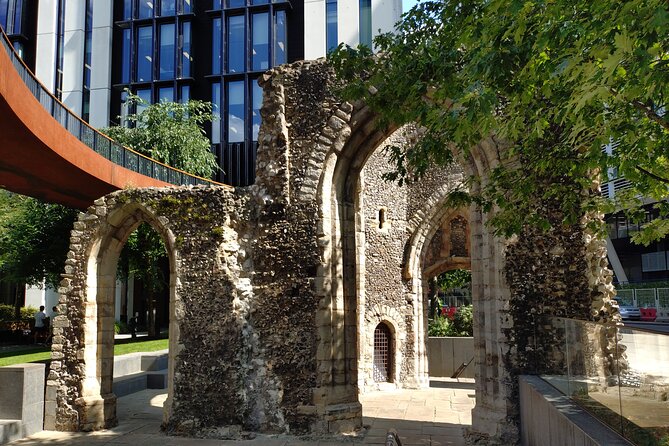
At Noble Street, the story turns to the 20th century, and it does so in a very London way. Roman ruins were discovered after bombing in WWII devastated the surrounding area.
This stop is short (about 5 minutes), but it carries big meaning. It’s a reminder that damage and destruction can also lead to archaeological discovery. You’re seeing history that wasn’t meant to be seen until later—history that was uncovered because the ground was changed.
If you walk through the City often, you’ll notice the effect of layered construction: buildings go up, old structures get buried, and then sometimes later events pull the curtain back. Listening closely at Noble Street helps you understand why some locations feel familiar yet oddly hard to pinpoint as “where the past is.” This is one of those places where the ground tells a story even when there’s nothing obvious to photograph.
The practical takeaway: look for cues the guide points out, then take the moment as a concept lesson. It makes the later WWII-related stop near the Old Bailey feel less random and more connected.
Postman’s Park and the Watts memorial: sacrifice in a quiet corner
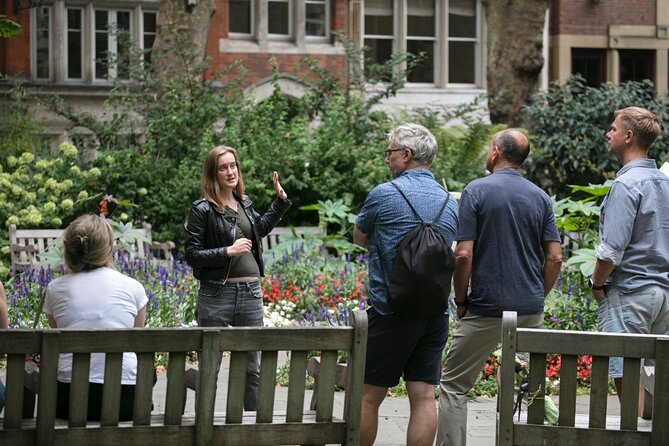
Postman’s Park is where the tour slows down emotionally. You’ll spend time in the park viewing the Watts memorial dedicated to those who gave their lives for others, along with a discussion of the park’s history.
Here’s why I think this stop works so well for a wide range of people. The City of London can feel like stone and business, but Postman’s Park puts humanity back into the picture. You’re not just learning dates. You’re encountering a memorial that asks you to reflect on courage, everyday risk, and the stories we choose to preserve.
Time is about 5 minutes, so you won’t linger for ages. Still, it’s enough time to make the memorial’s purpose land. If you’re someone who reads plaques and absorbs names slowly, you may want to revisit Postman’s Park after the tour when you have more time. But even in a short window, you’ll come away with a clearer sense of why the park exists and why it matters in the wider City story.




Old Bailey’s Christchurch shell garden: war damage turned into a courtyard lesson
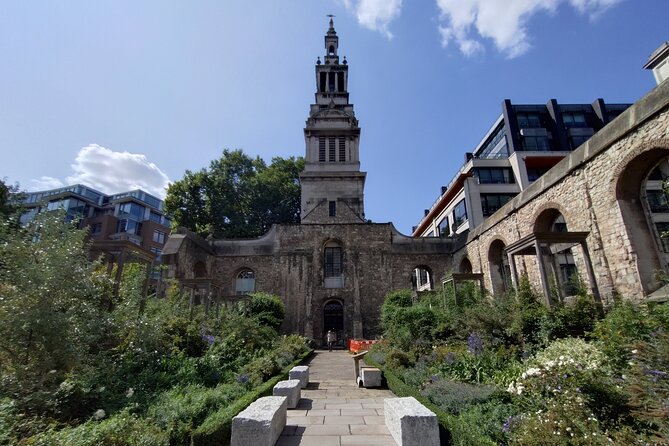
At the Old Bailey, you’ll visit the garden within the shell of Christchurch, another WWII bombing victim, and you’ll discuss the Old Bailey itself.
This stop is powerful because it shows how the City built around tragedy without erasing the evidence. The “shell” concept matters: you can’t really unsee that something was broken and left in place. It turns a garden into a quiet history room, where your eye naturally picks up the boundaries—what’s missing, what remains, and how the space is used after the fact.
It’s about 5 minutes, which means you’ll get the main ideas rather than a deep archival lecture. But the guided discussion helps you understand why the Old Bailey area carries such a heavy association, and why the WWII remnants fit into that broader “place and meaning” theme.
If you’re traveling with kids in a stroller, this is also the kind of stop that feels more like a pause than a sightseeing sprint. The space gives you a breath, and the guide’s explanation keeps it from feeling like a random ruin.
Smithfield Market: a 1,000-year meat market and the events around it
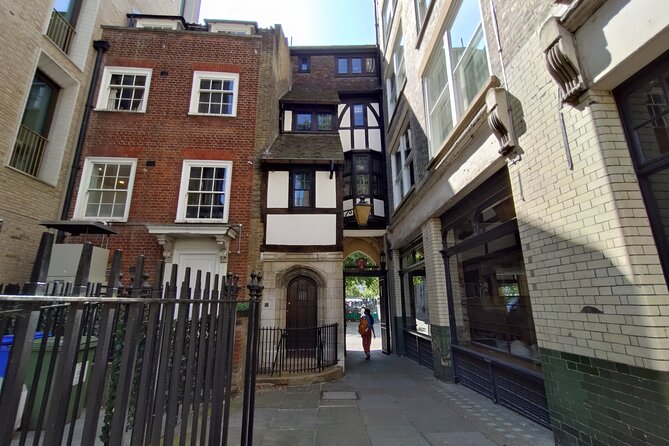
Now you shift to commerce and politics at Smithfield Market. You’ll hear about a 1,000-year-old meat market and the historical events that took place here that helped shape British history.
This is the stop that turns “City of London” from a set of monuments into a story about daily systems. Markets aren’t just where people buy food. They’re where power, regulation, class, and public life collide. When you learn that a market area runs that far back in time, you start to see why governments and events clustered here.
Time is about 5 minutes, so you’ll get the framework more than minute details. Still, it’s enough to make your future walks through Smithfield feel different. You’ll notice how the area reads as a long-running stage for civic life, not just a modern food location.
If you’re a history buff, you’ll like the “timeline in your feet” feeling. If you’re not, you’ll still enjoy the clarity: the guide translates how a working market influenced major moments.
St Bartholomew the Great: a 900-year church with time inside
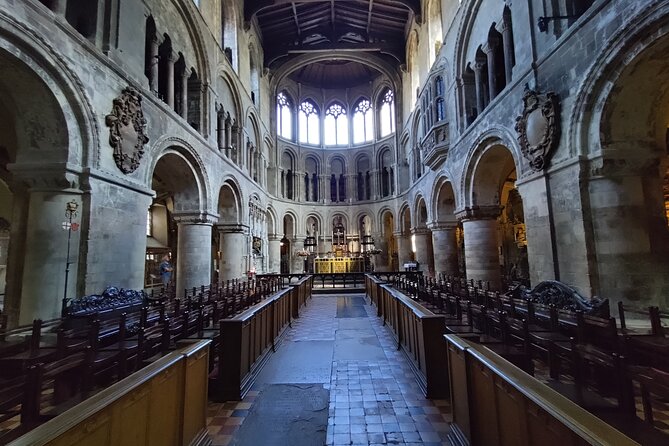
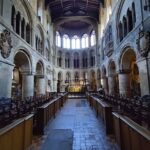
The final highlight is Church of St. Bartholomew the Great. You’ll first hear about the church outside, then go inside for a visit (about 20 minutes).
This is the most time you’ll spend at any single stop, and it’s a smart design choice. After quick snapshots of walls, towers, and memorials, you end with a place that lets you slow down and absorb. St Bartholomew the Great is about its 900-year-old presence, and the inside visit is what makes this more than just a photo walk.
Because time is limited, come prepared to focus. Look up and take in the interior feel, then listen for what the guide points out. If you love architecture, this is your reward stop. If you’re more into stories, you’ll appreciate how the church ties together the earlier themes: medieval London, the persistence of institutions, and how older structures keep shaping where people gather.
When the tour ends, you’re at St Bartholomew the Great near Smithfield.
Price and group size: what you’re really paying for
The tour costs $27.46 per person and runs for about 2 hours. That’s reasonable for a guided walk through multiple sites when the admissions at the listed stops are free. Put another way: you’re paying mainly for interpretation, not entry fees.
The mobile ticket is also a plus for convenience. You don’t need paper tickets. You’re just there for the route and the explanation. The group limit of 25 matters in the City, where sidewalks can get tight and where many historic sites are on busy streets.
Also, your timing is nailed down. It starts at 11:00 am, which is good if you want to get culture in before the afternoon crowding and before your energy dips. And since the route is near public transportation, you can tack this onto other London plans without making your day complicated.
If you’re deciding whether this is worth it, ask yourself one question: do you want help seeing the City, or do you want to wander it alone? This tour is built for the first option.
Who this walk is best for (and when to skip)
This experience is a great fit if you:
- Like history but don’t want a multi-hour museum day
- Enjoy architecture contrasts, like Wren next to modern towers
- Want to connect Roman, medieval, and WWII layers into one coherent story
- Appreciate a guide who can keep the pacing moving and still make room for questions
It may be less ideal if you:
- Want long stays at each stop (most are around 5 minutes)
- Need lots of time inside multiple buildings (this tour really saves that time for the last church)
- Prefer self-guided audio content only
One more practical benefit: the route is described as wheelchair and stroller accessible, and service animals are allowed. If accessibility matters for your group, this is the kind of tour design that helps you focus on the sights, not on navigation problems.
Should you book this tour?
I’d book it if you want a compact City of London lesson with a real guide and a route that covers Roman wall remnants, Wren architecture, WWII-discovered ruins, memorial reflection, and a proper church visit. The price is fair because most stops don’t charge entry, and the guide time is what you’re buying. With a small group size, you’re not stuck behind a sea of shoulders.
I’d skip it if you already know the City’s history well and you just want quiet time to roam without explanations. In that case, you might get more from planning your own slow walk.
If you’re a first-time London visitor to this area or even a long-time local who’s ready to notice what you usually walk past, this route is an efficient way to change how the streets read.
FAQ
Where does the tour start?
It starts at 101 Moorgate, London EC2Y 9AA, UK.
Where does the tour end?
It ends at St Bartholomew the Great near Smithfield, Barbican area, London EC1A 9DS, UK.
What time does the tour begin?
The start time is 11:00 am.
How long is the tour?
The duration is about 2 hours.
What language is the tour offered in?
The tour is offered in English.
Will I receive a mobile ticket?
Yes, you’ll have a mobile ticket.
Is the tour suitable for wheelchairs and strollers?
Yes, it is wheelchair and stroller accessible, and most travelers can participate.
Are service animals allowed?
Yes, service animals are allowed.
Can I get a full refund if I cancel?
Yes. Free cancellation is available up to 24 hours in advance for a full refund.