REVIEW · ATHENS
Private Tour of Apostle Paul’s Footsteps in Ancient Corinth
Book on Viator →Operated by Colours of Greece · Bookable on Viator
Paul’s footsteps are still visible here.
This private route connects the places Paul moved through with real geography, so the story feels less like an abstract read and more like walking through a living map. I like that you get pickup included with a comfortable ride, and the pace is built for taking photos and asking questions without the squeeze of a big group. One thing to plan for: you’ll pay entrance fees for the archaeological site and the museum on top of the tour price.
The other part I really like is the mix of big landmarks and the smaller “why it mattered” details. You’ll see the Corinth Canal and the ancient Diolkos ship-haul trackway, then shift to spiritual context at Kenchreai, the Agora, and the Bema platform. It’s also the kind of day where the guide can tie in names you’ve heard from Scripture, like Phoebe, Aquila, and Priscilla, in plain language you can actually use.
A possible drawback: this is not set up like a Bible study hour. It’s mainly a historical sites tour with faith-based context, so if you’re expecting a strictly biblical, verse-by-verse teaching, you may find it more practical sightseeing than sermon time.
In This Review
- Key things to know before you go
- From Athens to the Isthmus: Corinth Canal views that set the stage
- Diolkos: the ancient ship-haul track that saved ships the long way around
- Kenchreai port: where Paul’s story hits the shoreline
- Ancient Corinth’s Agora and the Bema seat: public life made concrete
- Museum of Ancient Corinth: what the ruins can’t explain
- Acrocorinth fortress: the hilltop you can feel in your legs
- Apostolos Pavlos Church: the modern mosaic that ties it together
- Price and logistics: is $169.03 per person good value?
- How the private format works: comfort, safe driving, and your pace
- What to wear and pack for a warm, walk-heavy day
- Who should book this Apostle Paul footsteps tour from Athens?
- Should you book it?
- FAQ
- How long is the private tour of Apostle Paul’s footsteps in Corinth?
- What is the starting area for pickup?
- Is the tour private or shared?
- What language is the tour in?
- Are entrance fees included in the price?
- Is there a licensed guide included inside the archaeological sites?
- Does the price include transportation?
- Is airport pickup included?
- What should I wear or bring for the day?
- What happens if weather is poor?
Key things to know before you go
- Private pacing from Athens: you can move through stops without crowd pressure.
- Corinth Canal plus Diolkos: engineering stops that make the region click fast.
- Kenchreai connection to Phoebe: a port stop tied to Paul’s early Christian network.
- Agora and the Bema: the physical setting for Paul’s public moments in Corinth.
- Acrocorinth views: the fortress hill is often the favorite stop of the day.
- Entrance fees are extra: plan on about €15 per person for sites and the museum.
From Athens to the Isthmus: Corinth Canal views that set the stage
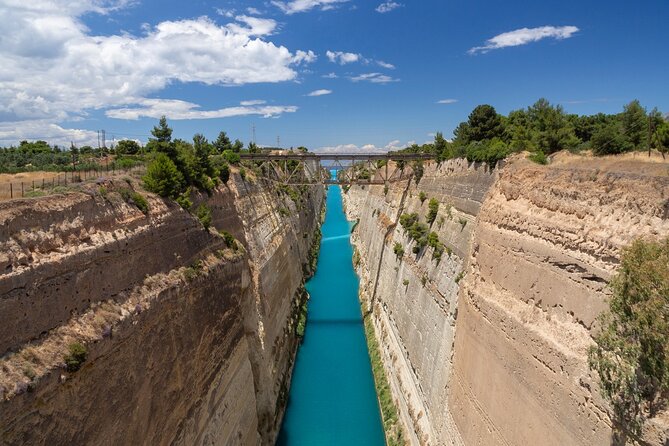
The day starts with the Isthmus of Corinth, the narrow land bridge that links mainland Greece to the Peloponnese. Even before you reach the ancient story beats, the landscape does half the teaching. You’re looking at a key chokepoint—exactly the kind of place where trade, ships, and people converge.
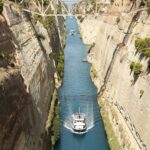
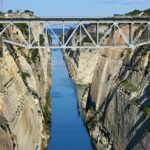
Then comes the Corinth Canal, cut through the isthmus since 1893. It slices a 6.3-kilometer-wide section of land, turning the Peloponnese into something closer to an island and creating steep limestone walls with clear blue water. For you, this is more than a scenic stop. It explains why the region mattered for movement and control—so later, when Paul’s travels and port towns enter the picture, it makes sense why these routes were so important.
Quick practical note: the tour time includes travel, and you’re only at each site for a short, efficient window. If you love viewpoints, bring your sunscreen and hat early—this area can feel bright and hot quickly.
You can also read our reviews of more tours and experiences in Athens.
Diolkos: the ancient ship-haul track that saved ships the long way around
A short ride brings you to the Diolkos, an older engineering solution than the canal. This stone-paved trackway let ancient ships be hauled overland across the isthmus, avoiding the perilous sea trip around the Peloponnese. Walking along its remains gives you a real sense of how Romans and Greeks solved problems with practical infrastructure.
What I like about this stop for first-time visitors: it turns “Corinth” from a name into a system. You start to picture the city’s economic power, how quickly goods could shift, and why port activity mattered for travelers, merchants, and missionaries.
No tickets needed here, which makes it a good “bonus” stop if you’re optimizing a half-day schedule.
Kenchreai port: where Paul’s story hits the shoreline
Next you’re headed to the eastern port area of Corinth, Ancient Port of Kenchreai (often spelled Kechrees or Cenchreae depending on maps). This is the spot tied to Paul’s movement into the city during his first visit around AD 51. The key detail here is that ports aren’t just places ships dock. They’re social hubs—where letters travel, people meet, and new communities form.
The tour connects the port to Paul’s later departure toward Ephesus and to the prominent Christian woman Phoebe, described as a deaconess connected to the local church. Even if your knowledge of the Bible is light, you’ll understand the value: Paul’s ministry wasn’t traveling alone. It spread through a network of people, and ports were where that network met reality.
You should also know what you’re walking into here: only modest traces of the ancient port remain. That can feel a little different from sites with big ruins. Still, the location does the work—standing near the shore gives the context a physical anchor.
Ancient Corinth’s Agora and the Bema seat: public life made concrete
Then you arrive at Ancient Corinth (Archaia Korinthos), the main archaeological area. This is where the day shifts from “regional context” into “Paul in action.”
Two places matter most for Christian visitors. First is the Bema, a raised platform where Paul is believed to have addressed the community and faced Roman authority. Second is the Agora, the marketplace area that represents everyday life—the kind of setting where letters, preaching, trade, and arguments all shared the same streets.
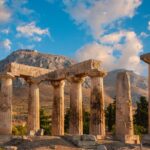
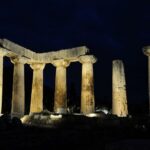
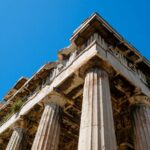
The tour also points out the Temple of Apollo, a reminder that Corinth wasn’t a one-religion city. You’re seeing the contrast—pagan beliefs in the same urban space where early Christianity was trying to take root.
A practical consideration: this is the stop where entrance fees apply (and the museum too). Budget for about €15 per person for sites and the museum, and remember that this fee is separate from the tour price.
Museum of Ancient Corinth: what the ruins can’t explain
After you’ve walked through outdoor ruins, you finish at the Museum of Ancient Corinth. It was built in 1932 to preserve finds from excavations, and it helps you fill in the gaps that open-air remains can’t answer.
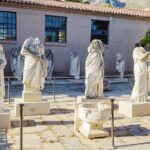
This museum isn’t just a pile of objects. It’s organized to help you understand everyday Corinth across time—prehistoric finds, material connected to the Sanctuary of Asklepios, and artifacts that show how people lived and worshiped.
If you’ve ever left an archaeological site wishing someone would connect the dots, this is that fix. The museum makes the tour feel less like a series of stops and more like one story with evidence behind it.
Like the archaeological area, museum entry isn’t included, so plan for the same €15 per person extra cost.

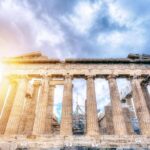
Acrocorinth fortress: the hilltop you can feel in your legs
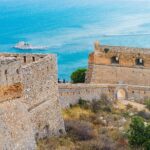
If Ancient Corinth is the ground-level story, Acrocorinth is the command center. This fortified acropolis dominates the landscape above the city, and it’s been reinforced through Greek, Byzantine, Frankish, Venetian, and Ottoman periods. That layering matters because it shows you how this place stayed important for centuries, long after Paul’s era.
The site includes the area associated with the Temple of Aphrodite. The tour connects this sanctuary to a large religious establishment, with accounts of up to 1,000 priestesses. Whether you treat the number as literal or symbolic, the takeaway is clear: religion here wasn’t small-scale. It was part of power, economy, and civic identity.
For me, the best part is simple: the views. Standing up there, you understand why someone would build a fortress at that point. You also see how easily a hilltop becomes a message—people can spot it, rulers can control it, and communities orient around it.
This is the stop to slow down. Wear shoes with good grip and expect uneven paths.
Apostolos Pavlos Church: the modern mosaic that ties it together
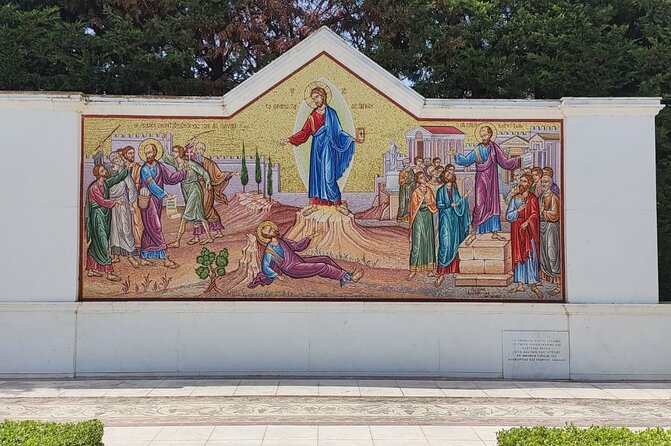
The tour ends at the Church of Saint Paul (Apostolos Pavlos Church), set in the modern area tied to ancient Corinth. Inside, you’ll find a striking mosaic by artists Pastorutti and Tsotsonis depicting Paul’s journey and mission in Corinth.
This final stop is more reflective than archaeological. You’re not learning new measurements of ancient stones; you’re seeing how modern visitors and communities keep the story alive.
For Christian travelers, this is where the day can feel like more than a sightseeing checklist. For non-religious travelers, it can still be a meaningful cultural touchpoint: art and memory in a place that has carried faith, politics, and trade for a long time.
Price and logistics: is $169.03 per person good value?
At $169.03 per person, this is priced like a true private outing from Athens. The value isn’t only the driving—it’s the combination of hotel or port pickup/drop-off, an air-conditioned vehicle, WiFi on board, and bottled water. You’re also paying for a guide-driver who can connect the dots between Scripture references and physical sites, and for a private schedule that doesn’t force you to rush.
The big add-on is entrance cost. You should expect €15 per person for the archaeological site and museum. So the real total depends on whether you’re buying just one extra site or multiple paid entrances, but your budget should include that extra.
Airport pickup is optional, costing €50 per booking. If you’re on a cruise, port pickup is handled at the gate with a name sign, which is a comfort when you’re trying to time the day smoothly.
How the private format works: comfort, safe driving, and your pace
This is a private tour, meaning only your group participates. In practice, that usually shows up in small ways that matter: you can ask questions without watching the clock, and you can linger when something grabs your attention.
A lot of the best feedback centers on the driver-guide experience. Names that come up often include Nick, Ruslan, George, Dennis, Giannis, Johnny, Fortis, and Fotis. People consistently praise clear explanations tied to Paul and Greece, plus practical care—help getting in and out of the vehicle, cold water during the ride, and safe driving through tight corners and busy streets.
You can also request a pace that matches your group. If you’re traveling with an older person, this private setup can be a big win because the itinerary can be handled more gently.
One more practical point: a licensed guide to accompany you into archaeological sites is not included. In other words, the tour driver handles narration and context, but site entry guidance may still be limited to what you can access on your own inside the paid areas. If you want a lot of interpretive detail inside the museums and major ruins, plan your time accordingly.
What to wear and pack for a warm, walk-heavy day
Even with short stop times, this tour includes walking in several places, including Acrocorinth. Bring comfortable shoes. Add a hat and sunscreen because Greece can be hot and sunny even when you think you’re only out for a few hours.
Since entrance fees apply and you’ll likely spend time outdoors, carry a small bag with water (you’ll get bottled water from the tour) and something light for shade if you tend to get sunburned fast.
Who should book this Apostle Paul footsteps tour from Athens?
Book it if you want:
- a private, efficient half-day with pickup and a comfortable ride
- strong connect-the-dots context between Paul’s story and the actual places in Corinth
- a mix of engineering landmarks (Canal, Diolkos) and faith-related stops (Kenchreai, Agora, Bema, Acrocorinth, Church of Saint Paul)
I’d also say it works well if you’re Bible-curious but not sure you want a strict religious format. The tour leans historical and spatial, then connects Scripture details in a way you can follow without needing to treat it like a classroom.
If your main goal is a heavy biblical teaching session, you may find it more like history with faith context than a sermon tour.
Should you book it?
Yes, if you like the idea of pairing Paul’s story with real geography—especially the Agora, the Bema area, and the climb/fortress feel of Acrocorinth. The private format and the emphasis on practical explanations make it a good use of time when you’re based in Athens.
Skip or rethink if you hate extra museum or site fees, or if you want a verse-by-verse, strictly biblical experience rather than a guided walk through place-based context.
One last timing note: the experience requires good weather, so keep an eye on forecasts if your travel dates are tight.
FAQ
How long is the private tour of Apostle Paul’s footsteps in Corinth?
It runs about 5 to 6 hours (including travel time).
What is the starting area for pickup?
Pickup is offered from hotels/apartments in Athens (driver waits at the entrance) and from the port (driver waits at the gate holding a sign with your name).
Is the tour private or shared?
This is private. Only your group participates.
What language is the tour in?
The tour is offered in English.
Are entrance fees included in the price?
No. Entrance fees for the archaeological sites and museum are €15.00 per person and are not included.
Is there a licensed guide included inside the archaeological sites?
A licensed guide to accompany you into archaeological sites is not included.
Does the price include transportation?
Yes. The tour includes an air-conditioned vehicle, plus hotel/port pickup and drop-off, and includes WiFi on board and bottled water.
Is airport pickup included?
Airport pickup is optional and costs €50.00 per booking.
What should I wear or bring for the day?
Wear comfortable shoes for walking. Bring a hat and sunscreen because it can be hot and sunny.
What happens if weather is poor?
The experience requires good weather. If it’s canceled due to poor weather, you’ll be offered a different date or a full refund.