REVIEW · ACCRA
HERITAGE GHANA(Cape Coast Castles and Kakum National Park)
Book on Viator →Operated by Blemawe Xpo Ghana · Bookable on Viator
History here still has teeth. This Heritage Ghana day trip from Accra connects slave-trade heritage sites at Elmina and Cape Coast with a breath of nature at Kakum’s canopy walkway. It’s not a sightseeing rush. It’s structured to help you understand what the trans-Atlantic slave trade did to Africans and the wider world.
I like that your stop at Elmina is built around an included informative visit through the dungeons, punishment cells, the Door of No Return, and the turret room tied to Ashanti king Prempeh I. I also like the practical comfort built into the price: air-conditioned vehicle, lunch, bottled water, and admission tickets are covered.
One thing to consider: this tour spends real time in places tied to human suffering, including the Door of No Return. If you’re the type who wants a lighter day with more “fun photos” and less emotional weight, you may find it heavy.
In This Review
- Key highlights to look for
- A coast day that’s equal parts emotion and air
- From Accra to the coast: how the timing really plays out
- Elmina Castle: the Portuguese trading post that became dungeons
- What to expect at Elmina
- Possible drawback at Elmina
- Kakum National Park canopy walkway: nature break with a steady pace
- Practical comfort tips for Kakum
- Cape Coast Castle: the Door of No Return revisited
- What to expect at Cape Coast
- Price and value: what $150 covers (and why that matters)
- Where the price might feel less “fair”
- Comfort, guidance, and group pace on an all-day run
- Who should book Heritage Ghana?
- Should you book this tour?
- FAQ
- What is included in the $150 per person price?
- What stops are part of this Heritage Ghana tour?
- How long does the tour take?
- Is pickup offered and is the tour private?
- What are the operating hours for this experience?
- Do I need a certain fitness level?
- What is the cancellation policy?
Key highlights to look for
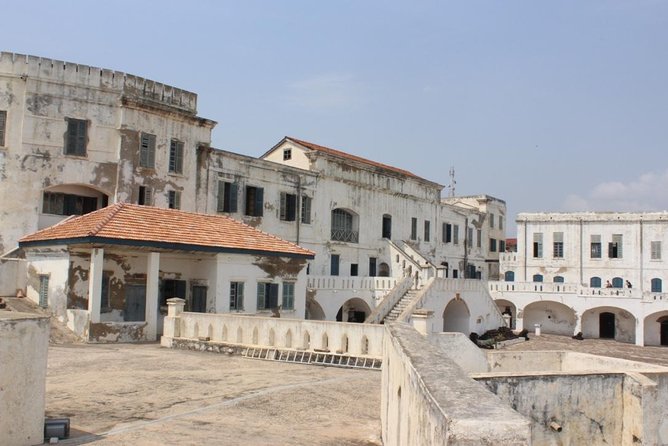
- Elmina Castle’s full story: Portuguese trading post beginnings (1482), Dutch capture (1637), and dungeons created when enslaved people replaced gold as the main trade.
- Door of No Return moments in two places: you’ll see it at both Elmina and Cape Coast, with context from your guide.
- Prempeh I’s imprisonment gets named: the turret room where the British held Ashanti king Prempeh I for four years is part of the Elmina experience.
- Kakum canopy walkway as a paced break: admission included, and the whole day supports guests with moderate physical fitness.
- Comfort matters on a long coast drive: AC vehicle, bottled water, and lunch included.
- Guides can set the tone: multiple guide names come up in past groups, including Jeff and Binney/Biney, and they’re credited with making the day feel personal.
A coast day that’s equal parts emotion and air
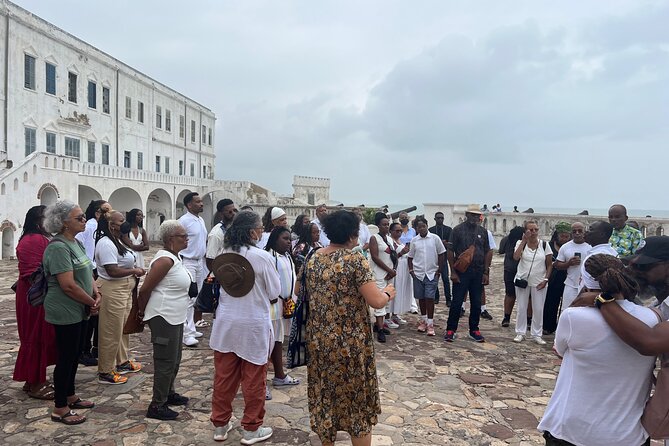
This is the kind of Ghana day trip that starts with the past and ends with the present. You’ll go from castle walls that tell the story of commerce turned to captivity to Kakum National Park, where the pace shifts back to walking, breathing, and looking up through the canopy walkway.
The order matters. Elmina’s dungeons and cells hit hard, and then Kakum gives you a mental reset. Cape Coast closes the loop again with another Door of No Return stop. Plan your headspace like you would for a museum day plus a nature stop: respectful for the first half, then re-enter “tour mode” for the park.
You’ll also feel that this isn’t only about checking off famous names. The tour is described as educational, focused on trans-Atlantic slave trade history and its impact. That framing changes how the stops land.
You can also read our reviews of more tours and experiences in Accra.

From Accra to the coast: how the timing really plays out
You’re looking at about 5 to 10 hours total, depending on travel time, how the group moves, and how long lunch takes. The tour’s operating window runs Monday through Sunday, 5:30 AM to 5:00 PM, so expect a day plan that works within those hours.
The on-site time blocks are clear enough to plan around:
- Elmina Castle: about 1 hour
- Kakum National Park canopy walkway: about 2 hours
- Cape Coast Castle: about 1 hour
Add in the drive from Accra, lunch, and the time it takes to move through sites, and that’s how you get to a full day. If you like your travel days tight and efficient, this schedule fits. If you prefer slow wandering, you might feel the pace is brisk at the castles—because the stops are structured to hit specific rooms and points of meaning.
Practical tip: wear comfortable shoes. Even if you’re not doing marathon walking, you’ll be moving through sites with stairs, uneven surfaces, and lots of standing time.
Elmina Castle: the Portuguese trading post that became dungeons
Elmina Castle is a UNESCO heritage site and it’s one of the most powerful starting points for understanding the slave trade along the Gulf of Guinea. Built by the Portuguese as a trading post in 1482, it later passed into Dutch hands in 1637. That long European timeline matters because it shows how trade systems evolved, not overnight, but across decades.
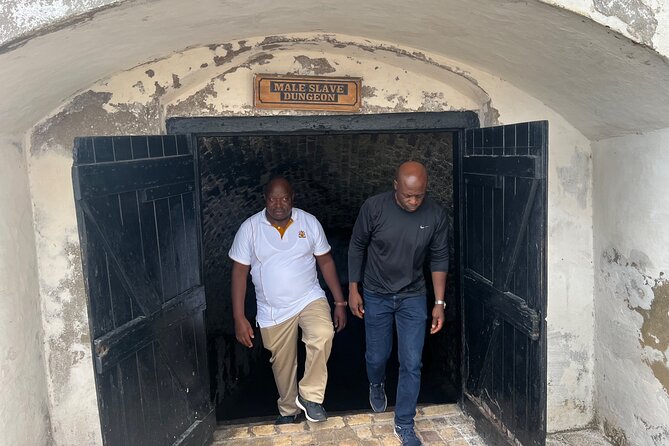
Here’s the key shift that the tour highlights: when enslaved people replaced gold as the major object of commerce, spaces inside the fort were repurposed. Storerooms became dungeons. The tour’s included visit takes you through that reality—into grim dungeons, punishment cells, and the Door of No Return.
There’s also a specific political layer that makes Elmina more than a single narrative. The experience includes the turret room where the British imprisoned Ashanti king Prempeh I for four years. That detail gives you a wider view of how European powers interacted with African states—through alliances, conflict, and forced control.
Another thing I appreciate is how the site isn’t only “museum wall.” Elmina is described as an active fishing town along Ghana’s coast. That means you’re not only stepping into history; you’re also seeing that the present life of the town still continues around these walls.
What to expect at Elmina
- You’ll get the included informative tour as part of the visit time.
- You’ll move through the spaces tied to captivity: dungeons, punishment cells, and the Door of No Return area.
- You’ll leave with context that connects trade to policy to imprisonment, not just names and dates.
Possible drawback at Elmina
Elmina is emotionally intense. If you’re the kind of traveler who shuts down during heavy topics, this stop can feel like too much. But if you want the meaning of the site—not just the photo from the outside—Elmina is where this tour’s education really earns its place.




Kakum National Park canopy walkway: nature break with a steady pace
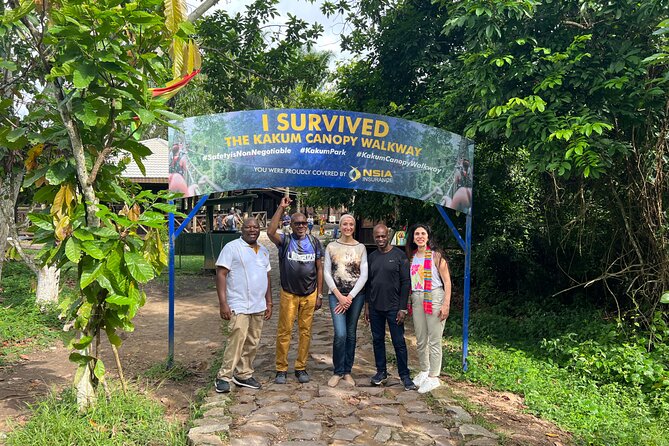
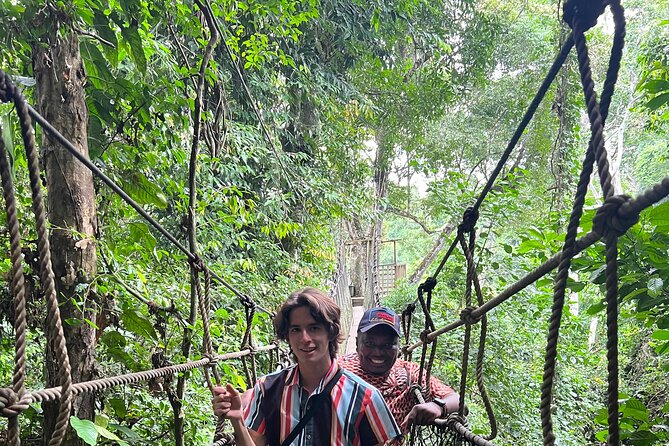
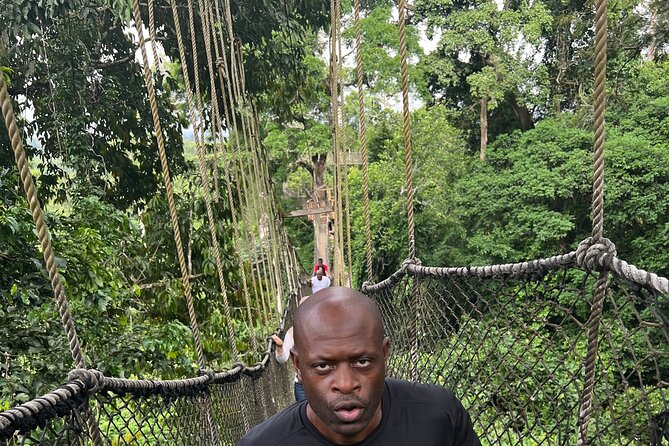
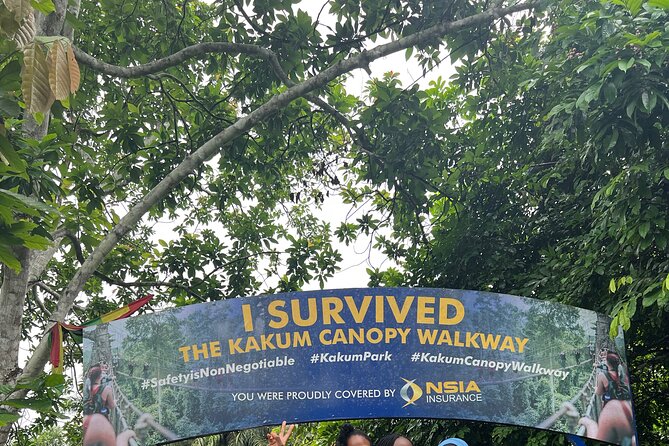
After the castles, Kakum National Park gives you a different sensory world. Your time here is focused on the canopy walkway, with admission ticket included and about 2 hours on the clock.
The tour’s overall requirements call for moderate physical fitness, and this is where that matters. The canopy walkway is still walking time, and you’ll likely spend more effort than you expect just staying balanced, moving slowly, and taking in views from above. You don’t need extreme fitness, but you do need to be comfortable being on your feet for a while.
Why I like including Kakum in a slave-trade heritage day: it gives you a structured mental reset. You go from enclosed rooms and punishment spaces to open air and wide tree canopy views. It’s not a distraction from the history; it’s a way to keep your energy intact so the next stop lands with clarity.
Practical comfort tips for Kakum
- Bring layers or plan for sun and shade changes as you move along the walkway.
- Stay mindful of footing. This is the part of the day where slow steps are a feature, not a flaw.
Cape Coast Castle: the Door of No Return revisited
Cape Coast Castle is the final heritage stop on your day. You’ll have about 1 hour here, and admission is included. The stop centers on the Door of No Return area—an anchor point for understanding the forced removal of Africans across the Atlantic.
If Elmina is about seeing the broader system of captivity within the broader history of European trading posts, Cape Coast tends to feel more concentrated on that end-point meaning. Seeing the Door of No Return in two separate castles can hit differently the second time, because you’re not starting from zero.
Also, your guide plays a real role in how this lands. Past groups highlight strong communication and clear explanations from guides such as Binney/Biney and Jeff, with one solo guest praising an extremely helpful guide and another noting that the tour felt personal and attentive. While the physical walls don’t change, the interpretation you get while you’re there can make the experience easier to process.
What to expect at Cape Coast
- Time is focused: enough to reach the key Door of No Return points without turning it into a long, meandering day.
- Expect an emotional closing note to the route.
Price and value: what $150 covers (and why that matters)
At $150 per person, the value of this tour isn’t just the sites. It’s what’s bundled together so you’re not doing travel math all day.
Included:
- All fees and taxes
- Air-conditioned vehicle
- Lunch
- Bottled water
- Admission tickets for the included sites
That means your day is “one price, then go.” For a long day that includes transport out of Accra and multiple paid sites, this kind of bundling usually makes a difference, especially if you hate the feeling of reaching into your pocket every hour.
Also, pickup is offered, and the tour is set up as private—only your group participates. You’ll still be on a fixed schedule, but privacy tends to make the day feel less rushed in the small moments: bathroom breaks, pacing questions, and the way your guide can answer what you’re curious about.
Where the price might feel less “fair”
If you’re expecting an all-day, slow, fully optional sightseeing stroll, the time blocks at each site might feel tighter. Elmina is about 1 hour, Kakum about 2, Cape Coast about 1, and the rest is drive and lunch. The price is built for that structure.
Comfort, guidance, and group pace on an all-day run
This is described as a private tour, which is a big deal for how days like this usually feel. You’re not dealing with random strangers moving at different speeds. Your guide can keep you aligned with the story the sites are trying to tell.
Past participants also praised guide performance—especially names like Jeff and Binney/Biney. Comments point to clear communication, help during the tour, and guides who keep the experience moving without leaving you behind. One traveler even noted an issue with a delayed start due to miscommunication, which is worth acknowledging as a real-world risk in any day-trip operation. The good news: it wasn’t described as a failure of the tour content, just a hiccup with timing.
On comfort, the practical items show up repeatedly in feedback:
- AC vehicle was mentioned as comfortable.
- Lunch and bottled water reduced decision fatigue.
- The day felt well-run even when it stretched across long hours.
Who should book Heritage Ghana?
This tour is a strong match if:
- You want to understand Ghana’s role in the trans-Atlantic slave trade story through major sites rather than vague summaries.
- You like guided explanation while you walk inside meaningful places, including Elmina’s dungeons and Prempeh I’s imprisonment room.
- You want nature time too, not only castles—Kakum gives you that reset.
You should think twice if:
- You want a light, casual day with minimal emotional weight.
- You’re not comfortable with a moderate fitness requirement for time on your feet at a canopy walkway.
It’s also a solid option for first-time visitors to Ghana who want one efficient route combining education and a nature highlight, without needing to plan everything yourself.
Should you book this tour?
If your goal is a well-structured heritage day that combines Elmina Castle, Cape Coast Castle, and Kakum canopy walkway, I think booking makes sense. The price includes the big-ticket pieces—transport, lunch, bottled water, and admission—so you can focus on the experience instead of logistics.
I would book this if you’re willing to face the emotional reality of the slave trade sites, and you want your visit guided and explained, not just observed. I’d hesitate only if you’re seeking a purely relaxing day or you know heavy topics shut you down.
If you do book, go with the right mindset: comfortable shoes, a bit of patience for a longer day, and respect for what these spaces represent. That’s where the tour becomes more than a checklist and turns into understanding.
FAQ
What is included in the $150 per person price?
The tour includes all fees and taxes, an air-conditioned vehicle, lunch, bottled water, and admission tickets for Elmina Castle, Kakum National Park (canopy walkway), and Cape Coast Castle.
What stops are part of this Heritage Ghana tour?
You visit Elmina Castle, Kakum National Park canopy walkway, and Cape Coast Castle (including the Door of No Return).
How long does the tour take?
The experience runs approximately 5 to 10 hours.
Is pickup offered and is the tour private?
Pickup is offered, and it is a private tour/activity where only your group participates.
What are the operating hours for this experience?
Between 01/13/2024 and 06/18/2026, it runs Monday through Sunday from 5:30 AM to 5:00 PM.
Do I need a certain fitness level?
Yes. Travelers should have a moderate physical fitness level. Service animals are allowed.
What is the cancellation policy?
You can cancel for free up to 24 hours in advance for a full refund. If you cancel less than 24 hours before the start time, the amount you paid won’t be refunded.