REVIEW · CHARLESTON
Charleston History Tour /
Book on Viator →Operated by Charleston History Tours · Bookable on Viator
Charleston can feel like a postcard, until history steps in.
I liked how this 2-hour walk turns major landmarks into a story you can actually follow, and you get the admission tickets for the key stops without figuring out extra entry fees. It’s a practical way to see the highlights fast, without rushing through the meaning of what you’re looking at.
One of my favorite parts was the guide experience. On a recent tour, guide Joyce impressed with a clear, street-level approach—tying together development of the city, military facts, architectural points, cultural highlights, and the specific local threads you’d otherwise miss.
One thing to consider: the tour depends on good weather, and while cancellations are handled, you’re still planning around a walking schedule. (And yes, there’s been at least one ugly-sounding hiccup reported when a guide couldn’t make it—rare, but worth knowing.)
In This Review
- Key highlights worth planning for
- Where this Charleston History Tour starts (and why it helps)
- The 1771 stop: the Constitution story in Charleston’s own setting
- Learning the Gullahs of Charleston: a cultural thread, not a side note
- Dock Street Theater (circa 1810): woodwork, courtyard energy, and an art-world vibe
- St. Michael’s Church (circa 1764): a calm look at the city’s oldest religious building
- Rainbow Row: nine attached buildings and the clue hidden in dates
- The Battery & White Point Gardens: a defensive seawall that doubles as a promenade
- French Huguenot Church (1844): the oldest Gothic Revival in South Carolina
- What the 2-hour pace feels like (and who it suits)
- Value check: included admissions are the real win
- Practical tips to make your tour day smoother
- Should you book this Charleston History Tour?
- FAQ
- How long is the Charleston History Tour?
- Where does the tour start?
- Where does the tour end?
- Is admission included for the stops?
- What format is the ticket?
- How many people are on the tour?
- What physical condition do I need?
- Does the tour run year-round?
- What should I bring for the tour?
- What happens if the weather is bad?
Key highlights worth planning for
- A Constitution-linked stop from 1771: you’ll visit the building tied to the ratification of the U.S. Constitution.
- Gullahs of Charleston focus: the tour includes a cultural stop built around this important local story.
- Dock Street Theater (circa 1810): an ornate playhouse moment with woodwork and a courtyard, plus admission included.
- St. Michael’s Church (circa 1764): the city’s oldest religious building, with entry covered.
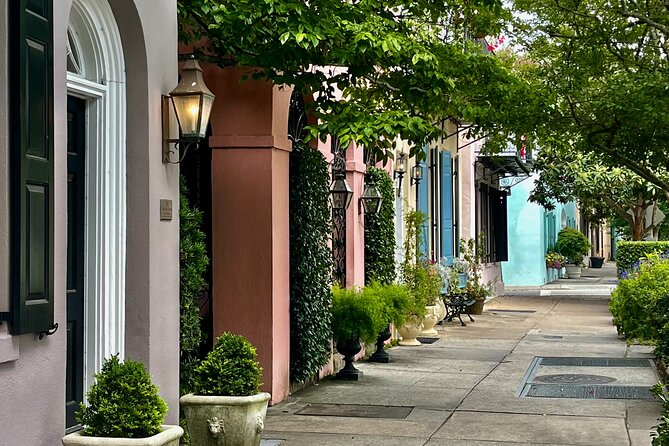
- Rainbow Row’s nine connected buildings: you’ll learn why the dates matter—one long span of history on one street.
- French Huguenot Church (1844): Gothic Revival in South Carolina’s oldest church style—plus the rare status as an independent Huguenot church.
Where this Charleston History Tour starts (and why it helps)
You meet at 80 Broad St, Charleston, SC 29401, right in the heart of the action. That’s a smart choice because Charleston’s best “walkable story” pieces are concentrated in a way that works well for a short, guided loop.
This is built as an easy-to-manage about 2 hours on your feet. It’s also capped at 10 travelers, which I like for two reasons: you get a more human pace, and it’s easier for the guide to steer the group rather than reciting a script over your shoulder. If you prefer your history with some breathing room (and not a nonstop sprint), this format fits.
You’ll get a mobile ticket, which matters more than it sounds. Less paper, fewer steps at check-in, and more time staring at buildings that really deserve it.
You can also read our reviews of more tours and experiences in Charleston.



The 1771 stop: the Constitution story in Charleston’s own setting
The tour includes a stop at a building built in 1771 that’s home to the ratification of the United States Constitution. That detail is the kind that changes how you see a city: it’s not just pretty streets and old bricks—it’s where national decisions played out in real places.
What I’d pay attention to here is the way the guide frames the site. A Constitution-related stop can turn into abstract textbook facts if you don’t connect it to the physical setting. This is designed to do the connection for you, so when you later look at nearby architectural styles and civic landmarks, you have a better sense of how Charleston’s power and identity shaped what happened.
If you like your history grounded in locations, this is a strong anchor point. It gives the tour a “why we’re here” spine.
Learning the Gullahs of Charleston: a cultural thread, not a side note
Midway through, you’ll learn about the Gullahs of Charleston. I appreciate when a city tour doesn’t treat culture like an add-on. Even without loading you with a textbook, including this topic signals that Charleston’s story isn’t only about European architecture and big political dates.
For you, this stop works best if you’re open to hearing the local cultural story as part of the same walking timeline. When it’s integrated into the route, it helps you connect people, place, and influence instead of turning Charleston into a set of unrelated photo spots.
One practical thing: because this tour is time-limited, it’s worth listening actively here. If you let your mind wander during a short cultural segment, you may miss the key takeaway.
Dock Street Theater (circa 1810): woodwork, courtyard energy, and an art-world vibe

Next up: Dock Street Theater, described as an ornate playhouse with elegant woodwork and a courtyard, dating to around 1810. This stop is great for anyone who likes their history with the arts baked in.
Here’s what you should watch for: theaters are about more than performances. The design choices tell you how people gathered, how spaces were staged, and how elegance showed up in everyday civic life. The courtyard element also matters. Courtyards often create a “pause” moment in a walking tour—somewhere you can regroup and let the guide’s context land before moving on to the next landmark.
Admission is included, so you don’t have to do the mental math of timing your ticket purchase. That’s small, but it’s real value when you’ve only got a couple hours.
St. Michael’s Church (circa 1764): a calm look at the city’s oldest religious building
Then you’ll visit St. Michael’s Church, a historic church dating to about 1764 and identified as the oldest religious building in the city. This stop shifts the mood. Churches tend to do that, even when you’re in a group.
What makes this worthwhile is the framing: the guide likely connects the age of the building to Charleston’s longer timeline, not just the structure itself. When a church is described as the oldest in a city, it gives you a powerful reference point. You can start comparing “before” and “after” in your head as you continue.
You’ll also have the benefit of included admission, which helps keep the tour rhythm steady. Instead of hunting for tickets or trying to time entry, you’ll spend your mental energy on what’s in front of you.


Rainbow Row: nine attached buildings and the clue hidden in dates

Rainbow Row is one of those places everyone photographs—but fewer people understand the pattern. Here, you’ll see that it’s made up of nine buildings attached to one another, and you’ll learn that all but one predate the American Revolution.
That detail is the key. Once you know most of the line survives from before the Revolution, Rainbow Row stops being just a colorful street and becomes a timeline you can walk along. It’s one of those visual histories where the city’s age feels obvious once someone points to the fact that the buildings are not all the same era.
Because this part of the tour is quick—about 5 minutes—you’ll want to choose one focal approach:
- Take in the full row first, so you understand it as a unit.
- Then pick one building to compare with what you see around it.
If you like to photograph, this is still the kind of place where you’ll get something better with a little context first. The dates turn your photos into stories.
The Battery & White Point Gardens: a defensive seawall that doubles as a promenade
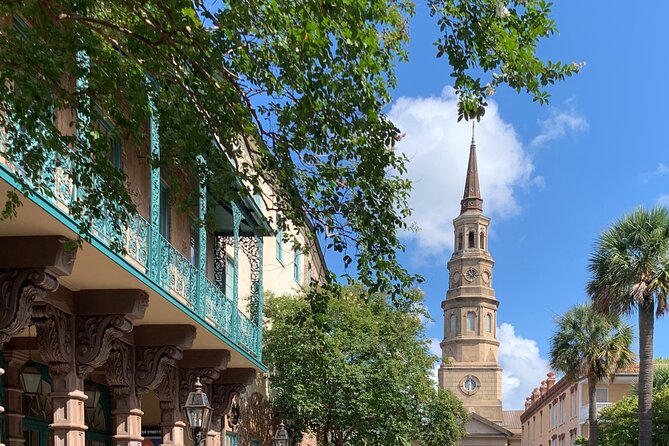
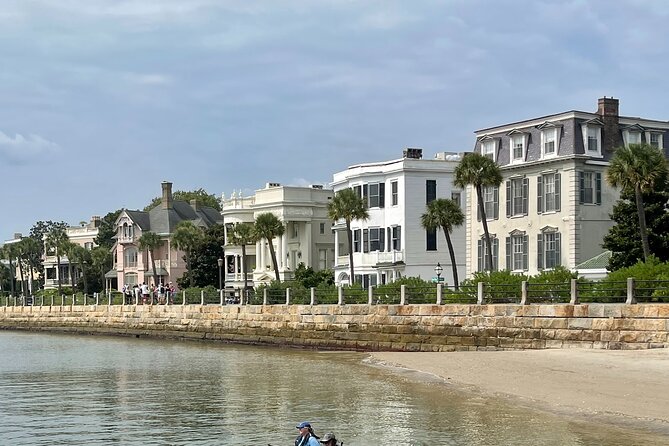
The tour continues with the Battery & White Point Gardens. The Battery is described as a defensive seawall and promenade on Charleston Harbor. That single description gives you the dual purpose of this stop: protection and public life.
This is a smart pairing because it’s the kind of place where you can see how geography shapes history. A seawall isn’t only an engineering detail; it’s a reminder that Charleston’s position mattered. Then the promenade side reminds you that people still built routines and leisure into spaces designed for defense.
If you’re sensitive to wind or sun, plan for it here. Harbor air can change quickly, and this is the part of the tour most likely to feel exposed—worth remembering if you’re easily affected by heat.
Admission is included for the tour stops, and this segment’s value is more about viewpoint and context than ticketed entry. You’re using the setting as your classroom.
French Huguenot Church (1844): the oldest Gothic Revival in South Carolina
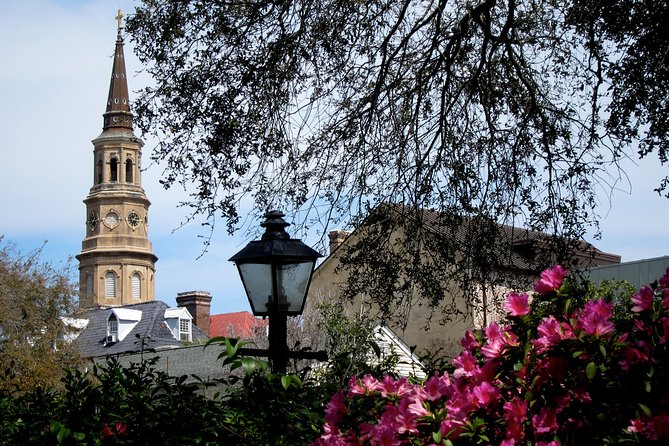
The final major church stop is French Huguenot Church, built in 1844. The tour highlights it as the oldest Gothic Revival church in South Carolina and also notes it’s the only independent Huguenot Church in the country.
That’s a lot of significance packed into one location, and it’s worth letting the guide frame why that matters. Oldest in a style tells you about architectural adoption and local preferences. The “only independent” detail adds a cultural identity layer that you can’t get just by looking at the building’s exterior.
This is also an admission-included stop, so you can focus on the experience without the hassle of figuring out fees at the last minute. For me, the best church-ending moments are the ones where you leave with a clear sense of why the building is rare—not just old.
What the 2-hour pace feels like (and who it suits)
This tour is designed to be short, structured, and efficient. You’ll hit multiple key sites, each around 5 minutes. That sounds fast—because it is—but it’s also why the tour works: the guide’s job is to hand you the essential story quickly so you can enjoy the place without getting lost.
It also helps that the group is small (maximum 10 travelers). You’re not stuck behind a wall of people blocking your view, and you can usually hear key explanations without craning.
The tour asks for moderate physical fitness. That means you should be comfortable with sustained walking and standing for about two hours. If you’re recovering from an injury or you know you fatigue quickly, I’d consider booking something with a more flexible stop-and-rest setup (but if you’re generally okay on foot, you’ll likely be fine).
And because food and drinks aren’t included, I recommend planning a proper breakfast or snack before you go. Think of this as a walking-and-learning window, not a meal tour.
Value check: included admissions are the real win
I don’t judge value only by the headline price. For me, the better question is: how many “hidden” costs and interruptions get removed.
Here, admission tickets are included for the key sites on the route, and the tour states that you won’t need additional payments for sites you see. That helps in two ways:
- You don’t burn time figuring out what costs what.
- You don’t get snagged by last-minute decisions while you’re already short on time.
That’s especially important on a compact schedule. If you’re the type who hates paying multiple small fees while sightseeing, this tour’s structure will feel like it was built for you.
The only obvious “not included” side is food and drinks. So you’ll bring yourself and your energy. The rest is handled.
Practical tips to make your tour day smoother
A few small moves make the experience better.
First, wear shoes that are comfortable for steady walking. This is a city-center route, and the pace is built to move from one landmark to the next.
Second, keep your expectations aligned with the format. This isn’t a museum marathon. It’s a guided highlights walk where the purpose is understanding, not lingering for hours.
Third, if weather looks questionable, watch the forecast. The tour notes it needs good weather, so plan your timing accordingly and be ready for a reschedule if conditions don’t cooperate.
Finally, if you’re booking because you want a specific vibe—architecture, cultural context, and political threads—you’re in the right place. This is the kind of tour where your guide’s storytelling is part of the product, and a recent guide (Joyce) received strong praise for connecting multiple angles of Charleston in a friendly, street-level way.
Should you book this Charleston History Tour?
I think you should book it if you want a tight, organized walk that connects landmarks to bigger ideas like the Constitution and Charleston’s cultural story. The included admissions reduce friction, and the small group size helps the experience feel personal rather than rushed.
I would hold off or book with caution if your plan depends on perfect timing and you’re worried about weather disruptions or the rare chance of an operational hiccup (there’s been at least one troubling report where a guide didn’t show and there was no clear plan B). Also, if moderate walking is a challenge for you, make sure you’re realistically comfortable with the pace.
If you’re trying to get your bearings quickly and you like learning as you go, this tour is a strong fit—and it can save you from spending your limited time in Charleston just chasing photos.
FAQ
How long is the Charleston History Tour?
It runs for about 2 hours.
Where does the tour start?
The meeting point is 80 Broad St, Charleston, SC 29401, USA.
Where does the tour end?
It ends back at the meeting point.
Is admission included for the stops?
Yes. The tour indicates that all sites seen will not require additional payments, and several listed stops include admission tickets.
What format is the ticket?
You’ll receive a mobile ticket.
How many people are on the tour?
The tour has a maximum of 10 travelers.
What physical condition do I need?
It’s recommended for travelers with moderate physical fitness.
Does the tour run year-round?
It’s scheduled for Monday–Saturday, 9:00 AM–5:00 PM during the listed date ranges (03/15/2025–12/31/2025 and 03/15/2026–12/31/2026).
What should I bring for the tour?
Food and drinks aren’t included, so you should plan for that. Also plan for walking during the 2-hour schedule.
What happens if the weather is bad?
The experience requires good weather. If it’s canceled due to poor weather, you’ll be offered a different date or a full refund.