REVIEW · TOKYO
Asakusa: TOKYO SKYTREE Exploration after History Tour
Book on Viator →Operated by Arumachi · Bookable on Viator
Asakusa stories keep unfolding with every corner. In just a few hours, you’ll walk with a local guide through temples, gates, and riverside parks, then ride up Tokyo Skytree for city views you can’t get from street level. It’s a smart way to see Asakusa’s spiritual side and its modern skyline in the same afternoon.
I especially like two things: the small group size (max 8) that makes it easier to hear and ask questions, and the fact that Skytree upper and lower observation deck tickets are built into the experience. On top of that, guides like Taka, Junko Yamashita, Sue, and Keiko are repeatedly praised for clear explanations and pacing that doesn’t rush you.
The main consideration is flexibility. Skytree entry tickets sell quickly, and once they’re purchased for your date they’re not refundable or changeable—so be ready to commit to the afternoon you book.
In This Review
- Key things that make this tour worth your time
- A 3.5-hour Asakusa-to-Skytree plan that saves you effort
- Sumida Park: the river where Japan’s isolation makes sense
- Asakusa Culture Tourist Information Center: Buddhism meets Shinto, clearly
- Kaminarimon and Nakamise: dragons, symbols, and woodblock art
- Hozomon and Sensō-ji: comparisons that make prayer feel real
- Asakusa Shrine: the one place where two traditions share grounds
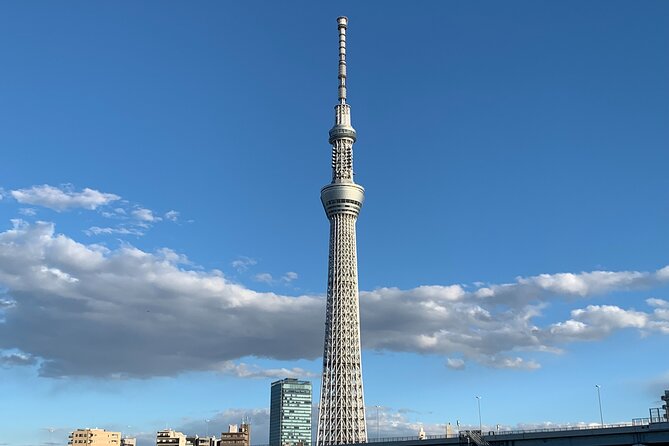
- The Tokyo Skytree payoff: two decks and time to shop
- Price and value: what you’re really paying for
- Small group pacing: why the guide matters on this route
- Practical tips so you enjoy it more
- Who should book this tour
- Should you book this Asakusa + Tokyo Skytree tour?
- FAQ
- What time does the tour start and where does it end?
- What’s included in the ticket price?
- Do I need to pay for the train from Asakusa to Skytree?
- How large is the group?
- Is this tour a good fit for most people?
- Can I change my date or get a refund if plans change?
Key things that make this tour worth your time
- Guided Asakusa walking route focused on meaning, not just landmarks
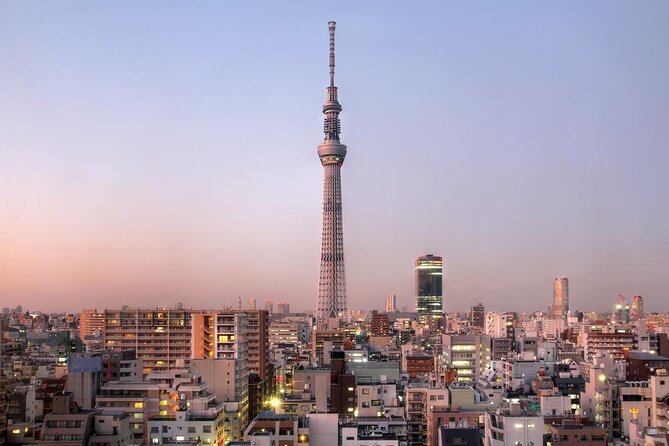
- Skytree combo deck tickets for both upper and lower observation levels
- Headsets for small groups of 3+ so your guide stays audible
- Iconic photo stops at Kaminarimon, Sensō-ji, and Skytree
- A smooth train transfer from Asakusa to Skytree, timed for views plus shopping
A 3.5-hour Asakusa-to-Skytree plan that saves you effort
This tour is built around one afternoon rhythm: start in Asakusa, learn as you walk, then shift gears to Tokyo Skytree. The total time is about 3 hours 30 minutes, which is long enough to feel like you did something real, but short enough that you won’t feel trapped in “tour mode” all day.
It also helps that you’re not trying to coordinate everything yourself. You get a guided route through the main Asakusa sights—then a train ride to Skytree—so you can focus on seeing and asking instead of navigating.
Start time is 1:30 pm, and the tour ends at Tokyo Skytree. The meeting point is at 2-chōme-20-6 Kaminarimon, Taito City, and you’ll finish at Tokyo Skytree1-chōme-1-2 Oshiage, Sumida City.
You can also read our reviews of more tours and experiences in Tokyo.
Sumida Park: the river where Japan’s isolation makes sense
Your first stop is Sumida Park along the Sumida River. This is a strong opener because it gives you context before you hit the temples and shopping streets. Your guide connects the scenery to Japan’s isolation period—how the Edo shogunate sealed the country for over 200 years and how the Netherlands was one of the few exceptions.
Why this matters: if you walk into Asakusa’s older sites without context, a lot of it can feel like impressive decoration. With this start, you’re primed to understand why certain ideas, cultures, and influences traveled (or didn’t) the way they did.
The park stop is short (about 20 minutes), so don’t expect a long lecture. It’s the kind of grounding you want before you start seeing symbols everywhere.
Asakusa Culture Tourist Information Center: Buddhism meets Shinto, clearly
Next you stop at the Asakusa Culture Tourist Information Center. It’s basically a quick, guided intro to Japan’s two big religious traditions: Buddhism and Shinto.
You’ll get a foundation that makes later moments easier to read. When you’re standing near a gate or a main hall, you’ll be able to tell what’s coming from which tradition, and why people approach prayer in different ways depending on the setting.
This stop is also about 20 minutes, so it works like a tutorial. By the time you reach Kaminarimon and Sensō-ji, the details are less confusing and more interesting.
Kaminarimon and Nakamise: dragons, symbols, and woodblock art
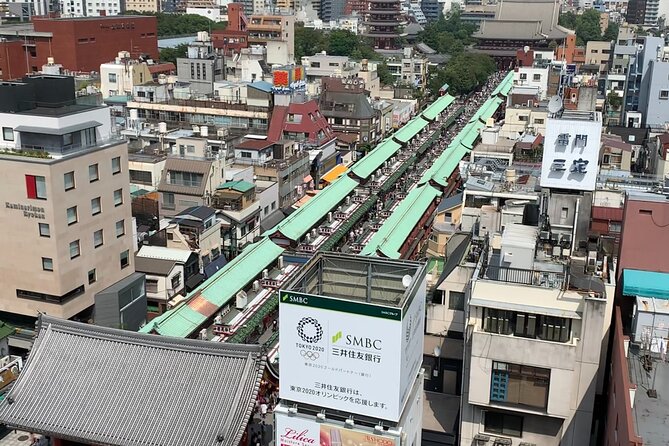
Kaminarimon is the iconic gate most people picture when they think of Asakusa. Here, your guide highlights the contrast between Japanese and Western dragons—different roles, different symbolism. It’s a fun way to turn a photo-stop into something you can actually explain afterward.
From there you move into Nakamise Shopping Street, which is one of Asakusa’s oldest shopping lanes. This is where the tour becomes equal parts history and atmosphere. You’ll learn about Buddhist symbols such as the vajra (tokko) and how ukiyo-e woodblock prints changed the world of images and storytelling.
What I like about this portion is that you don’t just wander. You get a lens to look through. Instead of treating everything as souvenirs, you start noticing why certain motifs show up again and again—and how mass-produced images helped shape popular culture.
Time on this stretch is about 40 minutes. That’s enough to browse without feeling like you have to sprint to keep up.
Hozomon and Sensō-ji: comparisons that make prayer feel real
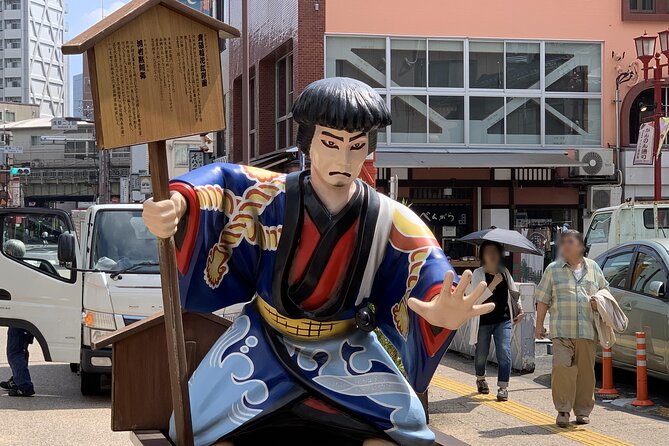
At Hozomon, the guide points out a surprising idea: people in Japan and the West shared remarkably similar ways of thinking about 1,000 years ago. It’s not an excuse for a history trivia contest. It’s more about how human thinking can rhyme across time and place.
Then comes Sensō-ji, Tokyo’s oldest Buddhist temple. This is a major emotional anchor in the tour. You’ll hear another set of comparisons and, importantly, an explanation of how prayer differs in Buddhism and Shinto—so you’re not just watching rituals, you’re understanding what you’re seeing.
The Sensō-ji stop is about 15 minutes. That sounds brief, but it’s paced well in a 3.5-hour route. You’ll still get time to see the space, take photos, and listen for the meaning, without getting stuck in one crowded spot too long.
Asakusa Shrine: the one place where two traditions share grounds
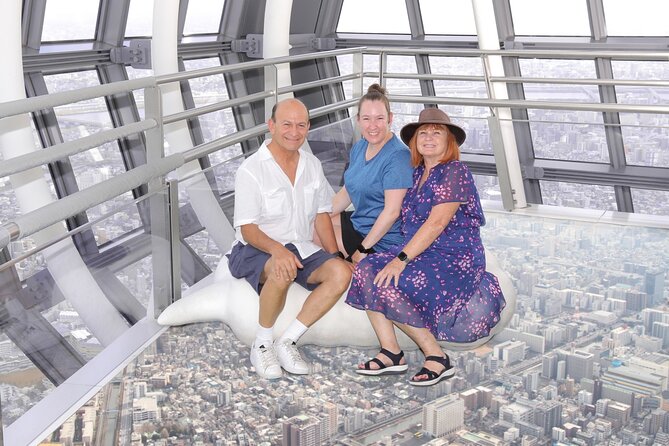
The tour ends its walking portion at Asakusa Shrine, a Shinto shrine that shares grounds with a Buddhist temple. The key point your guide emphasizes is peaceful co-existence over a long stretch of time—over a millennium.
This stop is short (about 15 minutes), but it’s memorable because it puts the whole religious foundation from earlier stops into a physical form. You can see how the traditions aren’t isolated “topics” for a classroom. They’re part of everyday community spaces.
If you care about architecture and how people use places differently, this is one of the strongest payoff moments of the day.
The Tokyo Skytree payoff: two decks and time to shop
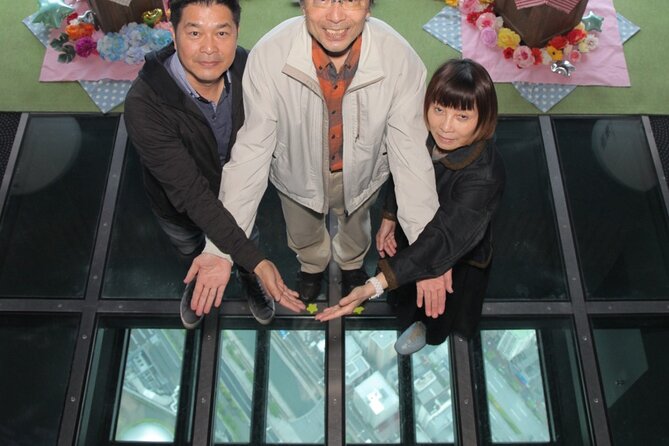
After the walking portion, you take the train from Asakusa to Tokyo Skytree. The tour description notes that the train fare is JPY 160 from Asakusa Station to Tokyo Skytree Station, and it’s not included in the price.
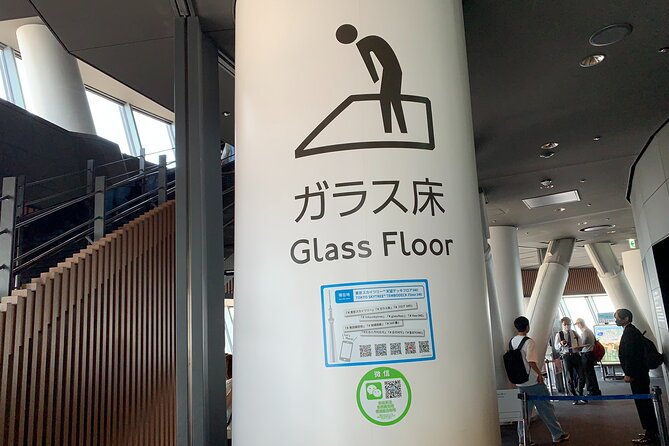
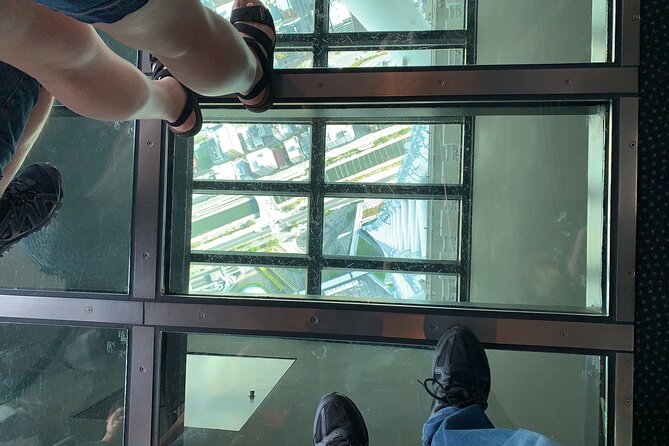
Then you head to the observation decks. Tickets for both the upper and lower decks are included, which is a big deal for value. You’re not stuck choosing one view level; you get two chances to see the city’s layout from different perspectives.
Your time at Skytree also includes shopping time below. The tower area has a dining and shop complex, so you can reset your brain after temples and narrow streets. You’ll likely want a snack or a souvenir, and it’s all conveniently in one place.
From a planning point of view, pairing Asakusa’s cultural stops with Skytree’s open views keeps the day balanced. One side gives you meaning; the other gives you scale.
Price and value: what you’re really paying for
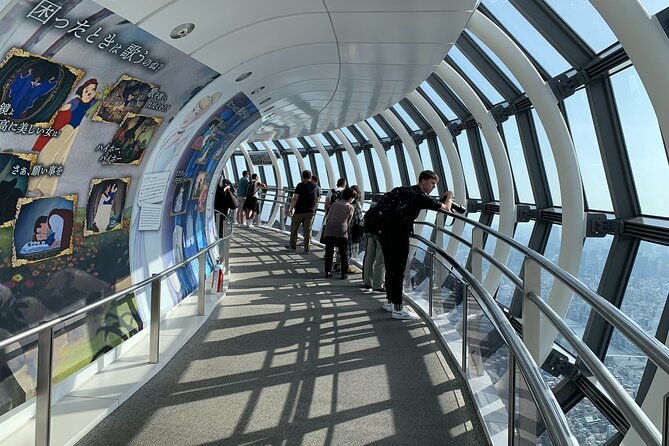
The price is $118.24 per person for a 3.5-hour small-group experience. At this level, you’re not just paying for admission. You’re paying for:
- A guide-led route through multiple major Asakusa landmarks
- Access to Skytree upper and lower decks through the included combo tickets
- A small group setup (max 8), which tends to improve the listening experience
- Headsets for groups of 3+, so you don’t have to strain in crowded areas
Where the value really shows is the ticket situation. Since Skytree entry tickets sell quickly, the provider buys them as soon as the booking is made. That reduces your personal stress, especially if you’re trying to match dates during peak season.
The tradeoff: that ticket certainty comes with strict date rules. If your plans are shaky, this tour is less forgiving.
Small group pacing: why the guide matters on this route
With a maximum of 8 travelers, you’re not lost in a crowd. That matters on a route like this, where you pass through gates, steps, and busy shopping lanes. A smaller group also makes it easier for your guide to answer questions without the whole line grinding to a halt.
You’ll also use headsets if your group is 3 or more, which is especially useful near loud street areas and when you’re a bit spread out from the guide.
From what you’re told and what guides like Taka, Junko Yamashita, Sue, and Keiko are praised for, the best part of this tour is the explanations: why the landmarks matter, how symbols show up, and how prayer differs across traditions.
Practical tips so you enjoy it more
A few things will make your afternoon smoother:
- Wear comfortable shoes. This is walking-heavy and includes temple steps and uneven surfaces.
- Bring a light layer. Late afternoon air can shift quickly in Tokyo.
- Have a payment plan for the train fare. The JPY 160 segment from Asakusa to Skytree isn’t included.
- Be ready to commit to your date. Skytree tickets are purchased early and can’t be changed.
Also, since the tour ends at Skytree, it can be a good setup for your next plan—dinner or an easy ride home—without having to backtrack through the Asakusa crowds.
Who should book this tour
This is a great fit if you want:
- An Asakusa experience that’s more than sightseeing photos
- A guide who explains the meaning behind gates, temples, and symbols
- A balanced afternoon that ends with big-city views from Skytree
It’s also a strong choice for families and mixed-age groups because the route is structured with short stops, and the group size stays small enough to stay comfortable.
If you’re the type who wants total freedom to linger everywhere on your own, you might prefer a DIY plan. But if you like learning while you walk—and you want Skytree access handled for you—this tour is built for that.
Should you book this Asakusa + Tokyo Skytree tour?
If your dates are firm and you want a low-stress way to connect Asakusa’s culture with Skytree’s views, I think it’s an easy yes. The value comes from the included Skytree deck combo plus a small-group guide who helps you read what you’re seeing—not just march past it.
Book it when you can, especially because Skytree tickets are treated as first-come, first-secured. If your schedule is uncertain, that strict ticket approach may be a dealbreaker. For a confident afternoon plan, though, this one is a solid, well-paced way to experience two sides of Tokyo in one go.
FAQ
What time does the tour start and where does it end?
The tour starts at 1:30 pm and ends at Tokyo Skytree (Tokyo Skytree1-chōme-1-2 Oshiage, Sumida City, Tokyo 131-0045).
What’s included in the ticket price?
You get Tokyo Skytree combo tickets for the upper and lower observation decks. For groups of 3 or more, the tour also provides headsets so you can hear the guide clearly.
Do I need to pay for the train from Asakusa to Skytree?
Yes. The train fare is listed as JPY 160 from Asakusa Station to Tokyo Skytree Station, and it is not included in the tour price.
How large is the group?
The maximum group size is 8 travelers.
Is this tour a good fit for most people?
The information provided says most travelers can participate.
Can I change my date or get a refund if plans change?
No. The experience is non-refundable and can’t be changed. Skytree entry tickets are bought soon after booking and dates can’t be altered.