REVIEW · ST AUGUSTINE
Private Guided Walking History Tour
Book on Viator →Operated by See America Tours · Bookable on Viator
Fort walls and wooden schoolhouses share the same block. This private 1.5-hour walk strings together the oldest wooden sites and key Spanish-era stops so the story clicks fast, and it’s family-friendly when the guide shifts pace and explanations. One thing to plan for: tickets aren’t included for every stop, so you may want to budget for the Lightner Museum and the Castillo if you plan to go in.
I like that the tour keeps moving—about 5 to 10 minutes per main stop—so you get context without spending a whole day in museum mode. You’ll start at 76 Spanish St, get a mobile ticket, and follow your guide along the Town Plaza area before finishing right back where you began.
In This Review
- Key highlights from this private St. Augustine walk
- Getting oriented fast on foot in St. Augustine’s historic core
- Stop 0: the Oldest Wooden Building and Oldest Wooden Schoolhouse
- Lightner Museum and City Hall: a quick pass that adds real context
- Government House Museum on the Town Plaza (free admission listed)
- Castillo de San Marcos National Monument: fort history in “why it mattered” terms
- Why the guides make this feel personal (Scott and Autumn examples)
- Walking pacing, timing, and how to plan your day
- Value for money: private guidance plus admissions that may be extra
- Who this tour suits best
- Booking checklist before you go
- Should you book this private guided history walking tour?
- FAQ
- How long is the private guided walking history tour?
- Where does the tour start?
- Is this a private tour?
- Are tickets included for the stops?
- What language is the tour offered in?
- Can service animals join the tour?
- What is the cancellation policy?
Key highlights from this private St. Augustine walk

- A tight 90-minute route that fits well between lunch and a longer evening plan
- Oldest Wooden Building + Oldest Wooden Schoolhouse as your early anchor point
- Lightner Museum and City Hall pass-by stop for quick orientation in the historic core
- Government House Museum on the Town Plaza with admission listed as free
- Castillo de San Marcos history in plain language focused on why the fort mattered
- Guides who adapt—including family-friendly add-ons and special local-food moments like Modern Rose Cafe tea
Getting oriented fast on foot in St. Augustine’s historic core

If St. Augustine feels a little overwhelming at first, this tour is built to fix that. In about 1 hour 30 minutes, you walk a short arc of the historic center and hit the places that help explain how the town survived, changed, and rebuilt over time.
Because it’s private, the pace is set for your group. If you’re slow, you’ll slow down. If you’re curious, you’ll get time to ask questions instead of watching the guide race ahead. You also get a mobile ticket, which is handy for staying hands-free while walking.
The practical upside: this is a walking tour where the route makes sense. You’re not bouncing across town on short attention spans. You’re staying in the area where St. Augustine’s layers show up in a very walkable way.
You can also read our reviews of more tours and experiences in St Augustine.


Stop 0: the Oldest Wooden Building and Oldest Wooden Schoolhouse

Your first brief stop is at the Oldest Wooden Building in St. Augustine and the Oldest Wooden Schoolhouse. It’s only around 5 minutes, but I think that’s a smart opener.
Why? Because it grounds you in the kind of place you’re walking through. Before you get to Spanish occupation stories and fort construction, you’re reminded that St. Augustine’s history isn’t only about dramatic battles. It’s also about everyday life—education, buildings, and the human scale of survival.
What to watch for: since this is a short stop, don’t treat it like a full museum visit. Treat it like a moment to look closely and let your guide point out what makes the structure historically important.
Possible drawback: if you love long interior walkthroughs, you might wish this first stop lasted longer. Here, it’s intentionally brief to keep the overall flow moving.
Lightner Museum and City Hall: a quick pass that adds real context

Next you walk by the Lightner Museum and St. Augustine City Hall for about 10 minutes. Admission is not included for this stop, and you should think of it as an orientation stop rather than a guaranteed full museum visit.
I like stops like this because they help you connect the dots. Even when you’re not going inside, you’re seeing the setting where the city’s stories are told in museums, and you’re getting a sense of how St. Augustine’s modern civic life sits on top of older layers.
What you’ll get from the guide here is the connective tissue. Your tour won’t just list names and dates. It’ll explain why these landmarks matter and how they fit into the broader arc of the town.
Consideration: because admission isn’t included, you’ll likely want to decide in advance whether you want to add time (and ticket cost) for Lightner beyond what’s built into the tour.
Government House Museum on the Town Plaza (free admission listed)

Then you head to the Government House Museum, described as the governor’s house during the Spanish occupation of St. Augustine, located on the Town Plaza. This stop is around 5 minutes, and admission is listed as free.
This is one of the most straightforward value points on the walk. Free admission means you can spend your money on other parts of the day rather than feeling like you’re paying twice for every historical stop.
Why the governor’s house story works on a short tour: it helps you understand authority and administration—how the town was organized and supported when Spain held control. Forts are impressive, but governance is part of survival too. You’re seeing the town function, not only the town fight.
What to do during the 5 minutes: slow down and listen for what your guide emphasizes—Spanish-era life, decision-making from the top, or how that era shaped what you see today.
Possible drawback: like the wooden-schoolhouse stop, this is brief. If you want deeper indoor time here, you might need to plan a separate visit. Still, as a tour stop, it gives you a strong anchor before you head toward the Castillo.
Castillo de San Marcos National Monument: fort history in “why it mattered” terms
The final main history stop is Castillo de San Marcos National Monument for about 10 minutes. Admission is not included here, and the focus is on a brief history of the Castillo and how its construction was critical to the survival of St. Augustine.
This is the part many people picture when they think of St. Augustine. A fort means defense, and defense means the town had to plan for risk. The way your guide frames the construction is the key—this isn’t just trivia about walls. It’s the reason those walls existed in the first place.
What you should expect: you’ll learn a quick, understandable story about the Castillo’s role. If you’re short on time, this is still useful, because it tells you what to pay attention to during and after the visit.
Consideration: since admission is not included, you need to decide what you want. If you want full access to the site’s interior and exhibitions, you’ll want to purchase tickets separately and possibly add extra time beyond this walking itinerary.






Why the guides make this feel personal (Scott and Autumn examples)

The most praised part of this experience isn’t just the route. It’s how the guide teaches it.
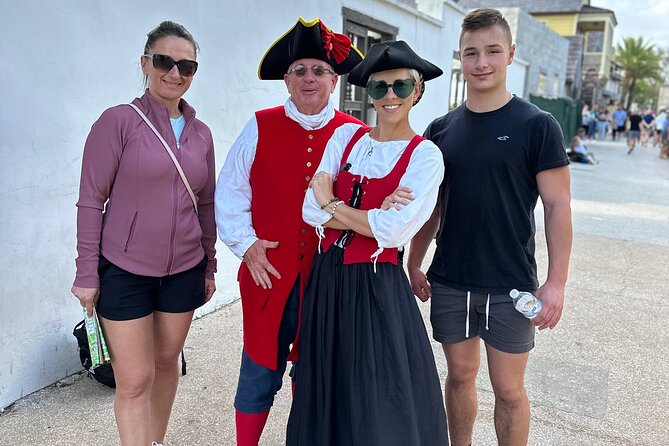
One guide named Scott is highlighted as passionate and full of local insight, including steering guests toward places that aren’t just the obvious tourist stops. In one example, the guide helped a group with tea and snacks at Modern Rose Cafe—exactly the kind of small, real-world payoff that turns a history walk into a more complete day.
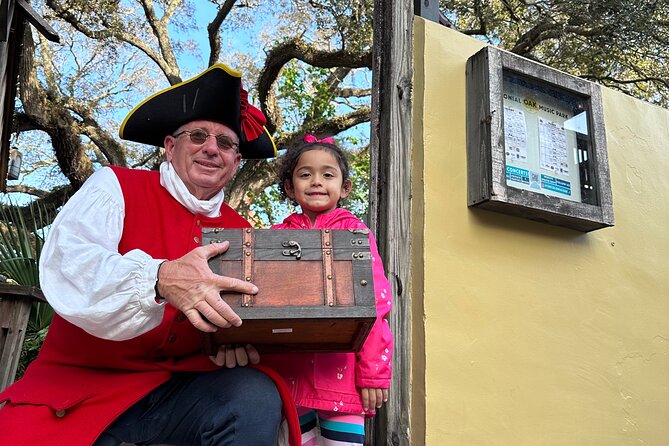
For families, the tour can shift in a way that matters. Another guide, Autumn, is praised for tailoring pirate and privateering history to young kids—down to toddler-friendly explanations. In one family’s experience, the guide added hands-on and playful bits like candle making and a treasure hunt, plus kid-centered “collector” moments like a treasure chest and a fox tail the child could wear.
That’s the big takeaway for you: this isn’t a one-note lecture. If your group includes kids, the best results come from a guide who can adjust the story without losing its core meaning.
Practical tip: if you’re traveling with children, tell your guide early what ages you have and what your kids usually enjoy. The tour is private, so that feedback actually helps shape the experience.
Walking pacing, timing, and how to plan your day
This tour is about 1 hour 30 minutes, give or take. The itinerary breaks into short segments—around 5 minutes at the wooden building, about 10 minutes around the Lightner Museum/City Hall area, 5 minutes at the Government House Museum, and 10 minutes at the Castillo.
Here’s why that timing works: you’ll cover a cluster of key sites without getting stuck in any one spot. You also avoid the common travel problem where you either rush too fast or spend half your day waiting in line.
Plan your day around it like this:
- Book it after you arrive in town so it helps you orient.
- Schedule lunch or a snack after the tour, especially if you want to explore any stop more deeply.
- If you’re adding museum time at Lightner or the Castillo, leave extra buffer because those are the stops with tickets not included.
If you love taking photos, bring water and expect some stops to be more watch-and-listen than picture-every-angle. Your guide will likely keep the story moving, and that’s part of the value.
Value for money: private guidance plus admissions that may be extra
There’s no single “one-size-fits-all” value here, because admission varies by stop. Government House Museum lists free admission, but Lightner Museum and the Castillo do not include tickets.
So the value equation becomes simple:
- If you want mostly guided storytelling and look at the key areas, you’re likely to spend less on add-ons.
- If you plan to go inside Lightner and fully access the Castillo, your total day budget will be higher—but the guided context can make those ticketed visits feel more meaningful.
The private format is also a value lever. Instead of waiting for a large group or hearing the same facts regardless of your interests, you get a tailored pace and the chance to ask questions.
For families, the “kids get a tailored experience” factor is often where the cost feels justified. Candle making and treasure-hunt-style energy (as seen in one family’s experience) can be hard to find on a standard walking tour.
Who this tour suits best
This private walking history tour is a strong fit if you want:
- A short, walkable introduction to St. Augustine’s historic core
- A guide who can explain stories in a way that works for your group
- A mix of early everyday history (wooden sites and schoolhouse) plus Spanish-era context and the Castillo story
- A plan that doesn’t require a full day commitment
It’s also ideal if you like family-friendly pacing. The tour’s flexibility—especially with guides who adapt explanations for younger children—can turn a history outing into something kids actually remember.
If you’re the type who wants long, detailed museum time, you’ll probably want to pair this tour with separate self-guided visits to any stop that interests you most, since the main stops are intentionally short.
Booking checklist before you go
To get the most out of the walk, I’d do a quick prep:
- Wear comfortable shoes. You’ll be on foot through multiple historic stops.
- If you might want to enter Lightner or the Castillo, plan on purchasing tickets separately since admissions aren’t included for those stops.
- Decide in advance whether you want a family-style experience. If yes, share kids’ ages so the guide can tailor the storytelling and activities.
And if you’re the kind of traveler who likes small local breaks, this tour is the sort where a guide might connect you with a practical refreshment plan—like tea and snacks at Modern Rose Cafe, as seen in one example.
Should you book this private guided history walking tour?
I’d book it if you want a time-efficient St. Augustine history overview with a private guide who can adapt to your group. The combination of wooden landmark context, quick Spanish-era stops, and a Castillo “why it mattered” focus is a smart way to build understanding without getting bogged down.
Skip it or plan extra time elsewhere if you want long museum stays at Lightner or the Castillo as part of the tour itself. Since tickets aren’t included for those stops, you’ll likely need separate time (and purchases) to go deeper.
FAQ
How long is the private guided walking history tour?
It’s about 1 hour 30 minutes.
Where does the tour start?
The tour starts at 76 Spanish St, St. Augustine, FL 32084, USA.
Is this a private tour?
Yes. It’s private, so only your group participates.
Are tickets included for the stops?
Admission ticket details vary by stop. Lightner Museum and Castillo de San Marcos National Monument are listed as not included. Government House Museum is listed as free.
What language is the tour offered in?
The tour is offered in English.
Can service animals join the tour?
Yes, service animals are allowed.
What is the cancellation policy?
Free cancellation is available. You can cancel up to 24 hours in advance for a full refund. If you cancel less than 24 hours before the start time, the amount paid is not refunded.
If you want, tell me your group size and ages, and whether you plan to enter Lightner or the Castillo. I can help you time the rest of your day around this 90-minute walk.