REVIEW · KOCHI
Fort Cochin Heritage Tour by The Kochi Heritage Project
Book on Viator →Operated by The Kochi Heritage Project · Bookable on Viator
Fort Kochi feels like a time machine on foot. This tour traces how Cochin moved from the Emporium of the World to the Queen of the Arabian Sea, then into today’s tourist-and-art hub, using the streets and buildings you can still point to.
I really like the small group feel and how the walk is built around a real local storyteller, Johann. His stories connect 3000 years of change to what you see in architecture, culture, food, and the people who shaped the city. One thing to plan for: it requires good weather, and the tour doesn’t provide umbrellas or rain gear.
In This Review
- Key things I’d plan around
- Where this Fort Kochi Heritage walk really takes you
- Chinese Fishing Nets: the icon you’ll never forget
- Vasco da Gama Square: Portuguese ambition, pepper, and prayer
- Fort and Santa Cruz: how a European town began in India
- David Hall Gallery & Cafe: Dutch shapes plus an Ayurveda connection
- Parade Ground: tea, cricket, and art festivals in a small window
- Fort Kochi Beach: Britain’s fight for control
- Why the storytelling feels different (especially with Johann)
- Price and value: is $27.96 worth it?
- Practical tips so the walk stays fun
- Should you book the Fort Cochin Heritage Tour?
- FAQ
- How long is the Fort Cochin Heritage Tour?
- What does the tour cost per person?
- Where does the tour start and where does it end?
- How big are the groups?
- What’s included in the tour?
- Do the stops require paid admission?
Key things I’d plan around
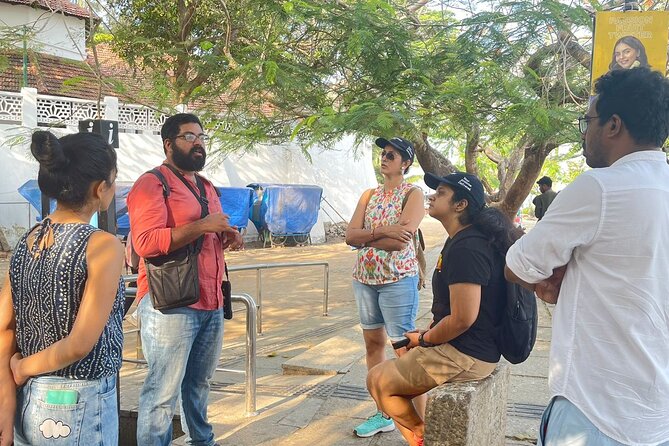
- Johann’s Fort Kochi perspective ties the European and Indian layers together in plain, story-first language.
- A tight 2–3 hour walk hits major icons like Chinese Fishing Nets and Vasco da Gama Square without wasting time.
- Portuguese influence, explained fully—including language, cuisine, and even the Portuguese slave trade, plus protective spirits passed down.
- Dutch architecture stop plus a surprising Ayurveda link via a 17th-century treatise that still matters.
- The tour ends at Princess Street, so you finish in a practical place to keep exploring on your own.
Where this Fort Kochi Heritage walk really takes you
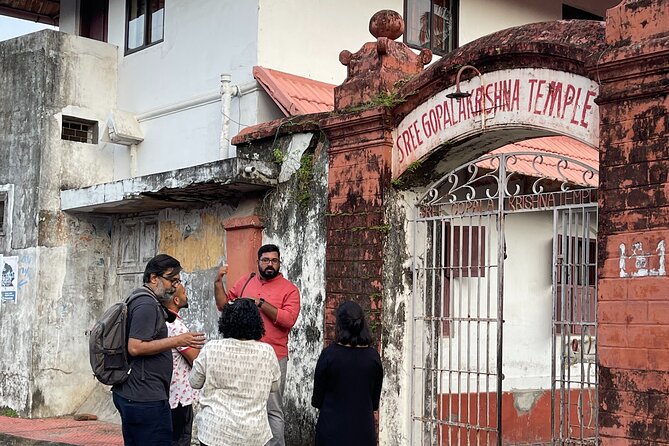
This is a guided walking tour of Fort Kochi’s old European fort-town remnants, with stories that explain how Cochin became a trading crossroads for centuries. You start at the Folklore Cultural Theatre bus stand building in Fort Kochi, then work your way toward Princess Street by the end. The whole experience lasts about 2–3 hours, so it fits well into a half-day plan without turning the rest of your Kochi time into a blur.
What makes it work is the focus on “basics first.” Instead of tossing dates at you, the guide connects the big labels—Emporium of the World, Queen of the Arabian Sea—to the street-level details that still show the city’s back-and-forth with Europe and Asia. And because the group is capped at 8 travelers, you’re not lost in a crowd during the story moments. You also get a mobile ticket, so you’re not juggling paper during the walk.
For most people, that’s the sweet spot: you want history, but you also want it to feel usable while you’re standing there.
You can also read our reviews of more tours and experiences in Kochi.

Chinese Fishing Nets: the icon you’ll never forget
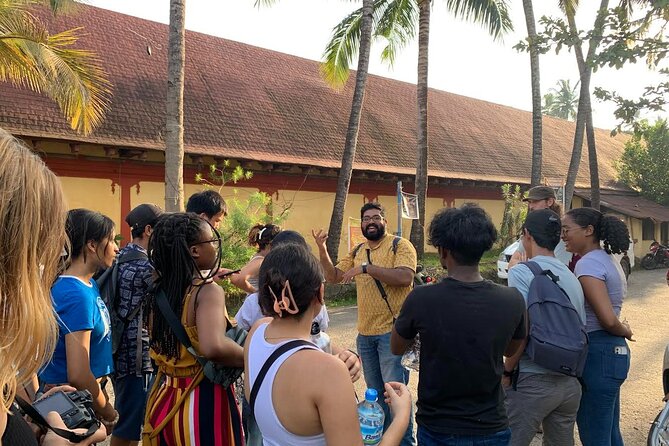
The tour kicks off at the Chinese Fishing Nets. This stop is short (about 15 minutes) but it’s a strong way to begin because it’s visual, iconic, and immediately tied to Cochin’s reputation as a place sailors and traders talked to each other. You’ll hear the stories behind the Chinese sailors reaching Malabar, and you’ll likely notice how this landmark functions like a living reminder of the maritime connections the city is famous for.
Even if you’ve seen photos of the nets before, the value here is the spoken context. The guide helps you connect a recognizable sight to the older networks that shaped how Kochi worked as a port town. Admission isn’t part of the equation at this stop—it’s listed as free—so you can focus on listening and looking instead of worrying about tickets.
Practical note: treat this as your warm-up stop. If it’s sunny, protect your eyes and shoulders early, because this whole route is designed around walking, not getting out of the sun for long museum breaks.
Vasco da Gama Square: Portuguese ambition, pepper, and prayer
Next up is Vasco da Gama Square, with a story centered on Portuguese arrival and motivation—finding pepper and Christians in India. This is another stop built for clarity. In a short time, you get a framework for why European powers were paying attention to the Malabar coast in the first place: trade goals and religious ambitions moving together.
It’s a good early checkpoint because it explains the shift from “fleets and sailors” to “European city-building and influence.” You also get that sense of Cochin as a city that kept absorbing layers. The Portuguese story isn’t presented as one neat chapter; it’s a thread that keeps reappearing later in architecture, language, and even food habits.
The time commitment is about 20 minutes here, and this stop is also marked with free admission. That makes it a low-friction point in your walk—no extra cost, no long waits.
Fort and Santa Cruz: how a European town began in India
As the route continues, the tour focuses on the beginnings of a European city in India: the Fort and the city of Santa Cruz. This is where you start seeing how history can be read like a map. Instead of just naming places, the guide links them to what “European fort town” actually meant on the ground—space, power, and daily life patterns that left long-lasting marks.
A big reason I’d recommend this stop is that it doesn’t treat Portuguese influence as only romance and monuments. You learn about Portuguese influences in Kerala that go beyond buildings: culture, cuisine, and language. You also hear about the Portuguese slave trade and tales of protective spirits passed down through generations. That combination matters. It gives you a fuller picture of how influence works—sometimes through art and food, and sometimes through harm and control.
If you’re the kind of traveler who gets annoyed when a tour skims the hard parts, this is one of the moments where the tour earns your attention. It also helps you understand why Cochin’s layers can feel both familiar and complicated when you walk them.
David Hall Gallery & Cafe: Dutch shapes plus an Ayurveda connection
The next stop is David Hall Gallery & Cafe, with a focus on Dutch architecture influences in Cochin. This is where you get a second European layer—more than just “Portugal happened, then Dutch happened.” The guide ties the Dutch presence to how the city looks and feels, so you’re not only collecting stories; you’re building a visual mental model of what each group contributed.
What makes this stop more interesting is the mention of a 17th-century treatise that still holds relevance in Ayurveda. That’s the kind of cross-world detail I love because it shows how knowledge didn’t stay in neat boxes. Even if you don’t know much about Ayurveda right now, the point is clear: the city’s story includes ideas that moved back and forth, not just ships.
This stop is about 30 minutes, and it’s also where you’ll get a break. The tour includes coffee and/or tea and snacks at a Dutch themed hotel, which means you’re not stuck running on empty while the guide moves through heavier topics. Still, don’t assume this is a long sit-down. It’s a short reset inside a walking tour.



Parade Ground: tea, cricket, and art festivals in a small window
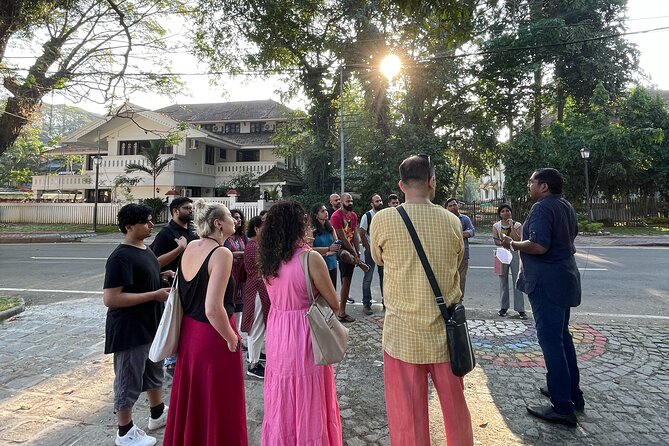
Parade Ground is a compact stop (around 15 minutes) that uses everyday cultural references—tea, cricket, and art festivals—to show how older colonial connections filtered into daily life. It’s not “everything you need to know about sports and tea.” It’s more about how cultural habits can persist and change over time.
If you tend to remember history best when it includes human details, this is a good one. The setting helps too because open spaces like this make the stories feel less like a lecture and more like something that fits how a city breathes.
Also, since the stop is short and the rest of the tour is planned, you don’t lose momentum. This kind of stop is a helpful rhythm change between the heavier European-era material and the final beach section.
Fort Kochi Beach: Britain’s fight for control
The tour ends with Fort Kochi Beach, with stories of the British and their fight for supremacy in the Indian subcontinent. This stop is about 30 minutes, which gives the guide enough time to connect “British power” to what it meant locally, without rushing you through the mood of the shoreline.
For me, this works because the beach adds a different kind of perspective. When you’re listening about trading and competition, standing near the water helps the stories land. You can connect the abstract idea of supremacy to the practical reality of ports and movement.
Afterward, the tour winds down at Princess Street, where colonial charm meets modern Kochi—colorful Portuguese- and Dutch-era buildings, plus cafés, art boutiques, and independent stores. Ending here is practical because it’s an easy place to keep exploring without needing a pickup or extra planning.
Why the storytelling feels different (especially with Johann)
The tour’s main strength is the way it links time periods to tangible things: architecture you can see, streets you can walk, and cultural signals like language and food that you’ll recognize later as you keep wandering. It’s also built around the idea that Cochin’s identity came from trade relationships and contact, not just rulers and wars.
Johann’s role matters here. In the best tours, the guide feels like a person who genuinely lives in the story, not someone reading from a script. His passion shows up in how the details connect—like how you hear about protective spirits alongside Portuguese influence, or how a Dutch architectural theme leads into a 17th-century treatise and Ayurveda. That kind of linking keeps you engaged, even when topics get complicated.
One more practical detail: the tour doesn’t try to turn into a museum checklist. It focuses on Indo-European heritage structures and establishments, including modern-day adaptations, and it notes that it won’t enter heritage monuments beyond what’s mentioned. So instead of losing time to tickets and corridors, you get a walk that stays on track.
Price and value: is $27.96 worth it?
At $27.96 per person (for a 2–3 hour experience), this tour is priced like a “story-and-walk” product, not a big-ticket attraction. The value comes from the combination: a local storyteller, a planned route across multiple key sites, and inclusions like coffee and/or tea plus snacks.
You also benefit from stops that are listed with free admission for the key photo/sight moments (Chinese Fishing Nets and Vasco da Gama Square are specifically marked as free). And because the group is capped at 8, you’re more likely to feel like the guide is working with you, not just managing a herd.
The cost isn’t meant to cover everything. It doesn’t include private transportation, and it doesn’t include alcohol. The tour also doesn’t provide umbrellas or rain gear, so if weather turns, you’ll need to handle that yourself. If you’re expecting lots of museum interiors, this may feel more street-focused than you want.
Still, if your goal is to understand Fort Kochi’s layers quickly and enjoyably, this is strong value.
Practical tips so the walk stays fun
First, wear shoes you can trust on sidewalks. This is a walking tour with multiple stops over a short window, and the route is designed around moving from point to point. Plan to carry a light layer if evenings feel cool, but don’t pack anything you’ll regret holding while you listen.
Second, keep weather in mind. Since good weather is required and umbrellas aren’t provided, you’ll want a rain plan. If the tour is offered again due to weather, that’s your chance to take it when conditions are kinder.
Third, remember the tour ends at Princess Street. That’s a good place to line up your next activity—late lunch, an art stop, or just wandering cafés—because you won’t have to retrace your steps.
Finally, save your mobile ticket and keep it handy. The tour uses a mobile ticket, which should make check-in simpler than paper tickets, especially while you’re moving around Fort Kochi.
Should you book the Fort Cochin Heritage Tour?
Book it if you want a walk that explains Cochin’s European-and-Indian layers in a way you can feel while you’re standing in the city. It’s especially worth it if you like history tied to real architecture, street names, language, food habits, and the kind of stories that include both the bright and the dark sides of contact. The small group size and Johann’s storytelling are big reasons this tour holds attention.
Skip it if you mainly want museum entry tickets and long indoor stops, or if you can’t handle walking in changing weather. This experience is built to work outdoors, and it’s designed around understanding the city through what you can see, not through heavy monument time.
If your plan is to get oriented fast and then keep exploring on your own, this one is a smart first-choice walk in Fort Kochi.
FAQ
How long is the Fort Cochin Heritage Tour?
It runs for about 2 to 3 hours.
What does the tour cost per person?
The price is $27.96 per person.
Where does the tour start and where does it end?
The tour starts at the Folklore Cultural Theatre bus stand building in Fort Kochi and ends at Princess Street (Princess St, Fort Nagar, Fort Kochi).
How big are the groups?
The maximum group size is 8 travelers.
What’s included in the tour?
It includes coffee and/or tea with snacks, a tour led by a local storyteller, and visits to Indo-European heritage structures and establishments (including modern-day adaptations).
Do the stops require paid admission?
The listed stops such as Chinese Fishing Nets and Vasco da Gama Square are marked as free admission ticket. The tour also notes it won’t enter heritage monuments except what’s mentioned in the inclusions.