REVIEW · MUMBAI
Best South Mumbai Heritage Walk
Book on Viator →Operated by Mumbai Dream Tours · Bookable on Viator
A 3-hour walk through South Mumbai cuts the stress. This tour threads together colonial-era architecture, standout landmarks, and prime street-level photo moments without tying you to a car. I like that you get a slow, walkable pace and plenty of close-up viewing time, and I also like the architecture focus that helps you make sense of what you’re seeing.
You’ll move at a human speed between major sights, which makes it easier to stop for photos and actually read the details on the buildings. One thing to consider: a walking tour depends on timing and group flow, so if you’re sensitive to crowding or weather changes, plan with some flexibility.
The small group size (up to 15 people) and the mobile ticket keep things simple. It runs about 3 hours, with morning and afternoon options, and it’s priced at $17.89 per person—reasonable for a guided loop that includes multiple well-known stops along the south edge of the city.
In This Review
- Key highlights at a glance
- Walking South Mumbai the smart way (3 hours, on purpose)
- Getting on and off: meeting near CST, ending in Colaba
- Stop-by-stop: what each landmark is really for
- Gateway of India: the starting frame for Mumbai’s modern face
- Kala Ghoda: architecture meets the arts streets
- Town Hall / Asiatic Society Library: neoclassical gravitas in Fort
- Flora Fountain and Hutatma Chowk: quick visual hits, easy photo angles
- Horniman Circle Garden: a pause with office-building surroundings
- Bombay High Court Principal Bench: law, power, and architecture
- Taj Mahal Palace: heritage and luxury sharing the same frame
- Chhatrapati Shivaji Terminus: the UNESCO finish that feels earned
- Why the architecture theme helps you understand the city
- Guides who actually connect history to what you see
- Price and value: $17.89 for a guided landmark loop
- Timing, comfort, and a small reality check
- Should you book the Best South Mumbai Heritage Walk?
- FAQ
- How long is the South Mumbai Heritage Walk?
- Are there morning and afternoon tour options?
- What does the tour cost per person?
- Do I need to buy admission tickets for the stops?
- What is the maximum group size?
- Is there a mobile ticket?
- Where do I meet the tour?
- Where does the tour end?
- Is the meeting point near public transportation?
- What is the cancellation window for a full refund?
Key highlights at a glance
- Morning or afternoon departures so you can match the walk to your day
- Victorian Gothic Revival plus neoclassical and other styles to compare building-by-building
- Major landmarks on foot, from Gateway of India to Chhatrapati Shivaji Terminus
- Free admission stops listed at each attraction
- Small group size (max 15) for a more manageable experience
- Guides who tell the story clearly, with stand-out praise for Aakash, Gautam, Sandesh, and Sanika
Walking South Mumbai the smart way (3 hours, on purpose)
South Mumbai is one of those places where the streets do a lot of the storytelling. On a heritage walk like this, you don’t just glance at landmarks from across the road—you get to approach them, frame them, and notice how the city’s layers sit next to each other.
The tour is about 3 hours. That’s a sweet spot. Long enough to see real variety, short enough that you’re not wandering all day. You’ll likely find it easier to keep momentum without rushing, especially if you’re building in time for photos. The pace is also a big deal for comfort: when you walk, you can slow down naturally instead of being dropped off and hustled back.
Also, the tour is set up as an eco-friendlier way to get around. That means less time thinking about traffic and more time watching the city itself—people, facades, and street corners.
You can also read our reviews of more tours and experiences in Mumbai.


Getting on and off: meeting near CST, ending in Colaba
The start point is near CST Station: McDonald’s (Building No 142, Shop No 12) on Dr Dadabhai Naoroji Road, opposite CST and near Azad Maidan. The end point is Regal Cinema on Apollo Bandar in Colaba, with the route tied closely to the Gateway of India area.
Why this matters for you: South Mumbai sights cluster tightly in this part of the city. Starting near CST helps if you’re arriving by train or want easy access to transit. Ending in Colaba is handy because it leaves you close to more sightseeing and dining options afterward.
The tour is marked as near public transportation, and that usually means less stress about how you’ll get there on time. Add in the mobile ticket, and you’re not stuck printing or digging for paperwork.
Stop-by-stop: what each landmark is really for
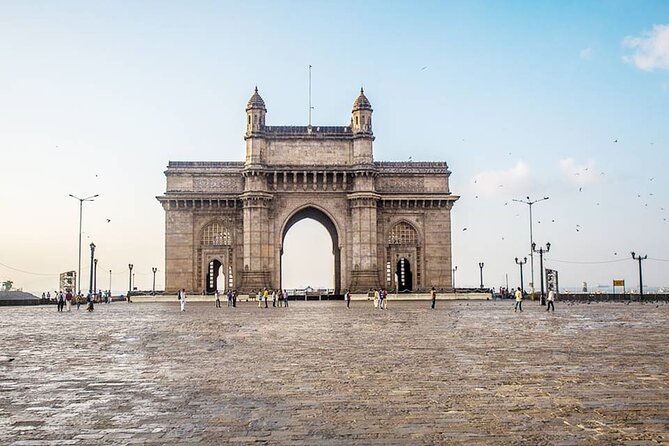
This walk is designed like a visual history lesson. Each stop gives you a building or public space you can read, photograph, and use as a reference point for the next one.
Gateway of India: the starting frame for Mumbai’s modern face
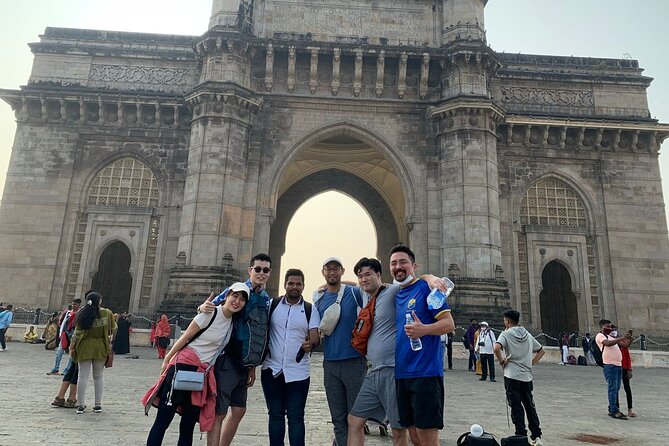
You begin at the Gateway of India, an arch monument built in the early 20th century. Even if you’ve seen it in photos, seeing it up close gives you a better sense of scale—how it anchors the waterfront area and how it feels like a public stage for arrivals.
Because the tour starts here, you’ll use it like a baseline image: from this spot, you start to notice how later stops fit into the city’s bigger story of colonial influence, trade routes, and civic display.
This stop is listed at about 30 minutes and has free admission, which keeps the pace from feeling like a rush-through.
Kala Ghoda: architecture meets the arts streets
Next comes Kala Ghoda. This area is known for its arts scene, and the highlight here is the Kala Ghoda Arts Festival in February. Even if your dates don’t line up with festival season, the neighborhood’s character still shows up in the streetscape.
If you like street-level details, this is a good moment to slow down. It’s also a nice contrast to the heavier monumental feeling at the waterfront.
Expect around 30 minutes and free entry, so you can take your time without worrying about extra costs.




Town Hall / Asiatic Society Library: neoclassical gravitas in Fort
The walk then turns to the Town Hall (Asiatic Society Library) in the Fort locality. This is a neoclassical building, and that style shift matters. Gothic Revival, neoclassical, and other European-influenced designs can feel like different worlds—until you stand close and see how they’re all part of one urban conversation.
In practice, this stop helps you connect the dots. When your guide talks about colonial-era planning and how it shaped Mumbai’s built environment, this is the kind of location that makes the explanation click.
This stop is also scheduled for about 30 minutes with free admission.
Flora Fountain and Hutatma Chowk: quick visual hits, easy photo angles
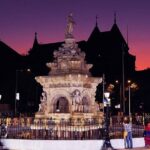
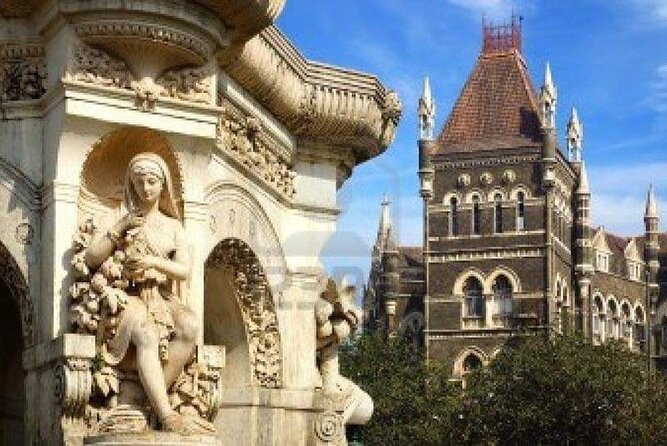
Flora Fountain sits at Hutatma Chowk, described as an ornamentally sculpted heritage monument. This is a strong stop for photos because it’s a landmark you can frame from multiple angles and it helps define the civic geometry of the area.
Right near the fountain, the streets feel like they’re designed for people to pass through and gather. That’s useful on a walking tour because it keeps your route flowing while still giving you a clear landmark moment.
You’ll get about 30 minutes here, also listed as free.
Horniman Circle Garden: a pause with office-building surroundings
Then you reach Horniman Circle Garden, a park area of about 2½ acres in the Fort district, surrounded by office complexes. It’s short on paper (around 10 minutes here), but it acts like a breather.
This stop is valuable because it reminds you that heritage in Mumbai isn’t only big monuments. It’s also the way public spaces were planned within commercial districts.
If you want to capture a mix of greens plus classic skyline lines, this is a quick but useful angle.
Bombay High Court Principal Bench: law, power, and architecture
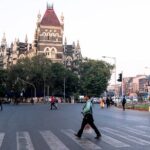
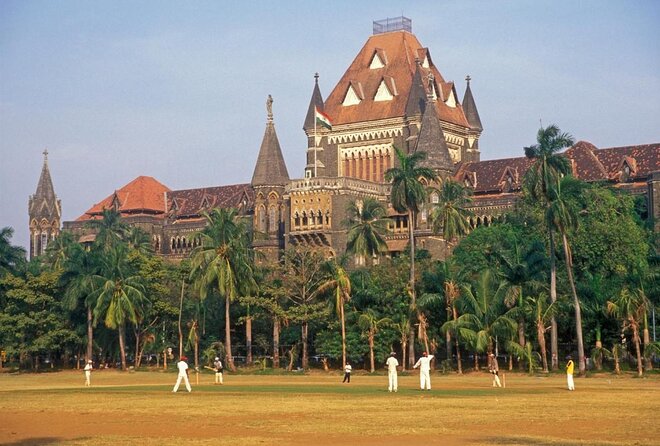
The next stop is the High Court of Bombay (Principal Bench). This is the high court for the states of Maharashtra and Goa. Even if you don’t know the legal system, the building’s purpose comes through in how it sits in the city: formal, imposing, and clearly meant to project authority.
This is listed as about 10 minutes. That’s not long, so use it like a focused checkpoint—notice the facade, step back for the full shape, then take your close-up details if you’re into architecture photography.
Free admission is listed for this stop.
Taj Mahal Palace: heritage and luxury sharing the same frame
From the High Court, you’ll pass to The Taj Mahal Palace, Mumbai, a heritage, five-star luxury hotel in Colaba. This contrast is part of the point of the walk. The city’s story isn’t one-note. It includes grand public buildings, formal institutions, and high-status hospitality.
You won’t spend ages here—about 10 minutes—but it’s long enough to register how this place fits into the broader colonial and post-colonial urban story.
Free admission is listed.
Chhatrapati Shivaji Terminus: the UNESCO finish that feels earned
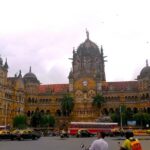
The walk’s last major stop is Chhatrapati Shivaji Terminus (CST), a UNESCO World Heritage Site. This terminal is one of the most visually dramatic parts of Mumbai’s rail heritage, and arriving at the end gives it extra impact.
You’ll get about 30 minutes. Use it to look up and take in the big architectural lines. If you’ve been paying attention to styles along the route, CST is where those influences feel most dramatic in scale.
Free admission is listed.
Why the architecture theme helps you understand the city
This walk’s strength is that it doesn’t treat landmarks like random photo stops. It ties them together through architecture—especially Victorian Gothic Revival, plus neoclassical and other styles you’ll see along the way.
That “style compare” approach is what makes the city start to make sense. Instead of memorizing names only, you start noticing patterns: how certain buildings feel heavier or more formal, how details change from facade to facade, and how civic power gets expressed through stone and design.
It also keeps your time efficient. You’re not stopping forever at one spot, but you’re getting enough context to make each stop click.
Guides who actually connect history to what you see
The tour’s quality depends heavily on the guide, and this one has strong guide praise in the details. I especially like that different guides bring different flavors while staying on-topic and clear.
- Aakash gets highlighted for extensive Mumbai history and for being genuinely likeable—exactly what you want when you’re listening for 3 hours.
- Gautam stands out for showing great photo spots and for adding extra conversation, including Bollywood insights, which is a fun way to link buildings to Mumbai culture.
- Sandesh is praised for being informative and for sharing interesting facts about historic landmarks across South Mumbai.
- Sanika is described as friendly and personable, with broad India conversation that stays flowing rather than feeling like a lecture.
So here’s the practical takeaway: if you like asking questions and chatting lightly while still learning, this tour is set up for that. A small group also helps—less time waiting for the guide, more time staying together.
Price and value: $17.89 for a guided landmark loop
At $17.89 per person, this tour is positioned as good-value for a guided heritage walk with multiple major stops. The most persuasive part isn’t just the price—it’s that the schedule stacks well-known landmarks in one outing, with stops listed as free admission.
You’re paying for guidance, timing, and storytelling that turns “I saw buildings” into “I understood what I saw.” And because the experience runs about 3 hours, you’re not buying an all-day commitment.
Is it cheap like a self-guided stroll? No. But it’s also not just wandering around. You’re using a route built around architectural variety and recognizable civic sites.
Timing, comfort, and a small reality check
This is a walking tour, so plan like you’re walking. Wear comfortable shoes and keep your camera charged. South Mumbai can move quickly around landmarks, so keep your focus on staying with the group near crosswalks and busy corners.
On the schedule side, there are morning and afternoon options, so you can pick the one that best fits your energy level. Also, while the experience notes most travelers can participate, walking time and street navigation still matter.
One more reality check: there has been at least one report of a cancellation without prior warning. That’s not something you can always prevent, but you can reduce stress by checking your messages close to departure and keeping your plans flexible around it. The tour also notes that free cancellation is available up to 24 hours in advance for a full refund, which is a helpful safety net.
Should you book the Best South Mumbai Heritage Walk?
Book it if you want a compact, guided way to understand South Mumbai’s architectural personality—especially if you care about Victorian Gothic Revival details, neoclassical contrasts, and the way colonial-era planning shaped the city you see today.
You might skip it if you already know you’ll want only one or two stops and plan to linger for much longer on your own. Also, if you’re very sensitive to walking time or want a totally flexible itinerary with no set sequence, a self-guided plan might better match your style.
If you’re new to Mumbai or you want a first “city read” before you branch out on your own, this is a solid choice. You’ll finish back near Colaba with a clearer sense of how the city’s big landmarks connect—and you’ll have enough photos to prove it.
FAQ
How long is the South Mumbai Heritage Walk?
The tour lasts about 3 hours.
Are there morning and afternoon tour options?
Yes. Morning and afternoon options are available.
What does the tour cost per person?
The price is $17.89 per person.
Do I need to buy admission tickets for the stops?
Admission is listed as free for the stops included in the itinerary.
What is the maximum group size?
The tour has a maximum of 15 travelers.
Is there a mobile ticket?
Yes, the tour uses a mobile ticket.
Where do I meet the tour?
Meet at McDonald’s, Building No 142, Shop No 12, Empire Building, Dr Dadabhai Naoroji Rd, next to CST Station, Fort, Mumbai.
Where does the tour end?
The tour ends at Regal Cinema, Apollo Bandar, Colaba, Mumbai.
Is the meeting point near public transportation?
Yes, the tour notes that it is near public transportation.
What is the cancellation window for a full refund?
You can cancel up to 24 hours in advance for a full refund.