REVIEW · NARA
Nara World Heritage PRIVATE TOUR
Book on Viator →Operated by 888tour · Bookable on Viator
Nara feels magic when you meet the deer. This private walking tour strings together the biggest World Heritage sights and the real Nara details that most people miss. I especially like that you get a tight route that moves fast without feeling rushed, and you also get the deer feeding moment built in with crackers included.
Two more things I like: the stops are planned to make sense in sequence (gate, main hall, then park), and admission fees are handled so you spend less time figuring out tickets and more time seeing. One drawback to consider is that, like any guide-led tour, the experience depends on your guide’s communication style; one past guest flagged that their guide felt more scripted and less interactive.
Key points to know before you go
- Todai-ji route built around the big landmarks: museum, grand gate, then the Daibutsu grounds
- Deer feeding with crackers included: one packet of cracker, timed into Nara Park
- Ukimido Pavilion at Sagiike: a floating-feel hexagonal hall for classic water reflections
- Kofuku-ji pagoda stop: includes the famous five-story pagoda viewpoint
- Private means flexible dispersal: you can end near Kintetsu-Nara Station and continue your own plan
- Heat is real in summer: bring water and shade, because you’ll be outside a lot
In This Review
- Why This Nara Private Tour Works So Well for First-Timers
- Price and Value: What $96.67 Buys You in Real Terms
- Timing, Weather, and Staying Comfortable Outside
- Start Point at Todai-ji Museum: Where the Story Begins
- Todai-ji Namdaimon (Grand South Gate): The Gate That Sets the Tone
- Inside Todai-ji: Daibutsu Grounds and World Heritage Scale
- Nara Park and Deer Feeding: Why This Moment Is Uniquely Nara
- Ukimido Pavilion at Sagiike: Reflections and a Calm Break
- Kofuku-ji and the Five-Story Pagoda: Tall Views in Traditional Wood
- The Real Secret Sauce: How Guide Style Changes Everything
- What’s Included vs. What You’ll Pay for On Your Own
- Who This Nara Tour Suits Best
- Should You Book This Nara World Heritage Private Tour?
- FAQ
- How long is the Nara World Heritage private tour?
- Is this tour private or shared?
- What’s included in the price?
- Do I need to buy tickets separately?
- Where does the tour start and end?
- Can I feed the deer during the tour?
- Is the tour outdoors, and what about summer heat?
- What happens if the weather is poor?
Why This Nara Private Tour Works So Well for First-Timers

Nara can feel a little overwhelming. Temples, gates, and parks sprawl out over a lot of walking, and it’s easy to waste time deciding what to see first. This tour fixes that by building a logical, compact loop around the highest-demand sights.
I like that the experience is designed for efficiency. You cover the iconic Todai-ji area, then you shift naturally into Nara Park and its deer, then you finish with Kofuku-ji. In practice, that means you get a full Nara snapshot without needing a whole day.
The best part for many people is the contrast: Todai-ji’s huge sacred atmosphere on one side, and Nara Park’s gentle chaos with deer on the other. It’s a very Nara thing, and it’s hard to replicate if you’re trying to plan it all on your own.
Price and Value: What $96.67 Buys You in Real Terms
$96.67 per person is a fair price for a 3 to 4 hour private experience—especially because it includes admission for the shrines and temples you visit. If you’ve ever tried to self-plan and then ended up buying multiple tickets while also negotiating crowds and distance, you’ll understand why “admissions included” matters.
You’re not just paying for someone to walk with you. You’re paying for a guide who can explain what you’re seeing as you go, and that turns a checklist into understanding. A few guests also praised how the guide helped them feel paced and not burnt out, even with lots of walking and park crowds.
One more value point: the tour uses a mobile ticket, so you’re not stuck hunting for paper vouchers at the last second. It’s a small thing, but it adds up when you’re moving between sites.
You can also read our reviews of more tours and experiences in Nara.
Timing, Weather, and Staying Comfortable Outside
This is a walking-focused tour, about 3 hours on the shorter end and up to around 4 hours depending on pace and your questions. That duration is long enough to feel satisfying, but not so long that you’re exhausted by mid-afternoon.
You also need to plan for weather. The experience requires good weather, and if it’s canceled due to poor conditions you’ll be offered another date or a full refund. In summer, especially August, heat can hit above 35°C, so you’ll want to treat shade and hydration like they’re part of your itinerary.
What I recommend you do before you meet your guide:
- bring water and drink regularly
- consider a parasol for shade
- wear shoes you’re comfortable walking in for a few hours
Start Point at Todai-ji Museum: Where the Story Begins
Your tour starts inside Todai-ji Museum at the Todai-ji general cultural center area. Starting here is smart because it helps you get oriented before you jump into the main sights. When you know a little about what you’re about to see, the big entrances and massive halls hit harder.
If you’re the type who likes a clean beginning, you’ll probably appreciate this approach. It’s also practical: you’re already in the right zone for the Todai-ji complex, so you avoid time lost commuting between far-flung parts of Nara.
Your guide then leads you toward the grand gateway area next, where you’ll get your first strong sense of the scale of Todai-ji.
Todai-ji Namdaimon (Grand South Gate): The Gate That Sets the Tone
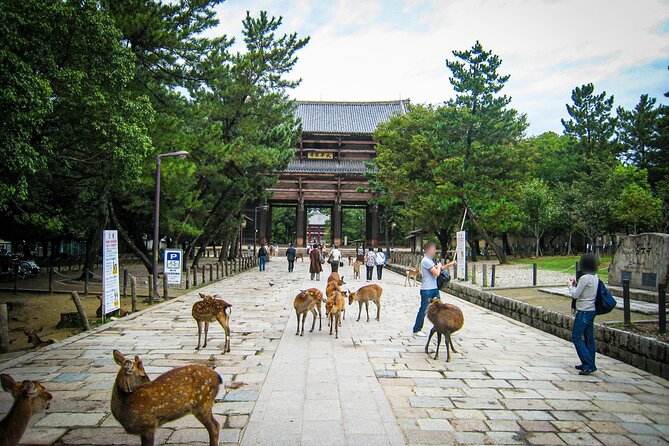
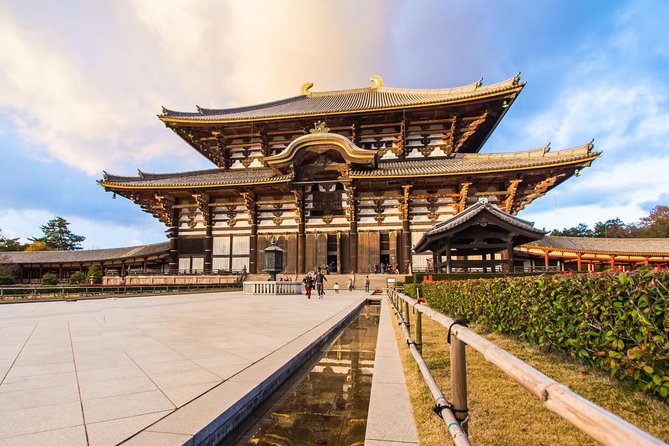
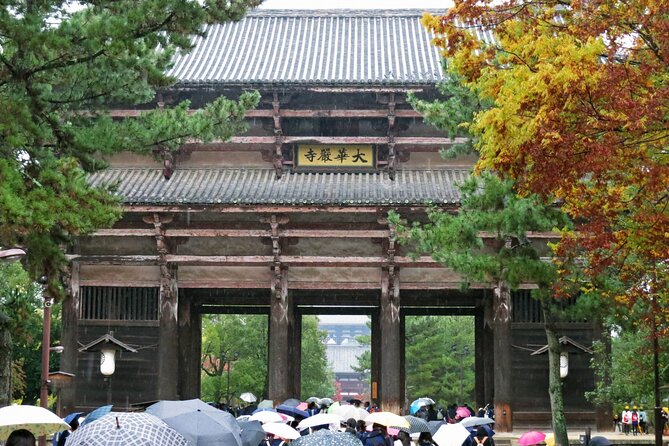
One of the first stops is the Todai-ji Nandaimon, the Grand South Gate. This gate is famous for its sheer size and wooden construction. It was rebuilt in the 13th century, so it’s not a modern prop—it carries real historical weight.
This is also a good place to slow down for a moment. Even if you only spend about 10 minutes here, the gate gives you a visual anchor. You can frame photos, get your bearings, and mentally shift from traveling mode into temple-visiting mode.
If you’re traveling with kids, this kind of landmark stop can be helpful too. It’s big enough to hold attention, and it’s easier than trying to explain the complexities of a temple site while walking fast.
Inside Todai-ji: Daibutsu Grounds and World Heritage Scale
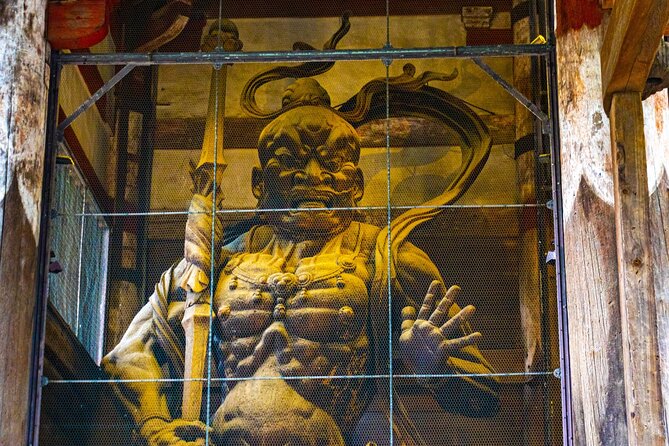
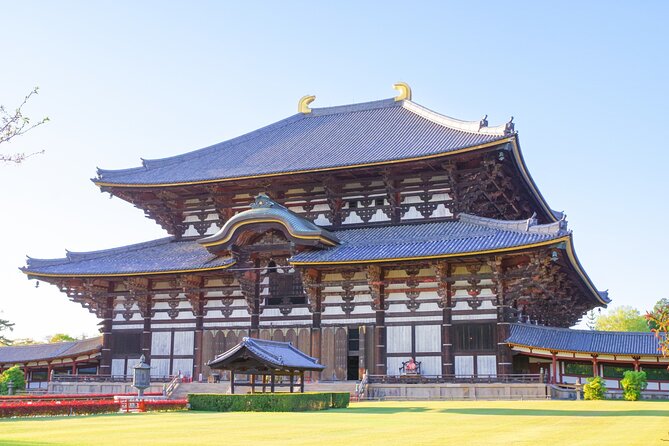
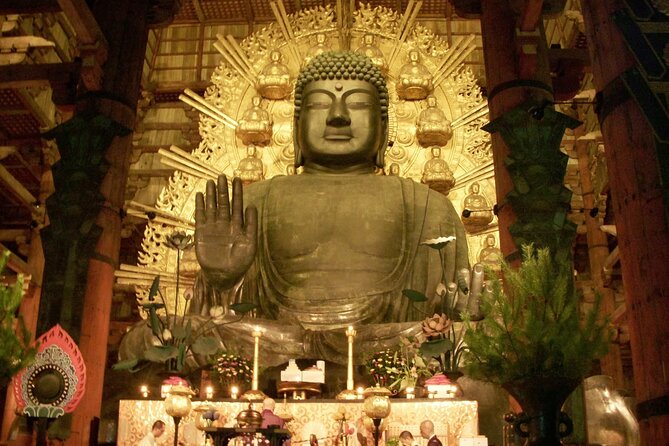
Next comes Todai-ji itself, where you’ll spend about 1 hour and 5 minutes. This is the core stop. Todai-ji is famous for having the largest Buddha statue in Japan, and the grounds are wide, nature-friendly, and designed for long looks—not just quick snapshots.
You’ll notice the “scale first” feeling here. The Daibutsu atmosphere is amplified by the surrounding grounds and the open sense of space. Even people who don’t know much Japanese Buddhist history tend to react strongly, because the presence is physical.
A drawback to consider: Todai-ji is large, and you’ll be on your feet. If you’re visiting on a hot day, take the quiet moments seriously. Pause when you need to, and use your time efficiently by asking your guide to point out the most important features for where you are standing.
Nara Park and Deer Feeding: Why This Moment Is Uniquely Nara
Then you shift to Nara Park, where deer roam freely—around 1,200 of them across the park’s roughly 660 hectares. The deer here are treated as revered messengers of the gods, which is one reason the relationship feels different than typical “zoo animal” interactions.
Your tour includes the deer feeding experience, plus one packet of cracker. That matters because the feeding moment is often the part people talk about later. It’s also the part that’s easiest to mess up if you’re on your own—crowds, timing, and figuring out how to do it calmly.
A practical tip: treat the deer feeding like you’re sharing space, not like you’re trying to speed-run a photo. Keep your movement controlled, follow your guide’s lead, and enjoy the moment rather than fighting the crowd energy.
If you want the deer experience to feel less chaotic, arrive with the mindset of moving step-by-step through the park, not stopping every few meters.
Ukimido Pavilion at Sagiike: Reflections and a Calm Break
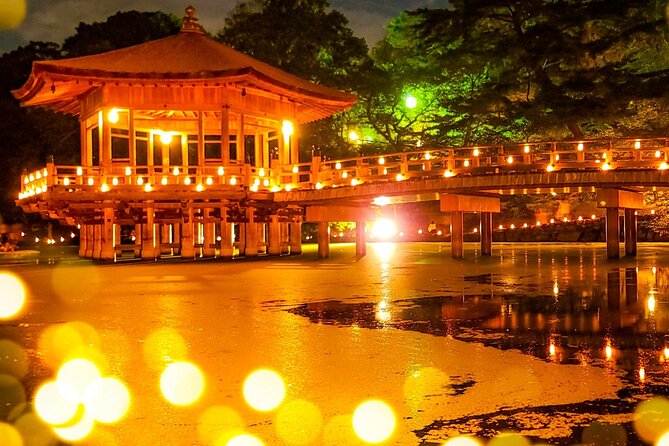
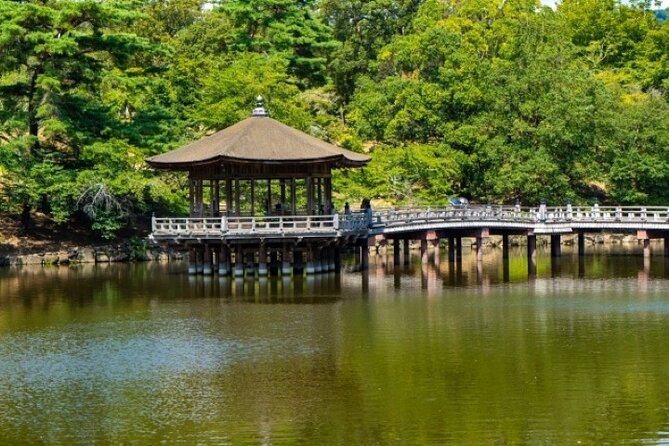
After the park feeding, you’ll visit Ukimido Pavilion—a hexagonal hall in Sagiike (a pond surrounded by trees). The big appeal here is that it feels like it’s floating, and on a clear day you can see the sky, the trees, and the pavilion reflected on the water.
This stop is about 30 minutes, which is a good length. You have time to find a comfortable viewing spot, watch how the light behaves, and take photos without feeling rushed.
One thing I like about this part of the tour is the pacing break. You go from crowded deer energy into a quieter visual scene. Even if you’re not a photographer, it helps reset your brain.
Kofuku-ji and the Five-Story Pagoda: Tall Views in Traditional Wood
To wrap up, the tour includes Kōfuku-ji, known for the five-story pagoda. The pagoda is about 50 meters tall and originally built in 730, making it a major historical anchor for the area.
This stop is about 30 minutes. It’s enough time to appreciate the craftsmanship and take in the structure from good angles without dragging out the visit.
The pagoda stop can also be useful for context. Once you’ve seen Todai-ji’s massive Buddha focus, Kofuku-ji gives you a different architectural idea—vertical, layered, and designed to draw your eyes upward.
The Real Secret Sauce: How Guide Style Changes Everything
With private tours, the guide matters a lot. In the feedback from past guests, friendly, polite, and attentive guidance came up repeatedly. Names like George and Kimu were mentioned, and guests praised them for being patient, especially when heat made kids restless.
This is where you’ll feel the difference most: some guides go beyond facts and help you connect what you’re seeing to why it matters. If you want a more interactive tour, bring that expectation to the start. Ask questions early, and don’t wait until you’re already walking away from the good photo spots.
One possible concern: a small number of reviews mentioned feeling like the guide followed a script and didn’t interact much, possibly due to a language mismatch. You can reduce risk by using simple, clear requests like: I’d like to understand what makes each place special. If your guide can match your style, the experience gets a lot better.
What’s Included vs. What You’ll Pay for On Your Own
This tour includes:
- admission fees for the shrines and temples visited
- one packet of cracker for deer feeding
- a professional guide
Not included:
- extra food and drinks purchased on the street
That split is helpful. You can budget mainly for snacks and drinks, not for multiple ticket surprises. And because the tour is relatively short (3 to 4 hours), you can plan to grab food before or after rather than hunting mid-tour.
Who This Nara Tour Suits Best
This is ideal if you:
- are a first-time visitor who wants the main Nara highlights in a short time
- want a private guide who can explain what you’re seeing as you walk
- have limited energy and don’t want to spend hours planning routes and ticketing
- are traveling with kids and want someone who can stay patient when temperatures climb
You might want to reconsider if you:
- dislike guided tours where you prefer total freedom to roam without structure
- want lots of long museum time (this tour is focused on outdoor landmarks and key temple areas)
- are sensitive to walking in heat and don’t have good shade and hydration habits
Should You Book This Nara World Heritage Private Tour?
I’d book it if you want a clean, high-impact Nara day with the deer feeding and the top Todai-ji and Kofuku-ji moments. The value is strongest because admission is included and the route is tightly organized around major sights. The deer feeding is the kind of experience you can only get here, and it’s handled for you with crackers included.
Skip it if you’re the type who wants to spend most of your time wandering at your own speed with no guided explanation. Also, if you’re visiting in peak summer heat, treat preparation as non-negotiable—water and shade will make or break your comfort.
If you book, do one thing that pays off fast: ask your guide early how they recommend pacing during heat. A little upfront planning helps you enjoy the sacred sites and the deer moment without feeling wiped out.
FAQ
How long is the Nara World Heritage private tour?
The tour runs about 3 to 4 hours.
Is this tour private or shared?
It’s private. Only your group participates.
What’s included in the price?
Admission fees for the temples and shrines you visit are included, along with one packet of cracker for deer feeding and a professional tour guide.
Do I need to buy tickets separately?
No. Entrance fees for the sites on the tour are included, and the tour uses a mobile ticket.
Where does the tour start and end?
Start: Todai-ji Museum, Todai-ji General Cultural Center (Nara).
End: Kintetsu-Nara Station area, Nishimikadochō (Nara).
Can I feed the deer during the tour?
Yes. The tour includes the deer feeding experience and provides one packet of cracker.
Is the tour outdoors, and what about summer heat?
Yes, it’s a walking tour and you’ll spend time outdoors. In summer, especially August, temperatures can exceed 35°C, so hydration and shade are strongly recommended.
What happens if the weather is poor?
The experience requires good weather. If it’s canceled due to poor weather, you’ll be offered a different date or a full refund.