REVIEW · ATHENS
Meteora Monasteries & Caves Unesco Wonder in Greece Day Trip
Book on Viator →Operated by Yomadic.Tours & Transfers · Bookable on Viator
Fourteen hours later, Meteora still pulls me in. This day trip saves you from transport stress with a private driver and delivers the UNESCO Meteora monasteries plus Thermopylae. The one tradeoff: it’s a long day with lots of stair climbing, so your comfort matters.
I like that the pace is flexible for a small group (max 7), and the ride is handled for you: modern vehicle, WiFi, A/C, and bottled water. Also, the driver gives English commentary and can answer questions during the drive, even though they are not a licensed guide inside the archaeological sites.
If you’re sensitive to cold, wind, or crowds, plan around the weather and the calendar. Meteora and Thermopylae are outdoors, and an Orthodox holiday weekend can bring extra local visitors.
In This Review
- Key points before you go
- Athens to Meteora with a private driver: why this format is worth it
- Kalabaka and the Meteora setting: you’re heading for 400m-high rocks
- Meteora monasteries: what the up-to-four stops really feel like
- Varlaam Monastery (Osios Varlaam)
- Rousanou Monastery (Holy Monastery of Rousanos – Saint Barbara)
- Up to three (and sometimes four) monasteries
- Practical monastery etiquette (this is not optional)
- Natural History Museum at Meteora: a helpful reset between rock-top climbs
- Thermopylae: how to make 20 minutes count
- Battlefield of Thermopylae and the Leonidas Monument stop
- Kastraki lunch break: where the views are more relaxed
- Price and value: what $276.35 really covers (and what it doesn’t)
- Timing, weather, and crowds: the realistic stuff to plan for
- Who should book this Meteora and Thermopylae day trip
- Should you book it? My take
- FAQ
- How long is the day trip to Meteora and Thermopylae?
- Where can I be picked up and dropped off?
- What’s included in the tour price?
- Do I need to pay entrance fees for the monasteries?
- How many people are in the group?
- What happens if weather is bad?
Key points before you go

- Private pickup from Athens means you start without meeting-point anxiety and end back at your hotel, Airbnb, or the port.
- Up to three monasteries, with up to four monastery stops total planned for the day, plus viewpoints around Kastraki.
- Thermopylae is quick but meaningful, with the Spartans story, Ephialtes, Simonides’ epitaph, and a included monument stop.
- English narration on the drive helps the history click while you’re watching the countryside roll by.
- Modern comfort on the 4.5-hour ride each way (A/C, WiFi, bottled water) makes the long day easier.
- Dress and walking rules are real at monasteries, so wear proper shoes and cover up your shoulders and legs.
Athens to Meteora with a private driver: why this format is worth it
Meteora is one of those trips where the logistics can quietly eat your whole day. This tour handles the big piece for you: you leave Athens early, then ride to Meteora in a modern private vehicle with fuel and tolls included.
Pickup is designed to be simple. Your driver meets you at your hotel or Airbnb in Athens, or at the airport or Piraeus cruise port. You’ll get a sign with your name, and you’re guided right to the car. That matters because Meteora days can start before your brain is fully online.
The ride itself is built for comfort. The vehicle includes A/C, WiFi, and bottled water, and groups are small: 1–3 people in a sedan, and 4–7 people in mini vans. In practice, that means less waiting around than group buses and more flexibility when you need extra time at a viewpoint.
One real advantage shows up in the drive stories. English-speaking drivers—names you may see in past days include Chris, Costas, Christos, and others—tend to mix Greek history with mythology while you’re on the road. Since they’re not licensed to walk into sites with you, their job is to help you understand what you’ll be seeing next.
You can also read our reviews of more tours and experiences in Athens.
Kalabaka and the Meteora setting: you’re heading for 400m-high rocks
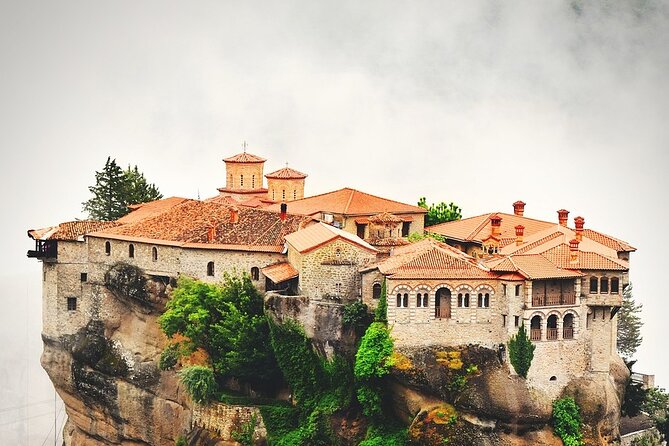
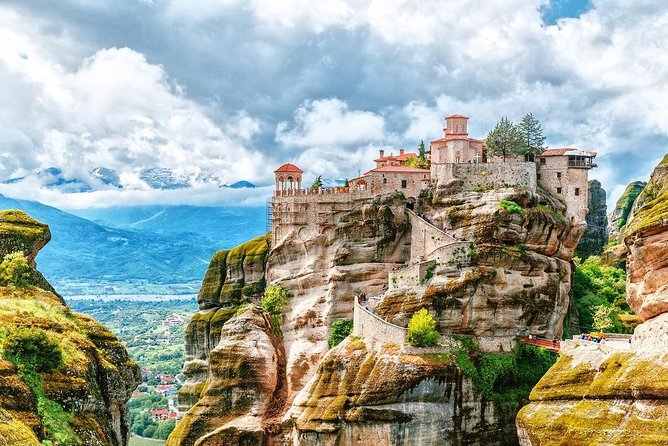
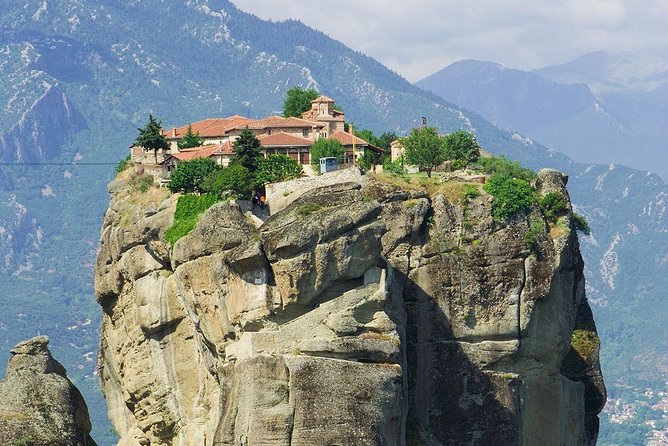
Most people arrive at Meteora with photos in their heads. When you get there, the scale hits you differently. The monasteries sit on immense rock pillars and rounded boulders, with cliffs reaching up to 400 meters (about 1,200 feet) above the area near Kalabaka.
Kalabaka is the main town used as the base for Meteora. It’s where you’ll connect with your stops and then transition between views, monasteries, and (usually) a lunch break. From here, you can also catch that famous “church-on-rock” feel from lower viewpoints, not just from the top.
Meteora is UNESCO-listed for a reason: the site is both spiritual and geological. Long before the modern tourist map, the vertical cliffs were seen as a place for isolation—ideal for Eastern Orthodox monastic life. The rocks weathered over millions of years, and you’ll see how the monasteries hug the rock faces instead of sitting in a traditional campus.
One useful mindset: don’t treat this as a single viewpoint. Treat it as several short experiences stacked in one day—drive, town, cliff views, monasteries, then Thermopylae before returning to Athens.
Meteora monasteries: what the up-to-four stops really feel like
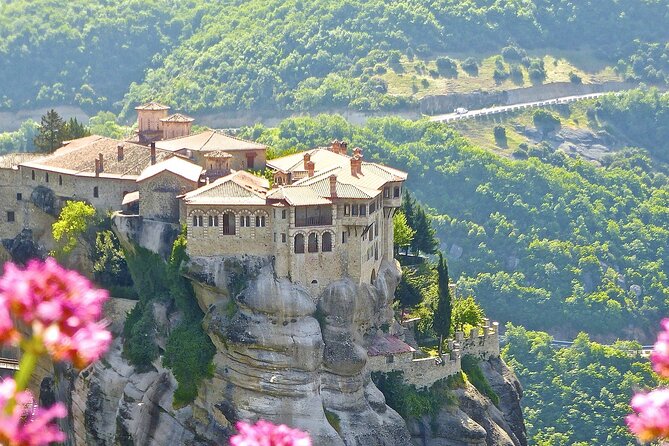
The Meteora portion is the heart of the trip. The plan is to visit up to three monasteries, and the day is also described as featuring four monastery visits total with an entry fee for monasteries. Either way, you should expect multiple churches on the rock top, with time to walk stairways, look up close at frescoes, and soak in the harsh beauty of the cliffs.
Varlaam Monastery (Osios Varlaam)
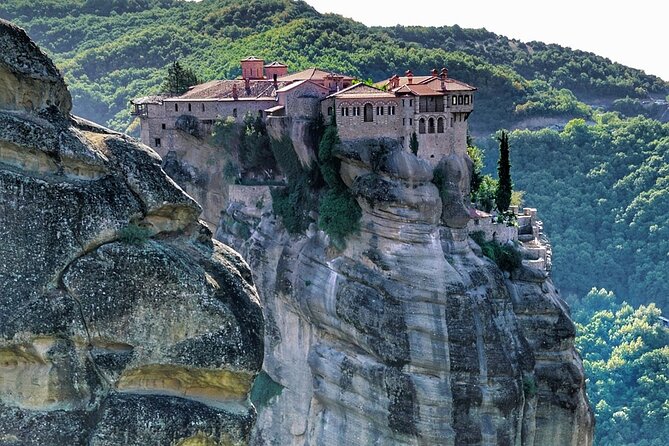
One clear stop is Varlaam Monastery, timed around about 1 hour. This is the kind of place where you feel the engineering behind the religious life: the buildings are perched where you’d never expect a complex to fit. Expect walking inside courtyards and along paths that link levels.
Rousanou Monastery (Holy Monastery of Rousanos – Saint Barbara)
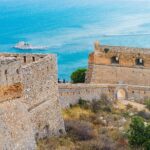
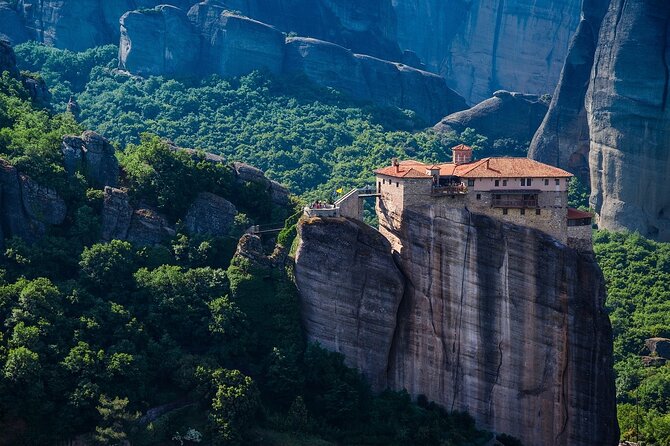
Another major stop is Rousanou Monastery, also about 1 hour. Like the other monasteries, it’s built into the rock environment rather than placed on flat ground. You’ll see why these sites are so visually iconic: the monastery architecture is shaped by the cliff, not the other way around.

Up to three (and sometimes four) monasteries
Because the day’s timing can shift with conditions and access, the practical takeaway is simple: be ready for a lot of steps, and don’t over-plan your expectations about which exact monasteries you’ll get if any are affected by maintenance or weather.
A small caution based on real-world experiences: you may find that some monasteries can be closed for maintenance, which can change how many you climb that day. The upside is that even “fewer stops” still usually means a strong set of views and a lot to take in.
Practical monastery etiquette (this is not optional)
Wear shoes that handle uneven stone. You’ll likely do repeated climbing and stairs across different levels. Cover your shoulders and legs out of respect—this is a rule you’ll feel, not just a suggestion. Cold and wind can also make the stone steps feel harsher, so dress in layers.
Also, monastery sites can get busy. You’ll get the best experience if you slow down inside each church and give yourself a buffer for waiting at narrow passages.
Natural History Museum at Meteora: a helpful reset between rock-top climbs
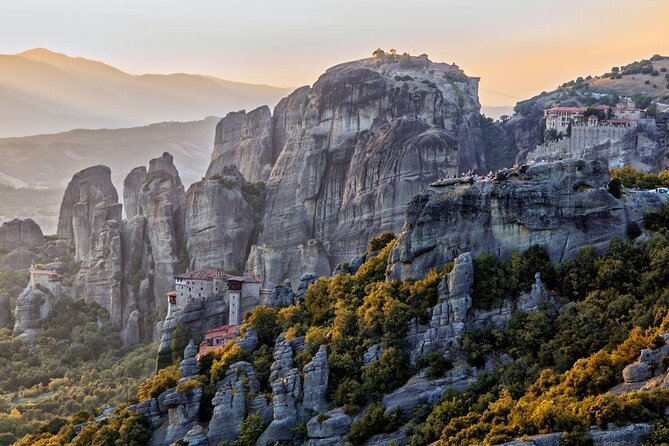
The highlights for this tour include a visit to the Natural History Museum during the Meteora segment. Even if you’re there for monasteries, this kind of stop can be a smart reset in the middle of a physically demanding day.
Think of it as the breath between the stairs. You’re moving from tall cliffs and intense walking to a more indoor, interpretive space where you can regroup, warm up if it’s cold, and get context for the region’s natural features.
Time here is not meant to replace monasteries. It complements them—especially because Meteora isn’t just a set of buildings; it’s rock formation and environment that shaped human choices over centuries.
Thermopylae: how to make 20 minutes count
After Meteora, the tour shifts from monasteries to one of Greece’s best-known battlefield stories: Thermopylae.
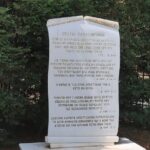
Thermopylae is famous for the battle between the Spartans and the invading Persian forces under Xerxes. The story includes a betrayal: Ephialtes of Trachis showed the path, and the battle became a last stand. It’s commemorated with Simonides of Ceos’ famous epitaph about obeying the laws.
This stop is short—around 20 minutes—and it’s timed to move you efficiently through the highlights without turning the day into a sprint.
There’s also the myth-and-geography layer. Thermopylae’s name connects to hot sulphur springs, and in Greek mythology it’s tied to one of the entrances to Hades, the Hot Gates. The tour area also reflects a key strategic detail: Thermopylae was the only land route big enough for meaningful traffic between regions in antiquity.
If you’re prone to information overload, this is where your notebook helps. Write down three things you want to remember from the story before you arrive at the memorial area—then you’ll leave with a mental snapshot, not just a quick visit.
Battlefield of Thermopylae and the Leonidas Monument stop
As the day winds back toward Athens, you’ll get a second short stop tied directly to the battlefield story. The Battlefield of Thermopylae segment is about 20 minutes, and the tour includes the admission for that stop.
You’ll also pass by a monument of Great Leonidas, King of Sparta. The idea here isn’t to recreate a full museum experience. It’s to give you a sense of place—where the last stand story is physically anchored with a memorial presence.
Even though you may feel like the time is brief, it works as a bridge from the morning’s spiritual sites to an afternoon focused on how Greeks remembered sacrifice, duty, and law. It’s history that’s meant to be felt, not just read.
Kastraki lunch break: where the views are more relaxed
Before you head back to Athens, you get about 1 hour in Kastraki for lunch and a bit of breathing room. This is one of the smartest parts of the itinerary because it breaks up the day and gives you control over what you eat.
Kastraki is a picturesque village near Meteora, and it’s also a good place to reset your eyes after rock-top intensity. You’ll get a chance to shop a little or simply wander at street level.
For lunch, the tour schedules time for you to go to a traditional Greek tavern. Meal costs are not included, so bring cash or a card plan you trust. In rainy or windy conditions, a tavern lunch can be the difference between a good day and a miserable one.
If you want photos without fighting the highest crowds, treat Kastraki as your “lower-view” option. You’ll see Meteora’s cliffs from the ground, where the scale becomes easier to absorb.
Price and value: what $276.35 really covers (and what it doesn’t)
At $276.35 per person, you’re paying for a lot more than a checklist. You’re paying for the hardest part to DIY: a long day between Athens and Meteora with stress removed.
What you get included:
- Pickup and drop-off from Athens hotel/Airbnb/airport/port
- Private modern transport with WiFi, A/C, and bottled water
- Fuel and tolls
- English-speaking driver with Greek history commentary
- Mobile ticket
What costs extra:
- Entrance fees for attractions
- Lunch is not included
- Monasteries: the price note says €20 per person for four monastery visits
- Also, tips are not included
The value question comes down to your time and sanity. If you’re trying to arrange buses, rental cars, or timed connections, the “savings” disappear fast when you factor in your stress level and the long driving day.
This tour also shines for small groups. With max 7 people and vehicle comfort, you spend more of the day actually looking, and less of it waiting or managing logistics.
Two practical money tips:
- Budget for monastery entry fees on top of the tour price.
- Plan for lunch out of pocket, since meals aren’t included.
If you’re comparing options, keep asking: who takes you there and back with a calm ride, and who helps you make sense of what you’re seeing along the way?
Timing, weather, and crowds: the realistic stuff to plan for
This is an outdoor-and-walking day. Weather is a real variable. The experience notes good weather is required, and if it’s canceled for poor weather, you’ll be offered a different date or a full refund.
Cold, wind, or light rain can make rock-top walking feel tougher. One reason people rate this tour highly is that it still works even when conditions are rough—foggy arrivals and later clearing happen. But you still need to bring the right attitude: dress in layers, and don’t assume you’ll get a perfect sky.
Crowds can also be part of the deal, especially on weekends or around Orthodox holidays. Some of the most scenic times can get busy, and monasteries may slow you down with lines and foot traffic.
Your best defense is simple:
- Start early (you do)
- Wear comfortable shoes
- Keep your schedule flexible inside each stop
Who should book this Meteora and Thermopylae day trip
This day trip is a strong fit if you want:
- Meteora without transport hassle (private pickup and car)
- A mix of spiritual sites and major Greek history
- A small-group experience that keeps you moving but not rushed off a bus
It’s especially useful if you’re traveling with kids or anyone who benefits from clear timing and a driver who can adapt. Past days also show that flexibility matters: drivers have been praised for accommodating family needs and adjusting the plan when conditions or interests shift.
It may be less ideal if:
- You have limited mobility and can’t handle stairs and uneven stone steps
- You hate long travel days (this is close to a full 12-hour commitment)
If you can handle walking, you’ll likely love it.
Should you book it? My take
I’d book this tour if you want Meteora’s monasteries and Thermopylae’s Spartan story in one organized, comfortable day, with a driver who handles the long Athens-to-Meteora route. The private transport and small group size are the big wins, and the itinerary hits the main mental highlights: rock-top spirituality, cliff views, then battle history.
Skip it only if the walking and stair climbing sound like a deal-breaker for your group. Otherwise, this is a practical way to do two UNESCO-level experiences without turning the trip into a logistics project.
If you do book, pack sturdy shoes, dress for monastery rules, and plan for extra time at the stops that genuinely grab you—because that’s where the day starts to feel personal.
FAQ
How long is the day trip to Meteora and Thermopylae?
It’s listed as about 12 hours approximately, including the drive from Athens to Meteora and the return trip.
Where can I be picked up and dropped off?
Pickup is available from Athens hotel or Airbnb residence, and also from the airport or cruise port (Piraeus). Drop-off is back at your Athens accommodation or port.
What’s included in the tour price?
You get an English-speaking driver, private transportation in a modern vehicle with WiFi, A/C, and bottled water, plus fuel and tolls. Entrance fees and meals are not included.
Do I need to pay entrance fees for the monasteries?
Yes. The tour notes that monastery visits are €20 per person for four monasteries. Entrance fees for other stops like Thermopylae are listed as free.
How many people are in the group?
The tour caps the group size at a maximum of 7 travelers.
What happens if weather is bad?
The experience requires good weather. If it’s canceled due to poor weather, you’ll be offered a different date or a full refund.