REVIEW · ATHENS
Ancient Agora of Athens Site & Museum Private Tour
Book on Viator →Operated by Let's Book Travel · Bookable on Viator
The Agora feels like Athens with the volume up. This private tour focuses on the Ancient Agora and its museum, with a licensed guide who can steer the walk toward what your group actually cares about. You get the city’s big religious and civic story in a tight, walkable loop.
What I like most is the way the essentials are handled. Tickets for both the site and the museum are included, so you can plan your day without last-minute add-ons. And because it’s private, the guide can adjust the pacing to your group’s ages and interests, rather than marching everyone at one speed.
One thing to consider is price. At $263.15 per person for about 2 hours, it’s best when you have enough people to make the private format worth it. Also, don’t wait until the last minute to confirm your e-ticket details and save them on your phone or printed, just in case.
In This Review
- Key things to know before you go
- Ancient Agora in 2 hours: why this private format works
- Stop 1: Ancient Agora and the Panathenaic Way story you can see
- Stop 2: Temple of Hephaestus (Hephaesteion/Thisio) and the preservation clue
- Stop 3: The Museum of the Ancient Agora in the Stoa of Attalos
- Price and value: what $263.15 per person buys you
- Tickets, ticket emails, and avoiding last-minute stress
- Best ways to connect this tour to the rest of Athens
- Who should book this private Ancient Agora and museum walk?
- Practical notes that matter on the ground
- Should you book this tour?
- FAQ
- How long is the Ancient Agora of Athens Site & Museum private tour?
- Is this tour private or a group tour?
- Are entrance tickets included for the Ancient Agora site and the museum?
- What language is the tour offered in?
- Do I need to buy tickets in advance?
- Is there free admission for certain ages?
- Can I cancel for a full refund?
- Are service animals allowed and is it suitable for most travelers?
Key things to know before you go
- Private, customized pacing for your group’s ages and interests
- Admission to the Ancient Agora and the museum is included
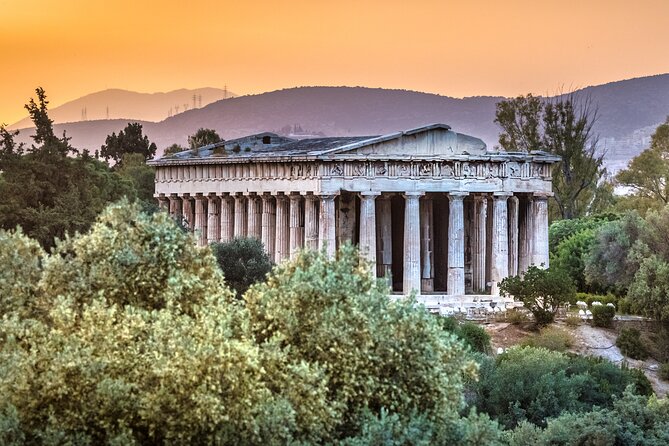
- Temple of Hephaestus (Hephaesteion/Thisio) gets you to one of the best-preserved stops
- Panathenaic Way context connects the Agora to the bigger Acropolis festival story
- Stoa of Attalos Museum is a reconstructed building holding finds from multiple periods
Ancient Agora in 2 hours: why this private format works
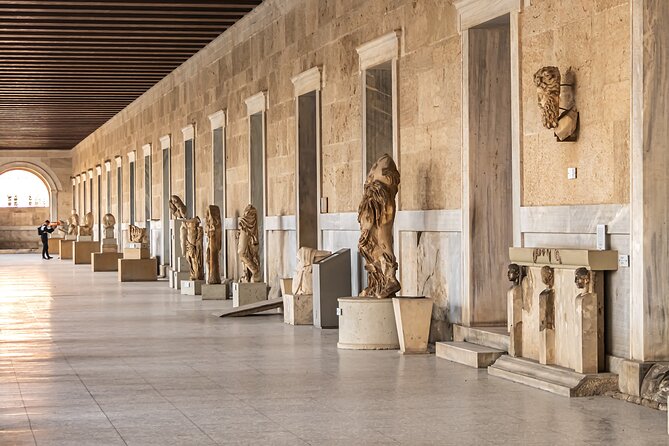
The Ancient Agora is not one single monument. It’s a flat zone packed with clues: roads, meeting places, worship spaces, and everyday life in Athens. A private guide matters here, because you need help stitching it all together fast. Left on your own, the boards are helpful, but you can easily miss how the pieces connect.
This tour is built for a short, satisfying time block. You’re looking at about 2 hours, which means you can do it without losing your whole day to one site. And since the tour is offered in English, the guide can explain things clearly without you doing extra translation work on your phone.
It’s also practical that the experience includes official licensed local guidance. You’re not just being walked through. You’re getting interpretation: why this area mattered, what you’re standing on, and what to look for as the group moves.
You can also read our reviews of more tours and experiences in Athens.



Stop 1: Ancient Agora and the Panathenaic Way story you can see
You start in the Ancient Agora, defined by the Sacred Rock of the Acropolis and the hill of Areopagus to the south, plus the hill of Kolonos Agoraios to the west. That geography isn’t trivia. It helps explain how people moved through the city and how the Agora functioned as a civic hub backed by major religious space.
A key theme here is the Panathenaic Way. This was one of the most important ancient roads, used as the procession route for the Panathenaic festival honoring Athena. The parade path ran from the main city gate at Dipylon Gate up toward the Acropolis. When you stand in the Agora, it’s easier to imagine the scale and meaning of that walk than it is when you’re reading about it in a book.
The tempo helps too. Expect about 20 minutes at this first stop. That’s long enough to get the layout and the big story, without dragging you into museum fatigue before you’ve even built context.
Stop 2: Temple of Hephaestus (Hephaesteion/Thisio) and the preservation clue
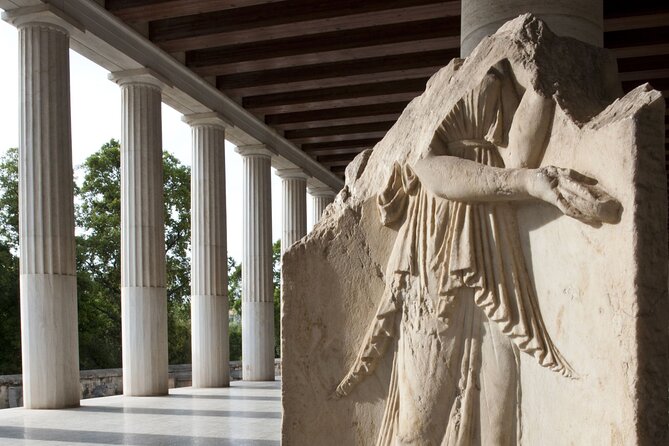
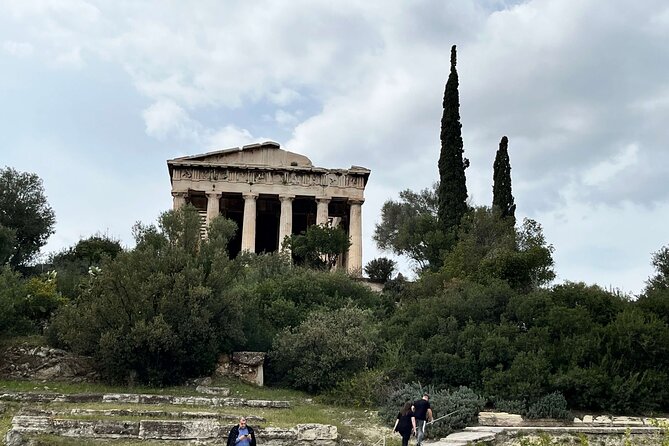
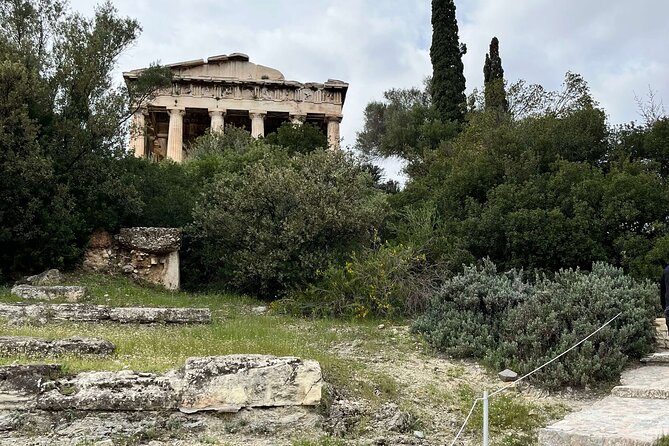
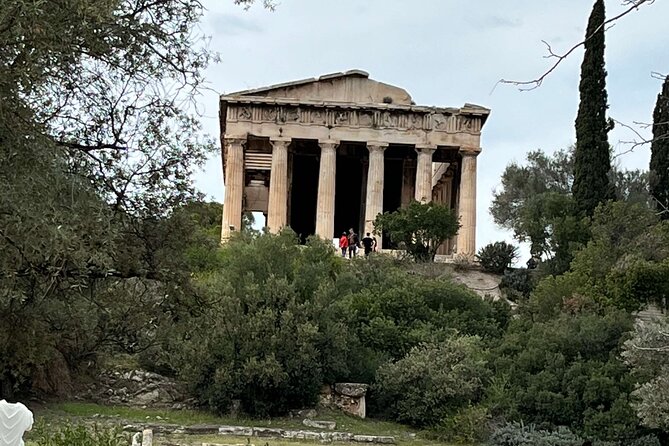
Next comes the Temple of Hephaestus, often called Hephaesteion and also known locally as Thisio. It’s located up on the Agoraios Kolonos hill, and it’s famous for how well it’s survived. The main reason is straightforward: it was transformed into a Christian church at some point in its long life.
That matters because it flips the usual “ancient site ruins” feeling. You can still read the structure. You can see what the building was meant to communicate. And once you know that story, the stone doesn’t feel random. It feels protected.
This is also where the guide’s interpretation earns its keep. Pausanias writes that two deities were worshipped together here: Hephaestus, protector of metallurgists, and Athena Ergani, protecting potters and cottage industries. The takeaway is powerful and very Athens: worship wasn’t separate from daily work. It was part of how the city understood craft, skill, and community.
The temple was likely erected between 460 and 420 BC, and the architect isn’t named in the information you’ll hear. What’s certain is the why: archaeologists connected the temple’s identity to workshops in the wider area of the hill, which helped confirm who was being worshipped here. If you like the moment when history gets argued and then proven, this part tends to click.
You’ll spend about 20 minutes here. That time is often enough to admire the structure, understand the dual-deity connection, and enjoy the views from the hill—especially if you’re building a day around skyline and stone.
Stop 3: The Museum of the Ancient Agora in the Stoa of Attalos
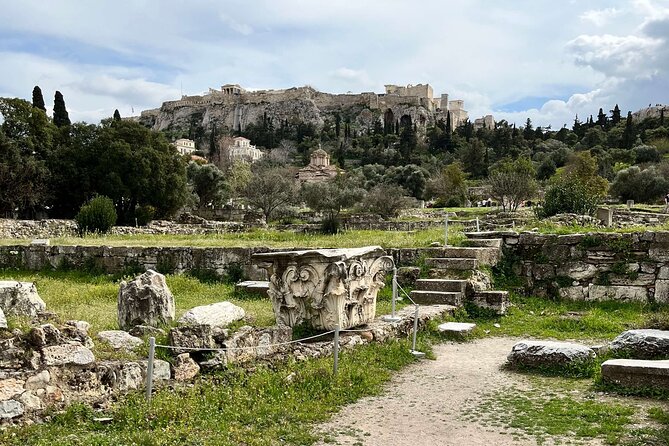
After the outdoor stepping stones of the Agora, you shift indoors to the Museum of the Ancient Agora. The museum is housed in the reconstructed Stoa of Attalos, originally erected in the 2nd century BC as a gift from King Attalos II of Pergamon to Athens. Even before you look at a single object, the building helps you feel the setting. Stoas were practical spaces—covered, social, and open to daily movement.
This stop is longer: about 1 hour. That’s good, because the museum is where the Agora stops being “a place” and starts becoming “artifacts with reasons.” The exhibition includes archaeological finds from systematic excavations in the area, spanning from the Neolithic period through the Post-byzantine and Ottoman periods.
That wide timeline can feel like a lot, but it’s exactly why the museum pairs well with the rest of your Athens day. It reminds you that Greek history didn’t end neatly at one date. People kept living on top of earlier layers, building new meanings over older stone.
And with this tour, you don’t have to treat the museum like an extra purchase. The museum ticket is included, so you can comfortably plan for both the site and the collection without doing extra math at the gate.
Price and value: what $263.15 per person buys you
Let’s talk money in a useful way, not just a number. At $263.15 per person, this isn’t a “grab it and go” budget tour. It’s a private experience, and the value is in the guide’s time plus the included admissions.
Here’s where the cost can make sense:
- You want a guided interpretation rather than wandering with a map and hoping you connect the dots.
- You have a group where ages and interests vary. Custom pacing helps. A two-hour visit is tight, so getting the right focus matters.
- You’d rather spend your energy on understanding than managing logistics.
The ticket value also matters because you’re getting access to both the Ancient Agora site and the museum. That reduces surprise costs and prevents the classic “one more line, one more ticket” day that quietly eats hours.
The duration also helps you justify the spend. Two hours is short enough to pair with other Athens highlights, instead of turning one stop into your whole day.
Where it might not be the best fit: if you’re solo and expecting a low-cost walking tour, you may prefer a cheaper group option. But if your group wants clarity and convenience in a compact block, this private format can feel like a smart trade.






Tickets, ticket emails, and avoiding last-minute stress
A big selling point is that the tickets are included. In practice, that means you’re not scrambling to figure out entry rules once you’re standing in Athens heat with everyone hungry and slightly annoyed.
Still, I strongly suggest you handle the “paperwork reality” part. Save your confirmation details and e-ticket info before the day. If an email goes missing or lands in spam, you can lose time fast. The fix is simple: check your inbox and spam folder ahead of time and keep a screenshot or saved file on your phone.
Also, treat tickets like you would treat your passport: not as a “maybe,” but as something you can quickly show at entry. That’s a small habit that prevents big headaches.
Best ways to connect this tour to the rest of Athens
This tour pairs well because it gives you context. The Agora links civic life with major religious celebrations like the Panathenaic festival that runs toward the Acropolis. When you later see the Acropolis and other top highlights, the Agora stops being an isolated stop. It becomes the city’s daytime foundation for the grander religious story.
If you’re planning your day tightly, think about order. Doing the Agora first can help you decode what you’ll see afterward, because you’ve already learned the civic and festival frame. It’s like getting the plot summary before the big scene.
Who should book this private Ancient Agora and museum walk?
This is a great fit if:
- You want a guided experience where the guide explains what you’re looking at, not just where to stand for photos.
- You like learning through stories, such as why the Temple of Hephaestus survived and how Pausanias connects deities to the crafts of daily life.
- Your group benefits from pacing control. Kids, teens, and adults all have different attention spans. A private guide can adjust.
It’s also a good choice if you want an efficient day plan. With about 2 hours, you can cover the Agora and museum without turning Athens into one long, exhausting line.
For families and groups with special admission rules, the tour notes are also helpful. People up to age 25 from EU member states can qualify for free admission with the right ID. Children up to age 5 from non-EU countries can also qualify for free admission with a passport. If you have anyone eligible, you’ll want to advise the operator ahead of time so free tickets can be arranged correctly.
Practical notes that matter on the ground
- The tour lasts about 2 hours (approx.), with shorter segments at each stop.
- It’s offered in English.
- It’s near public transportation, which can help if you’re building the day using transit.
- Service animals are allowed.
- Most people can participate, but you’ll still be walking around uneven historic terrain typical of major archaeological areas.
And yes, bring comfortable shoes. The Agora may be relatively flat compared to other Athens areas, but you’ll still be on your feet a lot.
Gratuities are not included, so if your guide does a good job for your group, you’ll likely want to consider a tip. Just keep it simple and fair.
Should you book this tour?
If you want the Ancient Agora and museum experience without guesswork, I think this private tour is worth strong consideration. The combo of private guidance plus included site and museum tickets removes two of the biggest friction points: confusion and unexpected costs. It’s also a smart use of time in a city where you’ll want to see a lot more than one archaeological zone.
Book it especially if your group includes people who need the why behind the stone. The Panathenaic Way connection and the Temple of Hephaestus worship story are exactly the kind of details that make you feel like you’re reading Athens, not just looking at it.
Skip it if you’re traveling as a solo budget traveler and you don’t mind doing the reading yourself. For everyone else who wants a focused, high-value, two-hour Athens history hit, this is a solid pick.
FAQ
How long is the Ancient Agora of Athens Site & Museum private tour?
It lasts about 2 hours (approx.).
Is this tour private or a group tour?
This is a private experience customized to the interests and ages of your group.
Are entrance tickets included for the Ancient Agora site and the museum?
Yes. Admission tickets for both the Ancient Agora archaeological site and the Ancient Agora museum are included.
What language is the tour offered in?
The tour is offered in English.
Do I need to buy tickets in advance?
Tickets are included with the tour, and you’ll receive a confirmation at the time of booking.
Is there free admission for certain ages?
Yes. Children and young people up to age 25 from EU member states may qualify for free admission with an ID card or passport for verification. Children up to age 5 from non-EU countries may also qualify with a passport. If you’re accompanying someone eligible, you should advise so free tickets can be issued.
Can I cancel for a full refund?
Yes. You can cancel up to 24 hours in advance for a full refund.
Are service animals allowed and is it suitable for most travelers?
Service animals are allowed, and most travelers can participate.
If you tell me your group size, ages, and when you’re visiting, I can help you decide whether this private price feels right versus a cheaper group option.