REVIEW · BORDEAUX
Private Bordeaux History Tour with a glass of Bordeaux wine.
Book on Viator →Operated by Bordeaux Free Walking Tours · Bookable on Viator
Gothic stone, civic squares, then a wine pour. This private Bordeaux walk strings together major Bordeaux wine culture touchpoints in central streets, ending with a glass at a local partner bar. It’s a time-saving way to see UNESCO World Heritage–listed sights without feeling herded through them.
What I like most is the pacing and focus: you get an English-speaking guide who explains the city’s big turning points as you stand in the places they happened. One thing to consider: the tour moves on foot with multiple short stops, so it’s not the best choice if you want a slow, sit-and-stare museum vibe.
In This Review
- Key things to know before you go
- Private Bordeaux history on foot: fast, focused, and local
- Starting at Cathédrale Saint-André: the Gothic anchor of Bordeaux
- Rue Saint-Catherine and Tour Pey-Berland: a long pedestrian street with Roman roots
- Rue du Loup and the medieval English connection
- Place du Palais: architecture and the idea behind the square
- Porte Cailhau: Bordeaux’s gateway age at street level
- Place de la Bourse and the Miroir d’Eau: the city’s showpiece waterfront feel
- Grand Théâtre de Bordeaux: neoclassicism, Victor Louis, and what’s inside
- Place Gambetta: gardens, a former western gate, and French Revolution echoes
- Passage Sarget: a covered arcade built for shopping and ideas
- Place du Chapelet and the Church of Notre-Dame: organ music and a painter’s funeral
- Allées de Tourny and the Monument aux Girondins finale at Quinconces
- The Bordeaux wine finish: a glass, a locals-style wrap-up
- Price and logistics: what you’re really paying for
- Who this tour is best for (and who should skip it)
- Should you book this private Bordeaux history tour?
- One quick decision rule
- FAQ
- How long is the private Bordeaux history tour?
- How much does the tour cost?
- Is the tour private?
- What language is the guide?
- Where does the tour start and end?
- What’s included in the price?
- Are monument entrance fees included?
- Do I need a physical ticket?
- Are service animals allowed?
- What is the cancellation policy?
- Is it near public transportation?
Key things to know before you go

- Private group pacing: only your group participates, so you can ask questions without waiting your turn.
- UNESCO landmarks in a single loop: you’ll cover several famous monuments close together, including Saint-André Cathedral and Porte Cailhau.
- History tied to street-level details: you’ll hear why Bordeaux shifted, including its medieval and English-era connections.
- A wine finish, not just sightseeing: you get a glass of Bordeaux wine at a partner bar after the walk.
- Short stops that keep the day flexible: most locations are quick looks, so you can add extra time where you care most.
Private Bordeaux history on foot: fast, focused, and local
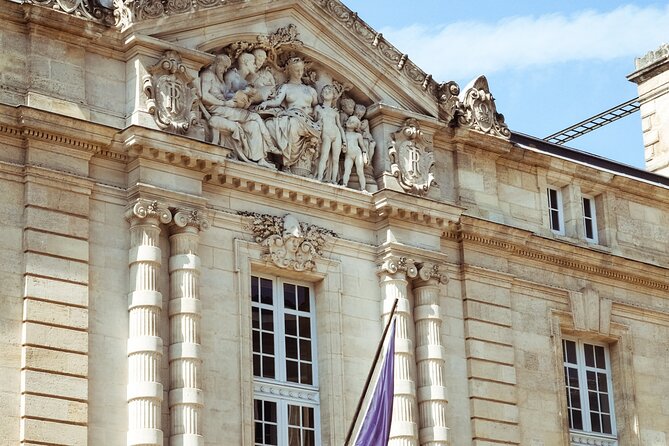
Bordeaux can feel big when you first arrive. This tour helps you do the opposite: it gives you a compact route where the story makes sense turn-by-turn. With about 2 hours on the clock, you’ll cover a lot of “best known” sights, but in a way that stays personal—because it’s private.
The price is $90.36 per person, and that’s where value really matters. You’re paying for two things that don’t happen when you wander alone: (1) an English-speaking guide and (2) context that connects the monuments you’re seeing. The included glass of Bordeaux wine after the walk is a bonus that makes the whole experience feel like more than just photos.
The trade-off is also clear. This is a walking tour with multiple quick stops—think about comfort, not endurance. If you’re sensitive to crowds along the main pedestrian streets, plan for that energy around Rue Saint-Catherine.
You can also read our reviews of more tours and experiences in Bordeaux.


Starting at Cathédrale Saint-André: the Gothic anchor of Bordeaux
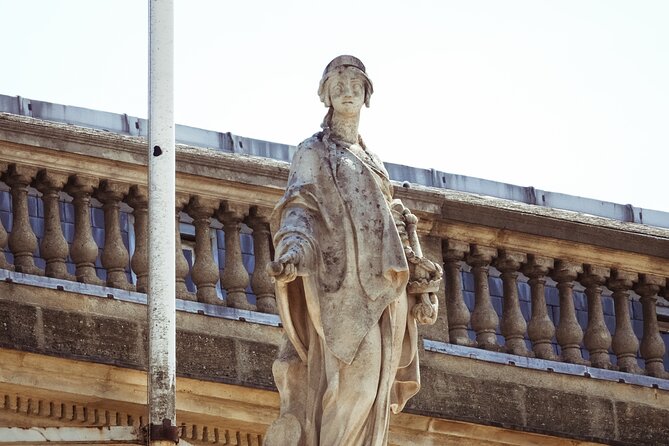
You meet at Cathédrale Saint-André de Bordeaux (Saint-André Cathedral). Even before you start “moving,” this cathedral sets the mood. It’s described as a Gothic masterpiece and a cornerstone of Bordeaux’s history, and the tour brings you there for more than architecture.
A standout detail you’ll hear: the cathedral’s connection to royal weddings, including the union of Eleanor of Aquitaine and King Louis VII. That story matters because it reframes the cathedral as not just a pretty building, but a stage for major European alliances.
You’ll get time to marvel at the façade and the soaring nave style Gothic is famous for. Admission inside isn’t part of the deal overall (entrance to monuments isn’t included), but the tour gives you plenty to appreciate from the outside and immediate surroundings.
Tip for your visit: look up at the façade carvings before you start listening. The best guides point out what you’d otherwise miss when you’re walking fast.
Rue Saint-Catherine and Tour Pey-Berland: a long pedestrian street with Roman roots
From the cathedral area, the tour heads toward Tour Pey-Berland and the Rue Saint-Catherine corridor. This part is the city’s “main drag,” but it’s not just shopping street time. You’ll hear why it’s historically important, including the idea that this thoroughfare has been central since Roman times.
Rue Saint-Catherine is known for being the longest pedestrian street in Europe, and your guide uses that to explain how the city evolved: from early roads to today’s public life. The tour also repeats the same corridor on the route (Rue Saint-Catherine / Promenade Sainte Catherine), which can be useful. It lets you see different angles and pick up more details as you slow down at specific points.
Tour Pey-Berland itself anchors the area with a strong sense of local identity—this is the kind of landmark that helps you orient mentally. Once you get your bearings here, the rest of the center feels easier to navigate.
Possible drawback: Rue Saint-Catherine is busy by nature. On a private tour you can still get good attention, but you may have moments where your guide has to talk over foot traffic. Plan on keeping your phone away for a minute and letting the guide finish a thought.
Rue du Loup and the medieval English connection
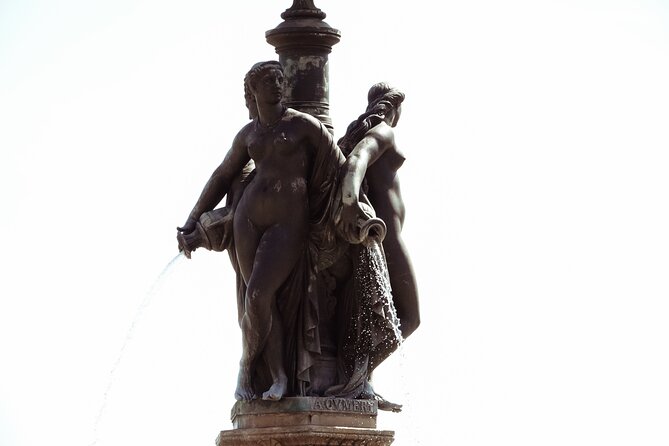
Next is Rue du Loup, where you stop to learn about the Middle Ages and how Bordeaux became tied to England. The tour points out medieval architecture here and uses the street as a map for that era—why the English connection matters, and how it shaped Bordeaux’s development.
This is one of those stops that feels small on paper but big in understanding. You’ll likely leave with a clearer idea of why certain power shifts show up in architecture and city planning, even when the modern street looks straightforward.
There’s also a “listen first” advantage here. If you’re the type who usually walks past old stone details without noticing, Rue du Loup is where the guide’s explanation can change what you see right away.
Place du Palais: architecture and the idea behind the square
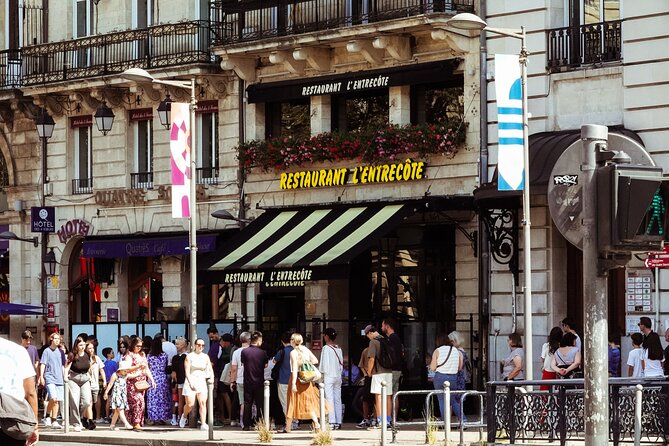
Then you reach Place du Palais, with a focused stop on architectural design and the thinking behind the square. This is the kind of place that can look “designed” but still be hard to interpret if you don’t have context.
Your guide’s job is to translate the layout into meaning—what the design supports in how the city functions. Even if you don’t spend long here, you’ll understand better how public spaces guided movement and power.
This stop is brief (around 10 minutes), so use it like a reset. Step to the edges, look at how streets feed into the square, and let the explanation connect it to what you’ve already seen.
Porte Cailhau: Bordeaux’s gateway age at street level
Porte Cailhau is a major visual payoff. This 15th-century gateway is described as honoring King Charles VIII’s victory at Fornovo, and it once served as the main entrance to the city.
What I love about this stop is the way it mixes eras. You’ll see a blend of Gothic and Renaissance styles, and the tour explains the strategic role of city gates—how they weren’t just decorative, but part of defense and identity. The guide also frames the gateway as a symbol of the region’s prosperity, which makes the stone feel connected to trade and power rather than just “old.”
It’s also one of the stops where you can take your time with photos. With a 15-minute window, it’s enough to get exterior angles and still keep the tour rhythm.
Place de la Bourse and the Miroir d’Eau: the city’s showpiece waterfront feel
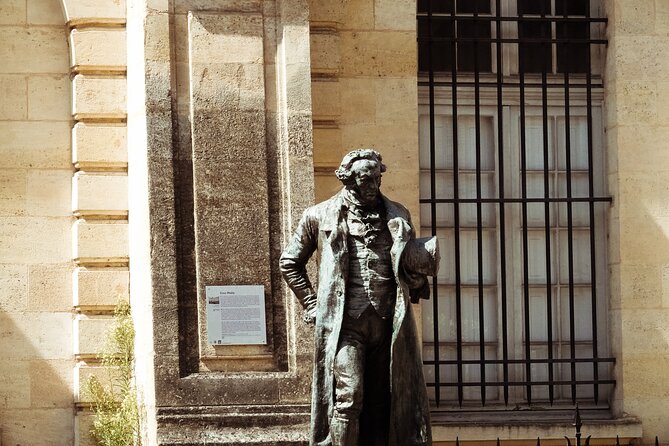
One of the best-known moments comes at Place de la Bourse and the Miroir d’Eau. This is the historical heart of Bordeaux where your guide ties together multiple famous landmarks in a way that helps you see the bigger picture—how the monuments relate to each other spatially.
The Miroir d’Eau is treated like a centerpiece here, and it’s worth looking at from slightly different points so you don’t miss how the setting changes the light. The tour uses this area to set up other sights later, including the Grand Théâtre and major civic locations.
If you’ve got limited time, this is exactly the kind of stop that helps. You’re not just seeing one landmark—you’re getting the city layout in your head. That makes it easier to plan the rest of your stay, because you start knowing what’s close together.
Grand Théâtre de Bordeaux: neoclassicism, Victor Louis, and what’s inside
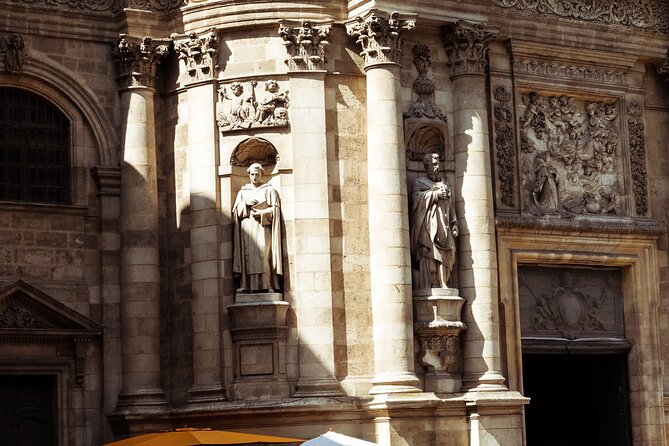
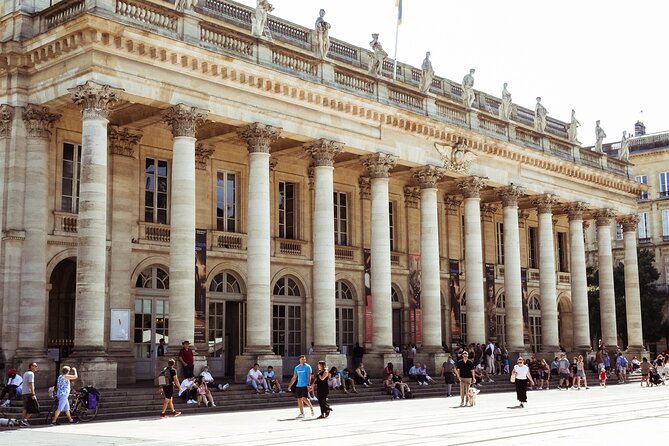
The tour includes a stop at the Grand Théâtre de Bordeaux. Built in 1780 and designed by architect Victor Louis, it’s explained as a neoclassical icon and a core part of Bordeaux’s cultural identity.
What you’ll take in from the outside: the grand colonnaded façade and the statues of the nine muses and goddesses. Then the tour also points toward what’s inside—grand staircase, a glittering chandelier, and the kind of opulent detail that makes you realize why people still talk about this building as much as the wine.
This stop is short (about 5 minutes), so don’t treat it like a full theatre visit. Instead, treat it as a “mental ticket.” If you like architecture, you’ll likely want to schedule more time later.
Place Gambetta: gardens, a former western gate, and French Revolution echoes
Then it’s over to Place Gambetta, where the tour connects a calm square to a more complicated past. It’s described as a historic square that once served as the city’s western gate, later becoming part of urban transformation in the 18th century.
Your guide also ties it to political history, including its connections during the French Revolution. The square today has gardens, so it’s a nice place to break the walking rhythm for a few minutes.
This is one of those stops where “stop and look” really works. If you’re tired, you’ll get a small reward: you can see how Bordeaux uses greenery and open space as a counterpoint to stone monuments.
Passage Sarget: a covered arcade built for shopping and ideas
Next comes Passage Sarget, a late 19th-century covered passage designed to connect two areas of the city. It’s named after banker and philanthropist Jean-Alexandre Sarget, and it’s described as inspired by Parisian arcades.
What makes this stop especially fun is the combination of physical design and social history: glass roofing, ironwork, and stone architecture; and a past as a hub for luxury boutiques and intellectual gatherings.
If you’re the kind of traveler who enjoys small-scale “Bordeaux feels,” Passage Sarget is where the city turns from “monuments” into “everyday elegance.” It’s also a good place to duck out of sudden weather changes, even if you only spend a brief amount of time.
Place du Chapelet and the Church of Notre-Dame: organ music and a painter’s funeral
At Place du Chapelet, the tour highlights the Church of Notre-Dame, built in the 17th century. The big detail here is the church’s organ, described as still resonating during special performances.
It also includes a more personal cultural story: the church being the site of a famous painter’s funeral in the 19th century. That kind of anecdote matters. It makes the religious building feel like part of the city’s artistic life, not just a stop on a route.
This stop is about 10 minutes, so you’re getting a taste rather than a full program. Still, it’s a smart change of pace after passages and squares.
Allées de Tourny and the Monument aux Girondins finale at Quinconces
The last stretch leans into civic planning and revolutionary memory.
At Allées de Tourny, you’ll see a grand avenue with tree-lined elegance. The tour explains that it was designed by a key figure behind Bordeaux’s transformation, and that this person influenced urban development in Paris. The guide doesn’t just point out “pretty avenue,” it connects the layout to how cities were reshaped during modernization.
Then the tour ends with Monument aux Girondins at Place des Quinconces. This tall monument memorializes the Girondin deputies who died during the French Revolution. It’s described as symbolizing liberty, the triumph of the Republic, and Bordeaux’s maritime heritage.
Ending here makes sense. After walking through royal weddings, medieval English ties, and 18th-century cultural power, you finish at a monument that explains how revolution and identity shaped the city’s public memory.
The Bordeaux wine finish: a glass, a locals-style wrap-up
The experience includes a glass of Bordeaux wine at the partner bar after the walking portion. This is a great pairing because it doesn’t turn into a long wine tour. It’s a simple tasting moment that helps you connect the city’s wine culture to what you’ve just seen.
You’ll also get a “Top recommendation” at the end of the tour. That’s the kind of practical guidance you can use immediately—where to go next, what to prioritize, and how to spend the rest of your day with better odds of enjoying it.
Tip: if you’re sensitive to alcohol, plan a slow pace after your wine. A single glass is manageable, but it’s smart to keep the rest of your sightseeing light afterward.
Price and logistics: what you’re really paying for
Let’s talk value without gloss.
You pay $90.36 per person for a private English-speaking guide, a 2-hour walking route, and the included wine glass after. Entrance into monuments isn’t included, so you’re not buying tickets to galleries or paying for interior time. What you are buying is explanation—how Bordeaux fits into broader European history—and the convenience of having a route that covers major sights efficiently.
If your goal is maximum landmarks with minimal planning, the price can feel fair. If your goal is deep museum time or long interior visits, you’ll need to pair this with other stops on your own.
Duration also matters. Most stops are short—around 5 to 15 minutes—so the tour is designed for getting context quickly. Think of it like a high-quality “orientation lecture” delivered while walking.
Who this tour is best for (and who should skip it)
This works especially well if you:
- Want a first-time Bordeaux route that gives you structure fast
- Like history stories that connect to what you’re seeing on the street
- Prefer a private experience over crowds and group pacing
- Have a limited schedule and want the UNSECO core covered in one shot
It may not be the best match if you:
- Want long, inside-only monument time (entrances aren’t included)
- Have limited mobility and find repeated walking difficult
- Prefer “quiet corners” only—Bordeaux’s central streets can be active
On the bright side, the tour says most people can participate, and service animals are allowed.
Should you book this private Bordeaux history tour?
If you want Bordeaux to feel understandable on day one, I’d book it. The mix of Gothic, civic architecture, medieval and English-era connections, and Revolutionary memory gives you a rounded picture without eating your whole day. The included wine glass turns the wrap-up into something memorable, not just another photo stop.
Book it sooner rather than later, too. The tour is commonly booked about 40 days in advance, so peak dates can fill.
One quick decision rule
- If you want guided context and a smart route: yes.
- If you only want interiors, long museum time, and a slow pace: plan other options.
FAQ
How long is the private Bordeaux history tour?
It lasts about 2 hours.
How much does the tour cost?
The price is $90.36 per person.
Is the tour private?
Yes. It’s a private tour/activity, and only your group participates.
What language is the guide?
The tour is offered in English.
Where does the tour start and end?
It starts at Bordeaux Cathedral (Cathédrale Saint-André de Bordeaux) on Pl. Pey Berland, and ends at Place des Quinconces.
What’s included in the price?
Included are the private historical walking tour, an English-speaking guide, a glass of Bordeaux wine at the partner, and a Top recommendation at the end of the tour.
Are monument entrance fees included?
No. Entrance inside the monuments is not included.
Do I need a physical ticket?
You’ll use a mobile ticket.
Are service animals allowed?
Yes, service animals are allowed.
What is the cancellation policy?
You can cancel for a full refund up to 24 hours before the experience’s start time.
Is it near public transportation?
Yes, it’s listed as near public transportation.