REVIEW · WARSAW
Private Historical Tour of Warsaw by a Retro Fiat with Pickup
Book on Viator →Operated by WPT1313 Warsaw Private Tours · Bookable on Viator
Retro Fiat, serious history. This private ride turns Warsaw’s big WWII and communist-era stories into an easy-to-follow route, with Old Town and Praga Polnoc plus ghetto sites you can’t really piece together on your own. It’s 4 hours long, and it mixes short walks with driving so you cover a lot without feeling rushed.
Two things I’d bet you’ll love: the way the tour slows down at key places (like UNESCO Old Town) and points out what’s still there after the war, and the fact that you get a real guide who can connect architecture to the human stories behind it. A lot of guides also add small local touches on the ride, like paczki or Polish vodka, depending on the guide and the day.
One thing to think about: the retro Fiat is a charming ride, but you should plan for comfort limits—there’s no A/C mentioned in feedback, and the stops include emotionally heavy sites tied to Nazi persecution and the Warsaw Uprising. If you’re heat-sensitive or prefer lighter subject matter, pick a cooler day and pace yourself.
In This Review
- Key highlights worth planning around
- A retro Fiat pickup that makes Warsaw feel navigable
- UNESCO Old Town: what survived the war, and what that means
- Practical tip
- From Castle Square to the Archcathedral: royalty and destruction side by side
- Warsaw Uprising Monument: turning names into a story you can stand near
- POLIN Museum area and ghetto memorials: what you can see, and what you should remember
- Stop worth lingering on
- Palace of Culture and Science: a communist-era landmark with a purpose
- Praga Polnoc: where older Warsaw still breathes
- Price and time: does $108.28 per person make sense?
- Guide quality matters more than the car
- Who should book this Warsaw retro Fiat tour?
- Should you book this private retro Fiat tour?
- FAQ
- How long is the private historical tour of Warsaw by retro Fiat?
- How much does the tour cost per person?
- Is pickup included, and where does the tour start?
- Is this tour private?
- What language is the tour offered in?
- What stops are included during the 4 hours?
- Do you need tickets for the listed stops?
- What’s the meeting and end point?
- Is free cancellation available?
Key highlights worth planning around
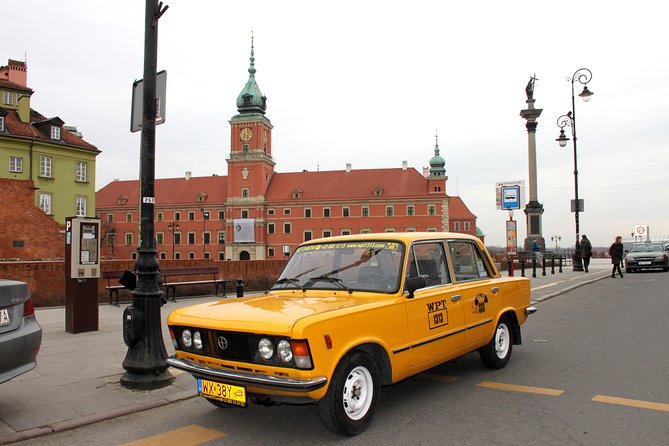
- Retro Fiat 125p driving that keeps walking short while still covering both sides of the city
- UNESCO Old Town time to spot what survived WWII
- Ghetto and Uprising memorial stops tied to real names, monuments, and remnants
- POLIN Museum area and ghetto-wall fragments without needing extra ticketing for the viewpoints used
- Praga Polnoc for the calmer, less-bombed feel of older Warsaw
A retro Fiat pickup that makes Warsaw feel navigable
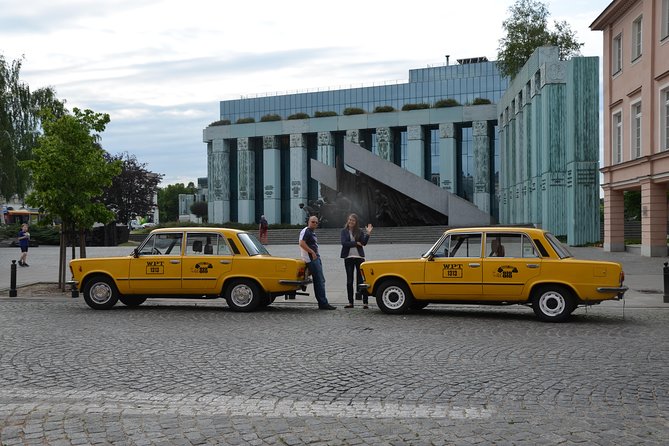
If your Warsaw days are short, this is a smart way to get your bearings fast. The tour starts at Palace of Culture and Science (pl. Defilad 1), and you can also arrange pickup from your hotel lobby if you’re within the operator’s pickup area. If you’re outside it, you contact them so they can find the best solution. That matters because it removes the morning stress of finding the right meeting point with bags, tired legs, or a jet-lagged brain.
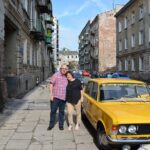
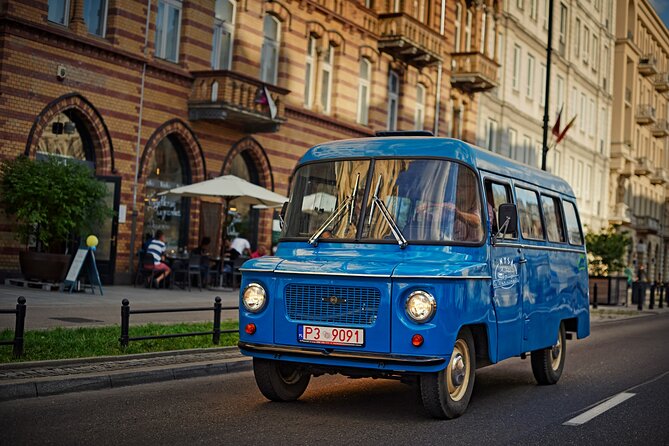
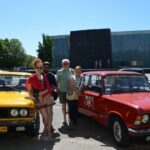
Then there’s the car. The retro Fiat 125p does more than look cool for photos. It changes the rhythm of the day: you move between districts without losing time to long transit connections, and your guide can keep explanations going while you glide past major landmarks. It’s the kind of format where you can ask questions on the fly, because you’re not constantly stopping and regrouping like you might on a pure walking tour.
The tour is private, so it’s just your group. That’s a big deal at sites where you’ll want to linger—especially around memorials—without holding up strangers. The tour runs in English, and there’s a mobile ticket involved.
You can also read our reviews of more tours and experiences in Warsaw.

UNESCO Old Town: what survived the war, and what that means
Most people rush Old Town like it’s a postcard. This stop does the opposite. You spend about one hour in Warsaw Old Town, which is UNESCO-listed, and your guide points out which buildings survived World War II. That one detail is worth the price all by itself, because it turns the Old Town from “pretty historic core” into something more honest: surviving architecture as evidence.
You also get the feel of the Old Town’s layout before the tour moves into other layers of Warsaw. The walking here is manageable. You’re not climbing hills or weaving through crowds for hours. Think of it as a guided orientation of the city center—enough to help your later self understand where everything sits.
At Castle Square (Plac Zamkowy), which is right in front of the Royal Castle, you’ll get a quick stop (about 15 minutes). This square connects the Old Town with the Royal Route, so it’s a natural “hinge” point. There’s even a commemorative focus here: the column at the square honoring King Sigismund III Vasa. It’s a short moment, but it anchors the idea that Warsaw’s story isn’t only 1900s tragedy—it has earlier political roots too.
Practical tip
Bring a camera, but also slow down. If you take photos nonstop, you’ll miss the guide’s prompts about what to look for in facades and site remnants.
From Castle Square to the Archcathedral: royalty and destruction side by side
Next comes Archikatedra Sw. Jana Chrzciciela (about 10 minutes). This stop is structured like a mini lesson with a specific purpose: it’s not just where to stand and admire. It’s about understanding what’s buried, and how German Nazis destroyed it, and what that says about the war’s reach—into religious buildings, identity, and memory.
If you like history explained through physical places, you’ll enjoy this format. Churches, squares, and monuments in Warsaw often carry layers: older meaning, wartime damage, post-war rebuilding, and today’s memorial framing. This tour uses those layers like signposts.
The tour also leaves the Old Town by the former gate of Warsaw. That’s a small detail, but it helps you feel the city as an enclosed place in the past—where gates mattered and movement had consequences.
Warsaw Uprising Monument: turning names into a story you can stand near
A quick stop follows at the Warsaw Uprising Monument (about 10 minutes). The monument is a bronze sculpture meant to commemorate the thousands of Poles who fought against German Nazis. It’s easy to skim over monuments when you don’t know what they represent. Here, the explanation is the point: you’re learning how the uprising fits into the broader WWII timeline, and why these memorials were built to keep that meaning alive.
Then you move toward the Jewish quarter area. The day gets heavier here, because the tour doesn’t treat WWII only as battles and dates—it connects the facts to memorial sites and to the people behind them.

POLIN Museum area and ghetto memorials: what you can see, and what you should remember
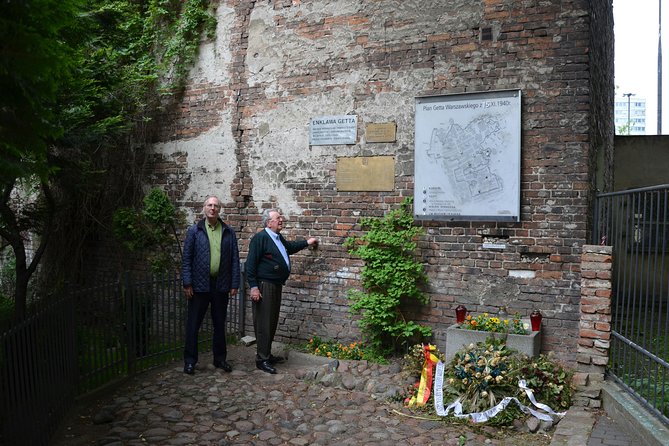
One of the most powerful parts of the tour is how it uses short, focused stops rather than long museum time. You’ll spend around 15 minutes at POLIN Museum of the History of Polish Jews, mainly from the outside, plus listen to the story of the Polish Jewish community.
Next comes the Pomnik Bohaterow Getta (about 10 minutes). This monument is tied to Mordechaj Anielewicz, a name that comes up again and again when you study the Warsaw ghetto uprising. You’ll also hear a detail about what the monument is made from: the basalt used for it. It’s one of those specifics that makes a monument feel less like a shape and more like something built with intention.
From there, the tour connects to the idea of the departure point to Treblinka extermination camp with gas chambers. This is not the kind of place for casual attention. If you have a moment of quiet in you, use it. This is where your guide’s framing matters: it gives you context so the site doesn’t feel like a random stop on a route.
Then you’ll hear about the most famous black market in Communist Poland. That contrast is important. Warsaw didn’t just move from Nazi occupation to peacetime. The tour shows how the city kept absorbing new political realities—and how ordinary people survived them.
Stop worth lingering on
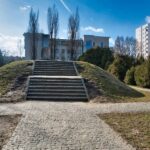
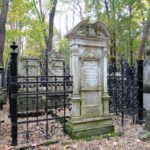
Near the end of this sequence, you’ll visit the Fragment of Ghetto Wall. It’s about 30 minutes, and it’s one of the stops where you can actually feel the physical weight of what’s left. You’ll look into the Jewish quarter, see remains of the ghetto, and learn the tragic history connected to Warsaw Jews. The tour also uses plenty of touchpoints tied to the Warsaw Uprising, including the fact that it was the largest armed uprising of civilians during World War II.
If you’re the type who likes taking a mental map home, this stop is the anchor. It gives you something real to remember when you later read or watch anything about Warsaw in the 1940s.
Palace of Culture and Science: a communist-era landmark with a purpose
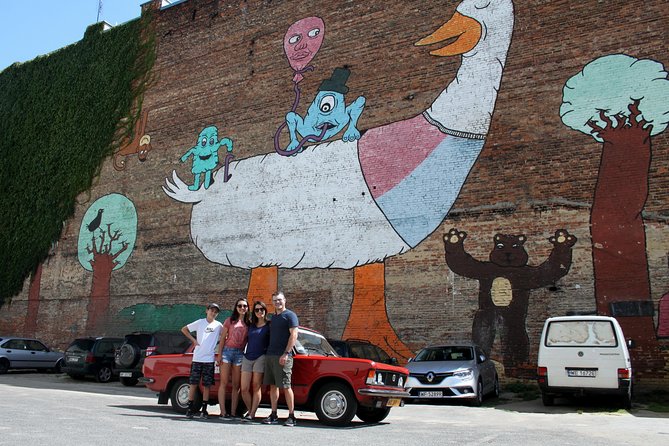
The tour then moves to Palace of Culture and Science (about 15 minutes). This is Warsaw’s iconic building and a clear symbol of the communist era. It’s also one of those landmarks that you can see from many angles, so the guide’s role is to explain why it became such a powerful reference point.
If you’ve ever wondered why cities keep certain buildings even when the political regime changes, this stop gives you a workable answer. It also helps connect the ghetto and WWII story to later Soviet-era realities without making the day feel like a separate tour.
Praga Polnoc: where older Warsaw still breathes
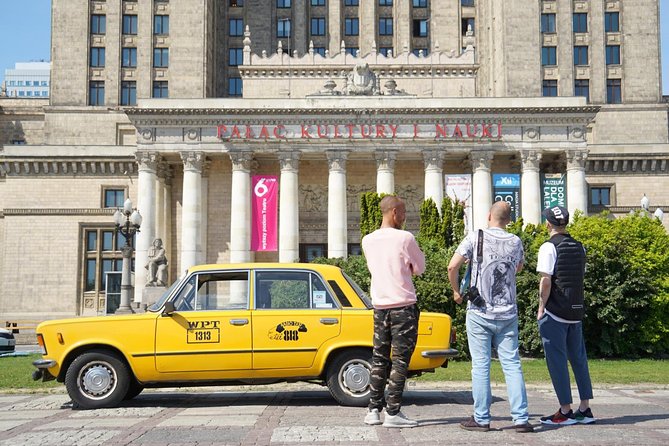
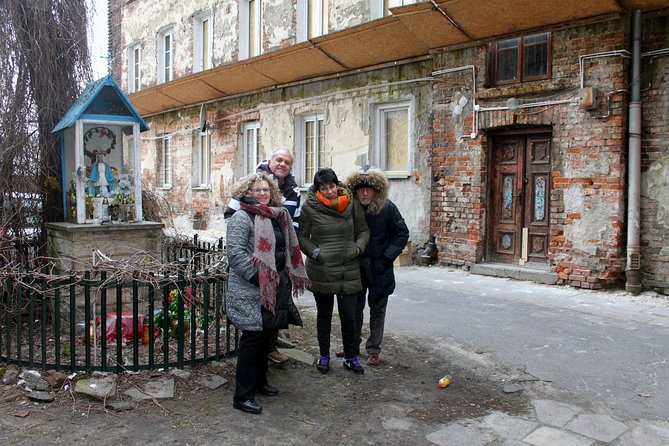
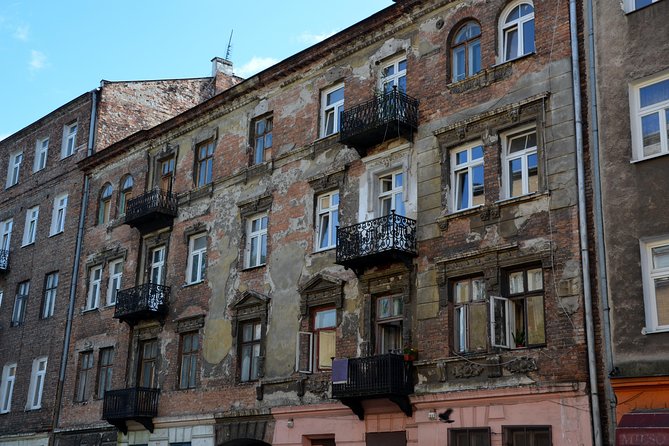
After the heavy stops, you get a change of pace in Praga Polnoc (about 30 minutes). The tour describes it as a “magical fragment” of Warsaw—an area that was far less affected by World War II than much of the rest of the city. That’s why it feels different.
This is where I think the Fiat helps most. Praga isn’t just a single sight; it’s a district feel—street character, building scale, and the sense of time. A driving-and-walking mix keeps you from turning it into a boring checklist.
You’ll also see that Praga is often treated as an afterthought compared to Old Town. This tour flips that. It gives you the kind of neighborhood perspective that helps you understand Warsaw as more than a museum city.
And if you like photography, you’ll likely find plenty of angles. One feedback point: the Praga area can show street art that you won’t catch on typical center-only routes.
Price and time: does $108.28 per person make sense?
At about $108.28 per person for roughly 4 hours, this sits in the “good use of time” category. You’re paying for three main things:
- A private guide who can steer you through places that often confuse first-time visitors
- A retro Fiat that reduces travel time and keeps the walking parts manageable
- A route that links the WWII-era story with later communist-era themes, not just Old Town highlights
If you only have half a day, a taxi-and-museum plan usually costs similar money but often loses the connecting narrative. Here, you get a clear order: Old Town → major historic and religious sites → Uprising and ghetto memorial points → communist-era landmark → Praga district feel.
Also, there are group discounts, and the tour is private for your group only. That can make it cheaper per person than you might expect if you’re traveling with friends or family.
Guide quality matters more than the car
The retro Fiat draws the eye. But the guide does the heavy lifting. Feedback highlights strong English and a teaching style that points out architectural details you’d likely miss, then ties them to what happened to the people living there.
Names that came up include Jakob, Agata, Karol, Martin, Konrad, Maks, Alice, and Hania. Across the different guides, a pattern shows up: they tailor the pace, answer questions, and connect multiple periods of history without turning it into a lecture you can’t follow. Some also add local food or drink moments—like Pączki (Polish doughnuts) or Polish vodka—though that depends on the guide and how the day flows.
One more practical note from feedback: the retro car experience can be comfortable enough, but it may have limits on hot days since there’s no A/C mentioned. If it’s summer, plan earlier hours and bring water.
Who should book this Warsaw retro Fiat tour?
This is a great fit if:
- You want a half-day overview that still feels meaningful, not superficial
- You like history told through real places (squares, churches, wall fragments, monuments)
- You prefer short walking segments with driving between districts
- Your group wants a private experience with flexibility for questions
It may be less ideal if:
- You want mostly light, fun sightseeing and minimal WWII/ghetto/occupation context
- You dislike emotionally intense memorial stops
- You strongly need a vehicle with modern comfort like A/C on a very hot day
Should you book this private retro Fiat tour?
Yes—if your goal is to understand Warsaw, not just see it.
This route gives you the parts of the city that explain why Warsaw looks the way it does today: the rebuilt Old Town, the memorial geometry of the Uprising and ghetto remnants, the communist-era landmark, and the district mood of Praga. The retro Fiat makes it easier to connect the dots because you spend less time figuring out logistics and more time listening, looking, and asking questions.
If you only have one afternoon, this is one of the better ways to make that time count.
FAQ
How long is the private historical tour of Warsaw by retro Fiat?
It’s about 4 hours.
How much does the tour cost per person?
The price is listed as $108.28 per person.
Is pickup included, and where does the tour start?
Pickup and drop-off from central locations are included. The meeting point is the Palace of Culture and Science (pl. Defilad 1, 00-901 Warszawa, Poland). Pickup is available from your hotel lobby if you’re in the pickup area.
Is this tour private?
Yes. It’s private, so only your group participates.
What language is the tour offered in?
The tour is offered in English.
What stops are included during the 4 hours?
The route includes Old Town, Castle Square, Archcathedral Sw. Jana Chrzciciela, the Warsaw Uprising Monument, POLIN Museum of the History of Polish Jews (from outside), Pomnik Bohaterow Getta, a Fragment of Ghetto Wall, Palace of Culture and Science, and Praga Polnoc.
Do you need tickets for the listed stops?
The itinerary notes admission tickets as free for the stops listed.
What’s the meeting and end point?
The activity ends back at the meeting point (Palace of Culture and Science area).
Is free cancellation available?
Yes. You can cancel up to 24 hours in advance for a full refund.