REVIEW · WARSAW
Warsaw: Jewish Heritage & Holocaust Walking Tour
Book on GetYourGuide →Operated by Orange Umbrella Tours Warsaw · Bookable on GetYourGuide
A long story, told on foot. This Warsaw Jewish Heritage & Holocaust tour covers roughly 600 years of Jewish life and Warsaw’s changing streets, using old photos, clear timelines, and a route that ends at major locations tied to the Ghetto Uprising. I like how the guide frames the bigger picture while still pointing you to specific places, and I also like the contrast of pre-war life shown through photographs against the landscape shaped by war.
There’s one big consideration: this is not a light walk. More than half of the tour focuses on the Holocaust of Warsaw’s Jews, and in winter the late portion can feel cold, especially when you’re standing still near memorials.
In This Review
- Quick hits before you go
- Castle Square start: your orange umbrella on a 20-meter landmark
- Medieval Warsaw, Jewish quarter life, and early expulsions
- Jurydki and the Haskalah: how Jewish life changed in the 1700s
- Pre-war Jewish Warsaw through old photos and modern contrasts
- The Warsaw Ghetto: walls, daily life, and Treblinka deportations
- Big Ghetto and the Uprising: seeing the fight locations
- Guides and style: why Magda, Gawel, Martin, and Albert matter
- Price and timing: a 150-minute value-focused walking tour
- Should you book this Warsaw Jewish Heritage & Holocaust walking tour?
- FAQ
- How long is the Warsaw Jewish Heritage & Holocaust walking tour?
- Where does the tour start?
- How much does it cost?
- What is included in the price?
- Are entrance fees included?
- Is the tour in English?
- Is the tour wheelchair accessible?
- What should I bring?
- Is smoking allowed during the tour?
- Is it suitable for children?
Quick hits before you go

- 600-year timeline from medieval Jewish life to the Holocaust, all in 150 minutes
- Big Ghetto focus, including areas connected to fighting during the Ghetto Uprising
- Pre-war photos and war-shaped streets help you read Warsaw’s transformation
- Treblinka deportations are covered as part of the ghetto story
- English live guiding from guides such as Magda, Gawel, Martin, Albert, Goska, and Peter Hardy
- Small practical tips like bringing a head covering or kippah, plus water
Castle Square start: your orange umbrella on a 20-meter landmark
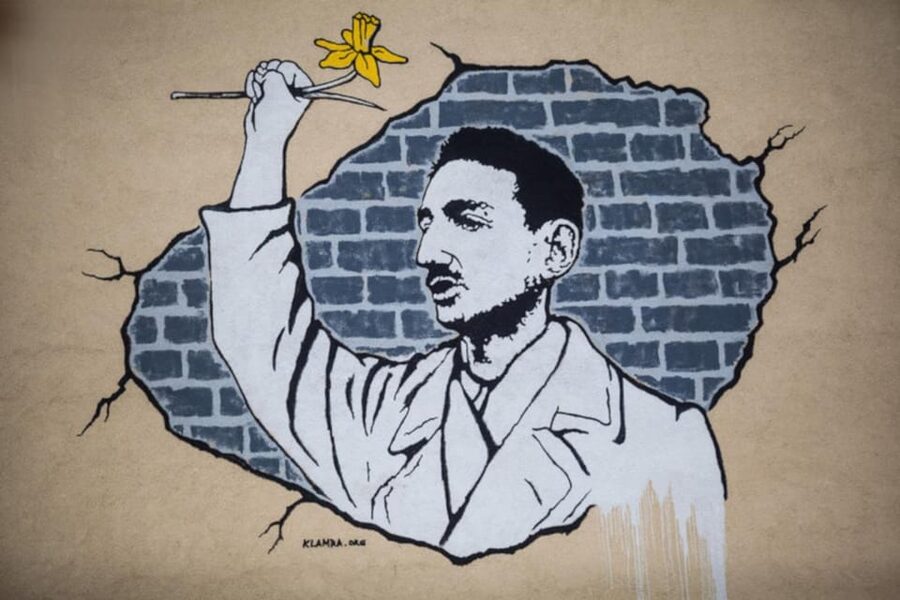
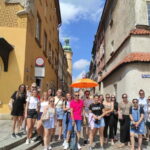
Your meeting point is easy to miss only if you’re rushing. Go to Castle Square, by Sigismund’s Column—a striking 20-meter-high monument with a statue on top. Look for a guide holding an orange umbrella with a British flag.
This matters more than it sounds. Warsaw is full of tall landmarks and busy intersections, and the first few minutes set the tone. Once you’re with the group, the guide typically turns the walk into a moving classroom: you’re not just looking at buildings, you’re learning how the city’s Jewish community formed, grew, and then suffered catastrophic destruction.
The tour is scheduled for 150 minutes, so you should expect an energetic pace. That’s a good thing here. The material spans medieval expulsions, later settlements under Warsaw’s magnates, Jewish Enlightenment ideas (the Haskalah), then the creation of the Warsaw Ghetto, daily conditions behind the wall, deportations to Treblinka, and finally the Uprising sites. You’ll cover a lot, but it’s done in a sequence that helps your brain stay organized.
Practical note: wear comfortable shoes. Even when the route is mostly “city-walk manageable,” you’ll be standing and pausing repeatedly. Bring water, and if you’re visiting a lot of religious or memorial spaces in Poland, it’s smart to have a head covering or kippah.
You can also read our reviews of more tours and experiences in Warsaw.

Medieval Warsaw, Jewish quarter life, and early expulsions
The best part of starting in central Warsaw is that you can feel how old the story is. The tour begins by pulling the Warsaw Jewish community into focus across time—back to the Middle Ages, when Jewish settlement and community life took shape in the city.
You’ll hear about origins of Polish Jews, and the guide connects that to what life could mean in a medieval Jewish quarter. This isn’t presented like a museum diorama. The guide uses the city itself—its street geography and key areas—to explain how community life grew, where people lived, and how authorities’ decisions could abruptly change those lives.
A major theme early on is expulsions. That word can sound abstract until you tie it to real people and real places. The tour keeps the sequence clear: Jewish life forms, then political pressure and shifts in control create hardship. Once you’ve got that early context, later chapters—the growth of settled Jewish populations and later ghetto confinement—feel less random and more like part of a brutal pattern.
This section is also where the tone becomes important. The guide aims to be fact-focused and objective while still being human about what happened. That balance matters for this topic; the goal isn’t shock, it’s understanding. And because the tour moves forward chronologically, you’ll have fewer “what am I missing?” moments.
Jurydki and the Haskalah: how Jewish life changed in the 1700s
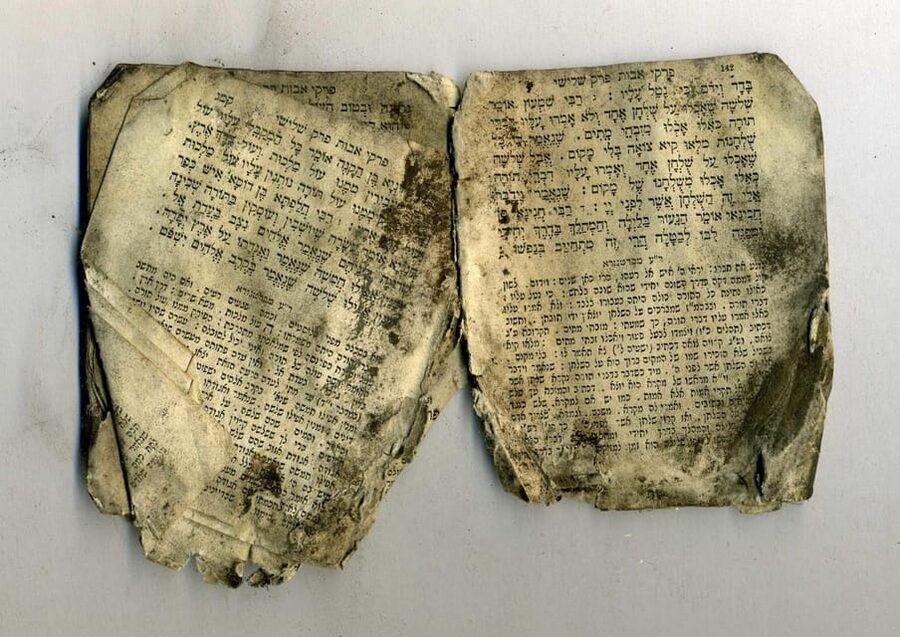
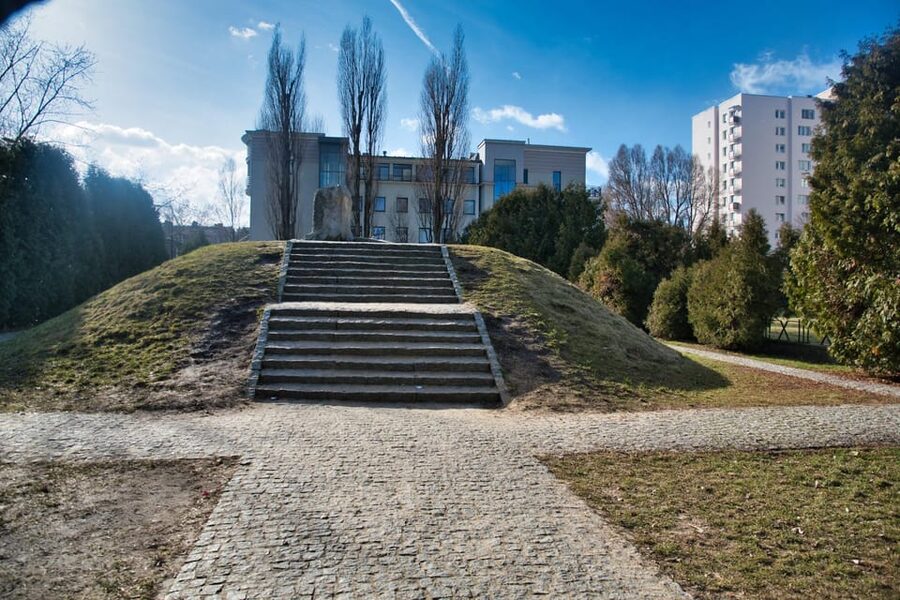
Next you shift into a more specific Warsaw story: 18th-century Jewish settlements within jurydki. These were areas under the jurisdiction of Warsaw magnates—so the experience of living there could be different than elsewhere in the city.
Why this part is worth your attention: it explains that Jewish life in Warsaw wasn’t one static thing. Legal status, local authority, and social conditions could vary. That variation helps you understand the later emergence of dense neighborhoods and the social networks that existed before World War II.
You’ll also hear about the Haskalah, the Jewish Enlightenment. This is the kind of topic that can feel “too intellectual” on a walking tour—unless the guide frames it in plain terms: how ideas about education, modernity, and cultural life influenced the community. If you like history that connects policy and daily life, this is one of the sections that tends to land well.
The tour also uses old photographs and maps later to bring these phases to life. Even before that, you can start noticing how the guide’s method works: place + time + what people experienced.
Pre-war Jewish Warsaw through old photos and modern contrasts
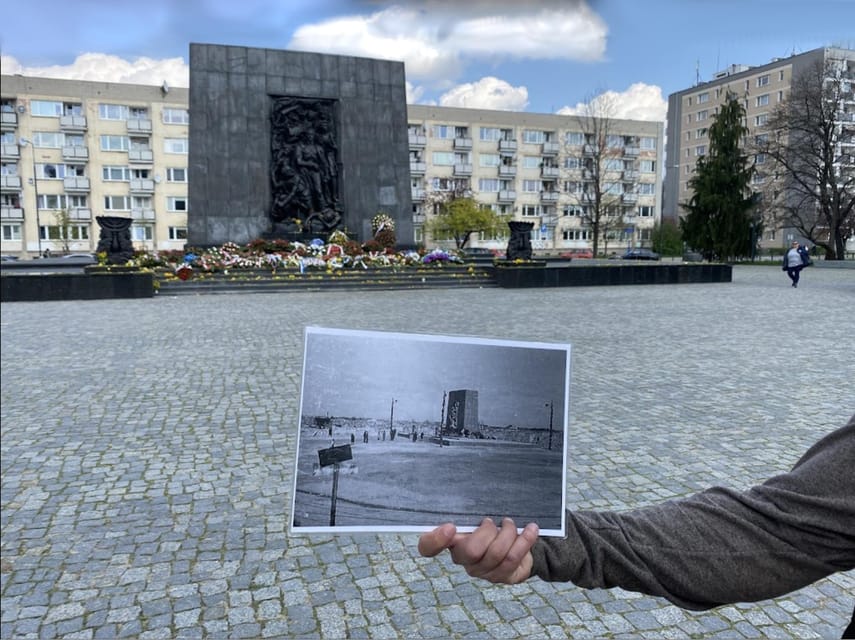
One of the tour’s strongest tools is the way it compares pre-war Jewish Warsaw with what you can see now. The guide brings in old photographs, so you’re not just learning facts in the abstract—you’re seeing what life looked like before the catastrophe, and then looking at the same kinds of locations after the war.
This contrast is more than emotional. It’s practical. Warsaw today is a rebuilt city, and without a timeline, it’s easy to miss what’s been erased or transformed. When you see pre-war images set against the modern streets, you start to “read” the city with new eyes.
This part often becomes the turning point for many people: you go from learning about the Jewish community’s growth to understanding what was violently destroyed. And because the tour keeps pointing out how the city changed, you don’t feel like you’re floating through time. You feel anchored.
If you’re the kind of traveler who enjoys doing your homework but hates dry lectures, this is a smart format. You get structure, visuals, and guided explanations, plus you can ask questions and get clarifications on what’s known and what’s harder to document.
The Warsaw Ghetto: walls, daily life, and Treblinka deportations
Now the tour shifts sharply, and it’s the section that takes up more than half of the walking time. You’ll learn about the creation of the Warsaw Ghetto, what daily life behind the walls meant, and how the system of persecution played out in ordinary routines.
The guide doesn’t treat this as a single event. It’s explained as a process: confinement, worsening conditions, and then mass removal. You’ll hear specifically about deportations to Treblinka death camp—a key part of the ghetto story that you need in order to understand what happened to Warsaw’s Jews after confinement.
What makes this part valuable is the pacing. Instead of jumping from the ghetto’s creation straight to the uprising, the tour first helps you understand what confinement did to life—socially, physically, and psychologically. That makes later chapters about resistance and fighting feel historically grounded rather than tacked on.
You should also know that this isn’t “for kids.” The tour is listed as not suitable for children under 10, which makes sense for the subject matter and the intensity of the content.
If you’re worried about emotional overload, plan it. Bring water, wear warm layers if you’re going in colder months, and give yourself permission to pause your mind for a minute when you need it. This tour is designed to be respectful and guided, but the topic is inherently heavy.


Big Ghetto and the Uprising: seeing the fight locations
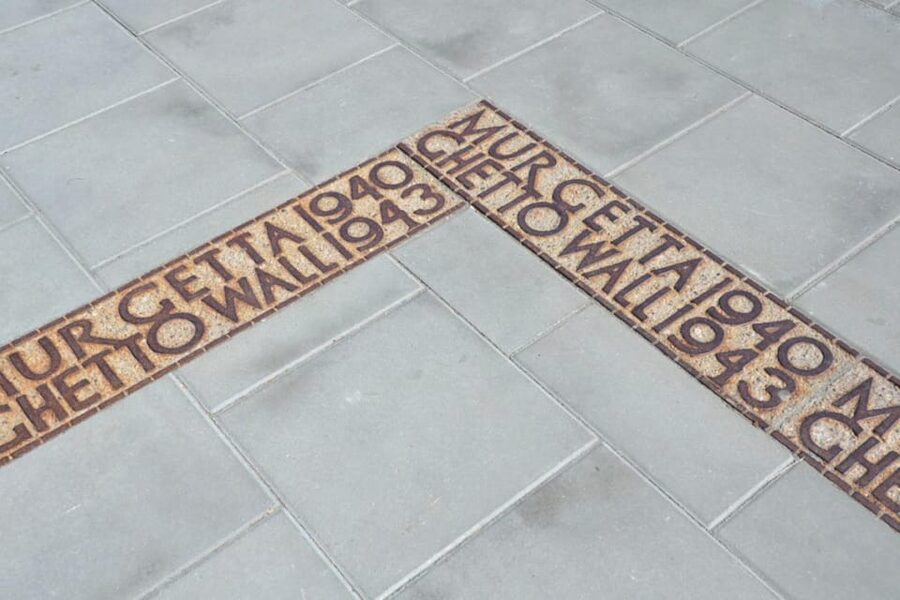
The tour culminates in the areas tied to the Ghetto Uprising. You’ll see the Big Ghetto, including the area where fights connected to the uprising took place.
For me, the best way to describe this section is that it turns “history lesson” into “spatial memory.” Warsaw becomes less of a backdrop and more like a map of decisions, desperation, and resistance. When you connect the events to street areas, it becomes harder to reduce the uprising to a single famous photo or headline.
This is also where pre-war context helps. You’ve spent time understanding what life was like before the ghetto, then what the ghetto meant, and now you’re shown where the uprising happened. The story comes full circle, and the final locations land with more weight.
The guide helps you notice memorials and meaningful sites associated with the uprising. Even when a spot looks ordinary from a distance, you learn what made it important during the fights.
Because the tour is walking-based, you get repeated short pauses, not one long stop. That pacing can help keep the experience clear: you hear the story, walk a bit, look again, and then absorb the next segment.
Guides and style: why Magda, Gawel, Martin, and Albert matter
What makes this tour consistently work is the way guides present the material. In the guide names shared for this tour, you’ll see strong repeats: Magda, Gawel, Martin, Albert, Goska, and Peter Hardy. People describe them as energetic, warm, and very ready to answer questions.
That’s not fluff. For a topic like this, you want a guide who can:
- explain without sensationalizing
- keep facts organized and timelines understandable
- use visuals like photographs and maps effectively
- handle sensitive questions with care
You’ll likely notice a few practical moments too. For example, at least one guide is described as letting the group stop to grab coffee when it was freezing—an example of good human logistics. Another common theme in feedback is the use of photos and maps to make the story easier to follow.
As for group size, there is one caution: a large group can be harder to hear and less comfortable, especially in winter. If you prefer more personal attention, choose a departure that you expect will be smaller, and plan on arriving a few minutes early so you can settle in.
Price and timing: a 150-minute value-focused walking tour
At $20 per person, this is a bargain for what you get—especially because it’s not just a quick overview. You receive a professional guide and a walking tour that runs 150 minutes. Entrance fees are not included, which is typical for a walking format, but it also helps keep the cost predictable.
The value is in coverage and teaching approach:
- you get a long timeline (medieval to WWII and beyond)
- you get both heritage and Holocaust material, not just one
- you see major ghetto and uprising-related sites
- you get visuals and context that you can’t easily replicate alone on a short visit
Here’s the tradeoff: because the group is moving and the topic is intense, you need to pace yourself. Don’t schedule something right after expecting to be “fresh.” This tour tends to stick to you.
Season also affects comfort. If you’re going in December or colder months, layer up. The tour includes long portions of standing and viewing, and later hours can mean darkness and cold.
Should you book this Warsaw Jewish Heritage & Holocaust walking tour?
Book it if you want a structured way to understand Warsaw’s Jewish story—from centuries of community life to the Warsaw Ghetto and the Uprising—without having to piece everything together yourself.
Skip or choose another format if:
- you need a lighter emotional load (this is heavy, with the Holocaust taking the majority of time)
- you dislike larger groups, since group size can reach up to around 30
- you’re traveling with kids under 10
If you do book, go in with a simple mindset: this walk is about context and place, not speed. Wear good shoes, bring water, and don’t be afraid to ask questions. You’ll leave with a clearer picture of how Warsaw’s streets carry both memory and consequence.
FAQ
How long is the Warsaw Jewish Heritage & Holocaust walking tour?
The tour lasts 150 minutes.
Where does the tour start?
It meets in Castle Square, by Sigismund’s Column. Look for a guide holding an orange umbrella with a British flag.
How much does it cost?
The price is $20 per person.
What is included in the price?
It includes a professional guide and a walking tour.
Are entrance fees included?
No. Entrance fees to attractions are not included.
Is the tour in English?
Yes. The live tour guide speaks English.
Is the tour wheelchair accessible?
Yes, it is listed as wheelchair accessible.
What should I bring?
Bring comfortable shoes, a head covering or kippah, and water.
Is smoking allowed during the tour?
No. Smoking is not allowed.
Is it suitable for children?
It is listed as not suitable for children under 10.