REVIEW · ATHENS
Private Luxury Tour: Ancient Corinth, Mycenae, Epidaurus, Nafplio
Book on Viator →Operated by Pericles Century · Bookable on Viator
Corinth to Epidaurus in one long day. This private luxury route links Ancient Corinth, Mycenae, Epidaurus, and the seaside break in Nafplio, so you see major sites without wasting time. I like the easy, pick-up-and-go setup plus the ride comfort, and I also appreciate the driver’s respectful, helpful approach, including practical suggestions on what to see and where to eat. One thing to watch: museum and archaeological entrance fees are extra, listed at €56 per person.
The format is built for small groups. You’ll ride in a luxury sedan if your group is 1–4 people, or a comfortable mini van for 5–7, with WiFi on board and bottled water included. That matters on a day that clocks in at roughly 10–11 hours door-to-door, because you’re not just “traveling between ruins”—you’re doing it in comfort.
Also note the guide setup. This tour includes an expert English-speaking driver with extensive historical knowledge, but it does not include a licensed guide to accompany you inside the archaeological sites. So plan on reading signs, listening to the driver’s context during driving stops, and using your own pace at each ruin.
In This Review
- Key Highlights to Know Before You Go
- Private Luxury Athens Pickup That Actually Saves Your Day
- Price and What You’re Really Paying For (Comfort vs. Site Tickets)
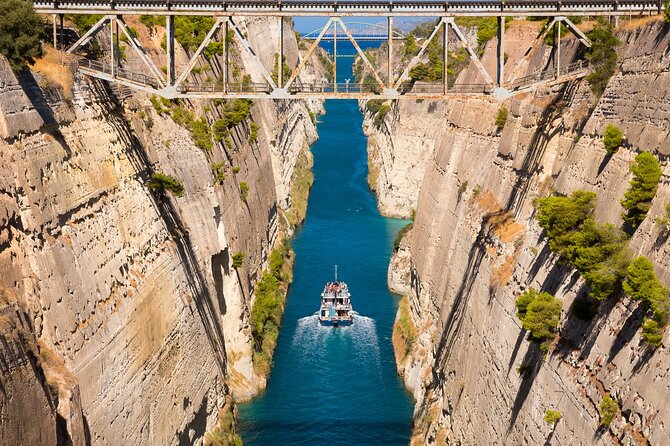
- Isthmus of Corinth: A Fast Start With Canal Views
- Ancient Corinth and the Temple of Apollo: Two Layers of the Same Story
- Corinth Archaeological Museum: The Artifacts That Fill the Gaps
- Mycenae: Lion Gate, Cyclopean Walls, and the Legendary King Connection
- The Treasury of Atreus and the Tholos Tomb Detail You’ll Remember
- Lion Gate: The Icon You Keep Seeing in Myth and Movies
- Archaeological Museum of Ancient Mycenae: Jewelry, Frescoes, and Everyday Clues
- Epidaurus Museum and the Theatre: From Healing Culture to Acoustics
- Sanctuary of Asklepios: The Healing Place Ruins Feel Calm
- Palamidi Fortress and Nafplio Old Town: Your Perfect End-of-Day Reset
- Comfort, Pace, and Group Size: Who This Tour Is Made For
- The Bottom Line: Should You Book This Private Luxury Classics Tour?
- FAQ
- How long is the Private Luxury Tour: Ancient Corinth, Mycenae, Epidaurus, Nafplio?
- What is the price per person?
- Does the tour include hotel or port pickup?
- Are entrance fees included in the price?
- Is lunch included in Nafplio?
- Do I get a licensed guide inside the archaeological sites?
- What vehicle do small groups use?
- Is the vehicle air-conditioned and is there WiFi?
- How much time do you spend in Nafplio?
- What if weather is poor or I need to cancel?
Key Highlights to Know Before You Go
- Small-group luxury transport: sedan for 1–4, mini van for 5–7, with air-conditioning, WiFi, and bottled water
- Door-to-door pickup and drop-off: convenient hotel, port, or airport-area options via a designated pickup plan
- You control the stop pace: short site walks with the freedom to pause for photos and viewpoints
- UNESCO-heavy day plan: Ancient Corinth, Mycenae, and Epidaurus form the backbone of the day
- Epidaurus plus healing sanctuary: theatre acoustics and the Sanctuary of Asklepios round out the classical story
- Nafplio reset at the end: Palamidi Fortress viewpoints and an easy hour in town to eat and wander
Private Luxury Athens Pickup That Actually Saves Your Day
The big win here is not just the sites—it’s how the day is stitched together from Athens. You get convenient hotel or port pickup, and the driver waits outside for hotel/apartment stops. For port arrivals, you’re met in the arrival area with your name on a sign. You’re also able to add airport pickup at extra cost.
Why that matters: in the Peloponnese, the driving time is real. On a 10–11 hour day, losing momentum at the start (finding the right meeting point, hunting for taxis, waiting on transfers) can eat up the time you wanted to spend walking ruins. This tour is set up to cut that friction.
The transport package supports that “keep it moving” plan. You ride in an air-conditioned vehicle, and you get WiFi on board plus bottled water. It sounds small, but on a warm day it helps you stay focused on sightseeing instead of dealing with comfort issues mid-drive.
One more practical detail: the tour runs as private transportation. Only your group participates, so you’re not stuck “timed to the slowest person” the way you might be on a larger group bus day.
You can also read our reviews of more tours and experiences in Athens.


Price and What You’re Really Paying For (Comfort vs. Site Tickets)
At $303.72 per person, this is not a budget excursion. It’s priced for the private-ride experience—door-to-door pickup, air-conditioned comfort, and a driver who brings historical context while you’re on the road.
Here’s the part you need to budget separately: entrance fees for archaeological sites and museums are €56 per person, not included. That’s a key value check. If you’d rather keep your day cost low and you’re fine arranging your own transportation, this tour will feel expensive. If you value convenience and want your schedule protected from logistics stress, the price makes more sense.
Meal time is also on you. Lunch stops are scheduled, but meal costs are not included. And as always in Greece, plan for small extra spending like snacks and drinks once you’re walking around.
In short: you’re paying for time saved and comfort gained, while site entry and meals are still part of your travel budget.
Isthmus of Corinth: A Fast Start With Canal Views
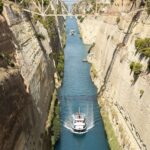
The day begins at the Isthmus of Corinth, the narrow land bridge connecting the Peloponnese to mainland Greece for thousands of years. This isn’t a “sit and read” stop. You’re there for the setting: the Corinth Canal slices through the rock, created by 19th-century engineering as a shortcut for maritime trade.
You’ll have about 20 minutes here, and that’s enough time to get oriented and grab a few good photos. The canal area also helps you understand the geographic logic behind Ancient Corinth’s rise—routes mattered, and this corridor made movement easier.
A small consideration: the time is short. If you want a longer scenic break, you’ll probably need to budget extra time elsewhere in your day—because the rest of the itinerary is packed.
Ancient Corinth and the Temple of Apollo: Two Layers of the Same Story
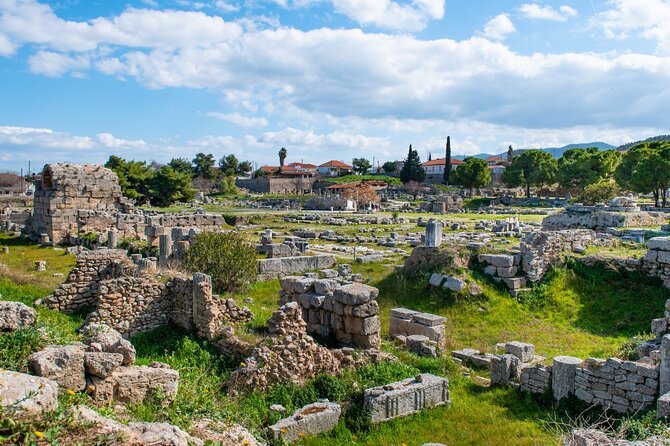
Ancient Corinth is the kind of place where one short walk can feel like you’re hopping across centuries. It was a powerful trade and religious center because it sat between land and sea routes. And yes, it also links to early Christianity: it’s associated with the Apostle Paul preaching there, which adds another layer beyond the classical ruins.
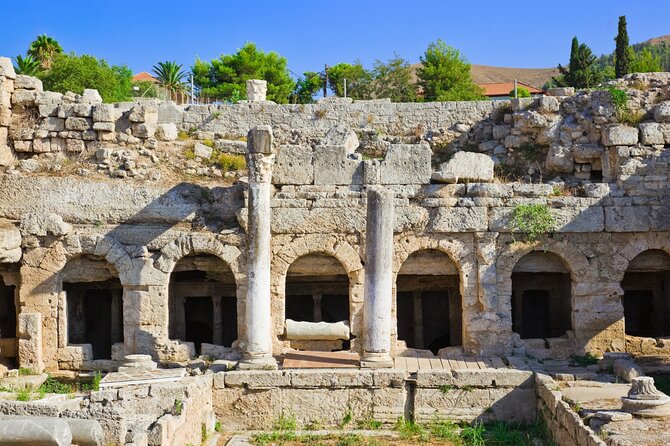
You get about 20 minutes to explore the ancient city areas, including the Agora and the Temple of Apollo area. Among the highlights you’ll encounter are the Bema of Apostle Paul (the platform where he addressed the people of Corinth) and the Glauke Fountain, a limestone structure tied to local legend and once used as a water source.
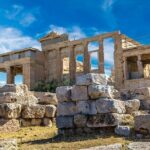
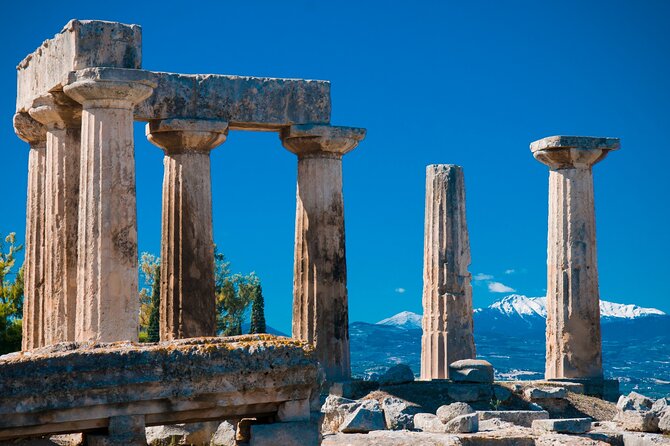
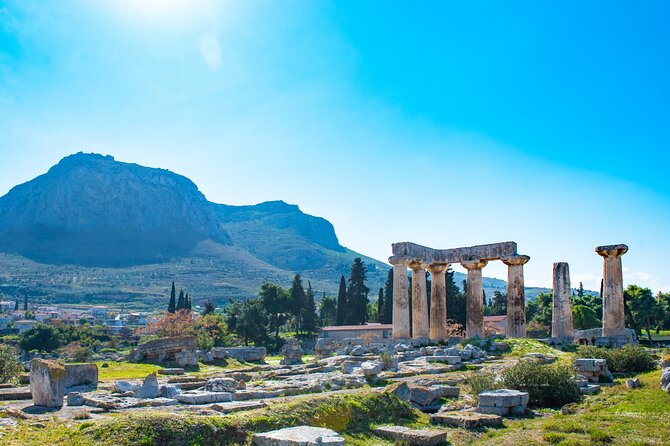
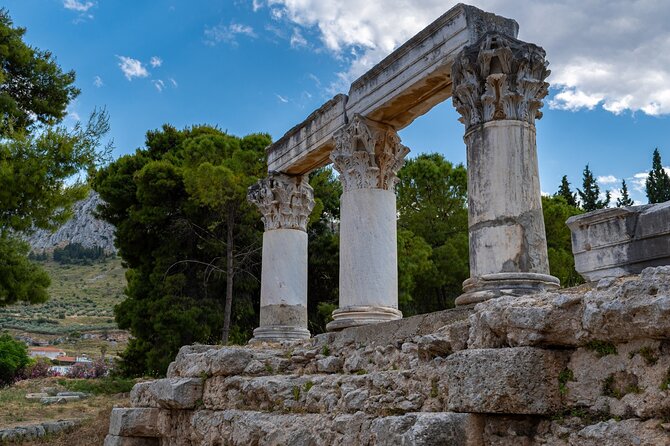
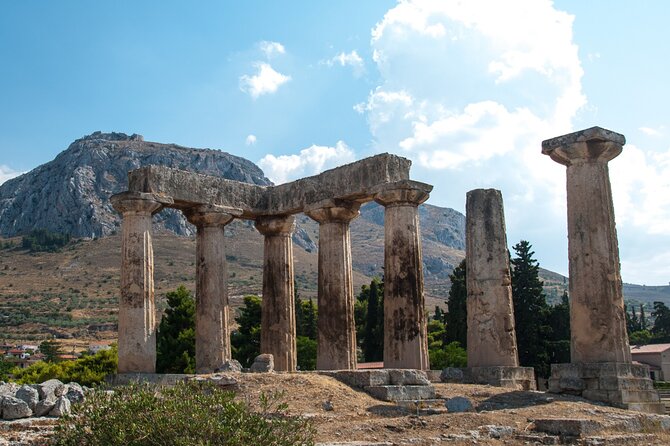
Then the itinerary breaks out the Temple of Apollo as its own stop for about 10 minutes. This is useful if you like photos and architecture details. The temple is one of the oldest Doric temples in Greece, built in the 6th century BC, with imposing limestone columns. Even with limited time, you can usually get a strong sense of scale and imagine how the city looked around it at its peak.
Photo tip that’s actually practical: the Acrocorinth backdrop can make Temple-of-Apollo photos more dramatic. If you care about pictures, use your few minutes intentionally—arrive, take wide shots first, then do close-ups on columns and stone textures before moving on.
Drawback to plan for: the ticket for this complex is not included in the tour price. You’ll want to make sure you’re ready to pay entry fees on arrival so you don’t lose time at the counter or gate.
Corinth Archaeological Museum: The Artifacts That Fill the Gaps
After the outside ruins, you’ll have about 30 minutes at the Archaeological Museum of Corinth. Museums can sometimes feel like a time filler on day trips, but this one helps you connect the dots.
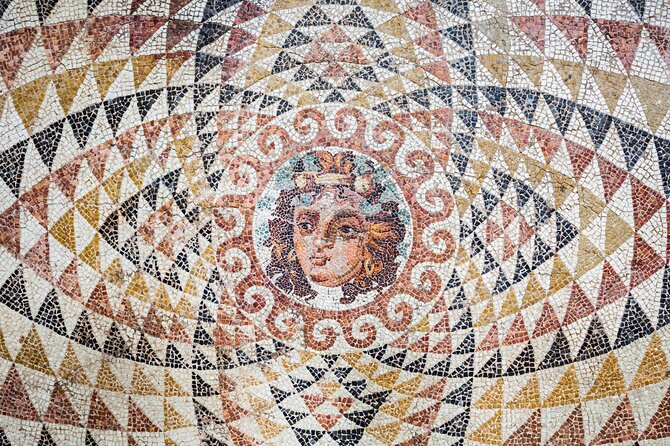
You’ll see artifacts from prehistoric periods through Roman-era pieces. Expect statues and pottery, plus items connected to the Sanctuary of Asklepios. That matters because it gives context: Corinth wasn’t just about politics and trade. It also had religious life and healing cult activity.
Why this stop is valuable: ruins tell you what structures existed. Museums tell you what people touched, used, and valued—objects of daily life and ritual.
If you’re someone who hates museum time, this may still be worth it because it’s only half an hour. You’re not stuck there for hours.





Mycenae: Lion Gate, Cyclopean Walls, and the Legendary King Connection
Then you move into Mycenae, one of Greece’s most famous archaeological sites and a UNESCO World Heritage Site. Mycenae is associated with King Agamemnon and sits right at the intersection of archaeology and myth.
You’ll have about 30 minutes at the archaeological site. In that time, the highlights are big-ticket visuals:
- Lion Gate, the monumental entrance
- Grave Circle A
- Cyclopean walls, built with massive stones
- palace and tomb remains that show how the Mycenaean world functioned
Even if you only skim, you’ll notice the architecture style: heavy, defensive stonework with a sense of power. It’s one of those places where you can feel how Bronze Age rulers wanted their presence known.
A practical consideration: the site is outdoors and involves walking on uneven ground. Good shoes matter more here than at many city attractions.
The Treasury of Atreus and the Tholos Tomb Detail You’ll Remember
Mycenae’s best “wow” structure is often the Treasury of Atreus, also known as the Tomb of Agamemnon. Expect about 10 minutes here.
This stop is short, but the structure is dramatic. The Treasury of Atreus is a tholos tomb: a monumental stone chamber with a massive lintel and a carved entrance. Even in limited time, you can understand why it’s held up as a highlight of Mycenaean engineering and artistry. If you’re into stonework and construction techniques, this is a place where your brain can keep working even when you’re moving quickly.
Worth knowing: admission fees for these sites are not included, so treat this as a gate-to-gate experience. Arrive ready to pay and get moving.
Lion Gate: The Icon You Keep Seeing in Myth and Movies
After the broader Mycenae site view, the tour gives you a specific Lion Gate stop with about 10 minutes allotted.
This is the gate with two carved lions guarding the entrance. Dating to the 13th century BC, it’s often described as the oldest surviving monumental sculpture in Europe. Whether or not you’ve seen pictures before, the scale is what hits you when you stand there—this isn’t a small museum piece. It’s a threshold to a powerful citadel.
If you care about meaning, take a second to read the interpretive info on-site. The lion relief tends to symbolize strength and power, and the site is commonly linked in popular imagination with Agamemnon and the Homeric epics.
Archaeological Museum of Ancient Mycenae: Jewelry, Frescoes, and Everyday Clues
Next up: about 30 minutes at the Archaeological Museum of Ancient Mycenae. This is the bridge between the heavy stone ruins and the human details.
You’ll see artifacts connected to Mycenaean life—gold jewelry, pottery, and fresco-like artwork. Museums like this help you picture more than fortifications. They bring you back to customs, beliefs, and what people decorated and used.
This is a good timing choice on the day because by the time you reach the museum, you’ve already walked major structures. A museum break helps you reset and absorb.
Epidaurus Museum and the Theatre: From Healing Culture to Acoustics
Epidaurus is where the pace can feel different. Mycenae is about power and walls. Epidaurus shifts toward art, ritual, and performance—plus that legendary theatre sound.
You’ll start with about 20 minutes at the Epidaurus Archaeological Museum, located within the ancient sanctuary of Asclepius. The museum is well preserved and focused on the healing center and its dramatic performances.
Look for inscriptions, architectural fragments, and statues connected to the sanctuary and theatre. The museum helps you understand that Epidaurus wasn’t only about crowds and shows. It was a place where health, religion, and art were part of the same system.
Then you’ll visit the Ancient Theatre of Epidaurus, with about 30 minutes. This theatre dates to the 4th century BC and is known for its exceptional acoustics. It was designed for performances tied to the healing rituals at the sanctuary. The seating capacity is around 14,000, so even if you don’t run an audio test, you can stand there and appreciate the engineering logic.
If you want to experience acoustics the best way, you’ll likely want to try it from the seats or positions you’re drawn to. If you’re with someone, pick one spot for a quick “check,” then move to other angles for views and photos.
Sanctuary of Asklepios: The Healing Place Ruins Feel Calm
Finally, you’ll spend about 15 minutes at the Sanctuary of Asklepios, another UNESCO World Heritage Site. This complex is tied to Asklepios, the god of medicine, and in antiquity it attracted visitors seeking physical and spiritual healing.
What you’ll notice as you walk is that the sanctuary layout supports ritual time. You may see features associated with the healing process, including the Tholos and the Abaton, where patients rested and waited for divine guidance. There are also temples and fountains that once played a role in how visitors moved through their experience.
Because your time here is shorter, treat it as a “get the big picture” walk. If you’re the type who likes slow, quiet exploration, consider whether you’ll want more time later on your own. Still, even in 15 minutes you can grasp why Epidaurus is remembered for wellness and arts tied to healing.
Palamidi Fortress and Nafplio Old Town: Your Perfect End-of-Day Reset
After all those archaeological stops, you finish with the coast and views. You’ll visit Palamidi Fortress in Nafplio for about 20 minutes.
Palamidi is a Venetian-style military fortification perched above town on a hill. It was built in the 18th century and offers panoramic views over Nafplio and the Argolic Gulf. You can also explore well-preserved walls and see the layout shaped by Venetian and Ottoman rule.
This stop is a nice counterbalance. Instead of deciphering stone carvings, you’re taking in the modern town scene and getting a sense of geography—how today’s Nafplio sits in the same region that fascinated ancient travelers.
Then you’ll get about 1 hour in Nafplion itself. It’s known for Venetian-inspired architecture, cobblestone streets, and a lively old-town feel with cafés, shops, and squares. The tour doesn’t include your meal, but lunch stops are scheduled and you can use your hour to grab something local and not rush.
A practical suggestion: if you want photos, do a quick sweep of the old town streets first, then commit to the taverna. This prevents the classic mistake of choosing a restaurant before you see the best nearby alleys.
Comfort, Pace, and Group Size: Who This Tour Is Made For
This is a strong fit if:
- you want a private day from Athens without doing the driving yourself
- you like major archaeological sites but don’t want to spend your trip figuring logistics
- you appreciate historical context from an expert driver during the travel breaks
- you’re traveling in a small group (1–4 or 5–7 works well)
It may be less ideal if:
- you want a licensed guide walking with you inside every museum and ruin
- you want long, deep stays at fewer sites rather than short, focused stops across multiple highlights
- you’re trying to keep total costs strictly low (because site tickets and meals add up)
The pacing is intentional: the tour stacks major stops, with shorter time windows at each. That’s exactly why it works for many people. It also explains why you should manage expectations: you won’t cover every corner in a single day.
The Bottom Line: Should You Book This Private Luxury Classics Tour?
If you want a one-day Athens classic that feels organized, comfortable, and built for small groups, this is a smart choice. The door-to-door pickup, air-conditioned transport, and expert driver support make a long day much more manageable. And the site lineup is excellent: Ancient Corinth and its Apollo connection, Mycenae’s Lion Gate and Treasury of Atreus, then Epidaurus with both the theatre and the Sanctuary of Asklepios, capped by Nafplio’s fortress views.
I’d book it if you’re history-minded but also practical. Bring good walking shoes, set aside money for the €56 per person site admissions, and plan to keep your museum expectations reasonable for a day trip.
FAQ
How long is the Private Luxury Tour: Ancient Corinth, Mycenae, Epidaurus, Nafplio?
The tour runs about 10 to 11 hours, including travel time between locations.
What is the price per person?
The price is $303.72 per person.
Does the tour include hotel or port pickup?
Yes. Pickup is offered from designated locations, including hotels/apartments and port options. The driver waits outside for hotel/apartment pickups and meets port arrivals with a sign.
Are entrance fees included in the price?
No. Entrance fees for archaeological sites and museums cost €56 per person and are not included.
Is lunch included in Nafplio?
Lunch costs are not included. Lunch stops are scheduled during the day.
Do I get a licensed guide inside the archaeological sites?
No. The tour includes an expert English-speaking tour driver, but it does not include a licensed guide to accompany you into archaeological sites.
What vehicle do small groups use?
Groups of 1–4 people are transported in luxurious sedan vehicles. Groups of 5–7 people use comfortable mini vans.
Is the vehicle air-conditioned and is there WiFi?
Yes. The tour includes an air-conditioned vehicle, WiFi on board, and bottled water.
How much time do you spend in Nafplio?
You’ll spend about 1 hour in Nafplio, after visiting Palamidi Fortress.
What if weather is poor or I need to cancel?
The experience requires good weather. If it’s canceled due to poor weather, you’ll be offered a different date or a full refund. Free cancellation is available up to 24 hours in advance for a full refund.