REVIEW · ROME
Private Tour of Ancient Ostia with Exclusive Guide and Skip-the-line Tickets
Book on Viator →Operated by Ostia Tours · Bookable on Viator
Skip the crowds at Ostia Antica. This private tour pairs skip-the-line tickets with an exclusive English-speaking guide, so you spend your 3 hours in the ruins instead of waiting at the gate. You’ll also get a focused route through standout places like the baths, amphitheater, and the House of Diana—without the guesswork.
I love how the guide experience turns the site from stones into a real port-city story. You’ll be looking at 2,000+ year old mosaics and frescoed walls, and the explanation makes those details feel purposeful, not random. One thing to consider: you’re walking about 2 km on uneven paths, and the tour is weather-dependent.
In This Review
- Key Highlights You’ll Care About
- Ostia Antica in About 3 Hours: What You’ll See (and Why It Works)
- A fast mental picture: Ostia’s “why”
- Skip-the-Line Entry and Mobile Tickets: The Logistics That Save Your Trip
- When private transport matters
- Step-by-Step Through the Ruins: From City Layout to Everyday Life
- Stop 1: Parco Archeologico di Ostia Antica
- The baths: more than a washroom
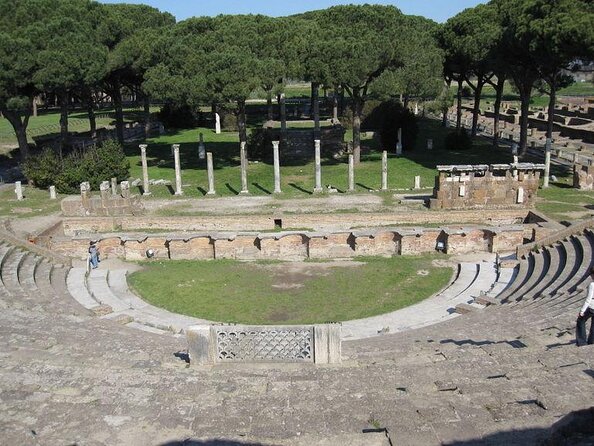
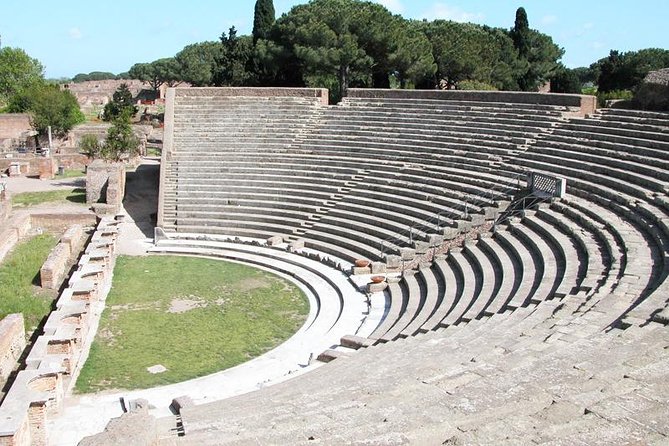
- The amphitheater: public energy in stone
- The House of Diana: mosaics and the feel of home
- What the Best Guides Do Here (From Valentina to Paola to Laura)
- Why the Skip-the-line + Private Format Is Good Value (Even at $320.49)
- For families and mixed groups
- Transportation reality check
- Practical Tips So Your Ostia Tour Feels Easy
- Should You Book This Private Ostia Antica Tour?
- FAQ
- What’s the duration of the Private Tour of Ancient Ostia?
- Are skip-the-line tickets included?
- Is admission included?
- How much walking is involved?
- Is the tour offered in English?
- What’s the meeting point?
- Is private transportation included?
- Can children participate?
- What is the cancellation policy?
- Is confirmation provided after booking?
Key Highlights You’ll Care About
- Skip-the-line entry is guaranteed, so your time stays on the archaeology instead of the queue.
- Mosaics and frescoes make Ostia Antica feel closer and more human than a lot of ruin sites.
- A guided route through major “set pieces” like the baths and amphitheater helps you avoid wandering.
- A private group format means your guide can move at your pace and tailor explanations.
- Roughly 3 hours with breaks keeps the experience realistic, even if you’re not a marathon-walker.
- Ostia’s port-city layout (and how it connects to Rome’s protection and trade) gives context fast.
Ostia Antica in About 3 Hours: What You’ll See (and Why It Works)
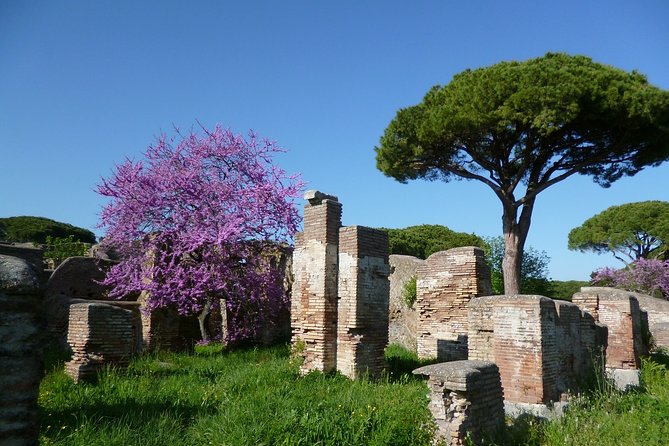
Ostia Antica is one of Rome’s best “thinking ruins.” It’s not just walls and columns. It’s a working city—built, expanded, and adapted—set up to handle the flow of goods and people into Rome. And because it’s only a few kilometers from the modern area, it’s also a practical day trip.
In this tour, your guide keeps things tight: you’re there for about 3 hours, with breaks to sit and catch your breath. That timing matters. Ostia Antica is large, and if you go in without a plan, you can end up seeing a bit of everything and understanding very little. Here, the focus stays on the places that best explain daily life in a Roman port city.
You’ll move through key public areas and impressive interiors, including the baths, the amphitheater, and the House of Diana. The point isn’t to “collect highlights.” The point is to see how people lived, worked, and gathered—then connect those spaces to the city’s history and layout.
You can also read our reviews of more tours and experiences in Rome.


A fast mental picture: Ostia’s “why”
Ostia began as a settlement associated with Rome’s protection of the Tiber and the surrounding entry points. The site traces back to a period when a squared military post (castrum) formed, with a planned street grid built around cardus and decumanus—Roman for the main north-south and east-west axes. Later, additional walls expanded the urban territory to something on the order of 50 hectares, accessed through major gates like Porta Romana, Porta Laurentina, and Porta Marina.
Your guide can turn those terms into something you can see. You’re not memorizing Latin street names. You’re getting a sense of how a defensive staging area became a city, and how that city grew into a major port life-support system for Rome.
Skip-the-Line Entry and Mobile Tickets: The Logistics That Save Your Trip

This is a private tour, and the biggest time-saver is right upfront: guaranteed skip-the-line tickets. In Rome, lines can eat a day. Here, the whole point is to protect your scheduled time so you don’t lose half your visit to slow moving entry points.
You’ll also use a mobile ticket. That’s convenient because you don’t need to hunt down paperwork at the last second. The confirmation happens at booking time, and the activity runs from a set meeting location in Lido di Ostia.
Here’s the practical catch: the tour does not include private transportation. So you’ll want to plan your own way to the meeting point at Viale dei Romagnoli, Lido di Ostia RM. The good news is that it’s described as near public transportation, which usually means you won’t be stuck hunting for a taxi at the worst possible moment.
When private transport matters
If you want to avoid the train routine entirely, it can help to ask the operator whether car transportation can be arranged. Past visitors report that Ostia Tours can arrange transport by car if you request it. That doesn’t replace the fact that it’s not included by default, but it’s a useful option if your group includes kids, slower walkers, or anyone who just wants simplicity.
Step-by-Step Through the Ruins: From City Layout to Everyday Life






Stop 1: Parco Archeologico di Ostia Antica
This entire experience is centered on the archaeological park, so your first job is just to show up ready for a real walking tour. You’re looking at around 2 km of walking, with breaks built in so you can sit and take in what you’re seeing.
Ostia Antica feels a bit like Pompeii’s cousin—still Roman, still dramatic, but with a different energy. Pompeii is famous for a catastrophe. Ostia gives you a broader sense of everyday rhythm: streets, public buildings, and domestic spaces where people lived as a community serving Rome’s needs.
Your guide starts by grounding you. The best tours make you understand what you’re looking at before you look too long. You’ll learn how the port city relates to Rome’s security and trade, why walls and gates mattered, and how the early layout shaped the later city.
Then you move into major sites that reflect different aspects of daily life:
- Public gathering and entertainment (including the amphitheater)
- Hygiene and social routine (the baths)
- Domestic life and status markers (like the House of Diana)
Even if you’ve seen ruins before, this is where you’ll likely appreciate the value of a guided route. Without one, it’s easy to treat mosaics and frescoes as just “pretty stuff.” With a guide, they connect to rooms, purpose, and status.
The baths: more than a washroom
Roman baths weren’t only about cleanliness. They were social spaces. Even if you aren’t an architecture superfan, you’ll probably find it easier to picture the daily schedule here: people meeting, relaxing, and moving through different areas.
Because your time is limited, a good guide helps you focus on what matters: the scale, the layout, and how the bath complex fits into a city built to serve crowds connected to the port economy.
The amphitheater: public energy in stone
An amphitheater is a built-in story engine. You can stand where audiences once sat and get a sense of how public entertainment structured community life. Your guide can also help you interpret the ruins’ shape and function, which makes the space more legible instead of just impressive.
If you’re traveling with kids, this part tends to work well because it’s visual and easy to imagine. Tours with parents in mind often keep pacing thoughtful, and guides often adjust the flow to match what the group can handle.
The House of Diana: mosaics and the feel of home
Domestic sites can sometimes feel like “fancier walls.” The House of Diana works better because you can connect decoration to daily life. You’ll see mosaic floors and frescoed walls, and the guide’s job is to show you why those details mattered—how they signaled taste, wealth, and identity.
When you’re looking at over 2,000 years old artwork, the temptation is to stare. A good guide helps you look with purpose: where the mosaic sits, what the room likely functioned as, and how the decorative choices would have read in the Roman world.
What the Best Guides Do Here (From Valentina to Paola to Laura)
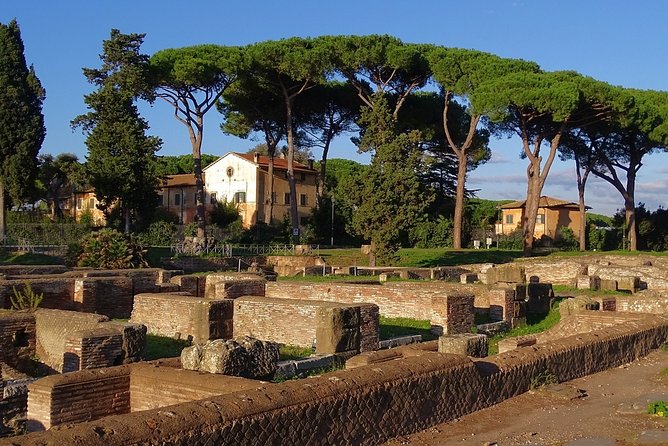
This tour stands or falls on the guide. The operator emphasizes a local guide, and the strongest experiences tie history to what you’re seeing in front of you.
In past tours, guides such as Valentina, Martha, Paola, and Laura have made a clear difference:
- Valentina’s tours have been praised for being passionate, with an approachable style that keeps the history interesting instead of academic.
- Martha has been described as a parent herself, which often means she knows how to pace information so kids don’t melt down mid-ruin.
- Paola is noted as an archaeologist and creates a sense of what ancient life may have felt like, not just a list of facts.
- Laura has been singled out for strong enthusiasm and a way of making the site feel like you’re walking through it.
Even if you don’t get the exact same guide, the pattern is consistent: you’re not there for a lecture. You’re there for a guided route that translates the site’s layout—streets, buildings, and decorative details—into a story you can follow.
Why the Skip-the-line + Private Format Is Good Value (Even at $320.49)
At $320.49 per person, this isn’t a budget tour. But it also isn’t priced like a generic group shuffle. You’re paying for two concrete advantages:
- Time protection through guaranteed skip-the-line entry.
- A private guide experience for your group, with room for questions and pacing.
Value is often about opportunity cost. If you’re on a tight Rome schedule, every minute you save on line time lets you spend more time on the ruins and less time stuck in a line with your lunch plans evaporating.
Also, Ostia Antica is big enough that a private guide can help you get the most from limited hours. You’re not just walking; you’re walking with a plan.
For families and mixed groups
If you’re traveling with kids, the private format is particularly helpful. One review highlighted how the guide balanced the information level so children (ages around 5 and 6) could stay engaged. If your group includes adults with different interests—history buffs and casual explorers—private pacing tends to work better than a one-size-fits-all group tour.
Transportation reality check
Because private transportation isn’t included, your total cost depends on how you get there. If you’re already planning to take public transit, the tour price becomes easier to justify. If you need a car ride, budget a bit more—or ask the operator about car transport options if that’s important for your group.
Practical Tips So Your Ostia Tour Feels Easy
Here’s how to set yourself up so the 3-hour experience doesn’t feel like a chore.
- Wear comfortable shoes. The site involves about 2 km of walking on archaeological terrain, and you’ll want grip and support.
- Plan for breaks. The itinerary includes pauses to sit and enjoy the site. Still, pace yourself like you’re on a real walk.
- Check the weather. The experience requires good weather, and if it gets canceled due to poor conditions, you’re offered a different date or a full refund.
- Bring patience. Even with skip-the-line entry, you’re visiting a working archaeological site. Time gets spent where it matters: on the places you came to see.
If you’re visiting in high season, the ruins can feel less stressful than you might expect because the tour focus is structured. One account even described Ostia as large and not too crowded during their visit.
Should You Book This Private Ostia Antica Tour?
Book it if you want a time-smart way to see the best parts of Ostia Antica with a guide who can connect buildings to the story of Roman life. The skip-the-line advantage and the private format make sense if you care about maximizing your limited time and want explanations that make mosaics, baths, and domestic spaces feel relevant.
Skip it or consider alternatives if you’re truly comfortable self-guiding and you don’t need help turning ruins into context. Also consider your comfort with walking. With about 2 km of walking and weather dependence, it’s not the best fit if you want minimal walking or you’re traveling in conditions where you may have to cancel last minute.
If you like your travel days planned—but not rigid—this tour fits well. You’ll finish with a clearer sense of how Rome’s port city worked, why its streets and gates mattered, and how the artwork survived to tell the story anyway.
FAQ
What’s the duration of the Private Tour of Ancient Ostia?
It lasts about 3 hours.
Are skip-the-line tickets included?
Yes. The tour includes guaranteed skip-the-line tickets.
Is admission included?
Yes. Admission is included with the tour.
How much walking is involved?
About 2 km of walking, with breaks to sit and enjoy the site.
Is the tour offered in English?
Yes, it’s offered in English.
What’s the meeting point?
The tour starts at Viale dei Romagnoli, Lido di Ostia RM, Italy, and it ends back at the meeting point.
Is private transportation included?
No, private transportation isn’t included.
Can children participate?
Most travelers can participate, and children must be accompanied by an adult.
What is the cancellation policy?
You can cancel for a full refund up to 24 hours in advance. If it’s canceled due to poor weather, you’ll be offered a different date or a full refund.
Is confirmation provided after booking?
Yes, you’ll receive confirmation at the time of booking.