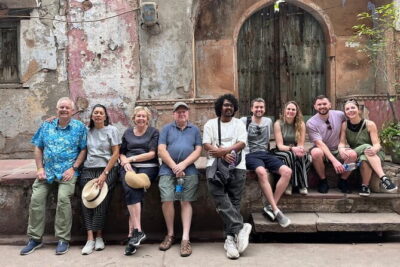
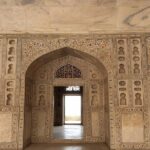
Mughal Delhi makes perfect sense on foot. Humayun’s Tomb Heritage Walk turns a UNESCO stop into a clear story about Mughal architecture and the people behind it, guided by heritage conservation architect Smita Babar. I like that you get more than photo spots; you learn how the site works and why it was built the way it was.
The two best parts for me are the expert-led conservation lens and the tight, structured route. You start at Isa Khan’s Tomb (with its nearby mosque) and then move to the Arab ki Sarai Gateway, so the walk doesn’t treat Humayun’s Tomb like an isolated monument. Finally, you spend focused time at Humayun’s Tomb itself, with talk on architectural ideas that influenced later Mughal building—including the design pathway toward the Taj Mahal.
One consideration: this experience is weather-dependent. If conditions are poor, you’ll be offered a different date or a full refund, and on hot or rainy days you’ll feel the pressure to keep moving.
In This Review
- Key highlights you’ll remember
- Why Humayun’s Tomb needs a guide, not just a camera
- Smita Babar’s heritage walk style (and what that means for you)
- Where you’ll start
- When you can go
- Stop 1: Isa Khan’s Tomb and the mosque next door
- The practical value of this first stop
- Stop 2: Arab ki Sarai Gateway and caravanserai life
- Why this stop is worth the short time
- Stop 3: Humayun’s Tomb and the design ideas behind it
- What you should try to do during the hour
- Price and logistics: is $38 good value?
- What’s not included
- Group size and pacing
- Practical tips so your visit feels smooth
- Who should book this Humayun’s Tomb heritage walk
- Should you book Humayun’s Tomb Heritage Walk?
- FAQ
- How long is the Humayun’s Tomb Heritage Walk?
- Where does the tour start and end?
- What stops are included in the tour?
- Is admission included?
- What is the group size?
- What is the price?
- Who is the guide?
- FAQ
- When is the tour available?
- What happens if the weather is poor?
- Is there free cancellation?
- What’s included besides the guide?
- What’s not included?
Key highlights you’ll remember
- Smita Babar’s heritage conservation perspective (including experience with INTACH and Harvard University) gives the architecture real context
- Three smart stops in about 2–3 hours: Isa Khan’s Tomb, Arab ki Sarai Gateway, then Humayun’s Tomb
- Admission tickets are included for each stop, so you’re not hunting for separate entry prices
- Small group size (max 10 travelers) makes it easier to ask questions and get answers that stay on-topic
- Humayun’s Tomb as a design landmark, with specific discussion of innovations that later influenced major Mughal work
Why Humayun’s Tomb needs a guide, not just a camera
Humayun’s Tomb is a UNESCO World Heritage Site in New Delhi, and it’s famous for a reason: it’s not only pretty, it’s architectural thinking made stone. The walk is built around understanding that thinking. Instead of treating the monument like a wall you stand in front of, you’re guided to connect form, function, and meaning.
You’ll also get the practical benefit of a guide who can explain what you’re looking at. Mughal tomb complexes can feel confusing at first glance—domes here, arches there, courtyards and garden lines pulling your attention in different directions. A conservation-minded explanation helps you organize the site in your head so the details stop feeling random.
And since the tour is framed as heritage conservation, you’ll hear how preservation and design ideas relate. That matters because buildings this old don’t just get appreciated; they have to be protected, maintained, and interpreted—otherwise they turn into set dressing.
You can also read our reviews of more tours and experiences in New Delhi.



Smita Babar’s heritage walk style (and what that means for you)
This is an expert-led tour with Smita Babar, a heritage conservation architect with a passion for sharing knowledge. The tour’s approach is interactive storytelling backed by architecture and historical context, not just a list of dates.
You also get a nice advantage from the group size: the tour has a maximum of 10 travelers. That usually translates into less waiting, more Q&A, and explanations that can respond to what you’re actually curious about.
Where you’ll start
You meet at the Humayun’s Tomb Ticket Counter & Entrance at H6VV+6QQ, Nizamuddin, Nizamuddin East, New Delhi, Delhi 110013, India. The tour ends back at the meeting point, so you’re not left stranded with a half-planned route home.
When you can go
The listed opening windows (for Mon–Fri) include these blocks: 8:00 AM–10:30 AM, 11:00 AM–1:30 PM, 2:00 PM–4:30 PM, and 5:00 PM–7:30 PM. You’ll want to pick a slot that matches daylight and comfort—especially since the experience needs good weather.
Stop 1: Isa Khan’s Tomb and the mosque next door
Your first stop is Isa Khan’s Tomb, where the guide sets the tone for the whole visit. You’ll get architecture and history context before you enter the main Humayun’s Tomb area, including discussion of the tomb and the mosque next to it.
Even though the stop is only about 20 minutes, it’s a smart use of time. It helps you recognize patterns you’ll see again later: how Mughal-era and earlier Delhi styles communicate power and belief through layout, symmetry, and materials. Think of it as your visual “warm-up.” You’ll be better at noticing what’s similar and what’s different when you move on.




The practical value of this first stop
If you’ve ever visited a major site and felt like you learned the story only after your best photos were already taken, this format helps. You get meaning up front, so your viewing time turns into understanding, not just sightseeing.
Stop 2: Arab ki Sarai Gateway and caravanserai life
Next you head to the Mughal-era Arab ki Sarai Gateway for about 15 minutes. This stop shifts the lens from individual monuments to the life around them—specifically the caravanserai idea and what medieval travel and commerce looked like.
A gateway like this is easy to overlook if you treat it like background scenery. In the walk, it becomes evidence of how people moved through Delhi and how rest, trade, and hospitality were built into the city’s systems. You’ll hear how the gateway connects to the larger story of routes, travelers, and the daily realities that shaped the region.
Why this stop is worth the short time
Architecture tours can sometimes focus so hard on tombs that they forget the living world. This one doesn’t. It gives you a reminder that these sites didn’t exist in isolation—they were part of networks and routines.
Stop 3: Humayun’s Tomb and the design ideas behind it
Your main moment is Humayun’s Tomb, with about 1 hour here. The guide spends time helping you look closely at the tomb and understand why it’s considered influential. You’ll hear that Humayun’s Tomb inspired architectural innovations, including ideas that later fed into Taj Mahal construction.
The focus isn’t just on the facade. The walk is designed to pull your attention to the monument’s logic—how the space is composed and how features work together to create a sense of order and monumentality. When someone trained in heritage conservation explains what matters, you notice things like how sight lines, structural forms, and spatial layout guide your movement.
What you should try to do during the hour
- Look for how the complex is organized before you pick where to stand for photos.
- Pay attention to any “why” explanations, not only “what is it.”
- Treat the hour as guided orientation, then keep seeing after the tour—this site rewards follow-up glances.
If you love architecture and historical connections, this is the stop that delivers.
Price and logistics: is $38 good value?
At $38 for a 2 to 3 hour walking experience, the headline value depends on what you’re paying for. Here’s the practical breakdown: the tour includes admission tickets for Isa Khan’s Tomb, the Arab ki Sarai Gateway stop, and Humayun’s Tomb itself (per the listed stops), plus travel tips for Delhi.
That matters because entry fees can make “cheap” tours less cheap once you add them. In this case, you’re paying mainly for the expert-led interpretation and the guided time, not for separate ticket chasing.
What’s not included
The listing notes that all fees and taxes are not included. So in real life, your total might be slightly higher than the base price depending on what applies at booking.
Group size and pacing
With a max of 10 travelers, you’re less likely to feel like you’re stuck in a long line of people. The route is compact: 20 minutes + 15 minutes + 1 hour, which keeps the walk moving. That’s great for a focused visit, but if you want to linger for personal exploration beyond the guide’s timing, you may want to plan extra time before or after.
Practical tips so your visit feels smooth
The tour itself is straightforward—meet at the ticket counter entrance, follow the stops, return to the same point. You’ll also be near public transportation, which is helpful in Delhi where travel time can swing depending on the day.
Here are a few practical moves that make sense for this specific kind of heritage walk:
Go with good shoes. You’ll be on-site moving through areas where you want stable footing.
Pick the right time window. Since the experience requires good weather, choose a slot when conditions look dependable. If the day is hot, you’ll feel it more while moving between stops.
Bring a simple plan for photos. You’ll get guided viewing time, but you can still take your own shots afterward. The best strategy is to take one “memory photo” early, then focus on learning, then take the closer shots once you understand what to look for.
Ask about conservation, not just history. The guide’s background is conservation architect, so lean into that angle. Even one or two questions can turn a nice walk into a learning session you carry home.
Who should book this Humayun’s Tomb heritage walk
This tour is a good fit if you like:
- Mughal architecture and want specific explanations, not just general admiration
- UNESCO sites with context, especially when conservation is part of the story
- A small group format where questions don’t get lost
- A structured route that covers more than the main tomb
It’s also ideal if you’re visiting Nizamuddin and want your time to feel intentional. The itinerary pulls in nearby architectural storytelling through Isa Khan’s Tomb and the Arab ki Sarai Gateway, so you’re not limiting your day to one landmark.
If your travel style is mostly about wandering freely and you hate fixed timings, the 2–3 hour structure may feel limiting. But if you want the site to click, a guided route is usually the fastest way to get there.
Should you book Humayun’s Tomb Heritage Walk?
Yes, consider booking if you want your visit to Humayun’s Tomb to make sense. The biggest reason is the combination of expert guidance from Smita Babar and a route that connects monument design to surrounding Mughal-era context, including the nearby Isa Khan’s Tomb area and the Arab ki Sarai Gateway.
Be mindful of the weather requirement, and remember that the total you pay may be affected by fees and taxes not included in the base price.
If you’re the type of traveler who likes learning while you walk—and you want the architecture to feel explainable—this is a solid use of time in Delhi.
FAQ
How long is the Humayun’s Tomb Heritage Walk?
The tour lasts about 2 to 3 hours.
Where does the tour start and end?
It starts at the Humayun’s Tomb Ticket Counter & Entrance (H6VV+6QQ, Nizamuddin area) and ends back at the meeting point.
What stops are included in the tour?
The walk includes Isa Khan’s Tomb, the Mughal-era Arab ki Sarai Gateway, and Humayun’s Tomb.
Is admission included?
Yes. Admission tickets are included for each stop listed in the itinerary.
What is the group size?
The tour has a maximum of 10 travelers.
What is the price?
The price is $38.
Who is the guide?
The tour is led by Smita Babar, a heritage conservation architect with experience through INTACH and Harvard University.
FAQ
When is the tour available?
The listed opening hours run Monday to Friday with multiple time slots: 8:00 AM–10:30 AM, 11:00 AM–1:30 PM, 2:00 PM–4:30 PM, and 5:00 PM–7:30 PM (for the dates shown on the activity details).
What happens if the weather is poor?
The experience requires good weather. If it’s canceled due to poor weather, you’ll be offered a different date or a full refund.
Is there free cancellation?
Yes, you can cancel up to 24 hours in advance for a full refund.
What’s included besides the guide?
Included items are tips on travelling in Delhi.
What’s not included?
All fees and taxes are not included.