REVIEW · ROME
Rome: Lesser Known Ancient Rome Walking Tour
Book on GetYourGuide →Operated by City Stories Tours · Bookable on GetYourGuide
Rome has a way of hiding its best stuff in plain sight. This walk strings together Largo di Torre Argentina, Capitoline Hill, and the Circus Maximus area with a focus on the parts most people skip. I really like that you get an expert historian guide who turns scattered ruins into real scenes—trade, daily life, myth—without feeling like a textbook.
Two highlights for me: seeing the Mouth of Truth story tied to the spot you’re standing in, and getting close to remains that show how Romans lived beyond the big-ticket landmarks. One thing to weigh: it’s a rain-or-shine walk, so you’ll want proper shoes and a water plan for warm days.
In This Review
- Key Points Worth Your Time
- Why This Walk Beats the Usual Rome Stops
- Meeting Points and What 2–2.5 Hours Really Feels Like
- Largo di Torre Argentina: Temples You Can See, History You Can’t Ignore
- Via delle Botteghe Oscure and Buried Roman Layers
- Capitoline Hill: The Religious and Political Heart
- Insula dell’Ara Coeli: Seeing Rome Through Ordinary Apartments
- Theatre of Marcellus and Forum Boarium: Public Life in Stone
- Mouth of Truth and the Roman Weirdness That Feels Real
- Cloaca Maxima Energy: Old Arches and Rome’s Sewer Superpower
- Palatine Hill and Circus Maximus: Birthplace of Rome Meets Chariot-Race Imagination
- The Guide Makes It: Expert Historian Storytelling (Ben Gets Special Praise)
- Price and Value: What $28 Buys You in Real Time
- What to Bring (So You Don’t Think About Logistics While You Learn)
- Who This Tour Suits Best
- Should You Book This Lesser-Known Ancient Rome Walk?
- FAQ
- How long is the Rome Lesser Known Ancient Rome Walking Tour?
- Where does the tour start?
- What are the group sizes for this tour?
- Is the tour guided, and what language is it in?
- Does the tour run in bad weather?
- Are food and drinks included?
- What should I bring?
- Is the tour wheelchair accessible?
- Can I cancel for a refund?
Key Points Worth Your Time
- Small groups (max 15) keep the pace human and questions easy.
- You skip the obvious crowd magnets and spend time on side streets and lesser-seen ruins.
- Every stop has a job in the story, from Julius Caesar’s shadow to the oldest-sewer-type engineering in Rome.
- A rare look at ordinary life, including a surviving example of an ancient Roman apartment.
- The Circus Maximus finish lands you in a massive, unforgettable Roman setting.
- Guides matter here: the tour’s approach is built around clear storytelling (including Ben, praised for tying remnants to context).
Why This Walk Beats the Usual Rome Stops
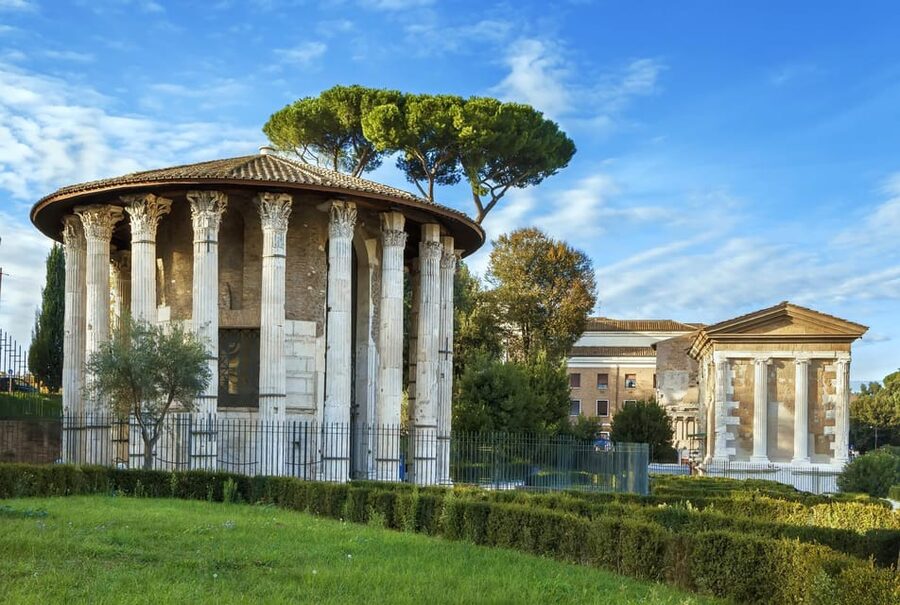
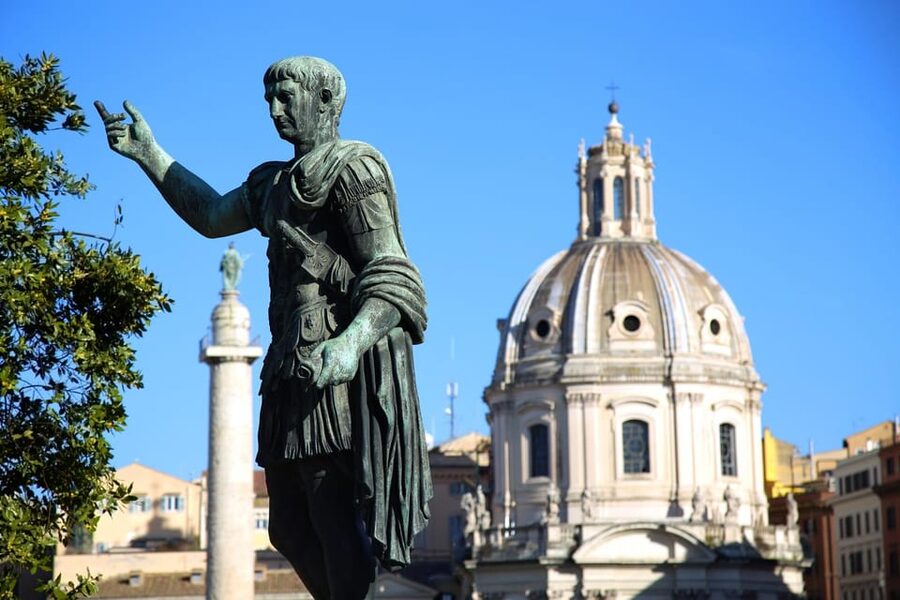
If you’ve already seen the Colosseum and Roman Forum from the outside, you may feel like Ancient Rome is starting to blur together. This tour slows that down on purpose. Instead of chasing the most photographed monuments, it guides you through smaller sites that still feel powerful because you can actually read the city’s layers.
What I like most is the balance. You get big themes—religion, politics, public entertainment, infrastructure—but they’re grounded in specific corners of Rome. You stand at places tied to famous moments and then you’re shown what those places meant for everyday people too. That shift makes the past feel less like a postcard and more like a real city.
You can also read our reviews of more tours and experiences in Rome.
Meeting Points and What 2–2.5 Hours Really Feels Like
You can start at Largo di Torre Argentina or at Piazza Venezia (depending on the option). Either way, plan for a concentrated walk that moves at a steady pace. The duration is listed as 2 to 2.5 hours, with short guided segments at each main stop.
The group size stays tight: up to 15 people for the standard tour. There’s also a private option that can run up to 25 people. In practice, smaller groups are what allow the guide to explain quickly, then check in, then keep you moving without turning the walk into a slow shuffle.
Practical note: the tour runs rain or shine. Bring weather protection. In summer, you’ll want water—the tour recommends a water bottle, and it notes that fountains are available for refills. Also bring comfortable shoes because this is Rome’s “keep walking” reality, not museum-steps.
Largo di Torre Argentina: Temples You Can See, History You Can’t Ignore
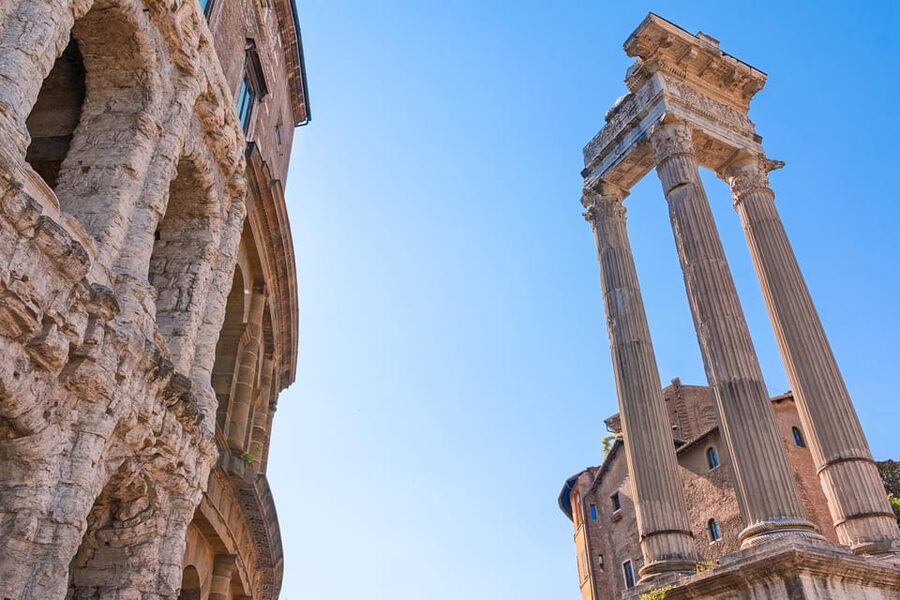
The tour often begins at Largo di Torre Argentina, a site that feels almost unreal because ancient remains sit right in the middle of the modern city. This area is tied to four ancient temples hidden in plain sight, dating back more than 2,000 years.
Here’s what makes this first segment work: it’s not just about ruins as objects. The guide sets up why the spot mattered as a sacred hub and then connects it to one of Rome’s most dramatic political moments—the assassination of Julius Caesar. If you only know Caesar as a name from school, this stop helps the story land in a physical place.
You also get a quick orientation jumpstart. The guide’s explanations give you a way to “place” what you’re seeing before the tour moves on to smaller, less obvious sites.
Via delle Botteghe Oscure and Buried Roman Layers
After Torre Argentina, you head toward Via delle Botteghe Oscure. This is the kind of street that can look ordinary at a glance—until the guide shows you what’s under and around it.
At this point in the tour, you’ll encounter ruins tied to an ancient Roman structure that was part of a larger complex and is now buried beneath the streets. The point isn’t to pretend you’re standing in a fully intact building. It’s to learn how Rome repeatedly rebuilt itself, layer by layer, and how archaeology can reveal those hidden phases even when the city keeps moving.
If you like the idea of history being visible in fragments—stone, foundations, hints in the street—this part is a strong match.
Capitoline Hill: The Religious and Political Heart
Next comes Capitoline Hill, described as the most revered of Rome’s seven hills. This is the stage where the tour makes a big promise: you’ll feel the power of Rome’s past by walking the hill that served as a symbolic and religious center of the empire.
This stop is ideal if you want your Ancient Rome to have structure. Instead of hopping between random sites, you get a sense of how geography mattered. When your guide explains the religious and political weight of Capitoline Hill, it also helps you understand why other sites in the walk are positioned the way they are.
It’s also one of those places where the view and the atmosphere matter. Even if you don’t linger long at each spot, the setting helps you “read” the city as a map of Roman priorities.
Insula dell’Ara Coeli: Seeing Rome Through Ordinary Apartments
Most Roman ruins focus on temples, forums, or grand public buildings. Here, the tour shifts to something rarer: Insula dell’Ara Coeli, including mention of one of the few surviving examples of an ancient Roman apartment.
That matters, because it changes your mental picture of who lived in Rome. You stop thinking only about emperors, senators, and generals. You start thinking about daily rooms, shared spaces, and what it might have felt like to live in a dense city where buildings weren’t just monuments—they were homes.
If you like “human scale” history, this stop is one of the best on the route. You come away with a clearer picture of how Romans lived when nobody was watching from a museum crowd.
Theatre of Marcellus and Forum Boarium: Public Life in Stone
The tour continues to the Theatre of Marcellus, one of Rome’s impressive ancient theaters. The guide focuses on what the space was built to do: host performances that would have drawn people into the rhythm of Roman public life.
Then you move to Forum Boarium, another stop that’s framed around Roman life and architecture. The tour description ties in rituals, stories, and the lasting beauty of Roman building traditions. Even if you’re not a theater-nerd or an architecture-nerd, the storytelling approach is designed to help you see beyond the word ruins.
This stretch also gives you a good contrast: entertainment and public gathering on one side, then the cultural and architectural context on the other.
Mouth of Truth and the Roman Weirdness That Feels Real
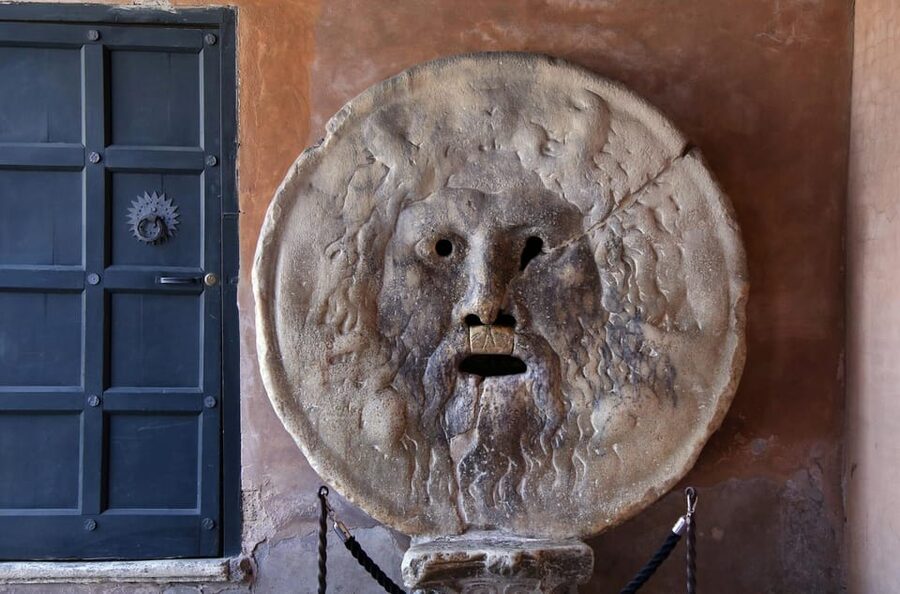
You’ll hit Bocca della Verità, the Mouth of Truth, where the famous legend says the stone mask will bite off hands of those who tell lies. It’s the kind of story that travels well—fun, memorable, and easy to picture in a Roman setting.
But what makes this tour better than a standalone photo stop is the way it’s placed into the larger narrative of the walk. The guide doesn’t treat Mouth of Truth as a random quirky landmark. Instead, you get it as part of how Romans created meaningful public spaces where myth and everyday behavior mixed.
This is one of those stops where you can’t help but pause. Not for long, maybe. But long enough to let the story stick.
Cloaca Maxima Energy: Old Arches and Rome’s Sewer Superpower
The route also includes a unique archway and the outdoor remains of what’s described as the world’s oldest sewers. This is one of my favorite categories of Roman history: the stuff that doesn’t look glamorous on a first glance, yet shapes how a city actually functions.
When your guide connects it to Roman engineering, the city starts to feel less like ruins in a museum and more like a machine that worked. It’s also a reminder that “great empires” weren’t only built with speeches and battles. They were built with infrastructure.
If you like learning how Romans solved practical problems, this is where the tour delivers.
Palatine Hill and Circus Maximus: Birthplace of Rome Meets Chariot-Race Imagination
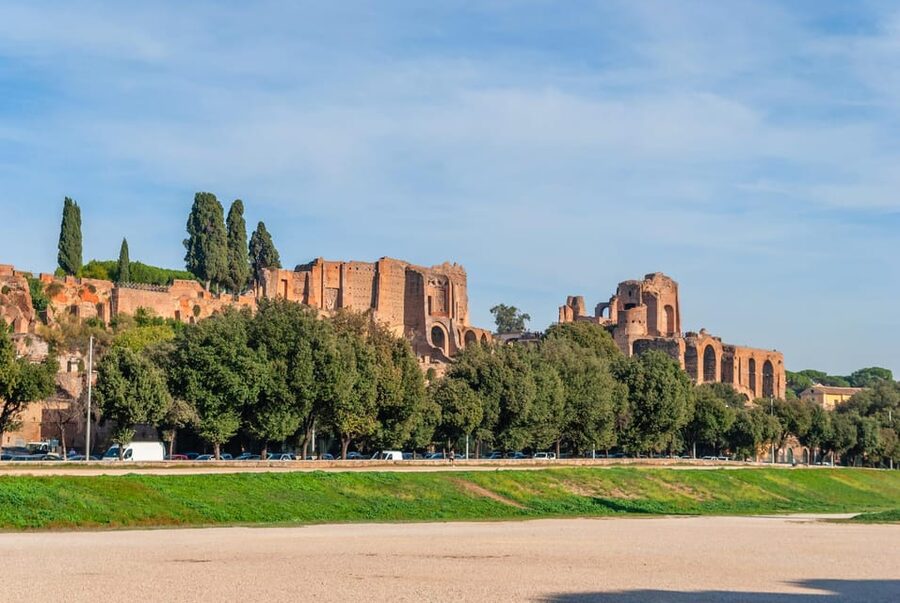
Toward the end, you reach Palatine Hill, described as one of the most meaningful, ancient parts of the city. Then the tour finishes at Circus Maximus, introduced as the sprawling remains of the largest stadium ever built.
You also get the mythology thread tied to the birthplace of Rome itself near this area of the walk. The guide invites you to imagine the roars of ancient chariot races and large gatherings that would have filled the space.
This ending lands well because it combines two things at once: myth and crowds, private hill life and public spectacle. Even if you only have a short window to take it in, the size and the setting make it hard to forget.
And since the tour ends back at the meeting point area (with the finish at Circus Maximus), you’re not left wondering how to get oriented. The tour loop gives you a clear “done” moment.
The Guide Makes It: Expert Historian Storytelling (Ben Gets Special Praise)
This is a guided walk with an expert historian guide in English. The impact isn’t just academic. It’s about how the guide tells the story so you can connect stone remains to cause, effect, and daily life.
One of the most praised parts from past guests is the guide named Ben. People highlighted his genuine knowledge of the ancient past and his ability to put remnants into context using storytelling, while staying grounded in the way classicists understand Roman evidence. Another common theme in feedback is that the tour experience reads less like what you’d get from a book and more like the city itself is talking.
Also worth noting: the tour works even when the weather turns. A top review praised the guide for delivering a very nice experience despite rain. That’s a good sign because Rome weather can change fast, and you don’t want a tour that falls apart when it pours.
Price and Value: What $28 Buys You in Real Time
At $28 per person for 2 to 2.5 hours, this tour isn’t competing with long, full-day museum tickets. Instead, it gives you something Rome does best: walking between meaningful places and getting interpretation while you’re there.
You also get:
- A small group capped at 15, which helps with pace and questions.
- Short guided stops that keep the explanations focused rather than stretched out.
- A route designed to show you sites many people miss, without needing extra entry tickets listed here.
You’ll still spend your own time and energy walking, so the value is highest if you’re ready to move and listen. If you’re the type who wants to linger 30 minutes at every ruin, you might feel rushed. But if you want a compact, well-explained route that changes how you see Ancient Rome, the price-to-time ratio feels fair.
What to Bring (So You Don’t Think About Logistics While You Learn)
Bring the basics:
- Comfortable shoes
- Camera
- Sunscreen
- Water
In summer, the tour specifically recommends bringing water bottles, with fountains available for refills. And because it runs rain or shine, pack a light layer or rain protection even if the morning looks fine.
The tour notes an optional break stop for food and drinks, but it’s not included. So if you want a coffee or snack, plan to pay for it yourself during that moment.
Who This Tour Suits Best
This tour is a strong fit if you:
- Already know the headline sites and want the less crowded Ancient Rome.
- Like history that includes everyday life, not only emperors and battles.
- Enjoy short stops with clear explanations that help you connect fragments into one story.
- Want a guide who can keep the walk lively even when the weather isn’t.
It may be less ideal if you:
- Want lots of free time at each monument.
- Prefer to do Ancient Rome at a slow museum pace.
Should You Book This Lesser-Known Ancient Rome Walk?
I’d book it if you want Ancient Rome to feel more personal and less repetitive. The route has a smart arc: begin with Largo di Torre Argentina, move through living-city layers and sacred sites, pick up myth at Mouth of Truth, then end with scale at Circus Maximus. That mix is exactly what makes a walking tour worth the money.
Book it with confidence if you’re comfortable walking for a couple hours and you’re open to a guide-led pace. If you’re traveling in a group and want the same structure without blending into a larger crowd, there’s also a private group option.
If you want Rome’s best stories told where they happened, not just where they’re photographed, this is a solid choice.
FAQ
How long is the Rome Lesser Known Ancient Rome Walking Tour?
It lasts 2 to 2.5 hours.
Where does the tour start?
Depending on the option booked, you can start at Largo di Torre Argentina or Piazza Venezia.
What are the group sizes for this tour?
The group tour is limited to max 15 people. There is also a private tour option with up to 25 people.
Is the tour guided, and what language is it in?
Yes, it has a live guide and is offered in English.
Does the tour run in bad weather?
Yes, it runs rain or shine, so bring appropriate weather protection.
Are food and drinks included?
Food and drinks are not included. An optional break stop is offered.
What should I bring?
Bring comfortable shoes, camera, sunscreen, and water.
Is the tour wheelchair accessible?
Yes, it’s listed as wheelchair accessible.
Can I cancel for a refund?
Yes. It offers free cancellation up to 24 hours in advance for a full refund.