REVIEW · ROME
Rome Private Golf Cart tour of Catacomb and Ancient Appian Way
Book on Viator →Operated by Rome in golf cart · Bookable on Viator
Hop into a Rome golf cart and time flies. I love the walking-skip convenience, because you cover major ancient sights without wearing down your legs before the real classics. I also love the live guide commentary—you can ask questions in real time instead of shouting over crowds.
This is a private setup, so the pace feels under control and the stops line up in a smart order: big viewpoints first, then the ruins and the famous cemetery city. You’ll roll past landmarks like the Circus Maximus area and the Palatine Hill viewpoint, then head up to the Aventine Hill viewpoints before going deeper into the Roman world.
One practical consideration: the stop at the Pyramid of Caius Cestius does not include admission, so you may want to budget a little extra right when you get there.
In This Review
- Key highlights to know before you go
- The core idea: save your feet, keep the stories
- From your hotel to Circus Maximus: the route gets you oriented fast
- Aventine Hill at Giardino degli Aranci: orange-garden views with real context
- Pyramid of Caius Cestius: a Roman-era pyramid you can almost touch
- Baths of Caracalla: massive ruins, plus the thermal-bath idea
- Appian Way (Via Appia Antica): the start of the road that still makes an impression
- Catacombs of Saint Callixtus: the included entry that makes this tour special
- What the guides bring (and why it affects your day)
- Price and value: what you’re really paying for at $356.23
- Timing, weather, and Jubilee changes you should expect
- Who this tour suits best
- Should you book this Rome golf cart tour of Catacombs and the Appian Way?
- FAQ
- How long is the Rome private golf cart tour?
- Does the tour include hotel pickup and drop-off?
- Is the catacombs admission included?
- Which catacombs are visited?
- Is admission included for the Pyramid of Caius Cestius?
- What sights are included besides the catacombs?
- Is the tour private, and what language is it in?
- What should I know about weather and possible restoration?
Key highlights to know before you go
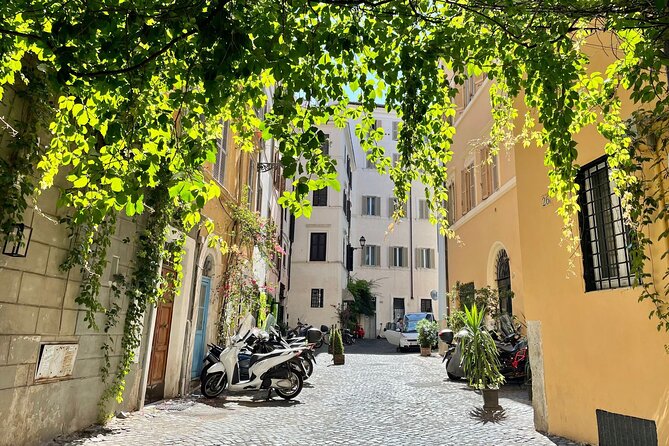
- Hotel pickup and drop-off means you don’t have to figure out meeting points across Rome
- A live English-speaking guide gives context while you ride between far-apart sights
- Giardino degli Aranci + Santa Sabina pass-by pairs scenic views with a quick look at an older church site
- 360-degree-style views from the golf cart make the Pyramid of Cestius feel close and immediate
- Appian Way start + Imperial Gate of San Sebastiano keeps you oriented at the road’s early point
- Catacombs entry is included, with a backup option if Saint Callixtus isn’t available
The core idea: save your feet, keep the stories
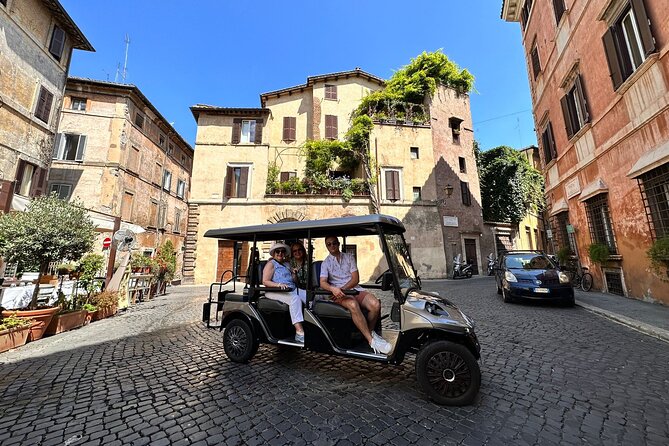
Rome can chew up your day with walking. This tour’s whole pitch is simple: use a golf cart to connect several sites that usually require lots of transfers and long stretches on foot.
That means more time spent looking and listening, less time spent moving. The ride is also built for questions. You’re not squeezed into a mass group plan where you have to wait your turn for answers.
You can also read our reviews of more tours and experiences in Rome.
From your hotel to Circus Maximus: the route gets you oriented fast
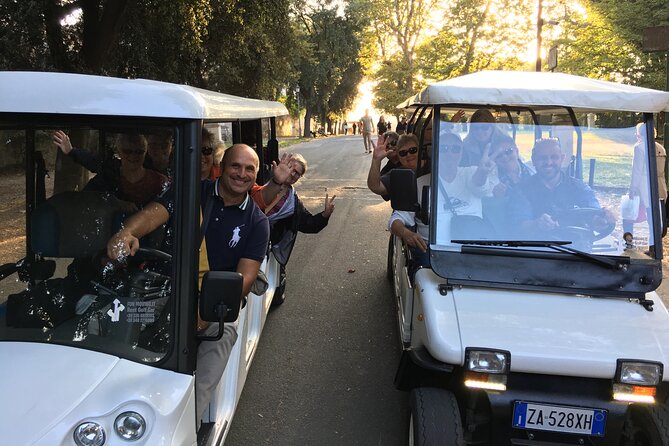
Your day starts with hotel pickup and drop-off, then you head toward the Circus Maximus area. As you ride, you get a view of the ancient chariot racing stadium, with Palatine Hill in the background.
This first segment matters because it sets the “Roman map” in your head. Before you start collecting details about specific monuments, you get a big-picture sense of where emperors, arenas, and ceremonial routes fit together.
Aventine Hill at Giardino degli Aranci: orange-garden views with real context
Stop 1 is Giardino degli Aranci, on the Aventine Hill. The tour ties the viewpoint to the hill’s older role—historically tied to Roman consuls—while also pointing out what you see today: 19th-century villas in the area.
Then comes the Orange Garden moment. You’ll stop here to enjoy some of Rome’s best sightlines from this side of town. The timing is built so you get the payoff without it turning into a long hike.
You’ll also pass by the Church of Santa Sabina, built in the 1200s, while traveling by cart. After that, you continue toward the Pyramid of Cestius.
Practical note: this stop includes 30 minutes, and the admission ticket here is listed as free.
Pyramid of Caius Cestius: a Roman-era pyramid you can almost touch
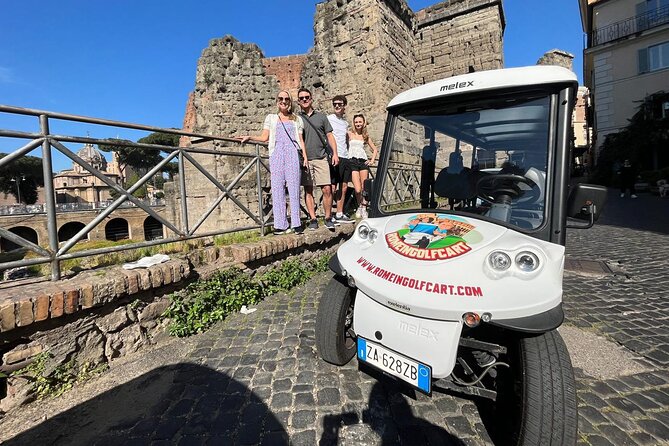
Stop 2 centers on the Pyramid of Caius Cestius. This is where the golf cart format really earns its keep. From the cart, you get a sweeping view angle that feels almost like you can reach out toward the monument—plus a strong sense of its shape and presence in the surroundings.
The stop time is 25 minutes, which is long enough to enjoy the view and absorb the guide’s explanation without forcing you into a rushed scramble.
The catch is straightforward: admission here is not included. If this pyramid is a must for you, it’s smart to set aside a little extra budget before you arrive—so you’re not doing mental math mid-tour.
Baths of Caracalla: massive ruins, plus the thermal-bath idea
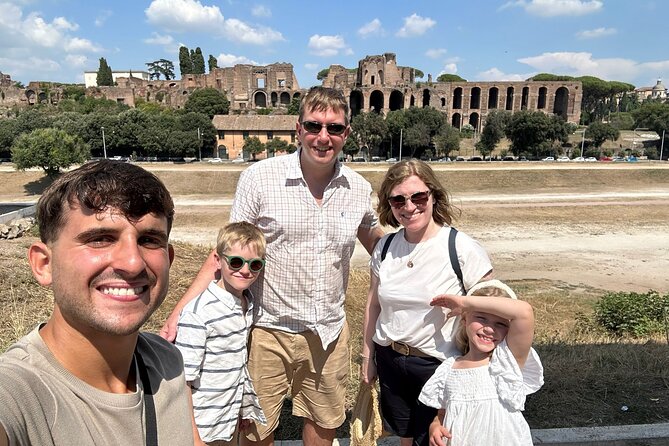
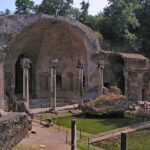
Next up is the ancient Baths of Caracalla. What you’ll appreciate from this stop is the scale. You’re looking at massive ruins, including the thermal baths area.
The tour also sets you up with a framed view—Roman pines are mentioned as part of the scene—so you’re not just staring at stone. You get a more complete “how it feels” picture of the complex from the cart.
Even with only a limited window, this stop has the kind of visual impact that tends to stick. It’s the sort of place where your brain naturally starts imagining crowds, routines, and daily life—then the guide’s commentary helps you connect those ideas to what remains.


Appian Way (Via Appia Antica): the start of the road that still makes an impression
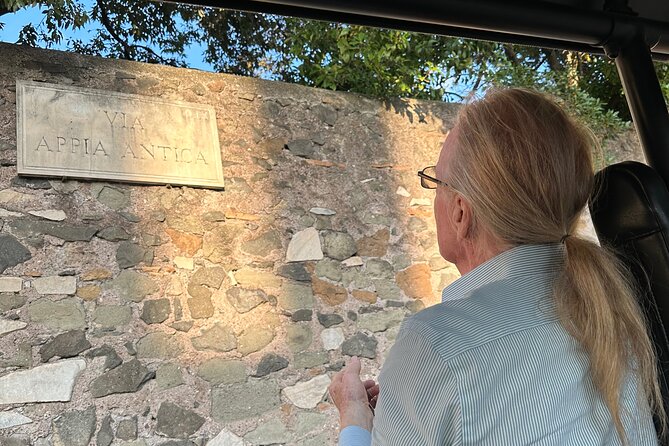
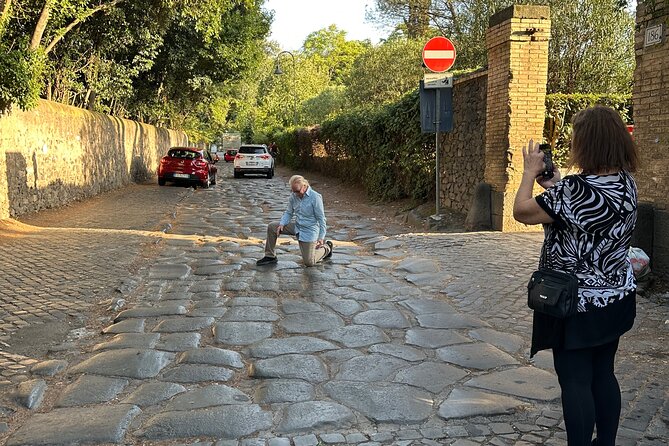
Then you reach the beginning of the Ancient Appian Way. This is one of those names you hear everywhere in Rome, but here the tour gives you specifics that help you picture what makes it special.
From the start of the road, you’ll see original paving still intact along much of the route. You’ll also spot tombs of Roman consuls buried along the way, which helps the road feel less like a street and more like a corridor of memory.
You’ll also pass the Imperial Gate of San Sebastiano, described as remaining untouched since the 3rd century AD. Again, being in the cart matters: you get the “line of sight” effect without needing to walk the full stretch.
This Appian Way segment runs about 20 minutes. It’s a strong sampler—enough to understand the core idea and orient yourself—without pretending you’re doing the whole ancient road end to end in one go.
Catacombs of Saint Callixtus: the included entry that makes this tour special
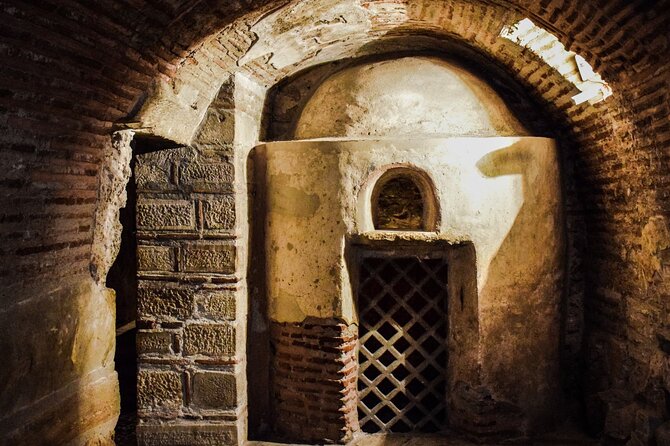
The final major stop is the catacombs—Catacombs of Saint Callixtus. From the San Sebastiano Gate, it’s about a 10-minute golf cart ride to the catacombs area. On the way, you ride along the Aurelian Walls, which act like a heavy backdrop to the idea of “Rome below.”
This portion is one of the key reasons to choose this specific tour. Catacombs entry is included, and the time at the catacombs is listed as 30 minutes with a guided tour.
And there’s a smart backup plan built in: if Catacombs of San Callisto is not available, the tour will switch you to the Catacomb of Sebastiano instead. That’s worth noting because it protects your day from the common headache of a “site unavailable” moment.
What the guides bring (and why it affects your day)
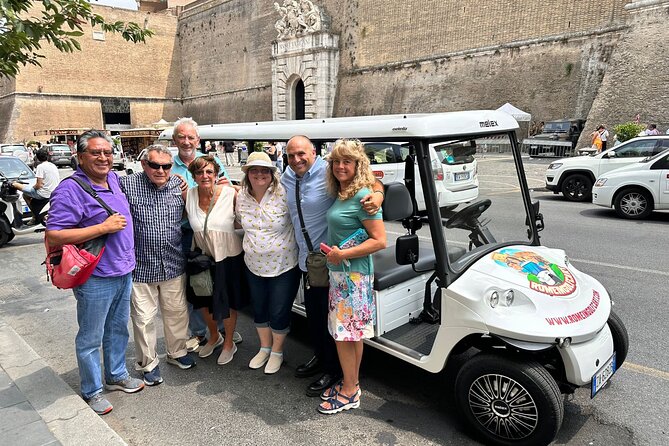
A big pattern shows up with this experience: the guide is not just reading facts. You’re riding with someone who keeps the pace lively and answers questions—whether you’re asking about the views, the monuments, or logistics you didn’t think you’d have until you were there.
You may see names like Valerio, Khalid, and Achille connected with this tour style, with comments that highlight energy, clear explanations, and comfort in driving. One standout detail: the tour is also described as family-friendly, with kids engaged throughout the route.
If you’re the type who likes to understand what you’re seeing (not just photograph it), this matters. A well-run route with good storytelling makes the Appian Way and catacombs feel like part of one connected day instead of three separate stops.
Price and value: what you’re really paying for at $356.23
At $356.23 per person, this isn’t a budget activity. So I look at value in terms of what you’re avoiding:
- You’re paying for private transport by golf cart, not just a guide.
- You’re saving time that you’d normally spend walking long distances between far-apart sites.
- You’re getting hotel pickup and drop-off, which in Rome can be the difference between a smooth day and a stressful one.
- You’re also getting catacombs entry included (and a guide), rather than assembling separate tickets and timing.
The biggest “extra cost” item to watch is the Pyramid of Caius Cestius, where admission isn’t included. If you handle that in advance mentally, the rest of the experience is fairly straightforward.
So when does the price make sense? It’s a good fit when:
- you want a compact route with major highlights,
- you prefer comfort over long walking,
- you care about guided context in multiple places during a short day.
Timing, weather, and Jubilee changes you should expect
Two real-world notes can shape what you see.
First: this experience requires good weather. If it’s canceled due to poor weather, you should expect either a different date or a full refund.
Second: because of the Jubilee, some monuments may be under restoration. That doesn’t mean the tour disappears—it means you should pay attention to messages you receive about possible changes to what’s accessible.
Who this tour suits best
This tour is built for people who want Rome’s big ancient anchors without a full-day walking plan. The experience is described as suitable for most travelers, and it specifically works well if you:
- want a private guide with time for questions,
- enjoy strong viewpoints and shorter focused stops,
- want both the Ancient Appian Way and catacombs in the same outing,
- prefer a comfortable way to see more in less time.
It’s also a sensible choice for families, especially if you want a route that keeps kids engaged while still delivering real sights.
Should you book this Rome golf cart tour of Catacombs and the Appian Way?
I’d book it if you want the practical win: a private, time-efficient route that strings together Aventine Hill views, Caracalla’s ruins, the Appian Way start, and catacombs—with catacombs admission included.
Skip it (or think twice) if the Pyramid of Cestius is a “maybe” on your list and you strongly dislike add-on costs, since the pyramid admission is not included. Also, if you’re hoping for a long, slow walk through every section of the Appian Way, this is more of a focused starter route than a full expedition.
If your goal is to maximize highlights with a guide you can actually talk to, this one has a strong case.
FAQ
How long is the Rome private golf cart tour?
It’s approximately 2 hours 30 minutes.
Does the tour include hotel pickup and drop-off?
Yes. Hotel pickup and drop-off are included.
Is the catacombs admission included?
Yes. Entry to the catacombs is included.
Which catacombs are visited?
The tour is for the Catacombs of Saint Callixtus. If that’s not available, the tour goes to the Catacomb of Sebastiano instead.
Is admission included for the Pyramid of Caius Cestius?
No. Admission for the Pyramid of Caius Cestius is not included.
What sights are included besides the catacombs?
You’ll visit the Aventine Hill area at Giardino degli Aranci, see views tied to the Pyramid of Cestius, visit the Baths of Caracalla, and reach the start of the Ancient Appian Way (Via Appia Antica).
Is the tour private, and what language is it in?
Yes, it’s private (only your group). The tour is offered in English.
What should I know about weather and possible restoration?
The tour requires good weather. Also, due to the Jubilee, some monuments may be under restoration, so you should watch for any messages about potential changes.