REVIEW · ROME
Rome: Trastevere street food and history tour – small group
Book on Viator →Operated by Rosy Smart City Tours · Bookable on Viator
Nothing beats Rome by snack and street story. This 2.5-hour walk threads Trastevere through the Jewish Ghetto, with food tasting built into the route. I love the small-group feel, where you can actually ask questions, and I love that the tastings act like a preview of what to hunt for later. One thing to consider: it is a walking tour with some steps and uneven lanes, so comfy shoes matter.
You’ll start with the Jewish quarter as a reference point, then move toward the postcard corners of Trastevere, including a stop at the big square and its church interior. I also like the practical habit the tour encourages: spotting the best shops and bites so you can circle back on your own time. The main potential drawback is that the tour is structured into short viewing blocks, so if you want a long, slow deep dive into any one neighborhood, this is more sampler than marathon.
The value here is simple: guided route + landmark stops + multiple tastings, for a price that’s aimed at feeding you more than just showing you sights. Expect artichoke, sliced pizza, supplì, gelato, and other street snacks along the way. And if you want alcohol, plan to buy it separately.
In This Review
- Key points you’ll care about
- Rome by Bites: what makes this tour different
- Meeting point to final stroll: the route’s flow and timing
- Jewish Ghetto stop: seeing the neighborhood that shaped food
- Tiber Island and Piazza in Piscinula: two scenic pauses with meaning
- Chiesa di San Francesco a Ripa Grande: the alley-walk plus tastings moment
- Via della Lungaretta and Trastevere window-shopping that feels like part of the meal
- Fontana della Botte: a quirky Roman landmark you’ll remember
- Santa Maria in Trastevere: square energy and an inside look
- Trastevere alleys at the end: off-the-beaten-path wandering
- What you’ll actually taste (and how to use it after the tour)
- Price and value: what $66.38 buys you
- Who this tour suits best (and who should consider another option)
- Guides and pacing: why the best part is the human touch
- Should you book Rome Trastevere street food and history?
- FAQ
- How long is the Rome: Trastevere street food and history tour?
- What is the group size for this tour?
- What language is the tour offered in?
- Where do I meet the tour guide, and where does it end?
- What street foods are included?
- Are alcoholic beverages included?
- Is the tour suitable for vegetarians, vegans, or people with dietary intolerances?
- Are there admission tickets for the stops?
- What is the cancellation policy?
- Does the tour run in rain?
Key points you’ll care about
- Small group (max 12) keeps the pace human and the Q&A easy
- Street food plus history stops across two neighborhoods, not one
- Landmark variety from the Jewish Ghetto to the quirky Fontana della Botte
- Food includes classic Roman picks like artichoke, pizza, supplì, and gelato
- Vegetarian-friendly planning with options for vegans and common intolerances if you inform them early
Rome by Bites: what makes this tour different
This is the kind of Rome walk that helps you understand how neighborhoods work. You start in the Jewish Ghetto, then shift into Trastevere’s maze of alleys. Along the way, the guide uses food as a shortcut to context: what people ate, where they gathered, and why the streets matter.
I like tours that give me a base map. Here, you get that map fast. You’ll also get the kind of “where do I go next?” recommendations that make the rest of your trip easier, especially if Trastevere is on your must-see list.
The group size is capped at 12, and that shows in the feel. You’re not just herded from point A to point B. You have a chance to ask questions about what you’re tasting and what to look for afterward.
You can also read our reviews of more tours and experiences in Rome.



Meeting point to final stroll: the route’s flow and timing
The tour starts at Piazza Benedetto Cairoli, 118 (near public transport) and ends at Via dei Pettinari, 45. That end point is handy because it drops you right into the area where you’ll likely keep roaming for dinner or gelato.
The walk runs about 2 hours 30 minutes, with multiple stops ranging roughly from 15 to 20 minutes each. It’s built like a chain: quick landmark moments, then food tastings tied to where you are. That structure is great for first-time visitors, but it also means you’re not lingering for long photo sessions at every corner.
One practical note: some people prefer a tour where the food starts earlier. This one includes food tastings, but there can be stretches that feel more like walking and looking before the big snack moments. If you’re the type who gets hangry, plan a small bite before you meet up.
Jewish Ghetto stop: seeing the neighborhood that shaped food
You begin at the Jewish Ghetto, which is the reference point for Rome’s Jewish community. The area is tied to the main synagogue and to traditional culinary restaurants, so it’s a clever first stop for a food-and-history concept.
Here’s what this helps you do as a visitor: it puts names and places to the food you’ll later recognize around Rome. Even if you don’t know the story yet, you’ll come away with a stronger sense of why certain flavors, shops, and traditions cluster where they do.
This stop is about 20 minutes. That’s enough to orient you and understand the basics, but not enough to satisfy anyone who wants a full, slow history lesson. If you want more depth in the Ghetto specifically, treat this as your doorway, then plan a second visit later on your own.
Tiber Island and Piazza in Piscinula: two scenic pauses with meaning
From the Ghetto, the route shifts toward the river with a stop at Tiber Island. It’s an unusual island sitting between the two sides of the Tiber, and even a short stop gives you a sense of why Rome’s river life shaped daily movement and trade.
Then you head to Piazza in Piscinula, described as a first approach to Trastevere from its medieval side. This matters because Trastevere isn’t one neat picture; it’s layers. Starting on the medieval approach helps you feel the transition from broader history to tight alley life.
Expect these moments to be more about orientation than eating. They’re quick, but they help your brain connect the dots while you walk.
Chiesa di San Francesco a Ripa Grande: the alley-walk plus tastings moment
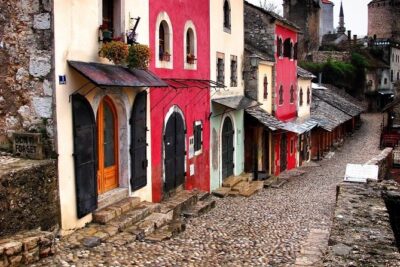
One of the best things about walking Trastevere with a guide is that the alleys feel like a story you can read, not just narrow streets with laundry lines. The stop at Chiesa di San Francesco a Ripa Grande is built into that walking rhythm—less tourist-bus energy, more street-level view.
This is also where the tour starts tying the route to what you’ll taste. You’re moving through alleys, then stopping for food. That sequencing is smart: it lets you connect the flavor to the place, so it sticks when you later try to recreate the experience.
If you’re the type who loves photos, remember that churches and alley lanes often come with uneven paving and steps. Go slow here, and you’ll enjoy it more. Rushing only makes you trip into stress.





Via della Lungaretta and Trastevere window-shopping that feels like part of the meal
Via della Lungaretta is called the spine street of the district, and once you’re there, you’ll understand why it matters. It runs through the whole neighborhood and gives you a steady line through the chaos. The street is enriched by climbing plants and picturesque window displays in handcraft shops.
This is the perfect place to do a little “future planning” while still in tour mode. The highlight of this kind of stop isn’t only the views—it’s that you can identify the shops you want to revisit. The tour actually encourages you to note your favorite places and bites for later.
A tip that costs nothing: take a quick note in your phone as you go. Write down shop names you spot, plus what you liked about the snack. Later, when you’re hungry, that note becomes your personal food map.
Fontana della Botte: a quirky Roman landmark you’ll remember
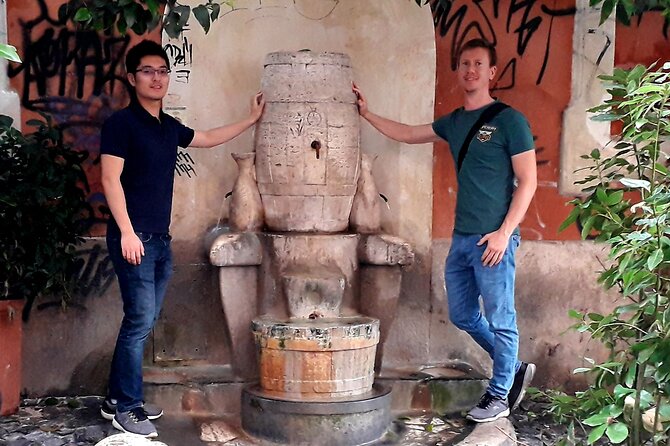
After the street and shop time, you’ll hit Fontana della Botte, a fountain shaped like wine measures. It’s the sort of odd little Rome detail that’s easy to skip on your own. On a guided walk, it becomes a fun punctuation mark between tastings.
This stop is short, around 15 minutes. But short doesn’t mean meaningless. These small landmarks are exactly how you learn the personality of a neighborhood. If you come to Rome expecting only big monuments, a stop like this is your reminder that the city’s charm often lives in the in-between.
Santa Maria in Trastevere: square energy and an inside look
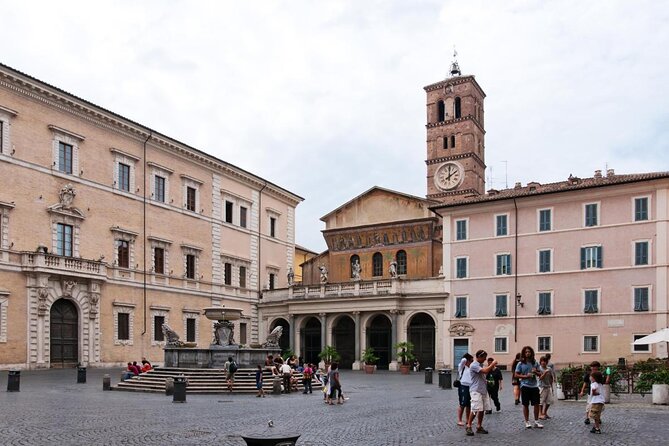
Next comes Piazza di Santa Maria in Trastevere. This square is one of those Rome hubs where the streets feed into a bigger public space, and where you feel the neighborhood’s social pulse.
The tour also includes a visit to the church from inside. That’s a nice balance to the street-food theme. You’re not just eating and walking; you’re also getting a cultural anchor so the neighborhood feels grounded, not random.
Plan for some people-watching and photos, but keep in mind this is still a moving tour. The time here is about 20 minutes, so you’ll get a taste of the space rather than a long, slow worship visit.
Trastevere alleys at the end: off-the-beaten-path wandering
The final leg leans into Trastevere’s alley magic. You walk through the district discovering nice glimpses and off-the-beaten-path sections. This is where the tour earns its value for me. By the end, you’ve got enough street sense to continue roaming without feeling totally lost.
It also helps that the tour ends at Via dei Pettinari, which is a practical drop-off once you’re ready to keep going. If gelato or a sit-down meal is your next step, you’ll already be in position.
If you have limited time in Rome, this ending walk is a strong payoff. Even if you’ve seen other parts of the city, Trastevere’s texture is different. The alleys, the small windows, the quick turns—this is what you’ll remember when you’re back home.
What you’ll actually taste (and how to use it after the tour)
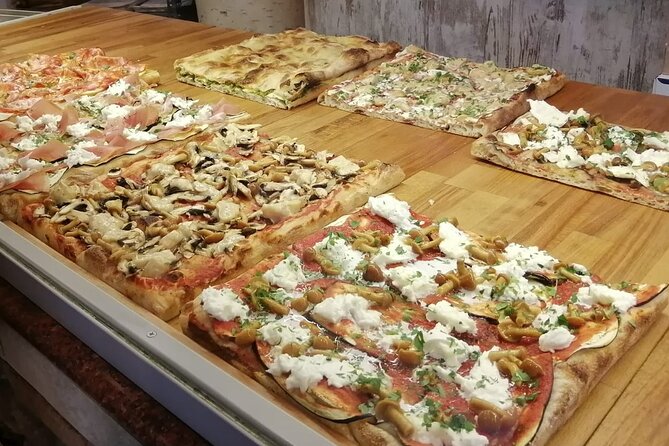
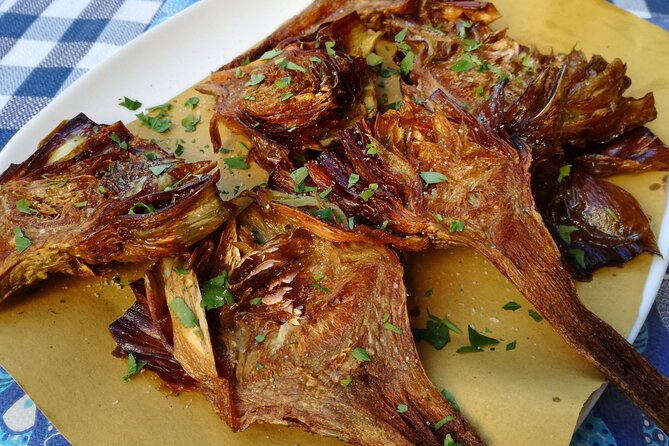
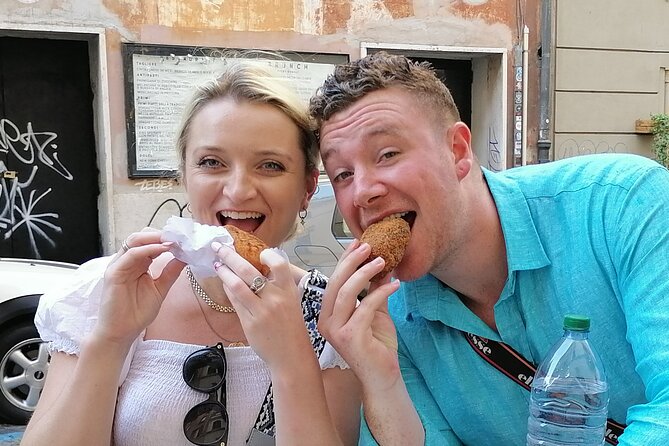
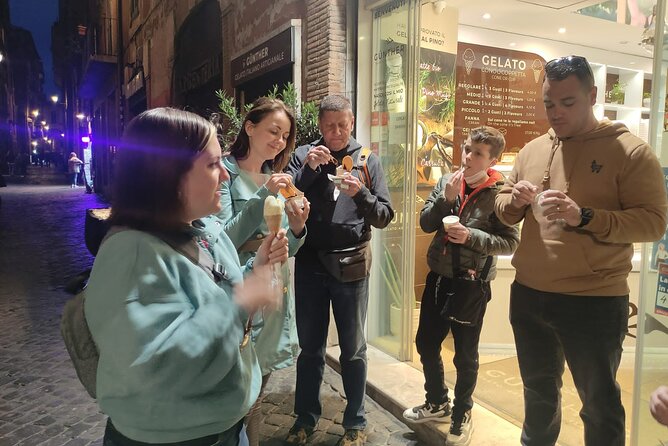
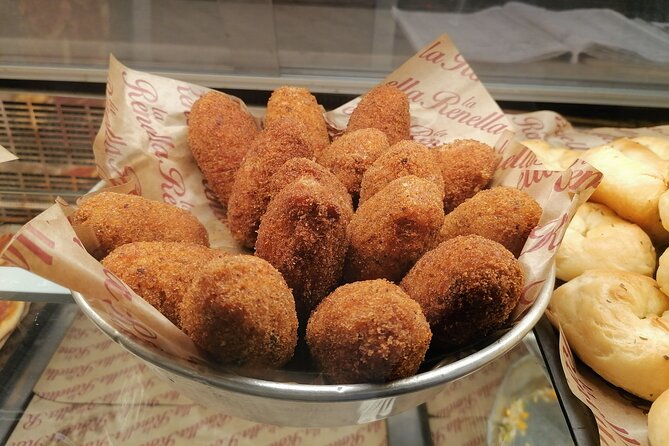
The tour includes street food such as artichoke, sliced pizza, supplì, gelato, and more. That list is a smart spread. It covers savory standards and ends with something sweet. Plus, artichoke and supplì are both very Roman in feel, so they’re good “anchors” for what to look for later.
Also, this is more than menu items. The guide frames the tastings in place. So when you see a shop again, you’re not just thinking, I’ve eaten here. You’re thinking, I know why this belongs here.
One practical note: alcoholic beverages are not included. You can buy them separately if you want. That keeps the tour price focused on food and walking rather than turning it into a pub crawl.
Price and value: what $66.38 buys you
$66.38 for about 2.5 hours sounds like a lot until you break down what you get. You’re paying for three things at once:
- A guided route that connects landmarks in two neighborhoods
- Multiple food tastings (not just one snack)
- A small group size, meaning less waiting, more interaction
If you were trying to recreate this solo, you’d likely pay for food samples anyway, then spend time figuring out where to go and which streets make sense. Here, the guidance compresses the guesswork.
You do have to accept the trade-off: it’s not a private tour, and it’s not built for unlimited lingering. But if your goal is to get your bearings fast and eat well, the value is solid.
Who this tour suits best (and who should consider another option)
This works great if you:
- Want to see Rome beyond the biggest postcard sights
- Like food tastings tied to real neighborhoods
- Prefer a small group (max 12) over a larger crowd
- Are excited to learn the “why” behind what you’re eating
It’s also planned to suit vegetarians, and you should inform the operator at booking. If you’re vegan or have gluten or lactose intolerance (not allergies), you can participate, but not all tastings can be guaranteed. Communicate your needs early, because last-minute changes may not be taken into account.
For reduced mobility, the tour specifically invites guests to book a private tour so the schedule and duration don’t get affected for everyone else. If walking is a challenge for you, that’s a thoughtful safety call.
Guides and pacing: why the best part is the human touch
One reason this tour earns such high marks is the guide energy. You’ll see names like Chris, Serena, Christian, Daniel, Virginia, Emanuel, Marco, Sabrina, Victoria, and Manuele attached to standout experiences. The common thread is a mix of street-level food guidance and neighborhood context, with a pace that keeps people engaged.
The pacing also matters. One person even noted that the flow can be light on eating for the first stretch and heavier on the snack moments later. That’s not a dealbreaker if you’re expecting a walk-first structure, but it’s worth knowing so you can plan your appetite.
Also check that your comfort level with English accents is good. Most guides are easy to follow, but one experience flagged that an accent can be hard to catch if you’re listening closely. If you’re sensitive to that, it’s smart to go in with a little patience and ask questions when you can.
Should you book Rome Trastevere street food and history?
I think you should book this tour if you want two things at once: street food you can taste and a neighborhood map you can use. The route through the Jewish Ghetto and Trastevere gives you contrast, and the food list is full of Roman classics like artichoke, pizza, supplì, and gelato.
Skip it (or consider a different format) if you:
- Want long stays at a single site
- Have trouble with walking, steps, and uneven roads
- Need guaranteed tastings for multiple dietary restrictions without variation
If you’re a first or second-day Rome visitor, this is one of the best ways to build momentum. You’ll come away with better instincts for where to eat next, plus a memory of how the streets feel, not just what they look like.
FAQ
How long is the Rome: Trastevere street food and history tour?
The tour runs about 2 hours 30 minutes.
What is the group size for this tour?
It is a small-group experience with a maximum of 12 travelers.
What language is the tour offered in?
The tour is offered in English.
Where do I meet the tour guide, and where does it end?
The tour starts at Piazza Benedetto Cairoli, 118, 00186 Roma RM, Italy and ends at Via dei Pettinari, 45, 00186 Roma RM, Italy.
What street foods are included?
Street food tastings include artichoke, sliced pizza, supplì, gelato, and more.
Are alcoholic beverages included?
No. Alcoholic beverages are not included and can be bought separately.
Is the tour suitable for vegetarians, vegans, or people with dietary intolerances?
The tour is planned to suit vegetarians, and you should inform the operator at booking. Vegans and people with gluten or lactose intolerance (not allergic) can participate, but not all tastings could be guaranteed, and you must communicate restrictions at booking.
Are there admission tickets for the stops?
The stops on the route are marked as free in the schedule provided, with no admission ticket listed for each stop.
What is the cancellation policy?
You can cancel up to 24 hours in advance for a full refund. If you cancel less than 24 hours before the start time, the amount paid will not be refunded.
Does the tour run in rain?
The tour goes with sun or rain, except for extreme weather conditions. No refund is allowed for last-minute cancellation requests due to rain.