REVIEW · ST ANDREWS
St Andrews Old Course History Tour, for the Golfer
Book on Viator →Bookable on Viator
St Andrews feels like golf history in motion. This Old Course history tour strings together the town’s past and the game’s origins, with stops that land you near the fairway, the 1st tee area, and the iconic Swilcan Bridge. You’re guided by Richard, a pro caddie storyteller who connects legends to the real places you see in front of you.
Two things I love right away: the small group size (max 15) and the way the pacing stays calm with frequent stops to explain what you’re looking at. You also get professionally taken Swilcan Bridge photos (on non-tournament days), which means you leave with more than memories and a phone camera.
One thing to consider: the tour is fully English-language driven, and the experience notes are clear that speaking slowly or translating does not work. If fast conversation is hard for you, plan to choose a time when your English comfort level is strongest.
In This Review
- Key takeaways before you go
- Why this 1 hour 15 minute Old Course tour is worth your time
- Stop 1: Hotel du Vin to set the stage with Links charter history
- Stop 2: The Links and the origin story from Low Countries to Edinburgh (1744)
- Stop 3: Royal and Ancient Golf Club to explain how the course shaped the game
- Stop 4: Grannie Clark’s Wynd and the path from 12/10 holes to 18
- Stop 5: Rusacks and the 1st/18th story (farmers, Mannings, and first tee)
- Stop 6: Swilcan Bridge photo moment (and when it’s not included)
- Stop 7: The Jigger Inn finish near the Road Hole 17th
- What the guide style means for your experience (Richard’s caddie storytelling)
- Weather, walking pace, and what to bring for a smooth Old Course day
- Price and value: how $25 stacks up for what you get
- Who should book this Old Course history tour
- Should you book the St Andrews Old Course History Tour?
- FAQ
- How long is the St Andrews Old Course History Tour?
- Where does the tour start and end?
- What’s included in the price?
- Is the tour offered in English?
- How big is the group?
- Are Swilcan Bridge photos included on tournament days like the Open or Dunhill?
- Is the tour suitable for young children or strollers?
- What if the weather is poor?
Key takeaways before you go
- Richard’s caddie stories connect the Old Course to how golf evolved over centuries
- Walk the famous areas with a rare chance to step onto Old Course fairway territory
- Small-group attention (up to 15) keeps questions and moments from feeling rushed
- Swilcan Bridge photo stop is a highlight, but it is excluded on major tournament days
- You get a practical game plan for what to do after the tour around the Old Course
Why this 1 hour 15 minute Old Course tour is worth your time
This tour is short by design, and it works for two kinds of travelers: golfers who want context fast, and non-golfers who want the story behind why this place matters. In about 75 minutes you cover town history, the origins of golf, and the course development that shaped the 18-hole Old Course as golfers know it today.
The timing also helps your day. You’re not stuck on a long guided loop that prevents you from going back later on your own. Instead, you end near the Road Hole (the 17th area) so you can linger, grab a drink, and then keep exploring the Old Course in a way that fits your pace.
You can also read our reviews of more tours and experiences in St Andrews.


Stop 1: Hotel du Vin to set the stage with Links charter history
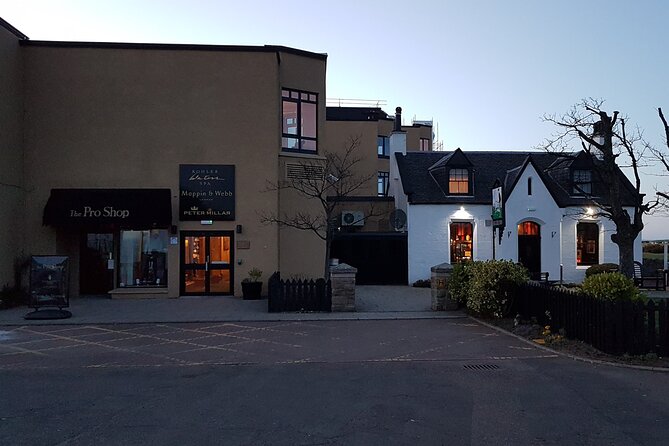
The tour starts outside Hotel du Vin St Andrews at 40 The Scores. From the first minutes, Richard gives you a town overview that matters because St Andrews is not just a golf backdrop. It is a living seaside town where golf grew into part of local identity.
A key moment early on is the reference to the 1123 Links charter. Even if you are new to golf history, this anchor point helps you understand why people talk about St Andrews as if it has always been part of the game. It also helps you connect the later course details you see, instead of treating everything like random landmarks.
Practical note: you’ll want to arrive a few minutes early. This is a scheduled public tour start, and the experience is not built for late arrivals.
Stop 2: The Links and the origin story from Low Countries to Edinburgh (1744)
Next you head to The Links, where the tour focuses on the early game. You’ll hear how golf traces back from a stick-and-ball tradition across the Low Countries, then moves through Britain in ways that lead toward Scotland.
The timeline includes a key marker: Edinburgh in 1744, which is used to explain how the game shifted from regional play into something with a clearer public footprint. For golfers, it frames why St Andrews is more than a course. For non-golfers, it’s a clear narrative: not just where golf is played, but how it became the game people recognize today.
What I like about this stop is that it gives you language for what you’ll see later. When you reach the course features and characters, you’re not just looking at holes—you understand why the shape and rules mattered.
Stop 3: Royal and Ancient Golf Club to explain how the course shaped the game
At the Royal & Ancient Golf Club of St. Andrews, the tour shifts from origins to development. This stop is where course layout becomes a story about the game itself—how fairways and bunkers connect to how golf played and how it was refined over time.
You’ll also hear about named golfing moments and characters, including Old Tom and the old Caddie Shack. These aren’t just trivia tags. They explain the human side of course change, like how people worked the ground, how they learned what worked, and how the Old Course became a model that influenced the game.
A real value here is balance: this stop gives you both the physical clues (features you can later picture) and the cultural clues (the people and habits that helped shape golf at St Andrews).
Stop 4: Grannie Clark’s Wynd and the path from 12/10 holes to 18
Grannie Clark’s Wynd is one of those places where history shows up in the street name. The tour uses the location to talk about big golf events such as the Open Championship and the Dunhill Cup, and it ties those events back to the course’s evolution.
You’ll get the story of how the Old Course moved from 12 and 10 holes toward 18 holes, and why that shift mattered. This is especially helpful if you only know golf as 18 holes with set rhythms. The tour helps you see that the modern structure was earned, not automatic.
For anyone who loves the behind-the-scenes side of sports, this is a strong stop. It’s not just what happened—it’s how the course design and competitions fed each other.
Stop 5: Rusacks and the 1st/18th story (farmers, Mannings, and first tee)
At Rusacks St Andrews, the tour focuses on two of the Old Course’s most symbolic ends: the 1st/18th fairway areas and the story around the first tee and 18th hole. This stop is where the tour starts feeling like you’re walking through a living museum rather than checking boxes.
You’ll hear about the local backdrop, including farmers, and you’ll also get names tied to the Old Course past, like the Mannings and the Rusacks Hotel. Those details help you picture the course as it existed when it was both a sport and a piece of everyday local life.
One of the most interesting myths-to-mechanism moments is the tour’s explanation of how early caddies and ladies influenced Old Tom to create the world’s first putting green. Whether you treat it as legend or history, the point is clear: golf culture at St Andrews shaped practice, not just play.
If you’re a golfer, this stop often clicks because it explains why practice areas and routines took root here. If you’re not a golfer, it still gives you a human storyline: people kept trying to make the experience better, smarter, and more usable.
Stop 6: Swilcan Bridge photo moment (and when it’s not included)
Then comes the iconic part: Swilcan Bridge. This is one of the most photographed landmarks in golf, and the tour builds around a photo shoot so you get a proper shot in the right spot.
Here’s what matters for planning: the professionally taken photos on Swilcan Bridge are excluded on tournament days, including big events like the Dunhill and Open. That doesn’t mean the area is off-limits, but it does mean you should not expect the photo service to run on those dates.
If you care about photos, this stop is a practical win. Even if your phone is great, the angle and timing here are tricky. A guided photo moment saves you time and reduces the stress of finding the exact spot while you’re also trying to listen.
Stop 7: The Jigger Inn finish near the Road Hole 17th
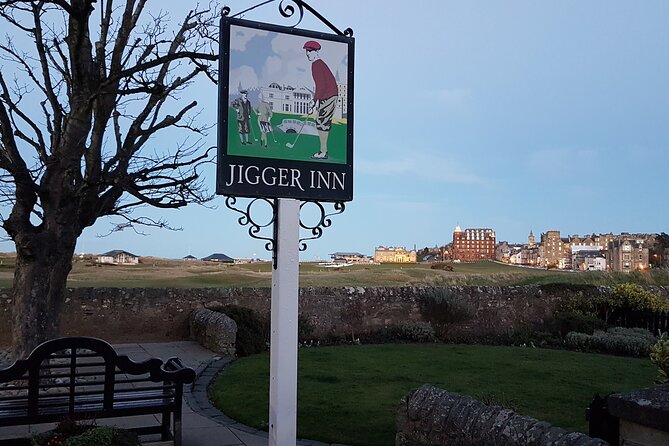
The tour ends at the Jigger Inn area, near the famed Old Course Road Hole (the 17th green). This finish is smart because it drops you right where the drama of the Old Course is built into the design and reputation.
You’ll hear about jaw-dropping golfing moments at the Road Hole, and then you can relax near the course with food and beverages. Refreshments are available, but not included, so keep that in mind if you’re budgeting.
I like this finish because it gives you a landing pad. Instead of stopping abruptly, you finish at a place built for post-round hang time—so you can keep the vibe going while you look out toward the 17th area.
What the guide style means for your experience (Richard’s caddie storytelling)
The highest praise for this tour centers on Richard’s approach. You’ll typically get a guide who ties the legend into the real geography around you, and who can answer questions without making you feel like you’re interrupting.
One more detail that shows up in feedback is the tour pacing: people like the frequent stops, comfortable speed, and the fact that the guide does not waste time on random photo pauses. The tour is built around learning, then looking, then learning again.
There’s also mention of hearing support like ear buds, which makes sense for an active walking route. If you struggle to hear in open air, this is exactly the kind of feature that turns a good tour into a great one.
Finally, Richard’s caddie background seems to matter because it makes the story practical. The Old Course is famous partly because it’s old, but mostly because it’s playable and demanding. Caddie-level storytelling naturally connects tradition to what players feel when they stand on specific ground.
Weather, walking pace, and what to bring for a smooth Old Course day
This tour is short, but it’s still a walking experience. The guidance says a moderate physical fitness level helps, and it is not set up for strollers, crutches, walking frames, or mobility scooters. There is also nowhere to leave items like that while on tour, so plan accordingly.
Golf clubs can be a problem too. The tour does not mention a storage option, so I’d plan to carry what you need and keep it simple. If you’re bringing clubs, consider whether you can comfortably transport them for the full route.
Weather matters in St Andrews. Even in good months, it can shift fast. I recommend layers and something windproof. One piece of feedback sums it up well: rug up, because it can get very cold when the weather changes.
And for the sound: if you want to hear every point, stand where you can see and face the guide, especially early on when the group is still finding its rhythm.
Price and value: how $25 stacks up for what you get
At $25.00 per person for about 1 hour 15 minutes, this is a bargain if what you want is guided context plus a few high-impact stops. You’re not paying for a full-day package with a bus and long downtime. You’re paying for a tight walking route with a pro guide and story focus.
Also, several stops note free admission ticketing for the tour segments listed, which helps keep the price honest. You’re paying mostly for the guide and the curated route, not for expensive add-ons.
The other value booster is the professionally taken photos on Swilcan Bridge (again, only on non-tournament days). That single deliverable can make the tour feel like more than $25 in real terms, especially if you’re traveling with someone who wants a keepsake.
Who should book this Old Course history tour
This is a strong fit if:
- You want the Old Course story quickly, without spending hours reading and guessing
- You like golf culture, whether you play or not
- You enjoy being outside with stops that explain what to look for
- Your group wants an easy win on a tight schedule
It may not be the best fit if:
- English fluency is a challenge for you, since the tour does not adjust via slow speaking or translation
- Your mobility needs require equipment support that the tour cannot accommodate
- You want a quiet, purely self-paced experience with minimal speaking
Should you book the St Andrews Old Course History Tour?
I’d book it if your goal is to understand why St Andrews matters and to walk away with better instincts for what you’re seeing around the Old Course. The tour’s strongest points are clear: Richard’s caddie storytelling, the small-group attention, and the fact that you finish near the Road Hole so the experience doesn’t end when the tour clock runs out.
If you’re visiting St Andrews for the first time, this tour is a smart way to get your bearings fast. You’ll know which places carry weight, which moments define the legend, and how the game evolved into the modern form. Just match it to your comfort with English and walking.
FAQ
How long is the St Andrews Old Course History Tour?
It’s approximately 1 hour 15 minutes.
Where does the tour start and end?
You meet outside Hotel du Vin St Andrews at 40 The Scores, St Andrews KY16 9AS. The tour ends at Swilcan Bridge / near the Road Hole (17th) by the Old Course Jigger Inn.
What’s included in the price?
You get a professional local guide, and professionally taken photos on Swilcan Bridge (excluded on tournament days).
Is the tour offered in English?
Yes. It is offered in English, and participants need a fluent command of English since speaking slowly or translating will not work.
How big is the group?
The tour has a maximum of 15 travelers.
Are Swilcan Bridge photos included on tournament days like the Open or Dunhill?
No. The Swilcan Bridge photo shoot is excluded on tournament days.
Is the tour suitable for young children or strollers?
It is not suitable for children under 5, and it is not suitable for strollers or carriages.
What if the weather is poor?
The experience requires good weather. If it’s canceled due to poor weather, you’ll be offered a different date or a full refund.
If you want, tell me your travel month and whether you’re visiting on a weekend or tournament date, and I’ll suggest the best way to schedule the Old Course before and after this tour.