REVIEW · TBILISI
Mtskheta Tour with All UNESCO Sites & Ancient Ruins
Book on Viator →Operated by SelectGeorgia-For Holiday · Bookable on Viator
Mtskheta hits you fast with sacred views. This private 9-hour trip pairs hotel pickup with a comfortable ride to some of Georgia’s most meaningful UNESCO stops, and your guide brings the places to life with clear, story-shaped explanations (I’ve seen guides like Giorgi and George praised for this style). One catch: you’re on the move—there’s old-town walking with stairs, plus church dress rules—so plan accordingly.
What makes this day worth your time is the mix of early Christian sites and the feel that you’re stepping through centuries, not just ticking boxes. The admission tickets listed for the stops are free, so you’re mostly paying for the day’s guidance, transport, and time in the monuments.
If you want a totally relaxed, do-nothing day, this may feel a bit active. But if you like history you can see, touch, and stand inside, it’s a strong choice.
In This Review
- Key highlights worth paying attention to
- UNESCO Mtskheta feels like you’re reading history out loud
- First Stop: Jvari Church and the “Jvari type” church idea
- Svetitskhoveli Cathedral: the Living Pillar and kings’ graves
- Samtavro Church: a 4th-century origin you can trace forward
- Shio-Mgvime Monastery: strict stone, a hermit’s cave, and survival of original form
- The 9-hour pacing: how you avoid a rushed monument day
- Transport, church dress rules, and shoes that save your day
- Price ($127.50) and what makes it feel like value
- Who should book this Mtskheta tour?
- Should you book the Mtskheta Tour with All UNESCO Sites & Ancient Ruins?
- FAQ
- FAQ
- What time does the Mtskheta tour start?
- Is hotel pickup included?
- Is this tour private?
- Are tickets required for the main sites?
- Is lunch included in the price?
- What should I wear to the churches?
- How much walking is involved?
- What happens if the weather is bad?
Key highlights worth paying attention to
- UNESCO sites in one focused circuit: Jvari, Svetitskhoveli, Samtavro, Shio-Mgvime, plus time for Mtskheta’s atmosphere
- Jvari’s elevation (656 m): you’ll get the pay-off views from the mountaintop setting
- Svetitskhoveli’s layered story: kings buried here, and the church ties to the Christ’s mantle tradition
- Monasteries with distinct eras: from 4th-century origins to the 6th-century hermit tradition at Shio-Mgvime
- Free admission tickets at each stop: less ticket hassle, more monument time
- Private format: only your group with personalized attention
UNESCO Mtskheta feels like you’re reading history out loud
Mtskheta isn’t far from Tbilisi, but it feels like a different world. You’re visiting a chain of Christian-era landmarks that trace major chapters of Georgia’s early church story—so even when the stones look quiet, the background isn’t.
What I like here is how the day is built around places where you can actually see time passing. Jvari and Svetitskhoveli represent the early medieval direction of Georgian church architecture, while Samtavro and Shio-Mgvime add the “lived faith” element of monasteries that grew from 4th- and 6th-century foundations.
And because this is a private tour with pickup and an air-conditioned vehicle, you spend less energy logistics-shopping your way around. You get a guide, a schedule, and breathing room to look around without feeling dragged.
You can also read our reviews of more tours and experiences in Tbilisi.
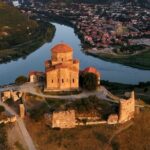
First Stop: Jvari Church and the “Jvari type” church idea
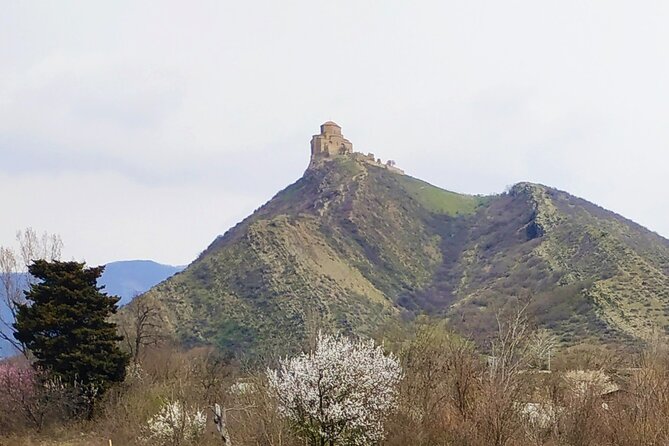
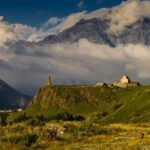
Your day starts with Jvari Church, a sixth-century Georgian Orthodox monastery sitting on Jvari Mount (656 m). This site is special because it’s an unusually well-preserved example of an early medieval Georgian church that has survived to today almost unchanged.
The guide’s job here is crucial. Jvari is described as the founder of the Jvari type of church architecture, a style that spread in Georgia and also in Armenia. So while you’re standing there, you’re not just admiring a viewpoint—you’re learning how a certain architectural idea helped shape later buildings.
Practical tip: wear your best “stairs-and-walks” shoes. Jvari Mount is about views, but you still need your legs to do the job. The view payoff is real: people highlight the look across the area, including the lake view from the top—this is exactly the kind of moment that makes the climb feel worth it.
Admission timing is tight-but-fair: you’re given about 30 minutes here, and that usually works if you balance photos with a moment inside. Since the stop is listed as free admission, you don’t lose time to ticket lines.
Svetitskhoveli Cathedral: the Living Pillar and kings’ graves
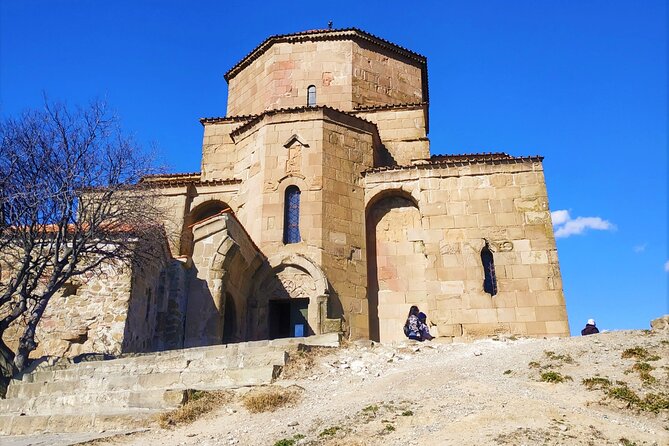
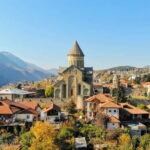
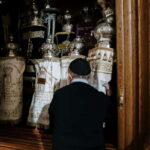
Next comes Svetitskhoveli Cathedral, also known as the Cathedral of the Living Pillar. This is one of Georgia’s major Orthodox churches, and it’s recognized as a UNESCO World Heritage site.
The big reason people remember it is the mix of sacred tradition and architectural achievement. It’s associated with the claimed burial site of the Christ’s mantle, and over centuries the cathedral also served as a burial place for kings. Even if you know nothing about the story beforehand, the cathedral’s importance comes through fast.
Here’s what makes it more than a dramatic interior: the building you see now is tied to a specific medieval construction effort. The cross-in-square structure was completed between 1010 and 1029 by architect Arsukisdze, though the site itself goes back to the early fourth century. That means you’re standing on a location with deep roots, then looking at a later form that reflects high middle ages craftsmanship.
And the exterior isn’t just background. The description notes well-preserved 11th-century exterior decorations. When you walk around, it helps to do it slowly—short pauses here can turn the cathedral from “big church” into “pattern and design.”
One more sober piece of context: many frescoes were lost because Russian Imperial authorities whitewashed parts of the church. Knowing that makes what survives feel more fragile and more valuable, not just impressive.
You typically get about 1 hour here, with admission listed as free. That hour matters because you’ll want at least a few minutes to look around both the exterior and the interior atmosphere, not just rush through.
Samtavro Church: a 4th-century origin you can trace forward
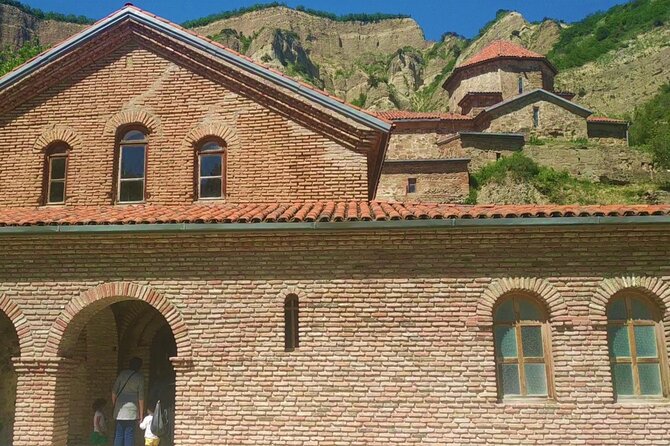
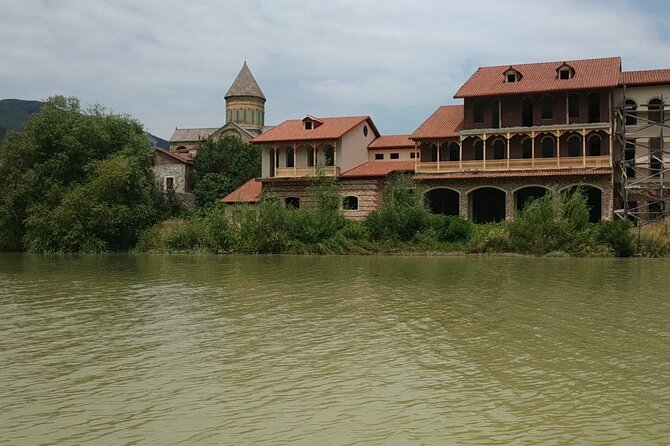
Samtavro Church (and the Samtavro Monastery complex) adds a different flavor. It’s tied to the early spread of Christianity in Georgia—starting with King Mirian III in the 4th century, when Saint Nino is associated with building an early church on the site.
The main temple you visit is dated stylistically to the first half of the 11th century, and it’s connected to major figures of that era—King George I and Catholicos-Patriarch Melchizedek I—who likely built or rebuilt the complex soon after Svetitskhoveli.
This stop is also UNESCO-protected and combines two elements: the Transfiguration Church and the Nunnery of St. Nino. So you’ll often feel a shift from “great cathedral power” to “monastery life and layered devotion.”
Time is shorter here—about 30 minutes—which means you should focus on what will actually stick. I recommend using your guide’s explanation of the site’s timeline, then spending your personal time on what the complex feels like as a place of worship.
Admission is listed as free, so you’re spending your time rather than your money to get your bearings.
Shio-Mgvime Monastery: strict stone, a hermit’s cave, and survival of original form
The day rounds into one of the most memorable monastery stories: Shio-Mgvime Monastery.
This place is linked to Shio, a monk and one of the Thirteen Assyrian Fathers who came to Georgia as Christian missionaries. What sets the story emotionally is the detail that Shio spent his last years as a hermit in a deep cave. Even if you don’t know the full legend, that kind of ending changes how you see the architecture.
The earliest building connected to the monastery is described as the monastery church of St. John the Baptist, a plain and strict cruciform design dating to the 560s–580s. There’s also a description of an octagonal dome and a conic floor, and it once housed a stone iconostasis that is now at the Art Museum of Georgia.
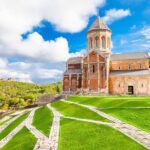
Think of Shio-Mgvime as a “less ornate, more intentional” stop. The modifications in later centuries—alterations in the 11th and 18th centuries—did happen, but the key point is that the monastery retained its original architecture. That’s one reason the site feels anchored instead of cluttered.
You usually get about 1 hour here, with free admission listed. This is often the best place to let your questions land. If you care about how different eras of Christianity show up in building style, this is where the contrasts become easiest to notice.
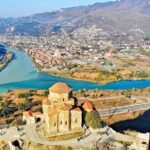

The 9-hour pacing: how you avoid a rushed monument day
A 9-hour day can go two ways: either it’s thoughtful, or it’s a blur of stone and stairs. This tour is built more like the thoughtful version.
You start at 9:00 am, and the visit length is weighted toward the big hitters: 30 minutes at Jvari, 1 hour at Svetitskhoveli, 30 minutes at Samtavro, and 1 hour at Shio-Mgvime. Add transport time from Tbilisi and some old-town walking in Mtskheta, and you get enough time to see each stop without feeling like you’re being stamped through.
The key benefit of the private vehicle and private format is that your guide can shape the flow. If your group wants more time standing still (for views at Jvari or inside the cathedral), you can often find that balance. The tour is designed so you don’t need to constantly ask, Where do we go next?
Still, keep expectations realistic. Even with free entry at every stop listed, each site is an active sacred place. Plan to move carefully, respect the space, and expect some quiet moments to take longer than photos.
Transport, church dress rules, and shoes that save your day
The logistics are mostly friendly here: pickup offered, transport in a private air-conditioned vehicle, and a mobile ticket. That’s the kind of setup that helps when you want a smooth start and you don’t want to spend your morning figuring out routes.
But the day includes practical constraints you’ll want to prepare for:
- The tour includes walking in the old town of Mtskheta with various terrain and stairs. Comfortable shoes are strongly recommended.
- Church dress code matters. For Orthodox churches, ladies need headscarves and dresses, and short trousers for men are forbidden.
- If you forget something, scarves and dresses are available near some church entrances.
This is one area where being “prepared” improves your experience a lot. Not because it’s fun to buy or borrow clothing, but because it reduces stress once you arrive.
A small planning idea: bring a lightweight scarf you’re comfortable wearing, even if you think you can get one on-site. It’s faster, and you’ll feel more relaxed when the moment to enter a church arrives.
Price ($127.50) and what makes it feel like value
At $127.50 per person for an approximately 9-hour private tour, you’re paying for three things: the guide’s time, the transport from Tbilisi, and the access to multiple major UNESCO monuments in a single day.
The value part is that several admissions are listed as free at each stop. That doesn’t mean the tour is “cheap,” but it does mean your money goes into the experience instead of ticket math.
Also, the private setup is a real value multiplier if your group includes people who want clarity, pacing, and explanations tied to architecture and religious story. If you’re the type who likes to understand what you’re seeing—why Jvari matters as a church type, why Svetitskhoveli is called the Living Pillar, why Shio-Mgvime’s early strict design is significant—this structure pays off.
Group discounts are mentioned too. So if you’re traveling with others, it’s worth asking about how pricing changes when your group grows.
The one cost consideration: lunch depends on what option you choose. If you book the tour with lunch, you should plan around that. If it’s a budget option, you’ll stop in a restaurant to have lunch, which means you’ll want to budget extra time and energy for that meal stop.
Who should book this Mtskheta tour?
This is a good match if you want:
- Multiple UNESCO Christian sites without the hassle of planning each stop yourself
- A guide who tells the story clearly, with enough time to take it in
- A day that feels historically connected, not just sightseeing
- Comfort and less commuting stress thanks to pickup and a private air-conditioned vehicle
It might be less ideal if:
- You have limited mobility or really struggle with stairs and uneven terrain
- You hate religious dress rules and don’t want to plan clothing
- You’re expecting a slow, no-walking museum day
If your goal is a focused “see the stones, understand the meaning” day, this tour fits nicely.
Should you book the Mtskheta Tour with All UNESCO Sites & Ancient Ruins?
I’d book it if you want a single-day best-of Mtskheta that covers Jvari, Svetitskhoveli, Samtavro, and Shio-Mgvime with guided context and comfortable transport. The combination of free-listed admissions, a private format, and the strong storytelling reputation of guides like Giorgi or George makes it feel built for learning, not just checking.
I’d think twice if you’re traveling with someone who can’t do stair-heavy old-town walking, or if church dress requirements would make the day frustrating. In that case, you might prefer a more flexible plan with fewer stops.
FAQ
FAQ
What time does the Mtskheta tour start?
The start time is 9:00 am.
Is hotel pickup included?
Pickup is offered.
Is this tour private?
Yes. It’s listed as a private tour/activity, and only your group will participate.
Are tickets required for the main sites?
The stops list admission tickets free, including Jvari Church, Svetitskhoveli Cathedral, Samtavro Church, and Shio-Mgvime Monastery.
Is lunch included in the price?
Lunch depends on the option you choose. If you booked a Tour with Lunch option, lunch is offered based on dietary restrictions. A Budget Tour option doesn’t include lunch, but you’ll stop in a restaurant to have lunch.
What should I wear to the churches?
Ladies need headscarves and dresses. Men should not wear short trousers. Scarves and dresses are also available near some church entrances.
How much walking is involved?
You’ll do walking in the old town of Mtskheta with varied terrain and stairs, so comfortable shoes are recommended.
What happens if the weather is bad?
The experience requires good weather. If it’s canceled due to poor weather, you’ll be offered a different date or a full refund.