REVIEW · TBILISI
Ancient Georgia Private Tour: Mtskheta,Jvari, Gori, Uplistsikhe
Book on Viator →Operated by Imperial Tours · Bookable on Viator
One word: layers. This private route strings together Georgian church history and Stalin-era reality in one smooth day.
I especially liked the way the stops are timed for your eyes and your brain. You get real time at Jvari and Svetitskhoveli, then a hands-on feel for Uplistsikhe and Gori, with English commentary that actually answers your questions. One thing to plan for: Stalin’s Museum and Uplistsikhe cost extra (15 GEL each), and lunch is not included.
In This Review
- Key highlights you’ll feel right away
- From Tbilisi to ancient Georgia in one organized sweep
- Jvari Church and the river meeting point (Stop 1)
- Svetitskhoveli Cathedral: the church that set the tone (Stop 2)
- Old Mtskheta UNESCO time: walking where Georgia’s story began (Stop 3)
- Gori’s Stalin Museum: the day’s uncomfortable pivot (Stop 4)
- Uplistsikhe cave town: pagan meets Christian in carved rock (Stop 5)
- Gori Fortress: a time-line you can walk (Stop 6)
- Price and value: what you’re paying for (and what you’ll pay on-site)
- The vehicle, timing, and guide style that make it work
- Who should book this Ancient Georgia day trip?
- Should you book? My decision guide
- FAQ
- How long is the tour?
- What’s included in the price?
- Which sites have extra admission fees?
- Is this tour private?
- What language is the tour offered in?
- Can I cancel for a full refund?
Key highlights you’ll feel right away
- Great guiding: English explanations with guides like David, Oto, and Rony who don’t dodge questions
- Smart pacing: enough time for photos and reading, without turning it into a sprint
- Most stops are free: Jvari, Svetitskhoveli, Mtskheta sights, and Gori Fortress have no admission fee
- Rock-cut history at Uplistsikhe: pagan and Christian architecture side by side
- A full day, not a rushed grab-bag: 7–8 hours with transport time built in
- Comfort matters: air-conditioned car and WiFi on board
From Tbilisi to ancient Georgia in one organized sweep
This is the kind of day trip that helps you make sense of Georgia fast. Mtskheta brings the early Georgian church story into focus, then the day turns toward Gori—where Georgia’s 20th-century history is unavoidable. After that, Uplistsikhe gives you a different kind of time travel: carved rock homes and sacred spaces that predate a lot of what you’re used to.
The payoff is practical. If your time in Georgia is limited, you still leave with a clear mental map: rivers, churches, fortress layers, and carved caves—plus names and timelines that stick.
You can also read our reviews of more tours and experiences in Tbilisi.
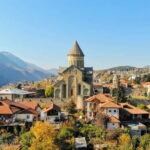
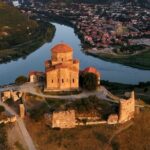
Jvari Church and the river meeting point (Stop 1)
Jvari is the opener, and it’s a good one. It sits at the confluence of the Mtkvari and Aragvi rivers, so you’re not just visiting a building—you’re standing where geography shaped what happened next.
You’ll have about 40 minutes here, and the admission is free. That time window is realistic: enough to look closely, take photos, and get your bearings before you head into Mtskheta proper.
Tip: Bring your best walking shoes. This stop is short, but you’ll want to move around for views and angles.
Svetitskhoveli Cathedral: the church that set the tone (Stop 2)
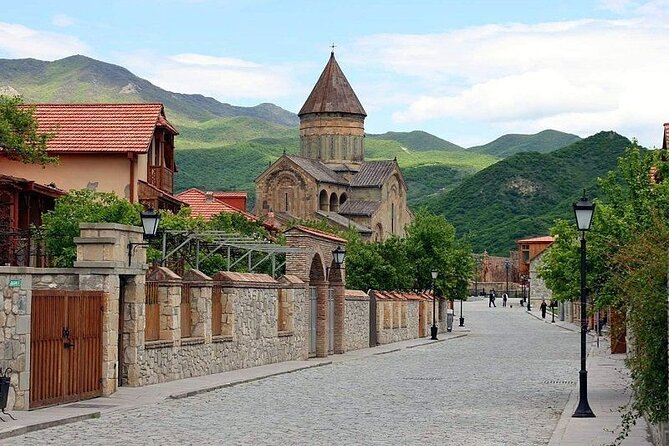
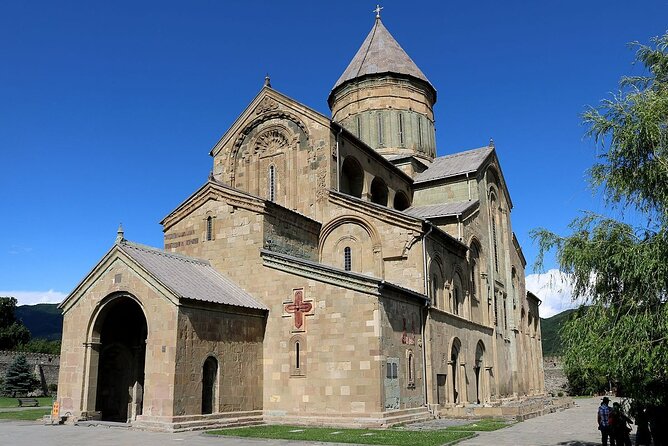
Svetitskhoveli is the centerpiece of Old Mtskheta. The site is tied to early Georgian Christian history, including a connection to Saint Nino’s story, and it’s often described as more historically significant than Jvari.
You’ll spend around 30 minutes at Svetitskhoveli, and again, admission is free. The cathedral is known for relics and historic objects inside—like the idea of Christ’s Mantle, a 4th-century baptismal font, and even cedar wood believed to come from the original structure. Even if you’re not the type to memorize church artifacts, the scale and meaning of the place make the facts feel grounded.
This is also where a good guide really matters. The best part of your visit won’t be the doors—it’ll be the story stitched around them.
Old Mtskheta UNESCO time: walking where Georgia’s story began (Stop 3)
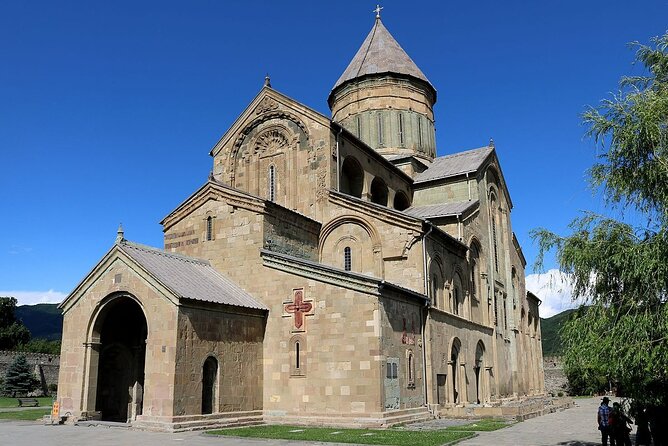
After the cathedral, you get time for the town itself. Mtskheta is one of the oldest cities in Georgia, and it has the special kind of significance that lasts: continuous habitation over a long stretch of time. UNESCO recognized it for its historical monuments in 1994.
You’ll have about 40 minutes here, with no admission ticket indicated. In that window, you’ll want to focus on two things: (1) spotting how the church sites anchor the town, and (2) understanding why people kept building and rebuilding in the same area.
Practical note: 40 minutes disappears fast in a historic core. If photos are a must, keep your camera ready and don’t wait until the last minute.
Gori’s Stalin Museum: the day’s uncomfortable pivot (Stop 4)
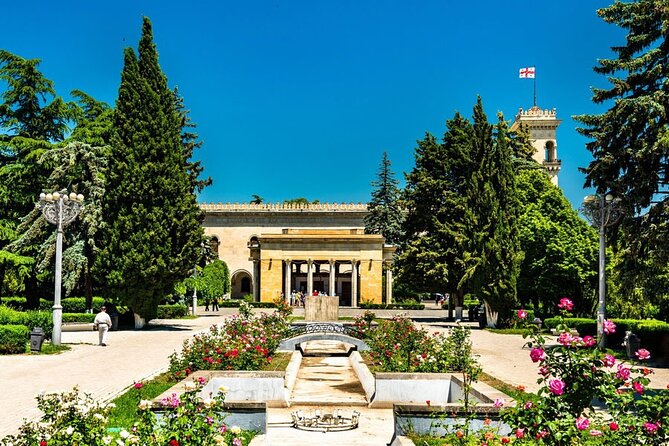
Then the itinerary turns. Gori is where Joseph Stalin was born, and the Stalin Museum is housed in a complex with a birthplace house and museum areas.
Plan for about 1 hour here, and remember the entry cost: 15 GEL per person, not included in the tour price. The information you get on the day matters a lot here, because the museum is not just a collection—it’s built around a person and a political era that still shapes how people talk about history.
One review highlight I liked: guides like David kept the day engaging while staying respectful with different nationalities in the group. That’s a real skill on a topic like this. You’re not hunting for a fun stop—you’re trying to understand context.


Uplistsikhe cave town: pagan meets Christian in carved rock (Stop 5)
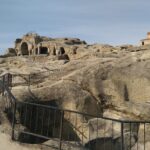
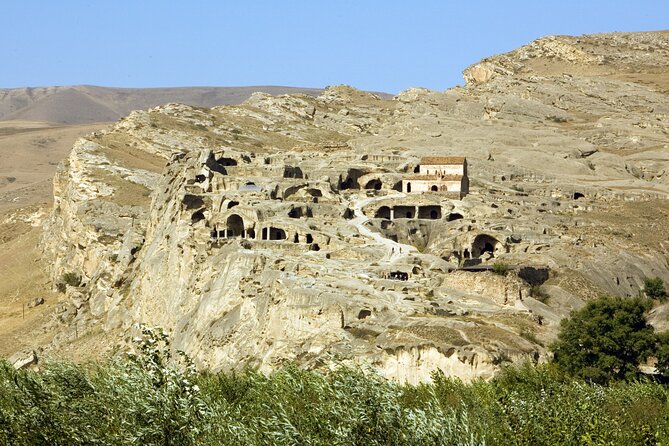
This is the most visually unique stop on the route. Uplistsikhe is a cave town built on a rocky bank of the Mtkvari River, with structures spanning from the Early Iron Age to the Late Middle Ages.
You’ll spend about 1 hour 30 minutes here, and admission is 15 GEL per person (also not included). The key detail is the mix of styles: influences from Anatolia and Iran, plus the co-existence of pagan and Christian architecture. That blend makes Uplistsikhe feel like a conversation between cultures, not a single repeating pattern.
If you like places that feel built by hand over centuries, this is your stop.
Good to know: Carved sites often involve uneven steps and rock surfaces. Take it slow, especially if the weather is slick.
Gori Fortress: a time-line you can walk (Stop 6)
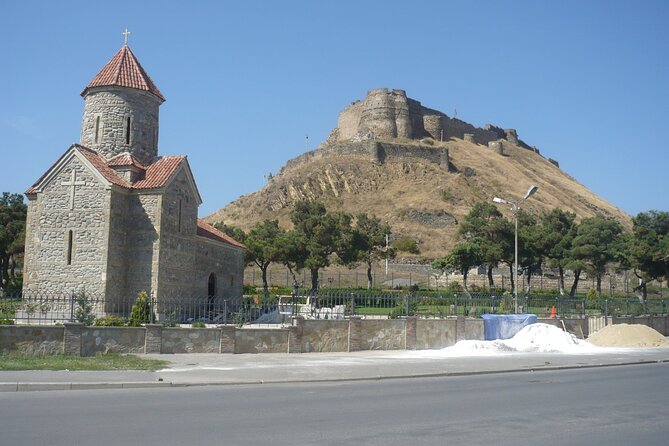
You end with Gori Fortress, a site whose origins reach back to the 7th century, first built by Arab conquerors of Georgia. Later, it was renovated by Georgian King Rostom in the 16th century, then taken over by the Ottomans in the 18th century.
You’ll have around 30 minutes here, and admission is listed as free. This stop works well as a finale because it ties together the whole day: your earlier church stops show spiritual roots, while the fortress makes political control visible.
Price and value: what you’re paying for (and what you’ll pay on-site)
At $170 per person, this is not a bargain tour. But for a private, English-guided day with air-conditioned transport and WiFi, it can be strong value—especially if you care about history stories that are actually explained.
Here’s the practical breakdown:
- Included: air-conditioned vehicle, WiFi onboard, pickup offered, and a private setup (only your group).
- Included on most stops: Jvari, Svetitskhoveli, Mtskheta monuments time, and Gori Fortress have free admission.
- Not included (you pay):
- Stalin’s Museum: 15 GEL per person
- Uplistsikhe: 15 GEL per person
- Not included: lunch (you stop for a restaurant meal at the end)
About lunch: you’ll get that restaurant stop after the tour ends. One review described it as a good-value meal in Gori. That doesn’t mean you should ignore your appetite—just plan to pay for food yourself.
How to judge the value for you: If you’d otherwise hire a private driver and guide separately, the package can feel efficient. If you’re trying to minimize costs, the extra museum/cave admissions plus lunch will add to your day.
The vehicle, timing, and guide style that make it work
Timing is built into the plan. The tour runs about 7 to 8 hours, and transportation time is included in that total. The start time is 9:00 am, and the day moves from stop to stop with a schedule that leaves enough time to look—without getting stuck in one place too long.
Pickup is a plus. Flexible pickup options mean the driver can meet you at a location you choose, which matters in Tbilisi where getting across neighborhoods can be slow.
Inside the car, you get WiFi and air-conditioning. Small thing, big deal on a long day.
The strongest theme from the experience is the guides. Names that stood out include David, Oto, and Rony. The common thread: clear English, solid historical explanations, and answers that don’t pretend when something isn’t known. That makes the day feel like a conversation instead of a lecture.
One caution: Start on time. Even a short delay can throw off the rhythm of a multi-stop day. If you want the smooth version of this tour, treat the 9:00 am start like an appointment.
Who should book this Ancient Georgia day trip?
Book this if you want a single day that hits the biggest “anchors” of Georgia’s past and present:
- church history in Mtskheta
- political history in Gori
- hands-on ancient life at Uplistsikhe
You’ll probably love it if you enjoy guided storytelling and want help turning monuments into meaning. It also fits families and most independent travelers, since it’s structured and private—so you can ask questions and pace yourself.
If you hate museums about modern politics, you might find the Stalin section heavy. If you’re not into walking around historic sites or navigating rock-cut areas, consider whether Uplistsikhe will be comfortable for you.
Should you book? My decision guide
I’d book this if your priority is learning the “why” behind Georgia’s major sites without building your own itinerary from scratch. The private format, English guiding, and a day that doesn’t skip the big moments make it a smart way to spend limited time in the country.
I’d think twice only if you’re extremely cost-sensitive or if modern political history is a hard no. Otherwise, this tour is an efficient, well-organized route that gives you a lot of memorable context in one long but manageable day.
FAQ
How long is the tour?
The tour runs about 7 to 8 hours, including travel time between stops.
What’s included in the price?
The price includes pickup offered, an air-conditioned vehicle, and WiFi on board. A mobile ticket is also provided. Lunch and certain admissions are not included.
Which sites have extra admission fees?
Admission isn’t included for Stalin’s Museum and Uplistsikhe, and each costs 15 GEL per person. Admission is free for Jvari Church, Svetitskhoveli Cathedral, and Gori Fortress based on the tour details.
Is this tour private?
Yes. It’s a private tour/activity, and only your group participates.
What language is the tour offered in?
The tour is offered in English.
Can I cancel for a full refund?
Yes. You can cancel for a full refund if you cancel at least 24 hours before the experience’s start time (free cancellation).