Porto can feel like a puzzle when you play it right. The Hidden Valley turns the city into a team game with riddles, stops at major sights, and a clear purpose: protecting local Porto heritage. I like that it mixes serious thinking with play, so you’re not just walking from A to B—you’re solving your way through the streets.
Two things really stand out for me: the clue-and-riddle format (it keeps your brain busy without feeling like homework), and the way the route hits big names like Coliseu do Porto and Torre dos Clérigos while still getting you off the obvious paths. One consideration: you need good physical fitness and it’s not recommended for people with special needs, so plan for real walking and movement.
In This Review
- Key things to know before you go
- Why this Porto mission feels different than a normal tour
- Starting at Coliseu do Porto: the QR step you can’t skip
- How the game really works: clues, teams, and your pace
- Stop 1: Coliseu do Porto as your mission launchpad
- Stop 2: Torre dos Clérigos and the thrill of earning landmark views
- Stop 3: Centro Português de Fotografia and “seeing” Porto differently
- Finishing at Armazém 93: wrap-up energy and what happens next
- Price and value: $22.88 for a 2.5-hour team puzzle
- Who should book Hidden Valley (and who might want a different style)
- Practical tips that keep your hunt smooth
- Final verdict: should you book this Porto mission?
- FAQ
- How long does The Hidden Valley mission take?
- Where do I start the mission?
- Where does the mission end?
- How do I start once I arrive?
- Is the mission offered in English?
- Do children need to scan the QR code?
- Is this a private activity?
- What’s the price per person?
- Is it suitable if I’m not very mobile?
- What if the weather is bad?
Key things to know before you go
- Start at Coliseu do Porto and begin by scanning a QR code on your phone
- Riddles and clues are designed for team thinking and playful competition
- Hits major sights like Torre dos Clérigos and the Centro Português de Fotografia, plus more
- Works at your pace: the mission is about 2–3 hours, with flexibility for breaks
- Private group experience, so it’s just your team, not a mixed crowd
Why this Porto mission feels different than a normal tour
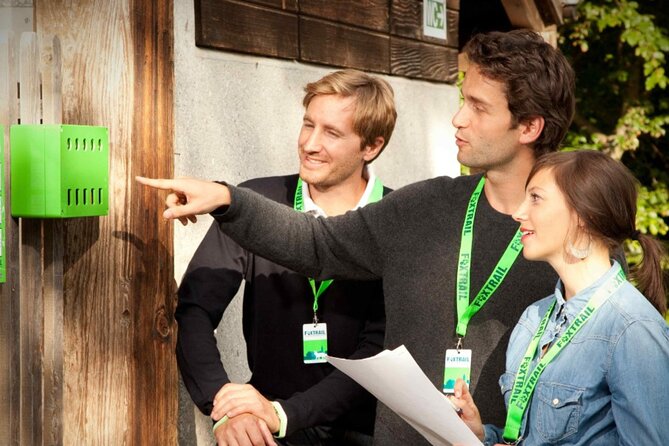
This isn’t a sit-and-listen sightseeing tour. It’s a scavenger hunt built to make you think, know, and play together. That changes the whole vibe. Instead of passively looking at landmarks, you’re earning your way toward them by solving clever clues.
The mission also has a purpose beyond points on a map: to discover and protect local heritage. Even if you’re traveling for fun, that extra layer makes the game feel more grounded. You’re not only learning where things are—you’re practicing attention, curiosity, and teamwork, which are honestly skills that help you appreciate a city long after the phone goes dark.
You can also read our reviews of more tours and experiences in Porto.


Starting at Coliseu do Porto: the QR step you can’t skip
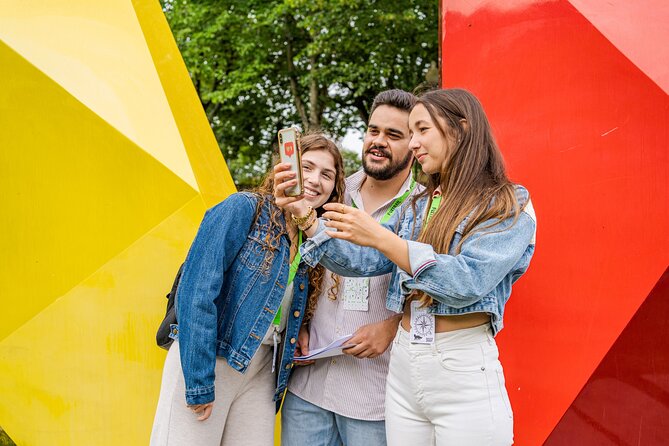
Your entry point is Coliseu do Porto. After you book, you’ll get a confirmation code by email with instructions on how to play. When you arrive, look for the QR code at Coliseu do Porto and scan it with your mobile device to start the mission.
Two practical tips here that save headaches:
- Bring your phone with battery you can trust. The whole flow depends on scanning and following what’s on the screen.
- Have your confirmation details handy in your email. If you’re juggling screens, the start step goes smoother.
Children don’t need to scan the QR code, which can make the experience easier for families. Adults do need to scan, though, so make sure your group is ready at the start.
How the game really works: clues, teams, and your pace
The Hidden Valley mission is designed for about 2 hours 30 minutes of playtime (roughly 2 to 3 hours). But you’re not forced into a strict timetable. You can work at your own pace, and you can stop for a break anytime you want.
That flexibility matters more than you’d think. Porto has hills and tight streets, and you may hit moments where a clue needs a second look. The freedom to slow down keeps the game fun instead of stressful, especially if your group includes a mix of puzzle-solvers and more relaxed walkers.
Also, the competition element is optional in spirit. You can treat it as a friendly challenge rather than a race. The best teams I’d bet on are the ones who combine logic with observation—reading clues carefully, then looking around with fresh eyes.
Stop 1: Coliseu do Porto as your mission launchpad
Starting at Coliseu do Porto is a smart choice. It’s a recognizable anchor point, which helps you get oriented fast. Since you begin with the QR scan right there, you’re not scrambling for the first clue while also trying to decode the city.
What I like about a start like this is that it sets expectations. You’re immediately in the heart of Porto’s “where do I look next?” energy. From there, the mission builds momentum: you solve one step, then the next, and suddenly the city feels like it has hidden structure.
A small drawback: since you’re starting at a major landmark, it can be busy around showings and crowds. If your group is sensitive to crowds, arrive a little early so you can scan and begin comfortably.
Stop 2: Torre dos Clérigos and the thrill of earning landmark views
The next major stop is Torre dos Clérigos. Even without forcing a checklist, the mission’s design nudges you toward iconic Porto sights by using clues and riddles that guide your attention.
This is where the “new lenses” idea really pays off. You’re not just looking up because it’s famous—you’re arriving because the mission logic pulled you there. That kind of guided discovery tends to make photos better too, because you remember why that moment mattered.
Potential consideration: this experience is meant for people with strong physical fitness. So if Torre dos Clérigos means more climbing or concentrated walking for your route planning, you’ll want comfortable shoes and a realistic pace.




Stop 3: Centro Português de Fotografia and “seeing” Porto differently
You’ll also reach Centro Português de Fotografia. A photography center is a natural fit for a mission that asks you to interpret clues and notice details. Even when you’re not thinking about cameras, it encourages observation: angles, textures, and what stands out when you stop treating the city like scenery.
What you’ll get out of this stop isn’t just a location on a list. It’s the experience of shifting how you look at the same streets you might otherwise skim past. That’s the value of missions like this: you leave with a different mental map than the one you would have built by sightseeing alone.
As for what to expect inside, the data I have doesn’t specify exhibits or timed entry elements. So I’d treat this stop as part of the puzzle route, not a guaranteed deep museum visit.
Finishing at Armazém 93: wrap-up energy and what happens next
The mission ends at Armazém 93. Your activity is also scheduled to end back at the meeting point, so the overall plan should bring you back near where you started after the puzzle wraps up.
This is a good way to handle a city game. You get a satisfying endpoint (instead of feeling like you just stop randomly), and you also avoid the “now what?” moment at the end. If your group likes closure, finishing at a specific location helps.
One more practical note: the experience requires good weather. If conditions are poor, the activity may be canceled and you’ll be offered another date or a full refund. So check forecasts like you would for any outdoor walking-heavy plan.
Price and value: $22.88 for a 2.5-hour team puzzle
At $22.88 per person, you’re paying for more than admission to a sight. You’re paying for:
- a mobile, self-paced mission (so you can play with your own timing),
- English-language availability,
- a route that links multiple major landmarks (Coliseu do Porto, Torre dos Clérigos, Centro Português de Fotografia),
- and a private group format, meaning it’s only your team.
That private angle is where the value often clicks. When it’s only your group, you control the teamwork pace and you’re not forced into the dynamic of strangers. It also tends to make families and friends feel more comfortable staying in character—arguing about clues, checking details, and laughing at near-misses.
The main way the value can drop is if you don’t enjoy puzzle solving or you want a traditional guided history lecture. This mission is built for curiosity and play, not for someone else narrating every step.
Who should book Hidden Valley (and who might want a different style)
This fits best if you’re the kind of traveler who likes to:
- do things with your brain turned on,
- enjoy team problem-solving,
- and see famous places through a game-style route.
It also tends to work well for friends and family. The overall feedback quality centers on the fun and the challenge—people like that it’s clever and that it can be played at a pace that makes sense for the group.
It’s not ideal if:
- you need limited walking or extra mobility support (good physical fitness is required),
- your group includes people who may struggle with the style of a scavenger hunt,
- or you dislike activities that rely on smartphone scanning and reading instructions.
Practical tips that keep your hunt smooth
Here are the things I’d do before you step into the mission:
- Charge your phone the day before. You’ll be scanning and checking clues, and a dying battery can turn fun into annoyance fast.
- Assign roles early. One person can lead reading clues, one can check surroundings, and one can keep an eye on time and team energy.
- Wear good walking shoes. The experience isn’t described as gentle, and physical fitness is called out for a reason.
- Plan for weather. It’s weather-dependent, so don’t schedule it as your only outdoor activity on an unreliable day.
- Start promptly at Coliseu do Porto. Since the QR start is part of the core system, giving yourself a little buffer reduces stress.
One caution worth taking seriously: there is at least one report of an event not taking place as expected, with no Foxtrail contact upon arrival and a delay in getting help. That doesn’t mean it’s the norm, but it is a reminder to follow the start instructions carefully, arrive on time, and keep your confirmation email accessible so you can troubleshoot quickly if something feels off.
Final verdict: should you book this Porto mission?
I’d book The Hidden Valley if you want Porto to feel interactive. It’s one of those experiences where solving riddles can make you notice details you’d normally miss, and the route links major sights with a sense of discovery rather than a checklist.
I’d skip it if you want a classic guide-led tour with a steady narrative, or if your group can’t comfortably handle walking and movement. Also, if weather is looking rough, consider whether you can be flexible—since it requires good conditions.
If you’re excited by team puzzles, landmarks like Coliseu do Porto and Torre dos Clérigos, and a mission tied to protecting local heritage, this one is an easy “yes.” It’s fun challenge time that helps you experience Porto with your brain and your feet working together.
FAQ
How long does The Hidden Valley mission take?
It’s designed for about 2 to 3 hours of playtime, roughly 2 hours 30 minutes.
Where do I start the mission?
You start at Coliseu do Porto, Porto, Portugal.
Where does the mission end?
The mission ends at Armazém 93, and the activity is scheduled to finish back at the meeting point.
How do I start once I arrive?
After booking, you’ll receive instructions by email. At Coliseu do Porto, find the QR code and scan it using your mobile device to initiate the mission.
Is the mission offered in English?
Yes, the experience is offered in English.
Do children need to scan the QR code?
No, children don’t need to do the QR scan to initiate the mission.
Is this a private activity?
Yes. It’s private, so only your group participates.
What’s the price per person?
The price is $22.88 per person.
Is it suitable if I’m not very mobile?
It requires a strong physical fitness level and is not recommended for people with special needs.
What if the weather is bad?
The experience requires good weather. If it’s canceled due to poor weather, you’ll be offered a different date or a full refund. Free cancellation is available up to 24 hours in advance for a full refund.