REVIEW · MARRAKECH
Marrakech Jewish Heritage and souks Tour
Book on Viator →Operated by Morocco Private Expert · Bookable on Viator
Marrakech’s Jewish quarter tells a human story. I love how the tour links the Mellah with market life around the spice souk, so you get more than one kind of history. I also like the private setup, which lets you steer the visit toward crafts, architecture, or shopping. One catch to plan for: parts of the walking lanes are tight, and some synagogue and cemetery entries are not included.
Guides like Chachi, Noura, Ismail, and Saïd have a knack for making the details feel practical, not just academic. For example, you’ll learn what changed at Slat al-azamat, including a women’s gallery added during renovation. The tour runs about four hours, starting near Bab Agnaou and finishing at Jemaa el-Fna.
After you wrap in the old market zone, you still have time to roam. The route flows into Souk Semmarine, where you can watch workshops and shop for crafts without getting completely lost.
In This Review
- Key things to know before you go
- Why the Mellah tour is the smart way to learn Marrakech’s Jewish legacy
- Stop 1: Mellah lanes, Lazama Synagogue courtyard, and Bab Mellah Spice Souk
- Stop 2: Slat al-azamat synagogue and the architectural clues you can actually see
- Stop 3: Miaara Jewish Cemetery, where the years show up in the ground
- Stop 4: Jemaa el-Fna as your gateway into souks and workshop streets
- Stop 5: Souk Semmarine, confusion with a guide worth paying for
- Pricing and value: is $95 per person a fair deal?
- How to tailor the tour to what you actually care about
- What to wear and how to plan your half-day
- Should you book this Marrakech Jewish Heritage and souks tour?
- FAQ
- How long is the Marrakech Jewish Heritage and souks tour?
- How much does the tour cost?
- Is this tour private?
- Where does the tour start and end?
- What main areas and sights are included?
- Are admission tickets included?
- What is included in the tour price?
- What is not included?
- How do I receive my tickets?
- Is good weather required?
Key things to know before you go
- Private and customizable: you can shape the focus to match your group’s interests, instead of following a fixed script.
- Mellah first: you start in the Jewish quarter’s lanes and markets, not in a distant museum.
- Synagogues with visible architectural details: Slat al-azamat includes renovation changes like the women’s gallery and a marble arch.
- Miaara cemetery context: you’ll see a cemetery that’s more than 500 years old, with graves that reflect different eras and even epidemic burials.
- Spice and market culture: Bab Mellah connects herbs and spices to everyday life in Morocco.
- Souk Semmarine time: you get a longer walk to browse workshops and handicrafts (with help choosing better quality).
Why the Mellah tour is the smart way to learn Marrakech’s Jewish legacy
Marrakech can feel like a nonstop blur of color and sound. This tour slows things down in the part of town where you can still read the past in alley width, courtyard layouts, and the way people move through a neighborhood.
You get two big wins. First, you see the Mellah itself, including key religious sites and the quiet, heavy atmosphere of the Miaara Jewish cemetery. Second, the tour doesn’t lock you in history mode. It connects those sites to nearby market culture—spices, fruit, meat stalls, and craft workshops—so the Jewish story sits inside Moroccan daily life, not beside it.
The tour also leans into something that’s easy to miss on your own: the way geography shapes memory. When you’re inside the warren of lanes, it’s easier to understand why the Mellah mattered, how communities lived there, and how markets grew around the same streets.
You can also read our reviews of more tours and experiences in Marrakech.


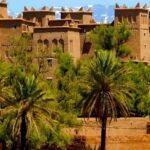
Stop 1: Mellah lanes, Lazama Synagogue courtyard, and Bab Mellah Spice Souk
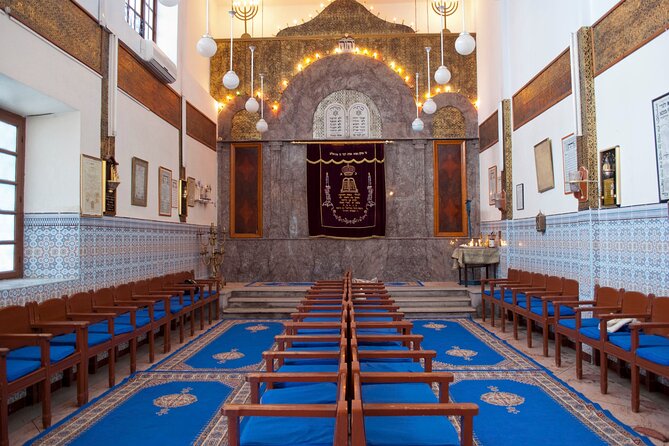
You begin in the Mellah area and settle into its smaller lanes. This is where the neighborhood’s Jewish life used to concentrate, and where you can still spot historic buildings and courtyard space.
A highlight here is Lazama Synagogue, known for its tiled courtyard and exhibitions on Jewish life. Even when you’re not a museum person, these kinds of small indoor displays work well because they ground the walking tour. You’re not just looking at old walls; you’re connecting what you see outside to what the neighborhood represented.
From there, you’re also close to Miaara Jewish cemetery, which you’ll visit later. That proximity matters, because it keeps the morning coherent: synagogue life, then the cemetery, then the market streets that surround it.
Next you shift into the neighborhood’s everyday engine. You can pass by the Mellah Market, where stalls sell things like meat and fruit. Nearby you’ll run into Bab Mellah Spice Souk, a strong entry point for Morocco’s spice culture.
If you like to shop for flavors, this is one of the better places to do it. You may also stop around an herb seller area, where you can see and ask about herbs and spices that show up in Moroccan cooking.
What I especially like is the contrast. Along the edges of the Mellah you can find European-style cafes and Moroccan restaurants serving grilled meats and tajines. It’s not a theme park version of the past. It’s the living neighborhood, just with visible layers of history.
Practical note: This portion is about an hour, so you’ll move with purpose. Wear shoes you can stand in for a while, because the Mellah lanes are not built for sneakers-with-comfort-as-optional.
Stop 2: Slat al-azamat synagogue and the architectural clues you can actually see
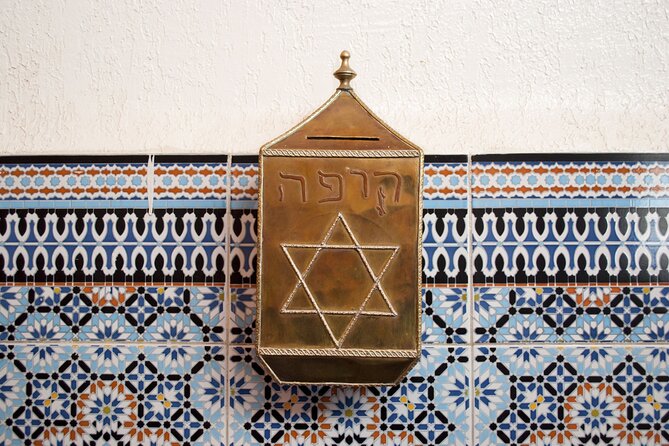
Slat al-azamat sits in the Mellah and dates to around 1492, serving the Jewish community there. What makes this stop worthwhile is that it’s not just a name on a map. The description points to a real architectural style: a synagogue built around a central courtyard.
Then the visit adds another layer. It was recently renovated, and that matters because renovations leave visible traces. For Slat al-azamat, the women’s gallery (called erzat nachim) was added to the eastern wall. Also, a typical moveable wooden arch was replaced by a marble arch along the eastern wall.
Even if you don’t think of yourself as an architecture person, these kinds of details are a fast way to understand time passing. You’re watching how a community maintained a place of worship while adapting elements over centuries.
Timing-wise, plan for roughly 30 minutes at this stop. Admission for the synagogue is not included, so it’s smart to budget a separate ticket cost if you want to see inside.
How to get more out of it: Ask your guide to point out the courtyard layout and the specific renovation features. When someone walks you through what’s changed, it helps you see the building like a story, not just a photo.
Stop 3: Miaara Jewish Cemetery, where the years show up in the ground
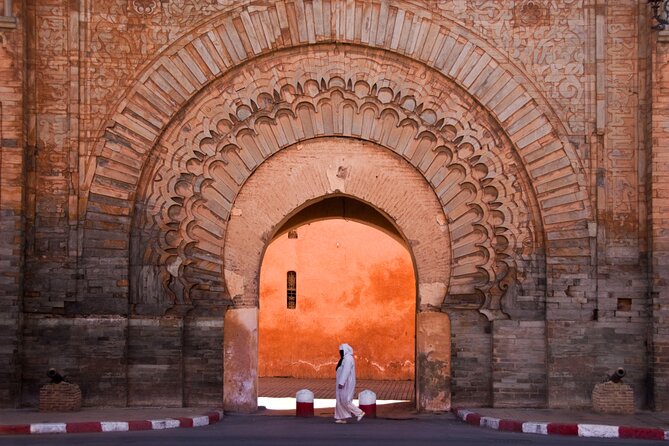
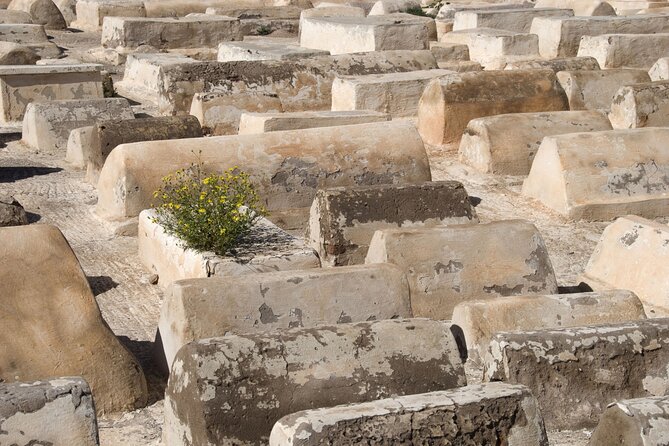
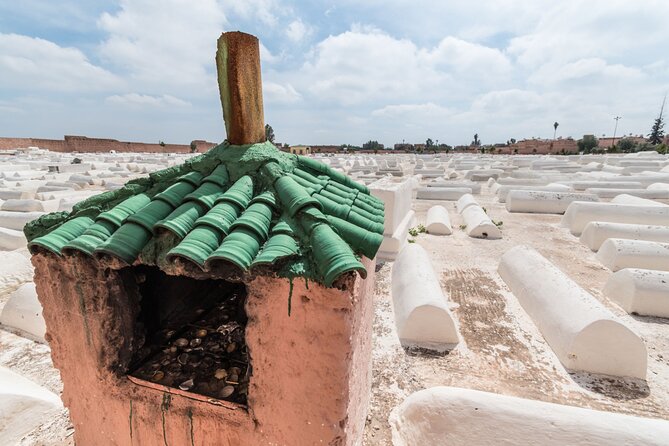
Miaara Jewish cemetery is one of the quietest moments of the tour. It’s located in the Mellah neighborhood and is more than 500 years old, with graves that vary in size and appearance.
You’ll notice that not every grave looks ornate. Many have a basic appearance. That can feel stark, but it’s also what makes it honest. The cemetery includes graves dated across several centuries, and it also includes evidence of rushed burials during epidemics.
There’s a particular detail to listen for from your guide: the cemetery has anonymous graves, and the left side is referenced in relation to those epidemic-era burials. You don’t need to be an expert to understand why that matters. It’s a reminder that community history wasn’t only celebrations and festivals. It also included fear, illness, and loss.
This stop is about 25 minutes. Admission is not included, so you may pay on site depending on what’s required.
Respect tip: keep your voice low and your pace slow. Cemeteries in Marrakech are often active places in the sense that people move around the wider neighborhood, but inside the cemetery itself, treat it like a moment that deserves a pause.
Stop 4: Jemaa el-Fna as your gateway into souks and workshop streets
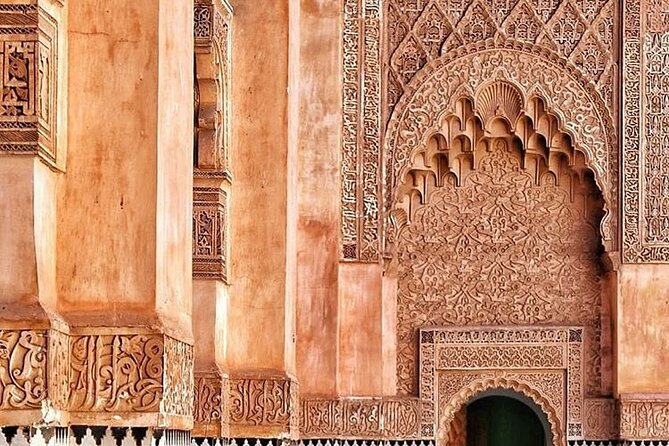
After the heavier heritage stops, the tour shifts gear to market navigation.
You’ll reach Jemaa el-Fna area, and your accredited guide walks you through souks and markets. Even though this portion may feel brief, it plays an important role: it connects the story of Jewish life in the Mellah to the broader trading rhythm of Marrakech.
As you move through different market lanes, you may see workshops focused on crafts like leather, blacksmith work, and woodworking. It’s not just shopping for souvenirs. It’s watching how products are made and who makes them.
This segment is short (around five minutes in the schedule), but it sets you up for the longer souk block that comes next. Think of it as the bridge between heritage and the shopping streets where you can spend real time.
Stop 5: Souk Semmarine, confusion with a guide worth paying for
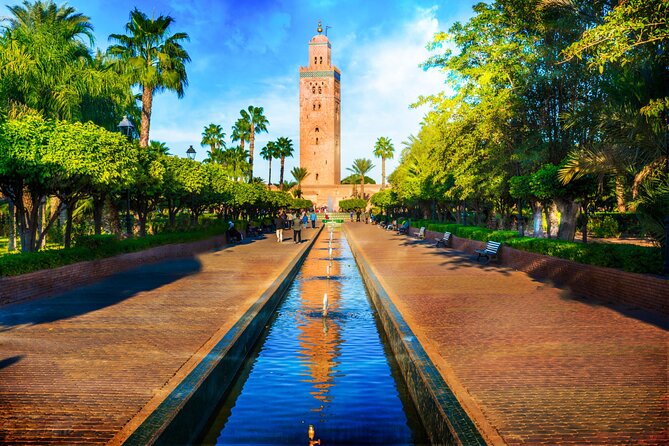
Souk Semmarine is a practical reason to book a guide. Marrakech souks can be a maze. Without help, you might end up walking in circles, ending up in the places that sell the same things every day to every tourist.
With a guide, the experience becomes more useful. You’ll get a full stretch of time—about two hours—to walk the confusing markets and look at workshops and handicrafts.
If shopping is part of your plan, this is where you can ask questions and look for better quality. Your guide can help you spot what’s worth your attention, and you can browse without feeling like you’re getting rushed.
What you’ll likely see depends on what’s active in the market that day, but the tour route points to hands-on crafts. You’re in the right zone to spot leather goods, metalwork, and woodworking-style items, then decide what you actually want to carry home.
Admission here is free, so the value is mostly in your time and guidance.
My advice for shopping: set a small target before you enter. Maybe you want one craft item, or one spice product, or something that fits your budget. If you arrive with no plan, the souks will happily give you a plan you didn’t ask for.
Pricing and value: is $95 per person a fair deal?
At $95 per person for roughly four hours, this is priced like a focused city tour, not a big bus excursion. It’s also private for your group, which is a key difference. Private time matters in a place like Marrakech, where getting from point to point inside old lanes can take longer than you expect.
What you get for the price:
- Guide service
- All fees and taxes
What you may need to pay separately:
- Lunch
- Souvenirs
- Some site admissions (for example, synagogue and cemetery entries are not included; the Lazama Synagogue ticket is noted as free)
So is it worth it? Usually, yes—if you care about accuracy and don’t want to waste your morning. A good guide does more than say facts. They show you what to notice in courtyards and walls, and they help you read a market without getting overwhelmed.
You’re also paying for pacing. Two hours of Souk Semmarine plus heritage stops means you’re not making your day up as you go along. You’re using a single morning window for a lot of meaningful stops.
How to tailor the tour to what you actually care about
One of the best parts of this experience is that it’s designed for customization. Since it’s private, you can steer it rather than suffer through a generic route.
Here are three easy ways to personalize it before you start:
- If you love food and flavors, lean into the spice souk side and ask your guide to explain herbs and spices in the context of market life.
- If you’re a history and architecture fan, prioritize courtyard details and the renovation changes at Slat al-azamat.
- If you want to shop, tell the guide what kind of crafts you’re hunting for, and use the Souk Semmarine time to compare quality instead of wandering.
You can also ask for a slower pace if you need breaks. In one case shared by a past group, the guide adjusted timing to accommodate mobility issues. So it’s worth telling the operator ahead of time what will help you enjoy the walk.
What to wear and how to plan your half-day
This tour is in walking-lane territory. You’ll spend time in the Mellah neighborhood, then move into market lanes and souks.
Plan for:
- Comfortable shoes for uneven stone and narrow turns
- Light layers, since you might move from shaded courtyards to sunlit markets
- A water plan for your own comfort
Also, this experience works best with good weather. If weather turns, you should expect rescheduling or a refund option based on what’s allowed for that date.
Lunch isn’t included, so think about what you want after. The tour ends at Jemaa el-Fna, which makes it easy to continue your day in the same general area.
Should you book this Marrakech Jewish Heritage and souks tour?
I’d book it if you want Marrakech with context. This is not just a history walk and it’s not just a shopping trip. It’s a single thread that connects the Mellah’s synagogue and cemetery sites to the markets and craft streets around them.
Skip it or rethink if:
- You want a fully independent DIY route with no tickets or guidance at sites.
- You’re not interested in heritage stops and would rather spend your time entirely in the souks.
- You’re worried about walking through tight lanes. You can still ask for a slower pace, but the area is what it is.
If you do book, go in with one goal: learn what you’re seeing in the Mellah, then use the souks time wisely. That combo is where the value lives.
FAQ
How long is the Marrakech Jewish Heritage and souks tour?
It lasts about 4 hours total.
How much does the tour cost?
The price is $95.00 per person.
Is this tour private?
Yes. It’s a private experience for your group.
Where does the tour start and end?
It starts at Bab Agnaou, Marrakech 40000, Morocco and ends at Jemaa el-Fna in Marrakech 40000, Morocco.
What main areas and sights are included?
You’ll visit the Mellah area, including Lazama Synagogue, Slat al-azamat synagogue, and Miaara Jewish cemetery, plus time around Jemaa el-Fna and Souk Semmarine.
Are admission tickets included?
Not all are included. Lazama Synagogue is listed as free admission, while Slat al-azamat and the Miaara Jewish cemetery are not included. Souk and market areas are free.
What is included in the tour price?
The tour includes the guide service and all fees and taxes.
What is not included?
Lunch and souvenirs are not included.
How do I receive my tickets?
A mobile ticket is provided.
Is good weather required?
Yes. The experience requires good weather. If it’s canceled due to poor weather, you’ll be offered a different date or a full refund.