REVIEW · ROME
THINK BIG, GO MINI! Rome Day&Night in Mini Cooper Classic Cabrio
Book on Viator →Operated by MINI TOUR ROMA · Bookable on Viator
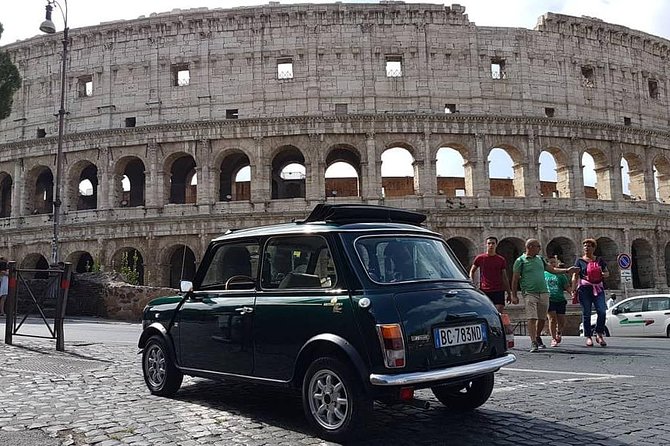
A classic Mini turns Rome into a personal film. You’ll cruise Rome in a vintage Mini Cooper Classic Cabrio, hitting the big sights with quick photo time and guided context from Luca (and, sometimes, Fabio). Two things I love: the intimate small-group feel that keeps it fun, not frantic, and the way the route stacks both day-and-night Rome highlights in one loop. One possible drawback: the stops are brief, so you’ll need to decide where you want your attention most.
This is a 3-hour experience with pickup offered, mobile ticket entry, and English-guided commentary. You’ll also get snacks, bottled water, and alcoholic beverages, plus an aperitif and food at a local spot—an easy way to turn sightseeing into a real Roman break. If you want long museum-style time in each monument, this may feel a bit fast.
In This Review
- Key things that make this Rome Mini tour worth it
- Why a Mini Cooper Cabrio for Rome day-and-night
- The pace: 3 hours, many stops, and smart how-to
- Piazza Navona to Trevi Fountain: the baroque hits (quick, but on target)
- Piazza di Spagna and the Pantheon: two icons with totally different vibes
- St. Peter’s Basilica to Castel Sant’Angelo: Vatican-area power in a snapshot
- Gianicolo viewpoints and Fontana dell’Acqua Paola: where Rome looks like Rome
- Trastevere after the sun: aperitif, food, and old-neighborhood energy
- Largo Argentina and the Forum area: where Rome’s timeline gets real fast
- Aventine Hill views, Orange Park angles, and the Secret Keyhole moment
- Other ancient stop markers: Cestio, arenas, baths, and the old market
- Price and value: what $209.70 buys you (and what it doesn’t)
- Should you book the Rome Mini Cooper classic cabrio?
- FAQ
- How long is the Rome Mini Cooper tour?
- Is pickup available?
- What’s included during the tour?
- Do you visit major landmarks like the Pantheon and St. Peter’s Basilica?
- Is this tour private?
- Is this tour refundable if plans change?
Key things that make this Rome Mini tour worth it
- Vintage Mini Cooper cabrio ride: A small, open-top vehicle makes Rome feel closer than a bus window.
- Luca’s Rome storytelling: You get explanations while you roll, not just at one stop.
- Photo time at Aventine Hill: You’ll get a viewpoint break plus the famous Secret Keyhole area.
- Day-to-night rhythm: You see landmark-after-landmark, then shift toward evening atmosphere.
- Aperitif and bites included: Drinks and food are built into the route, not tacked on later.
Why a Mini Cooper Cabrio for Rome day-and-night
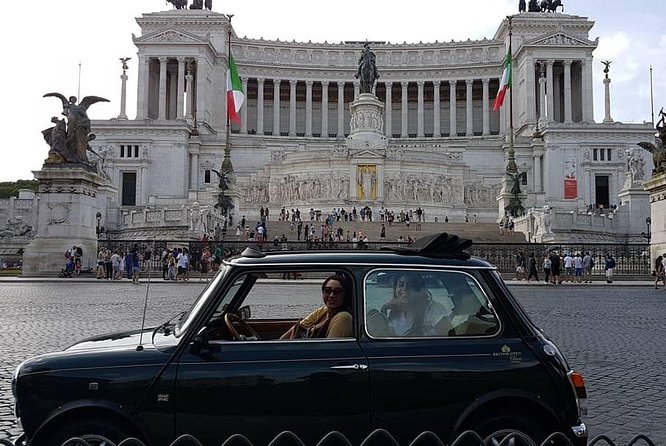
Rome is famous, which also means it can feel crowded and rushed. This tour uses a different trick: you move through the city in a vintage Mini cabrio, so the day-to-night feel comes through even when individual stops are short. Think of it as “get your bearings fast” plus a guided highlight list, with actual fun baked in.
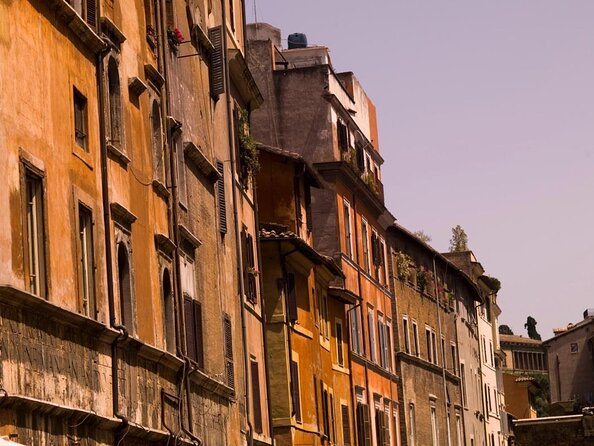
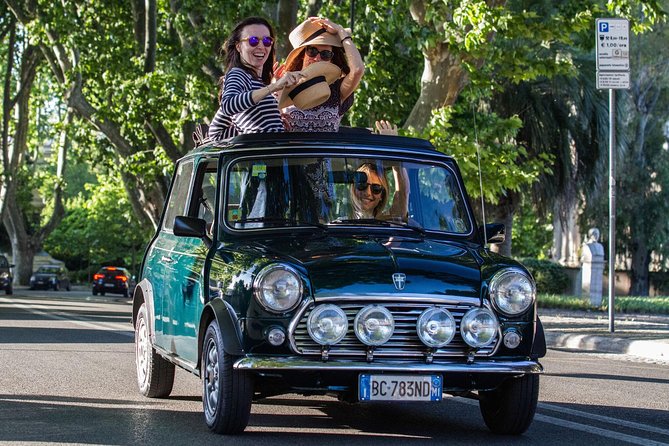
The car also changes how you experience Rome’s scale. You see arches, domes, and basilicas pop into view at street level, then you roll on before you lose the mood. I like that you’re not just looking at monuments—you’re watching Rome slide by, then stepping out long enough for a few great shots.
And yes, the route aims at both sides of Rome: the iconic daytime postcard views, then the shift toward evening energy in older neighborhoods.
You can also read our reviews of more tours and experiences in Rome.
The pace: 3 hours, many stops, and smart how-to
The tour runs about 3 hours, with stops generally around 5 to 10 minutes. That timing matters. You’re not going to do deep reading at each place, and you’re not meant to. What you are meant to do is hit the major sights and quickly compare “what I see” with “what it means.”
Here’s how to get more out of that short timing:
- Pick one stop for a closer look and one stop for a quick photo. That way you don’t feel you missed something everywhere.
- Wear comfortable shoes anyway. You’ll hop out at multiple points, and a 5-minute “look” can turn into extra steps for photos.
- If you love photos, plan to move to the best angles fast. The guide’s timing keeps you from wasting time.
Because it’s private for your group (your group only), the pacing can feel more flexible than a bus tour—especially when you want a few extra seconds at a view.
Piazza Navona to Trevi Fountain: the baroque hits (quick, but on target)
You’ll start at Piazza Navona, with time to see the Fontane del Bernini and also the chiesa del Borromini. This area is one of those Rome spots where the architecture looks dramatic from every angle. With only about 10 minutes, your goal is simple: take in the layout, then grab a couple of photos that show the piazza as a whole.
Next up is Trevi Fountain, built by Nicola Salvi between 1732 and 1762. Trevi is famous enough that it can feel like a chore. The advantage here is you’ll view it as part of a larger route. That helps you remember it as a story beat, not a single task to finish.
One tip for Trevi: don’t obsess over one perfect shot. You’ll have multiple viewpoints as the car and walking portions reposition you. If you’re trying to capture Rome’s scale, include a bit of the piazza around the fountain, not just the water.
Piazza di Spagna and the Pantheon: two icons with totally different vibes
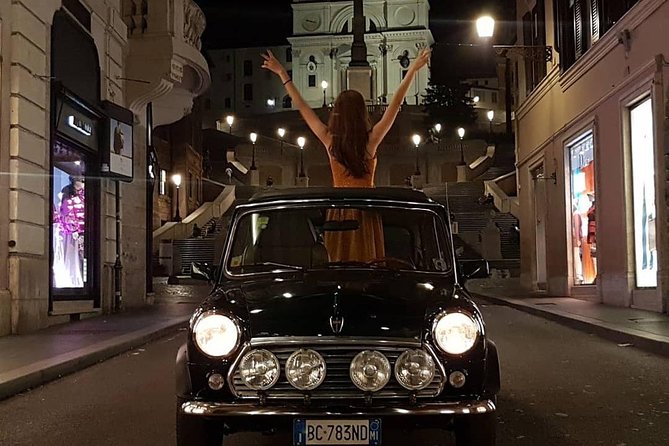
From Trevi you move to Piazza di Spagna, where you’ll be able to see the Fontana La Barcaccia by Bernini. This stop gives you a classic composition moment: stair lines, fountain shape, and that famous Rome “postcard geometry.” Because the timing is short, aim for a wide shot that shows the stair-and-fountain relationship.
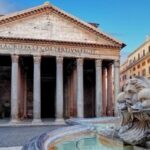
Then comes the Pantheon—the tour route even labels it as Tempio Pagano. This is where Rome’s layers feel real. You’ll go from baroque flair to an ancient space that still works as a site people experience in the present tense.
The quick stop works in your favor if you’re doing a highlight circuit. You get the wow factor without spending half your day stuck in one location. If you want more time inside the Pantheon, you can always plan a separate visit later. For this tour, the win is getting it into the same 3-hour Rome “movie” as everything else.
St. Peter’s Basilica to Castel Sant’Angelo: Vatican-area power in a snapshot
You’ll also include St. Peter’s Basilica (listed as a 1500s basilica) with another brief window to take it in. Even if you don’t go super deep, standing in the orbit of a place like this helps you understand why people make Rome a once-in-a-lifetime destination.
After that, you’ll head toward Castel Sant’Angelo, associated with the Tomba di Adriano. This is a different kind of monument: more fortress, more river-side presence. The value of a stop like this during a day-and-night loop is contrast. You see sacred grandeur, then a landmark with a very different shape and mood.
This is also a good point in the route to let the guide’s connections land. If you like seeing how Rome’s places relate, this portion helps you connect the dots quickly.
Gianicolo viewpoints and Fontana dell’Acqua Paola: where Rome looks like Rome
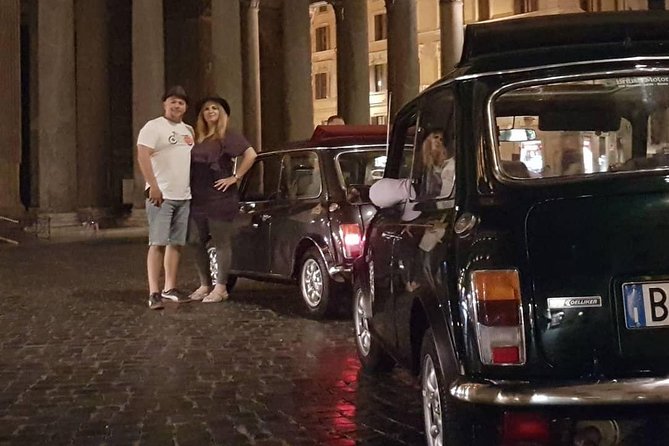
One of my favorite types of sightseeing is the viewpoint moment. That’s why Colle del Gianicolo is a standout on this route. You get time for a beautiful view of Rome from the hill. In a fast-paced tour, a viewpoint stop is how you reset your brain.
Next, Fontana dell’Acqua Paola is another listed “beautiful view” moment. It’s one of those Rome patterns: you get a monument that’s part architecture, part excuse to stand back and take a wider look.
If you want a simple strategy: treat these two stops as your “photo calibration.” Once you’ve got a viewpoint in your camera, you’ll understand the city’s layout better when you look at the next monuments rolling past.
Trastevere after the sun: aperitif, food, and old-neighborhood energy
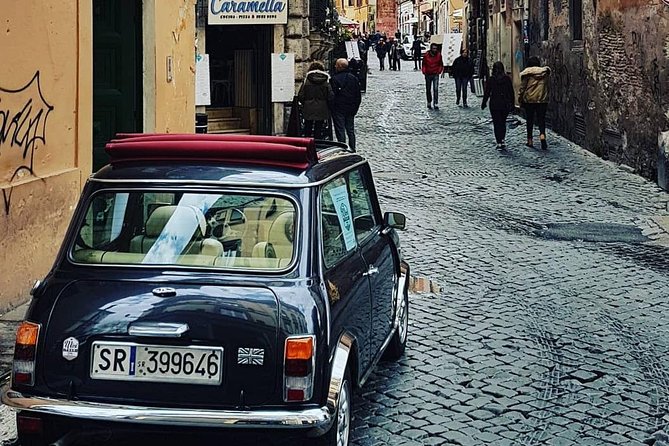
The tour then brings you toward Trastevere, described as a top night-life zone with an area around 1,000 years old. Whether your vibe is dinner, drinks, or just wandering, this is a smart inclusion on a day-to-night itinerary. Rome can feel like a museum during the day. Trastevere helps it feel like a living neighborhood.
This is also where the tour’s food-and-drink portion becomes more than just a perk. Highlights specifically mention an aperitif and food at a local spot, and the inclusions list alcoholic beverages along with snacks and bottled water.
That matters for value. You’re not spending extra money mid-tour just to keep energy up. You’re also taking a proper break instead of running on walking stamina alone.
If you’re the kind of person who likes to try local rhythms, this stop is the soul of the tour. Even if you only stay for the built-in time, you’ll leave with a better sense of where Rome changes gear after dark.
Largo Argentina and the Forum area: where Rome’s timeline gets real fast
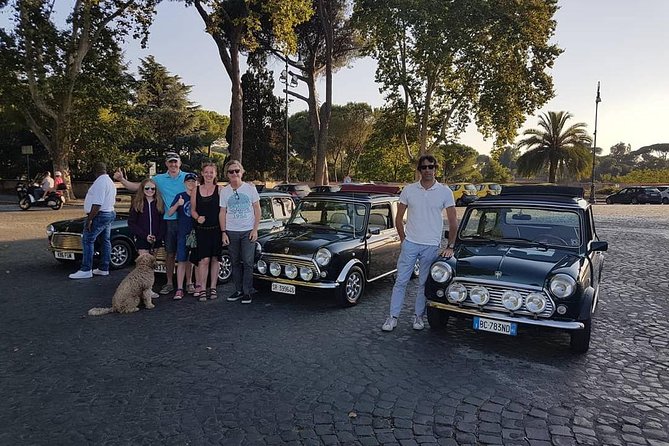
Next you’ll visit Area Sacra di Largo Argentina, described as the exact place where Julius Caesar was killed in Rome’s historic center. A short stop like this can still hit hard, because you’re standing where history is tied to a known event.
Then you move toward the Altare della Patria area (listed as Complex of the Victorian Ala Brasini). This portion is important because it shifts Rome’s story away from ancient-only. It’s a different “Rome language,” more monumental and civic, and it helps you see how later eras claim space too.
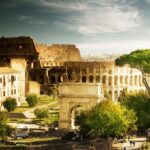
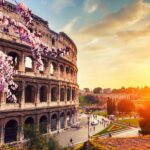
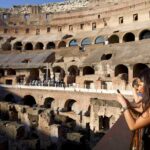
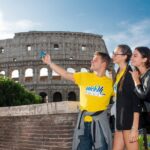
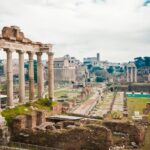
After that comes Foro Romano and Palatine Hill—the tour frames Foro Romano as the cultural and political center of old Rome, and Palatine as one of the seven hills. If you’ve heard people call the Forum “the heart,” this is where it starts to make sense. Even with brief time, you get a sense of scale: these weren’t small gatherings.
Short timing here is a feature, not a bug. Your brain can absorb a few key landmarks now, then you can build a deeper trip later with a clearer idea of what you want to see.
Aventine Hill views, Orange Park angles, and the Secret Keyhole moment
The route includes Aventine Hill (listed as Turo Aventi), with time for a view from what’s described as Orange Park. It also calls out the Secret Key Hole and Sant’Anselmo Church.
This is one of those Rome experiences that feels tailored to photographers and romantics in equal measure. The famous “keyhole” view is popular for a reason: it turns Rome into a framed picture. If your goal is to leave with images that don’t look like standard sightseeing, this is the part to linger on.
And again, timing is short, so make your choice. If you want the viewpoint shot, get set quickly. If you want the keyhole framing, focus on that and don’t let yourself get pulled into distracting angles. The guide’s pacing keeps you from missing the rest.
Other ancient stop markers: Cestio, arenas, baths, and the old market
Your loop also includes stops listed as:
- Piramide Tomba di Caio Cestio (12 AD)
- Antica Arena
- Antiche terme Romane
- Old Market
- Plus a stop labeled The oldest in the world
Because the route info names these as quick stops, you should think of them as “context anchors.” They add more texture to the route than a simple list of the biggest-name monuments alone.
If you’re someone who likes your sightseeing to feel like a scavenger hunt—spot, learn, move on—this part will feel fun. If you prefer one site per hour with long time for photos and reading, you might find these brief mentions a little light. But they do help the overall route feel like a real Rome scan.
Price and value: what $209.70 buys you (and what it doesn’t)
At $209.70 per person for about 3 hours, the main value isn’t “more time.” It’s the combination of:
- A vintage cabrio Mini ride
- A small, intimate feel
- Multiple major landmarks in one loop
- Snacks, bottled water, and alcoholic beverages
- An aperitif and food stop
- English guidance
If you compare this to doing the same route on your own, you’d spend time coordinating transport, paying for snacks and drinks, and figuring out which viewpoint angles are worth your effort. Here, the work is handled, and the pacing is designed around efficient viewing.
What this price does not cover is extra time in sites. You won’t replace a full museum day with this. Instead, you get a fast, guided “best-of Rome” that sets you up for smarter follow-up visits.
Booking is also done fairly in advance on average (about 51 days). If you’re traveling in peak season, lock it in early so you get the time window you want.
Should you book the Rome Mini Cooper classic cabrio?
I’d book this if you want:
- A fun way to see a lot of Rome without planning every leg
- Day-and-night variety, including a real evening-feeling stop in Trastevere
- A guide like Luca—friendly and passionate about Rome’s details—with time to take pictures
- Included food and drinks so the tour feels like an experience, not just transport
Skip it if:
- You hate short stops and need long time inside monuments
- You’re focused on one deep-dive attraction and want hours there
- You dislike tours where multiple sites are covered quickly
One last practical note: the tour is non-refundable and can’t be changed, so make sure your schedule is solid before you reserve.
FAQ
How long is the Rome Mini Cooper tour?
It’s about 3 hours. The route includes multiple stops, generally around 5 to 10 minutes each, so you’ll be moving through many landmarks within the time.
Is pickup available?
Yes. Pickup is offered, and the experience is run with a mobile ticket.
What’s included during the tour?
You get snacks, bottled water, and alcoholic beverages. The highlights also include an aperitif and food at a local spot.
Do you visit major landmarks like the Pantheon and St. Peter’s Basilica?
Yes. The route includes the Pantheon and St. Peter’s Basilica, plus several other big sights around Rome.
Is this tour private?
Yes. It’s listed as a private tour/activity, and only your group will participate.
Is this tour refundable if plans change?
No. It’s non-refundable and cannot be changed for any reason.