REVIEW · ATHENS
Acropolis of Athens, Ancient Agora and the Agora Museum Tour
Book on Viator →Operated by Athens Walking Tours · Bookable on Viator
Walking Athens, you’ll feel the centuries click. This tour threads the Acropolis monuments together with the Ancient Agora, so you’re not just staring at stones—you’re getting the why behind them.
I love how the guide keeps the story moving, from Parthenon views to the Dionysus Theater and Herod Atticus Odeon. I also like the way you transition from hilltop temples to street-level Agora life, then wrap it up at the Ancient Agora Museum. One drawback: this is a walking route with steep climbs, and entrance times are strict—show up late and you may miss your scheduled entry.
In This Review
- Key things to know before you go
- Athens in four hours: how the Acropolis-to-Agora route works
- Meeting at Dionysiou Areopagitou 3 and the security reality check
- Stop 1 at the Acropolis: monuments, theaters, and the story behind them
- The Parthenon stop: a focused 30 minutes for views and photos
- Stop 3: Ancient Agora of Athens and how a city-state really functioned
- Ancient Agora Museum: 30 minutes that can save you from blurry memories
- Skip-line tickets, strict entry times, and the one thing to do now
- What you get for $67.58—and why that can be good value
- Walking comfort: shoes, water, sun protection, and stroller rules
- Guide style matters: you’ll likely get names and stories, not scripts
- Who should book this tour (and who should skip it)
- Should you book the Acropolis of Athens and Ancient Agora Tour?
- FAQ
- What time does the tour start, and where do I meet?
- How long is the Acropolis of Athens, Ancient Agora and Agora Museum tour?
- Is the entrance fees included in the tour price?
- Do I need to buy tickets before booking?
- What should I wear or bring for the day?
- Can I bring a baby stroller to the Acropolis?
- Can I cancel, and how late can I cancel for a refund?
Key things to know before you go
- Acropolis first, Agora around 1pm: the schedule is built for fast entry and fewer delays
- Small group cap (max 24): more time with your guide, less herd pressure
- Skip-the-ticket-line service: you’ll still go through airport-style security checks
- Parthenon photo time built in: you get a focused window for views and pictures
- Baby strollers aren’t allowed on the Acropolis site: plan for a pouch instead
Athens in four hours: how the Acropolis-to-Agora route works
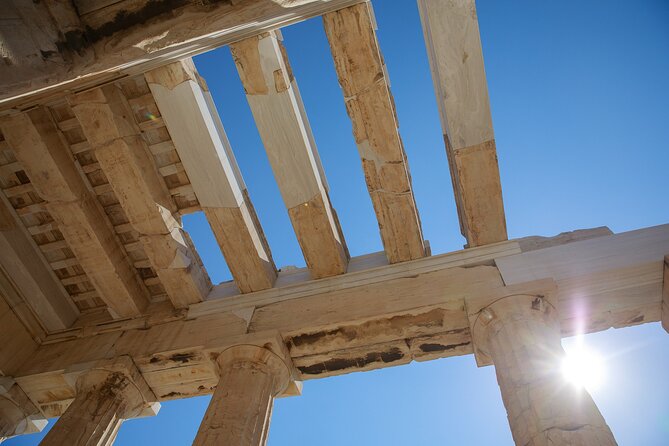
This is a tight, efficient walking loop designed to hit two of the city’s biggest ancient hits without wasting half a day figuring out what matters. You start on the Acropolis in the morning, then shift downhill to the Ancient Agora and end at the museum area. The total time is about 4 hours, so it’s ideal when Athens is competing with other plans like Plaka wandering, a food tour, or day trips.
The big win here is pacing. Acropolis ruins can be overwhelming if you’re solo—so many columns, so many angles, so little context. With a guide leading you stop by stop, you get a mental map fast. Once you reach the Agora, the change in atmosphere helps. You go from sacred hilltop architecture to the idea of a real working city: meetings, commerce, and civic life.
One thing to keep realistic: it’s still a lot of walking. The Acropolis involves climbs, uneven ground, and steps. Most people can do it, but if you know you struggle with slopes, this might feel like a workout.
You can also read our reviews of more tours and experiences in Athens.



Meeting at Dionysiou Areopagitou 3 and the security reality check
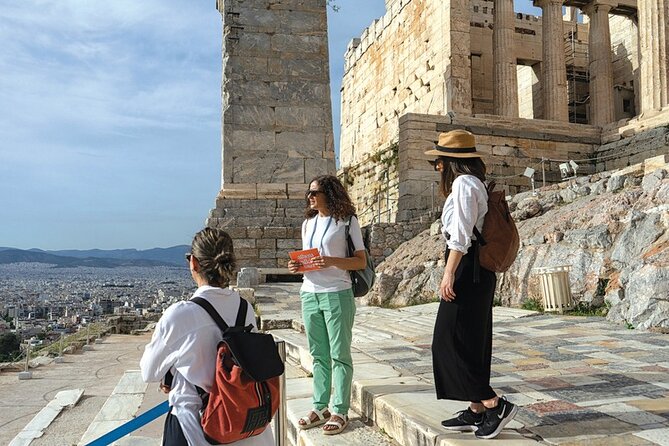
Your start point is Dionysiou Areopagitou 3, Athina 117 42, Greece, with a 10:30am start time. Expect to arrive a bit early. Athens uses airport-style security, and in peak season you can hit 30+ minutes of waiting even when things are well organized.
The tour’s “skip-the-ticket-line” angle helps with the lines tied to entry, but it doesn’t erase security. So your best strategy is simple: don’t plan on sprinting from the metro. Build in a buffer.
Also, this tour can’t wait for latecomers. Entrance times are strict, and there are no refunds for missing your time slot. If you’re the type who likes to linger for one last espresso, just make sure you don’t turn that habit into a schedule problem.
Stop 1 at the Acropolis: monuments, theaters, and the story behind them
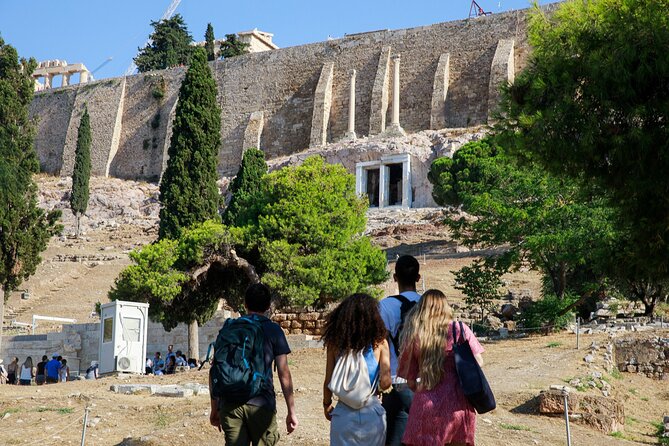
You’ll spend about 1 hour at the Acropolis, with the tour starting right as you enter the site. This is where the guide earns their pay. Instead of treating the Acropolis like a checklist, you learn how the pieces connect—who built what, what each area was for, and what it meant in daily political and cultural life.
Expect to cover major monuments including:
- the Parthenon
- the Temple of Nike
- the Dionysus Theater
- the Herod Atticus Odeon
- plus other key structures along the route
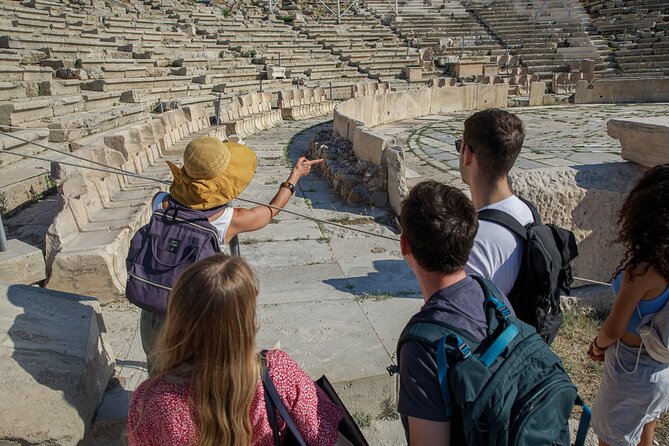
The Dionysus Theater and Herod Atticus Odeon are especially worth having context for. From a distance, they look like ruins. With a guide, you understand their roles in Greek performance culture—how theater and public life sat side by side. That shift turns your photos from “pretty rocks” into evidence of how people lived.
Important practical note: this stop uses Acropolis admission, and entrance fees are not included in the base price. The tour can guide you through the process, but you still need the right tickets ready. You’ll want a valid ID or passport as well, in case your ticket category depends on age or nationality.
The Parthenon stop: a focused 30 minutes for views and photos
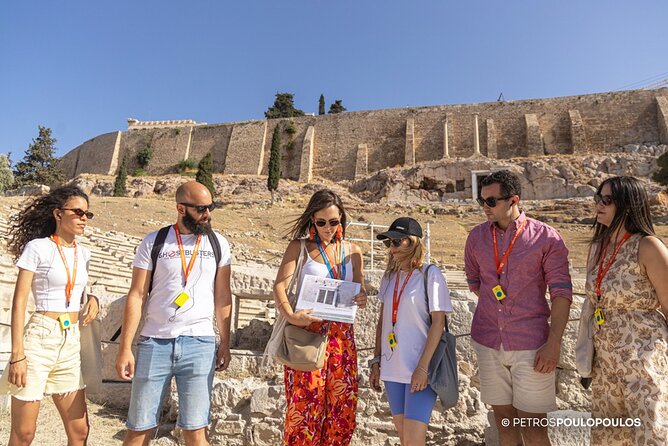
After the main Acropolis orientation, you get a 30-minute Parthenon stop (the tour lists this segment as admission ticket free). Even with that “free” label for this specific segment, don’t assume you can skip tickets for the overall visit—plan on admission as required by the site.
This block is your best window for the classic views. You’ll have time to photograph key angles and to pause without feeling like you’re being rushed onward after every stop. If you’re traveling with someone who wants pictures as much as facts, this helps you keep both sides happy.
Stop 3: Ancient Agora of Athens and how a city-state really functioned

Around 1pm, the tour heads to the Ancient Agora, about 1 hour at Adrianou 24, Athens 105 55. This is the part that makes the day feel real. The Acropolis is dramatic and ceremonial; the Agora is where city life happened at street level.
In the Agora, the guide helps you read the site like a system, not random ruins. You’re not just looking at stones—you’re learning what the Agora meant and how it supported the workings of an Athenian city-state. The effect is surprisingly personal. You start thinking in terms of public space: where people met, argued, traded, and gathered.
Also, the shift from hilltop to Agora helps with energy. Even if it’s still walking, the “steep climb” pressure eases. In warm months, that matters.






Ancient Agora Museum: 30 minutes that can save you from blurry memories
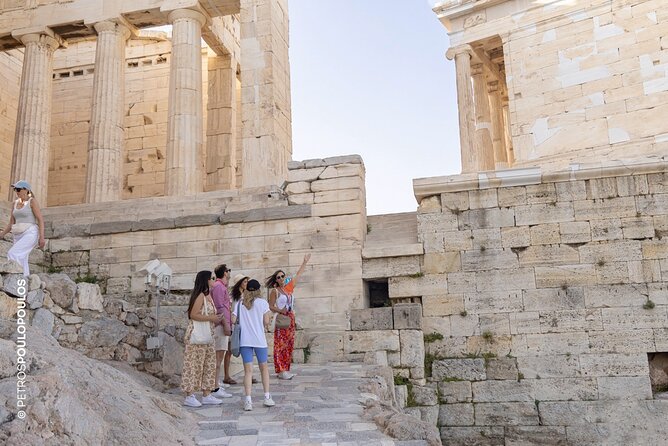
Your final major stop is the Museum of the Ancient Agora at 24 Adrianou, Athens 105 55, with about 30 minutes. This is a smart add-on because outdoor ruins can be hard to interpret. Museums help you “connect the dots” between what’s left on the ground and what the structures may have looked like or how they were used.
A heads-up based on real-world experience: the museum has been reported as closed for renovations on some dates. If that happens during your visit, you’ll lose that indoor interpretive time. Still, the guide’s storytelling at the ruins can keep the day coherent—you just might feel you’re missing one extra layer of context.
Skip-line tickets, strict entry times, and the one thing to do now
Here’s the practical truth: the difference between a smooth day and an annoying one is often tickets. Entrance fees are not included, and you’re required to purchase site tickets prior to booking your tour (or follow voucher instructions if you selected a no-ticket option). If you don’t show up with a valid entrance ticket at the beginning of the tour, you can be disqualified from joining.
This is where I recommend you simplify. Make sure your ticket entry time matches the tour’s entry schedule. The tour notes that it enters the Acropolis right after the start, then arrives at the Agora at around 1pm. If your ticket time is mismatched, that’s where stress begins.
There’s also the common “ticket confusion” pattern: tour fee versus site entry fees are separate. If you want fewer steps on the day, set yourself up so your ticket situation is handled cleanly before you arrive.
What you get for $67.58—and why that can be good value
At $67.58 per person, the price looks reasonable for Athens—especially because what you’re paying for isn’t just the route. You’re buying a local licensed guide, plus an Athens guide magazine and an Athens map.
What’s not included:
- food and drinks
- hotel pickup/drop-off
- entrance fees (depending on the option you choose)
- the ID/passport requirement (not a cost, but a must-do)
So the value calculation is simple. If you’re the type who would otherwise wander around the Acropolis wondering what you’re looking at, the guide fee is doing the heavy lifting. You’re paying to turn scattered views into a structured understanding of Greek public life—religion, performance, politics, and civic culture.
If you’re already a history pro and you love self-guided museum hours, you might feel the cost is less necessary. But for most first-timers—or anyone trying to compress Athens into a short window—this is a solid “best use of time” choice.
Walking comfort: shoes, water, sun protection, and stroller rules
This tour runs in all weather conditions, so dress for rain or heat. In particular, the Acropolis can get hot quickly. The best advice I can give is to plan like you’re going out for a workout: sturdy shoes, sun protection, and more water than you think you’ll need.
Bring:
- comfortable, grippy shoes (the stones can be slick)
- sun protection (hat or umbrella)
- plenty of water (people often recommend carrying enough for long stretches in heat)
There’s also a baby-stroller rule: baby strollers aren’t allowed on the Acropolis archaeological site, and there’s no cloakroom at the side entrance you use. If you’re traveling with a very young child, a baby pouch is the practical workaround.
Finally, watch your footing. Even when the guide keeps the pace controlled, you’re still on uneven steps and paths. Your knees will thank you for shoes that actually grip.
Guide style matters: you’ll likely get names and stories, not scripts
The quality of guides is one of the clearest strengths of this experience. You’ll see names in the feedback like Pam, Gina, Hermes, Tina, Helen, Amaryllis, Costos, Eli, Angeliki, and Stavros. What that signals is that you’re not just getting an anonymous group leader—you’re often getting a specialist who can connect what you see to larger themes.
In practice, that comes down to a few things:
- stopping often enough to explain what you’re actually looking at
- finding shade when heat makes it hard to listen
- answering questions in a way that makes the ruins feel less distant
If you care about the “so what” behind the sites—how Greek democracy, education, theater, and civic life influenced later Western thinking—this guide-led approach is a big part of why the tour works.
Who should book this tour (and who should skip it)
This tour is a great fit if:
- it’s your first time at the Acropolis and you want context fast
- you want to pair the Acropolis with the Agora in one tight schedule
- you’re okay with a walking-heavy route and steep ramps/steps
It may feel like too much if:
- you need very low walking or minimal stairs
- you’re hoping for a slow, loose wander with no pressure around entry times
- you want to spend lots of time only in museums (this tour keeps the museum stop to about 30 minutes)
Should you book the Acropolis of Athens and Ancient Agora Tour?
I’d book it if your goal is to leave Athens with a clear mental picture of how a Greek city-state worked—from hilltop ceremony to Agora debate. The combination of the Acropolis monuments, a guided Ancient Agora walk, and a short museum stop is a smart use of a half-day.
I’d hesitate if you’re going to show up late, don’t want to deal with entrance tickets, or you’re not comfortable with uneven stone and steep climbs. The schedule is built around strict entry times, and the tour won’t slow down for delays.
If you do book, go in prepared: tickets handled correctly, sun protection ready, and shoes that can handle steps. Get those parts right, and you’ll get a day that feels like more than sightseeing.
FAQ
What time does the tour start, and where do I meet?
The tour starts at 10:30am. The meeting point is Dionysiou Areopagitou 3, Athina 117 42, Greece.
How long is the Acropolis of Athens, Ancient Agora and Agora Museum tour?
It’s listed as about 4 hours (approx.).
Is the entrance fees included in the tour price?
No. Entrance fees are not included. The tour fee covers the licensed guide and materials, while site admission depends on the option you choose.
Do I need to buy tickets before booking?
Yes. You must purchase your site tickets prior to booking your tour (or follow the voucher instructions if you selected a without ticket option). You’ll need valid tickets at the start time to join.
What should I wear or bring for the day?
Bring sturdy shoes for walking and steps, and dress appropriately for the weather. In hot conditions, plan for sun protection and plenty of water.
Can I bring a baby stroller to the Acropolis?
No. Baby strollers aren’t allowed on the Acropolis archaeological site, and there’s no cloakroom at the side entrance used for entry. A baby pouch is recommended.
Can I cancel, and how late can I cancel for a refund?
You can cancel for a full refund up to 24 hours before the experience start time. If you cancel less than 24 hours before, the amount paid won’t be refunded.