REVIEW · ATHENS
Ancient Athens Corinth Biblical Tour Following Paul 51.A.D
Book on Viator →Operated by Great Greece Tours · Bookable on Viator
Paul’s footsteps hit different in Corinth.
This private 7–8 hour trip connects Athens and Corinth through the places tied to Paul around 51 A.D. I like the convenience of hotel or port pickup (no awkward meet-up hunt), and I like that you set your own pace with a small group in a comfortable, air-conditioned luxury van. One thing to plan for: the big archaeological stop at Ancient Corinth has an entrance fee (€15 per person), and the driver-guide generally doesn’t walk inside each site with you.
The day runs like a guided drive-and-walk mix: stops for photos and viewpoints, short site time, and clear context from the driver-guide in English. You’ll also get practical comfort perks that matter on a long day—Wi‑Fi on board and bottled water—plus a mobile ticket to keep things simple.
This is a strong fit if you want biblical context in a real place, not just a bus ride. If you want a deeper spiritual or slow-study experience, you may prefer adding extra time on your own at Ancient Corinth and nearby churches.
In This Review
- Key things you’ll notice on this tour
- A private Athens-to-Corinth day built around Paul’s 51 A.D.
- Pickup, Wi‑Fi, and the small comforts that make the day feel easy
- Athens stops: Areopagus and the Roman Agora set the stage for Paul
- The Diolkos and Corinth Canal: why Corinth was a connector, not a backwater
- Ancient Corinth (Archaia Korinthos) and the Bema of Paul: the big moment
- Temple of Apollo and Acrocorinth: ruins, legends, and big views
- Kechries Harbor and Apostolos Pavlos Church: grounding Paul’s story in place
- What to expect on the ground: time limits, entrance fees, and how to get more out of 30 minutes
- Price and value: why $313 per group can be a smart buy
- Who this Paul’s footsteps tour is best for
- Should you book this Athens to Corinth Paul 51 A.D. tour?
- FAQ
- How long is the tour?
- What’s the group size for this private tour?
- Is hotel pickup included?
- Is cruise port pickup included?
- Are entrance fees included?
- Is lunch included?
- Can I cancel for a full refund?
Key things you’ll notice on this tour
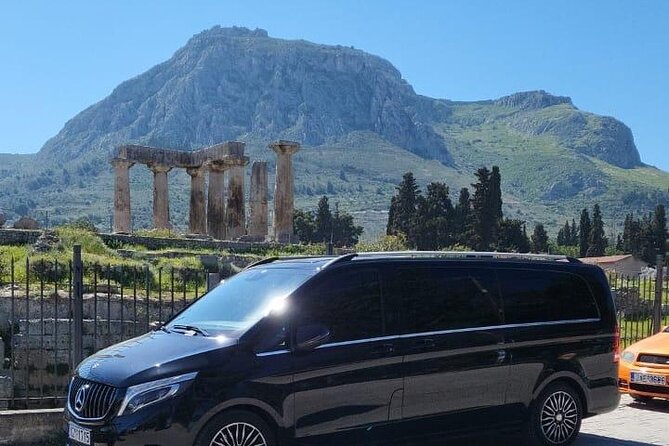
- Private pacing in a small group (up to 2 people), so you’re not trapped in a crowd rhythm.
- Hotel or cruise pickup handled for you, with the driver waiting at your entrance or gate.
- On-the-road comfort: A/C, Wi‑Fi, bottled water, and a luxury vehicle.
- Paul-focused sequencing: Athens stops first, then the Corinth landmarks that connect to his preaching and letters.
- Ancient engineering stops: the Diolkos and Corinth Canal show how Corinth stayed powerful.
- A big “core stop” at Ancient Corinth where you spend the most time and pay the site fee.
A private Athens-to-Corinth day built around Paul’s 51 A.D.
This is not a mega-group “see everything” day. It’s a private tour that keeps the day personal: your group rides together, stops together, and spends time where you want photos, views, or a quick reset.
Because the route links Athens to Corinth, you get an easy mental map: you start in Athens at the sites associated with Paul’s preaching and then you work your way toward Corinth’s key locations tied to his work there. The tour is designed for context, so even the stops that look like “just a viewpoint” usually come with a clear story about why the place mattered.
Duration is listed as about 7–8 hours, and that time is realistic for nine distinct stops with frequent short walks and photo breaks. Most people find this pace works well for a one-day itinerary: you’re not stuck driving for hours without stepping out, and you also aren’t doing marathon sightseeing.
Also, this tour is booked ahead often (on average, around 55 days in advance). That’s a hint that the best-time pick-up windows (especially for cruises) can fill up.
You can also read our reviews of more tours and experiences in Athens.
Pickup, Wi‑Fi, and the small comforts that make the day feel easy
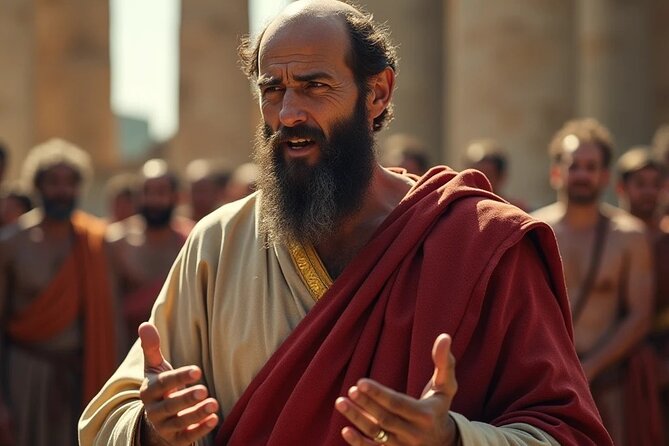
The biggest practical win is how the day starts. If you’re staying in a hotel or apartment, the driver meets you at the entrance and waits for you. If you’re coming from a cruise port, the driver waits at the gate holding a sign with your name, and drop-off is included.
Once you’re in the van, you get comfort that keeps you functional for a full day: air-conditioning, Wi‑Fi on board, and bottled water. On days that run seven hours, that matters. It means you can look up a passage on your phone, send a message, or plan your own snack break without losing time to logistics.
The tour price is listed per group (up to 2 people). That private setup changes the value equation: you’re not paying for a seat in a big bus, and you’re not stuck with a strict schedule that ignores your pace. You can ask questions without yelling over the crowd, and you can spend an extra few minutes at a viewpoint without feeling like you’re slowing everyone down.
Athens stops: Areopagus and the Roman Agora set the stage for Paul
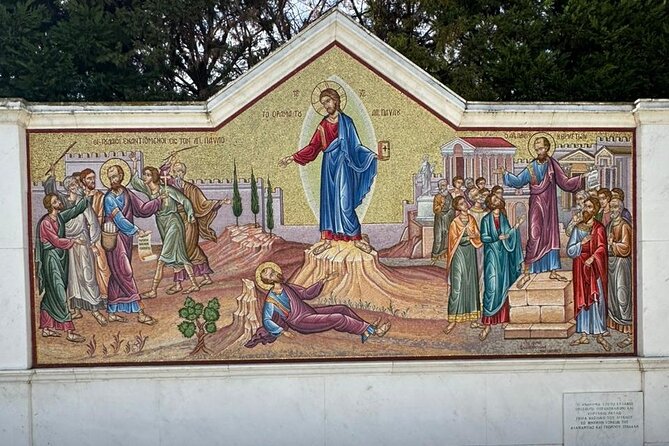
You start at Areopagus, tied to Paul’s preaching at Mars Hill (the tour places it in the same conversation as Paul’s activities around 51 A.D., and also mentions the connection to Saint Denis baptism at this starting point). This is one of those Athens moments where the location itself does half the teaching: you’re high enough to take in the area, and that makes the history feel less like words and more like a lived scene.
This first stop is about 30 minutes and listed as free. It’s a good moment to set expectations for the rest of the day: this is the “why Paul was in this part of Athens” anchor.
Next comes the Roman Agora, described as an Ancient Agora area linked to the Roman Forum vibe and also connected to Paul’s early movement when he came from Piraeus Port. The stop is another 30 minutes, and it’s marked as not having an included admission fee. Even though it’s a shorter stop, it helps you understand how public spaces worked in Paul’s world—courts, civic gatherings, and the kind of public debate where a preacher could get attention.
A practical consideration for these Athens stops: you’ll likely want to have shoes that handle uneven ground. The walking is not long, but the terrain can be rough.
The Diolkos and Corinth Canal: why Corinth was a connector, not a backwater
Then the day turns into engineering and scale—two stops that explain how Corinth stayed important through centuries.
First is the Diolkos, a legendary boat-dragway connecting the Corinthian Sea and the Aegean Sea (and the tour notes it as roughly 2,700 years old). The idea is simple but wild: instead of sailing the long route around, boats were dragged overland. That meant fewer days at sea, fewer risks, and more trade crossing Corinth.
You get about 30 minutes here, and it’s listed as free. This isn’t just for history nerds. It’s for anyone who wants to understand why Paul’s message would spread in a place used to movement and mixing people.
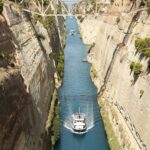
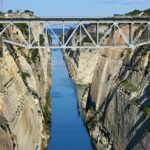
After that comes the Corinth Canal, where the scale becomes the main attraction. The tour gives specific dimensions: the canal is about 6 km long, with steep sides around 80 meters high, roughly 24 meters wide, and 10 meters deep. The canal connects the Aegean Sea with the Ionian Sea, and the tour notes that King George started excavations in 1882, employing 5,000 workers who were paid well.
This stop is also around 30 minutes and free. It’s one of the best photo opportunities on the day because you get both the visual drama and the sense of human effort. If you’re prone to overheating, plan for a water break here—sun exposure can stack up once you get out of the van.
Ancient Corinth (Archaia Korinthos) and the Bema of Paul: the big moment
This is the core of the tour. Ancient Corinth (Archaia Korinthos) is where the day’s focus tightens around Paul’s preaching and the local places tied to his ministry.
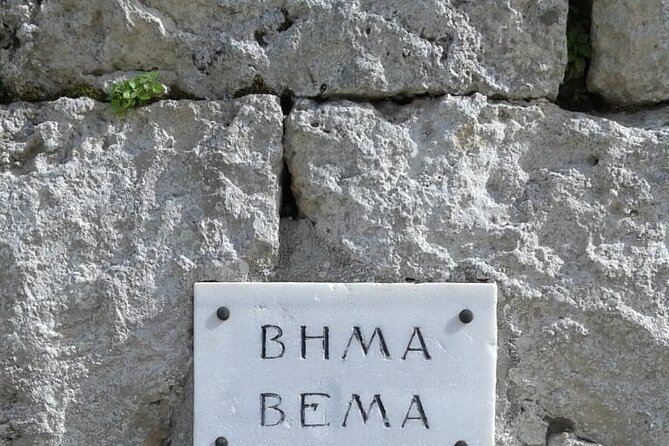
The tour highlights the Step of Paul and the Bema (BHMA), giving you the idea that Paul’s presence here wasn’t random—it was a public, recognizable setting. The time at this stop is about 30 minutes, and importantly, the entrance fee is not included: €15 per person.
If you want the maximum payoff, this is where you should show up with just a little prep. Even knowing basic names (Corinthians, themes from Paul’s letters, and what a public “platform” would mean in that culture) can help your brain connect the ruins to scripture.
One more practical note: one of the most consistent pieces of feedback is that the driver-guide doesn’t generally go inside with you. That doesn’t make the experience worse—it just means you should use your time wisely on-site and ask your driver-guide questions right before you head in.
If you’re the kind of traveler who loves to read every plaque, this 30-minute window might feel fast. If you prefer to take photos, get oriented, and leave with the main story, it’s a comfortable amount of time.


Temple of Apollo and Acrocorinth: ruins, legends, and big views

After Ancient Corinth, the tour moves into two connected stops that deliver different flavors: sacred architecture and a dramatic fortress view.
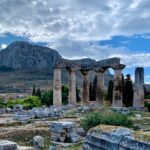
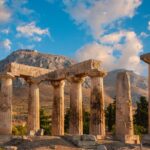
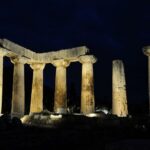
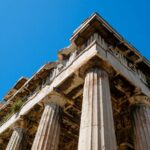
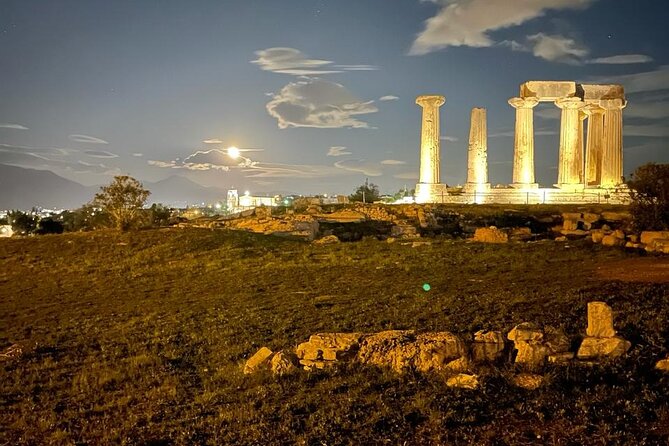
First is the Temple of Apollo, described as the oldest temple of Apollo in Greece and tied to Apollo as a god of light and music. The tour also claims it’s the only temple in Greece where sunlight hits from all sides at a certain time connected to 716 B.C. Whether you treat that as a fun “time-and-light” claim or you simply enjoy the ruins, the stop has a good purpose: it helps you picture what the local gods and ceremonies would have meant in Corinth.
This stop is listed as 30 minutes and the entrance fee is not included.
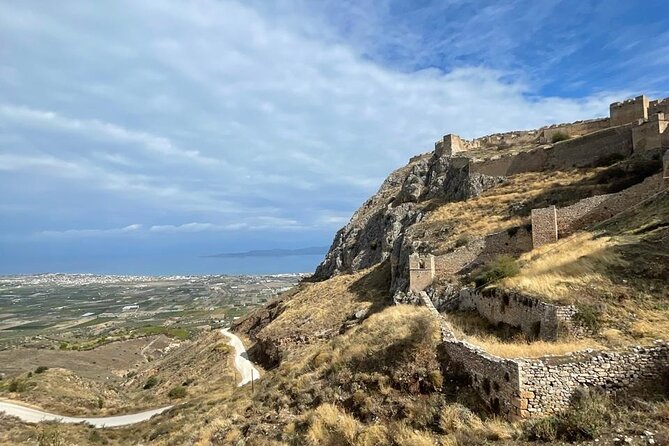
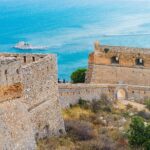
Then you climb mentally to Acrocorinth, described as a “winter palace of Caesar” with the Temple of Aphrodity, and noted as one of the biggest castle complexes—about 530 meters high. The tour includes legends, including a claim about 1,000 beautiful women—which you should take as folklore, not a documentary source. But the fact that the legend exists is part of the story: it shows how people turned the fortress into a dramatic setting over time.
You also get a historical timeline mention: the place is suggested as around 2,500 years old, and the tour notes it became the palace of King William Villehardouin in 1246 AD.
This stop is listed as 30 minutes and free. It’s one of those places where you’ll feel the geometry of the ancient city. If you’re sensitive to heat, consider bringing a hat and planning your photo rush early, because the views are the payoff.
Kechries Harbor and Apostolos Pavlos Church: grounding Paul’s story in place
The last part of the day shifts from heights and ruins to water-level locations tied to specific people.
First is Kechries, the ancient harbor. The tour ties it to Paul meeting Priscilla and Aquila, making tents, and connects the area to later Christian practice with a church monument connected to Paul, Priscilla, Akila, and Fivi. The tour also notes that Paul left for the port around 53 A.D. to go to Ephesus.
This stop is listed as 30 minutes and free. Harbor areas help you visualize motion—ships arriving, people trading, and conversations starting because strangers had to meet somewhere public.
Finally, you wrap up at Apostolos Pavlos Church, which is highlighted for a mosaic titled The vision of Paul. This is the kind of stop that can feel different from excavated ruins: it’s modern worship built around an older story. It’s listed as about 20 minutes and free.
End-of-day tips: keep your legs for the final walk and don’t underestimate how your energy drops once you’ve been touring for hours. This finish works best if you let it slow you down and not rush through it.
What to expect on the ground: time limits, entrance fees, and how to get more out of 30 minutes
The tour is built around short, efficient stops. That’s great for coverage, but you should enter knowing you won’t “solve” every ruin in one half-hour.
Here’s how to make the stops work for you:
- Ancient Corinth has the only clear paid entrance fee in the tour details: €15 per person. Plan cash or card for that.
- Lunch isn’t included. You’ll likely want to plan for a meal on your own. Some guides may help with recommendations, but the tour price does not include it.
- The driver-guide isn’t a site escort inside the archaeology areas. You’ll learn a lot before you go in, and you’ll still need to spend your time on-site reading and looking.
- The Athens first stop is Areopagus, and one feedback point you should know: access at Mars Hill can sometimes be affected by repairs. In April 2025, Mars Hill was closed for repairs, though you could still see it from nearby. For planning, think of this as a “see the spot” stop, not a “guaranteed climb” stop.
One more practical angle: bring water habits into your plan. Bottled water is included, but the day includes outdoor walking and waiting around viewpoints. Sunscreen and good footwear are worth it.
Price and value: why $313 per group can be a smart buy
At $313.01 per group (up to 2), this is priced for a private day with real transport, not a seat-sharing budget tour. It works like this: you’re paying for a private vehicle, hotel or port pickup, and an English-speaking driver-guide who structures the day for you.
Think about the components you’re getting without having to assemble them yourself:
- luxury private transportation with A/C and Wi‑Fi
- bottled water
- pickup and drop-off handling
- curated stops tied to Paul’s trail across Athens and Corinth
- control over pacing, since you’re not being herded by a full bus
The big extra cost you should budget is the Ancient Corinth entrance fee (€15 per person) and your own lunch. Tips aren’t included either.
If you’re traveling as two people, the per-person cost becomes easier to justify. If you’re traveling solo, it may feel like a bigger spend compared to large-group bus tours. But if you care about comfort, flexibility, and not losing time to meeting spots, this private format tends to pay off.
Also, since the trip is often booked about 55 days ahead, it’s smart to lock in your preferred pickup window rather than gambling on last-minute availability.
Who this Paul’s footsteps tour is best for
This works especially well for you if:
- You’re a Christian traveler wanting a place-based look at Paul’s world.
- You like combining scripture with practical geography—Athens to Corinth makes that connection easier.
- You’re traveling in a small group and want to ask questions without competing with a crowd.
- You’re on a cruise and need a day that fits a pickup-and-drop rhythm.
It may feel less ideal if:
- You want lots of time inside museums or multiple layers of archaeological explanation without time limits.
- You’re expecting the guide to walk inside every site with you.
- You’re not interested in the trade-route and city-power angle that the Diolkos and canal bring to the story.
As for guides: names that have come up include Konstantinos, Jorge, Nick, Michael, and George. Across these names, the consistent theme is strong day-structure, good communication, and making the time feel organized.
Should you book this Athens to Corinth Paul 51 A.D. tour?
I’d book it if you want a single day that stitches Athens and Corinth into one coherent Paul-focused route. The value is in the private comfort, pickup convenience, and the way the stops connect public spaces, transport power, and the key Corinthian locations tied to Paul.
Skip it (or plan extra time elsewhere) if you’re the kind of traveler who needs long inside-the-ruins sessions or you don’t want to manage the Ancient Corinth entrance fee and a lunch plan yourself.
For most people on a first visit, this is a smart use of time: you’ll leave with the sense that the story happened in real streets, real harbors, and real public spaces.
FAQ
How long is the tour?
The tour runs about 7 to 8 hours.
What’s the group size for this private tour?
It’s private and listed as up to 2 people per group.
Is hotel pickup included?
Yes. If you stay at a hotel or Airbnb, the driver waits for you at the entrance, and pickup and drop-off are included.
Is cruise port pickup included?
Yes. For port pickup, the driver waits at the gate holding a sign with your name, and drop-off is included.
Are entrance fees included?
Ancient Corinth (Archaia Korinthos) has an entrance fee of €15.00 per person that is not included. Other stop admissions are listed as free or not included per site details.
Is lunch included?
No. Lunch is not included in the tour price.
Can I cancel for a full refund?
Yes. Free cancellation is available up to 24 hours in advance for a full refund, based on the experience’s local time.