REVIEW · ATHENS
Ancient Corinth, Mycenae, Epidaurus, Nafplio full day private tour from Athens
Book on Viator →Operated by My Athens Transfers · Bookable on Viator
Six stops, one long day. This private route is a smart way to connect Greece’s most famous ruins with real downtime in Nafplio. You’ll ride in an air-conditioned private vehicle with Wi‑Fi, and your driver handles the driving plus the story.
Two things I like a lot: you get hotel pickup and drop-off, so you lose zero time wrestling with buses, and you can add a traditional Greek lunch without planning it yourself. The pacing is also built around quick, focused site time, then a breather in town.
One consideration: this is a walking-and-steep-views day. Mycenae and Epidaurus involve uneven ground and uphill sections, and Nafplio’s hilltop fort options can mean serious steps—plan around your comfort level.
In This Review
- Key highlights at a glance
- A Private Peloponnese Day in 9–10 Hours (Without the Chaos)
- Corinth Canal: A Quick Photo Stop With Real Geography
- Ancient Corinth and Its Museum: Where Paul and the City-State Overlap
- Apollo at Corinth: A Tiny Stop That Changes the Mood
- Mycenae’s Lion Gate and Treasury of Atreus: Bronze Age Power, Up Close
- The Epidaurus Theatre and Asclepios Sanctuary: Sound, Healing, and Scale
- Nafplio Break: Lunch, Bourtzi Views, and Castle Time on a Hill
- Price and Logistics: Does $265.70 Feel Worth It?
- Who This Tour Fits Best (And Who Should Rethink)
- Book It or Skip It? My Practical Recommendation
- FAQ
- How long is the Ancient Corinth, Mycenae, Epidaurus, Nafplio private tour from Athens?
- What’s included in the private tour price?
- Are entrance fees included for the archaeological sites?
- Is the tour guided by a licensed tour guide?
- Do I get free time in Nafplio?
- Is pickup available from hotels in Athens?
- What comfort features are in the vehicle?
- What if my plans change—can I cancel?
Key highlights at a glance
- Private, air-conditioned car with Wi‑Fi and bottled water keeps the day comfortable even when you’re out of Athens heat
- Local driver storytelling turns myth, Paul’s letters, and theatre history into a linked timeline
- Corinth Canal viewpoints give you the famous geography in minutes, then you move on
- Mycenae in one sweep: Lion Gate, museum, and the Treasury of Atreus area
- Epidaurus Theatre for acoustics fans: the sanctuary of Asklepios adds context beyond the ruins
- Nafplio break: Venetian-feeling streets plus harbor views, with optional castle time
A Private Peloponnese Day in 9–10 Hours (Without the Chaos)
This tour is built for travelers who want serious range in one day: ancient Corinth’s crossroads, Mycenae’s Bronze Age power, Epidaurus’ sanctuary and theatre, then Nafplio’s coastal reward. It’s not pretending you’ll “see everything forever”—it’s more practical: you get the key pieces and enough context to understand why they matter.
You’ll be picked up from your Athens hotel (or the exact meeting point for your apartment, airport, or port). Then you stay with the same private driver and vehicle all day. That matters. It means fewer logistics headaches and more time sitting down, cooling off, and asking questions.
One more detail that keeps this from feeling like a frantic checklist: the driver stays with you, explains what you’re looking at, and can help you prioritize what to focus on during short stop times. Many recent drivers have been strong on English commentary, with familiar local names such as Notis, Spiros, Panos, George, Michael, Costa, Alex, and Nicholas showing up as guide/drivers in past departures.
You can also read our reviews of more tours and experiences in Athens.

Corinth Canal: A Quick Photo Stop With Real Geography
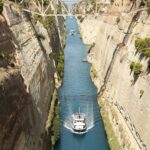
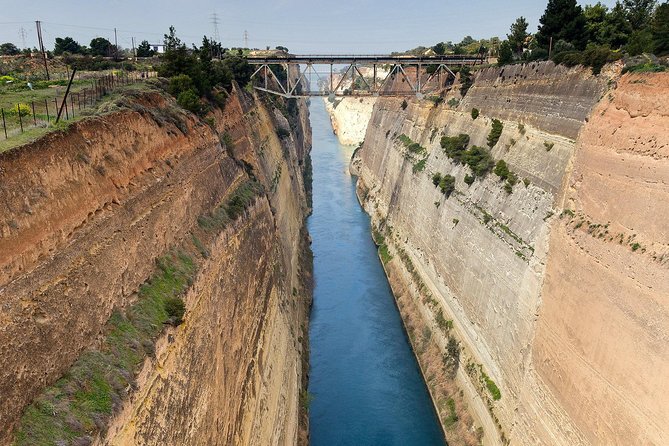
You start with a fast stop at the Corinth Canal, and the payoff is immediate: you’re seeing how one narrow strip of land becomes the “separator” between the Peloponnese and mainland Greece. The canal runs about 6.4 kilometers and is only around 21 meters wide at its base, and it’s crossed at sea level (no locks), which makes it a modern engineering story as much as a scenic one.
From the viewpoint high up, you can watch vessels thread their way through the cut. It’s only about 15 minutes, but it’s a great warm-up. You’re not deep in museum land yet. You’re getting your bearings for the rest of the day—what “this part of Greece connects” and why the region’s routes mattered for centuries.
Practical tip: bring sunglasses and expect wind near viewpoints. If you’re visiting in summer, this is one of those moments where you get the photos fast, then move on before you overheat.
Ancient Corinth and Its Museum: Where Paul and the City-State Overlap
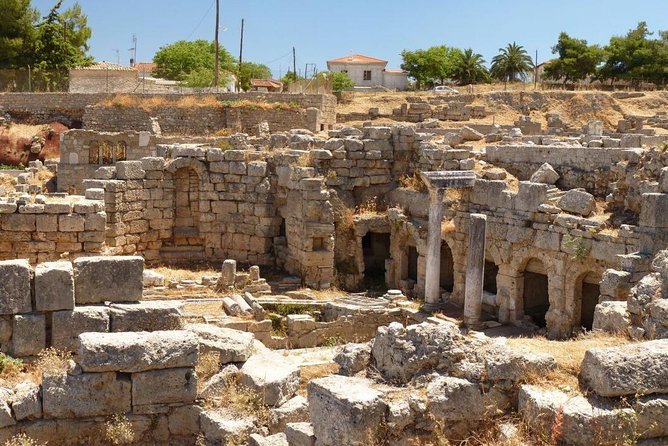
Next you shift into Ancient Corinth (about 1 hour on site), the city-state on the Isthmus. This is the kind of place where the ruins feel like a crossroads, not a single isolated “wow.” It was strategically located halfway between major powers, and that position shaped its importance.
There’s also a very specific layer you’ll probably notice in the way your driver frames it: for Christians, Corinth shows up in Saint Paul’s First and Second Corinthians and in Acts during Paul’s missionary travels. Beyond the New Testament connection, Corinth is referenced by Pausanias in the Description of Greece, which helps you see the site as both ancient and later “remembered” by writers.
You also get the Archaeological Museum of Ancient Corinth on the same general area (about 30 minutes). The museum’s value is that it helps you connect the excavated pieces to the larger story of the city. You’ll pass through major features of the broader archaeological setting such as the Hadgimoustafa spring, Lechaion Road, the Basilica, Fountain of Peirene, the Agora, and the theatre—so your time inside the museum makes the outdoor remains easier to “place.”
Watch-outs: entrances and museums are not included in the base price. You’ll need to plan for on-site ticket costs (more on that later). Also, museum time is short, so focus on the main displays rather than trying to read everything cover-to-cover.
Apollo at Corinth: A Tiny Stop That Changes the Mood
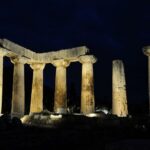
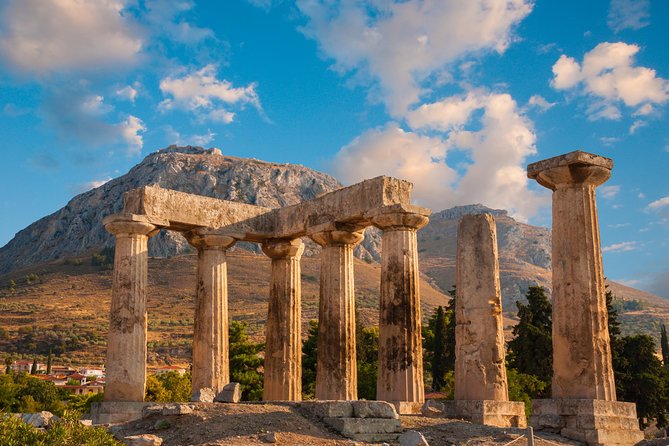
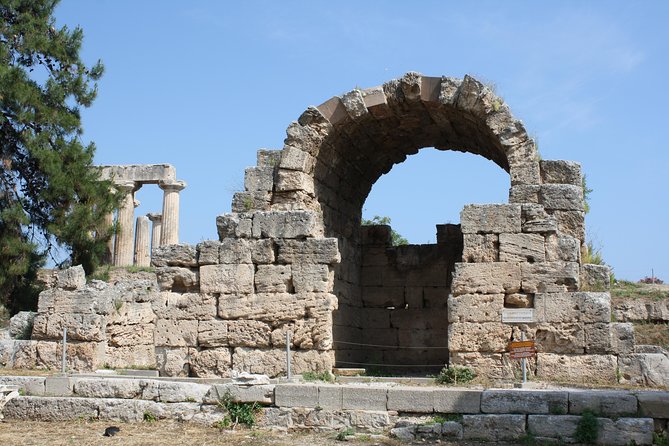
After the bigger Corinth time, you’ll have a brief 15-minute stop at the Temple of Apollo. The structure dates to around 550 BC, so it’s not just a random ruin stop. It adds a sense of religious anchor—Corinth wasn’t only about trade and politics; it also organized worship and civic identity around major deities.
Because this is quick, your best move is to stand back for a minute and let your eyes adjust. Even if you’re not a “column person,” you’ll start to see how religious sites create a different kind of space than the roads and marketplaces.
Mycenae’s Lion Gate and Treasury of Atreus: Bronze Age Power, Up Close
If you want the day’s biggest emotional hit, it’s usually Mycenae. The citadel is the seat of the legendary King Agamemnon, and this site is why the word “Mycenaean” exists at all. You’re looking at a fortified stronghold that dominated much of southern Greece and influenced islands and nearby regions in the late Bronze Age.
You’ll have a short viewing window at the main citadel area and then time for the museum at the entrance (museum time is about 30 minutes, and the broader citadel time is broken into segments). Key features you’ll want to keep an eye out for:
- the Cyclopean walls around the acropolis
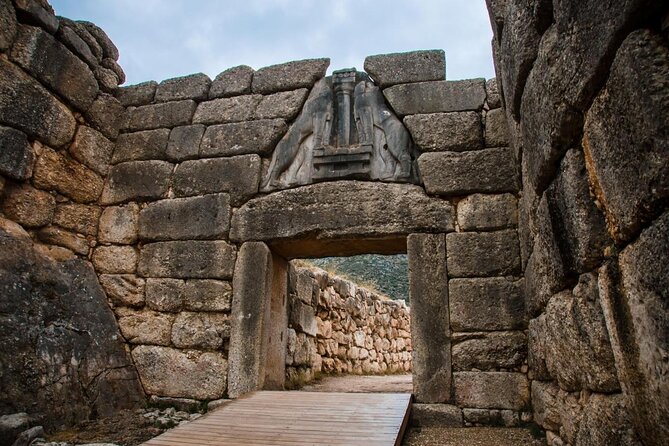
- the Lion Gate with its heraldic lion relief over the entrance
- the Tomb of Clytemnestra area (seen on-site)
- the Treasury of Atreus nearby
The Lion Gate stop is about 15 minutes and deserves it. The relief is one of the best-known pieces of Mycenaean monumental sculpture, and it’s tied directly to the idea of power made visible in stone. It’s also one of those places where the architecture “reads” faster than you expect—once you know it’s an entrance symbol, you feel the message right away.
Then comes the showpiece: the Citadel and Treasury of Atreus, including the Tomb of Agamemnon area. This is the tholos or beehive tomb on Panagitsa Hill, built around 1250 BC. It’s hard to picture the scale until you’re told the lintel weighs about 120 tons, and that helps. Even with only about 15 minutes, you’ll feel the weight of the place—this wasn’t a casual burial.
Practical reality check: Mycenae involves uneven ground, and the site sits on hills. Some past groups also noted steep, rocky paths and caution about slipping surfaces, especially if rain has made stone slick. If you have mobility concerns, it’s worth thinking carefully before you commit to a full day of short walks that add up.



The Epidaurus Theatre and Asclepios Sanctuary: Sound, Healing, and Scale
Epidaurus is where the day shifts from military myth to something calmer and stranger: the sanctuary of Asklepios and the ancient theatre dedicated to healing-themed worship.
You’ll start with the Archaeological Museum of Epidaurus (about 30 minutes, tickets not included). The museum is especially helpful if you’re the type who wants the “why” behind the stones. It includes reconstructions—so you can better imagine how temples and columns looked when they were complete. That kind of context makes the outdoor sanctuary feel less like random foundations and more like a planned sacred complex.
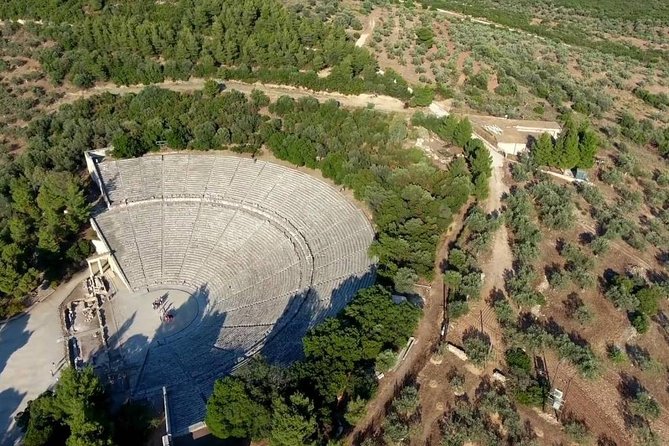
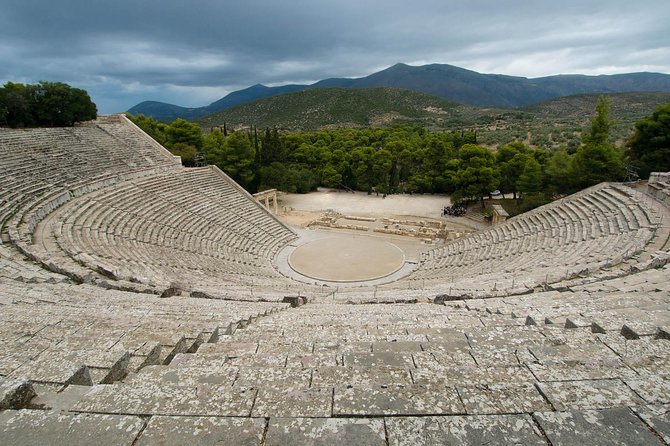
Then you’ll head to the Ancient Theatre of Epidaurus (about 30 minutes). This theatre is famous for its acoustics and aesthetics, and it retains the classic Hellenistic layout of theatron, orchestra, and skene. It also has Roman-era continuity without the kind of heavy modifications you see in many other ancient theatres. In other words: you’re not just looking at ruins—you’re looking at a space that was designed to work.
Next comes the Sanctuary of Asklepios (about 15 minutes). The temple dates to the early 4th century BC, and the sanctuary is described as a major cult site rivaling famous places like Olympia and Delphi. If you like connecting religion with civic life, this is the stop where your driver can tie together how healing was performed as a form of worship and how sacred geography shaped travel.
Nafplio Break: Lunch, Bourtzi Views, and Castle Time on a Hill
Nafplio is your reward after all that stone. You’ll get free time for lunch, coffee, or shopping (about 1.5 hours). This town has that “small but important” feel: cobbled squares, Venetian-era touches, and castles that look close enough to reach—until you realize they’re up on hills.
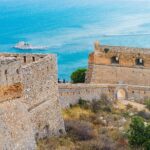
You’ll also likely include quick photo stops around the harbour area. Bourtzi, the Venetian water castle, is a short 10-minute view from the harbour side. The point here isn’t deep history; it’s perspective. You’ll see how the city guarded the water and how the coastline shaped where people built.
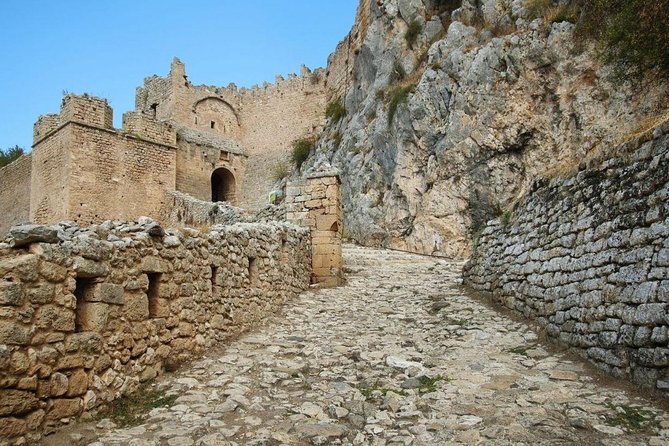
Then there’s the hilltop fort vibe around Acronauplia and Palamidi Castle. Acronauplia is the oldest part of Nafplion, and Palamidi is built by the Venetians during their second occupation (1686–1715). It’s on a hill about 216 meters high with winding stairs. People often quote the step count as 913 (with the local joke that it’s actually 999). Either way, it’s not a casual stroll. Palamidi is about 30 minutes and tickets aren’t included.
My practical advice: if you have energy, go up. If you don’t, stay near the harbour and enjoy the view from street level. You’ll still get the Nafplio atmosphere.
Price and Logistics: Does $265.70 Feel Worth It?
At $265.70 per person, this private tour is positioned in the “pay for convenience and time” category. Here’s how I’d judge the value:
What you’re paying for
- Private transportation all day in an air-conditioned vehicle with Wi‑Fi and bottled water
- Hotel pickup and drop-off in Athens (not just a central meeting point)
- Driver-guided commentary between stops
What costs extra
- Entrance fees for major sites:
- Ancient Corinth + Corinth museum: €15 per person
- Mycenae + Mycenae museum + Treasury of Atreus area: €20 per person
- Epidaurus + Epidaurus museum: €20 per person
- The tour’s base price also typically assumes you’re self-guiding inside sites (your driver won’t enter sites with you).
That means your “all-in” number depends on how many of those admissions you pay that day. But if you add up taxi costs, missed time, and the stress of coordinating multiple bus transfers across a long day, the private vehicle often starts to look like the sensible option.
Also, you can upgrade the experience with the Greek traditional lunch option. In hot months, the value of a sit-down meal chosen for you (instead of a random grab-and-go) is bigger than it sounds.
One more perk that shows up in real-world value: you can ask for flexibility with your schedule timing. One past group even mentioned adjusting the day due to cruise ship delays, and that kind of flexibility is often what saves a vacation day.
Who This Tour Fits Best (And Who Should Rethink)
This private day works best for you if:
- you want major Peloponnese highlights without planning a full route
- you like history that connects mythology, religion, and political power
- you care about comfort—AC, Wi‑Fi, and water during long drives are not a small detail
- you prefer a driver who talks through what you’re seeing (drivers like Costa, Panos, George, Michael, and others have shown up for English-speaking commentary)
You might want to rethink if:
- you have mobility issues or you’re sensitive to steep, rocky, uneven surfaces
- you’re only interested in one or two sites and would rather slow down than pack in many short visits
- you hate climbing stairs; Palamidi can be a workout
For everyone: bring good shoes. Even when stops are short, total walking across hills adds up fast.
Book It or Skip It? My Practical Recommendation
I’d book this tour if your goal is a single-day “best-of” that actually makes sense when the sites are explained in order. The mix of Corinth + Mycenae + Epidaurus + Nafplio is strong because the stops cover different sides of Greek life: trade and crossroads, royal power, healing sanctuaries, and a modern-feeling seaside town.
I’d hesitate if you’re looking for a slow, museum-only pace or if you know you won’t handle uneven ground and stairs. For many people, the day is long but manageable—especially because the private vehicle gives you an easy reset after every stop.
If you want to maximize value, plan your entrance tickets budget, choose the Greek lunch option, and decide ahead of time whether you want to climb up for Palamidi.
FAQ
How long is the Ancient Corinth, Mycenae, Epidaurus, Nafplio private tour from Athens?
It runs about 9 to 10 hours.
What’s included in the private tour price?
You get private transportation, air-conditioning, Wi‑Fi, bottled water, and hotel pickup and drop-off. Lunch is included if you choose the Greek traditional lunch option.
Are entrance fees included for the archaeological sites?
No. Entrance tickets for Ancient Corinth, Mycenae (including its museum and Treasury area), and Epidaurus (including its museum) must be purchased on-site.
Is the tour guided by a licensed tour guide?
The driver provides historical commentary, but they are not licensed tour guides for entering sites. A licensed tour guide can be requested depending on availability.
Do I get free time in Nafplio?
Yes. You’ll have time for lunch, coffee, or shopping in Nafplio (about 1.5 hours), plus additional quick views like Bourtzi and options around Acronauplia/Palamidi.
Is pickup available from hotels in Athens?
Yes. Since it’s private, your driver will pick you up from your hotel lobby (or your apartment entrance) and return you to the same place or a point you prefer.
What comfort features are in the vehicle?
The vehicle is air-conditioned and includes Wi‑Fi plus bottled water.
What if my plans change—can I cancel?
Cancellation is free if you cancel up to 24 hours in advance for a full refund. Changes inside 24 hours aren’t accepted.