REVIEW · ATHENS
Ancient Olympia Full-Day Private Tour from Athens
Book on Viator →Operated by LS Tours · Bookable on Viator
One day, two ancient stops, zero hassle. This full-day private tour from Athens is built for people who want major sights without planning every leg yourself, with round-trip comfort and a driver who keeps things moving smoothly. I especially like the personal feel of the private driver on the road and the chance to get context as you travel.
You’ll also love the comfort details that matter on a long day: air-conditioned transportation with onboard WiFi plus bottled water, so the hours between sites don’t feel like punishment. Even better, the quick stop at Corinth Canal is ticket-free, so you get a scenic win early before the main Olympia focus.
The main drawback to weigh is that the big museum and archaeological entries are not included, and your driver doesn’t walk inside the sites as an official guide. Plan for extra spending and come with comfortable shoes, because this is a full itinerary with lots of moving parts over about 12 hours.
In This Review
- Key Highlights Worth Noticing
- How This Corinth Canal + Olympia Day Trip Works for Time-Poor Athens Visitors
- Pickup, Your Private Driver, and the Real Meaning of WiFi in a Long Day
- Corinth Canal: A Ticket-Free Stretch of Engineering and Sea-Level Reality
- Ancient Olympia: What You Actually See at Each Stop
- The Sanctuary Core and the Pelopion Story
- Temple of Zeus: Classical Doric Meets a 13-Year Statue
- Stadium at Olympia: Where the Games Would Have Felt Real
- Temple of Hera (Heraion): The Olympic Flame Connection
- Nymphaeum and Water Infrastructure: When the Games Needed Plumbing
- Palaestra: Wrestling School Training for Rules and Power
- Philippeion: A Human Monument Inside the Altis
- Olympia Museums: The Parts Where Objects Make the Stories Click
- Archaeological Museum of Olympia
- Museum of the Olympic Games
- Archimedes Museum
- Market Time and Taverna Lunch: How to Use the Free Hour
- Price and Value: Is $330.44 Per Person Reasonable for This Setup?
- Who This Tour Fits Best (and Who Might Prefer Another Plan)
- Should You Book This Private Olympia Day Trip?
Key Highlights Worth Noticing
- Private, English-speaking driver: you get commentary while still keeping the experience tailored to your group
- Comfort-first ride: air-conditioning, WiFi, and bottled water for the Athens to Peloponnese drive
- Corinth Canal view stop: fast, scenic, and free of ticket hassles
- Olympia in layers: temple zones, training areas, and memorials, plus museum time
- Optional depth: you can request a licensed tour guide (availability-dependent) if you want more interpretation
- Village break: time to browse the Market of Ancient Olympia and eat at a traditional taverna
How This Corinth Canal + Olympia Day Trip Works for Time-Poor Athens Visitors
If you’re basing yourself in Athens and you only have one day to see the birthplace of the Olympic Games, this trip makes sense. You’re combining the dramatic modern engineering of the Corinth Canal with the large, iconic ruins of Olympia in one long loop. It’s a classic “best-of” day, but it’s not just a checklist. The timing is set up so you see something scenic on the way, then switch fully into Olympia’s world.
Here’s what I think makes the format good for you: it removes planning friction. Instead of you trying to coordinate buses, timing, and ticket entry by yourself, the driver handles the transfers, and you get a clear sequence of stops. It’s also genuinely practical if you want the story of Greek history in two snapshots, not one.
You’re still looking at a long day, though. Athens to Corinth is about an hour, Olympia is about 2.5 hours from the canal, and the return takes about 3.5 hours. That’s why the comfort features and a knowledgeable driver matter so much here.
You can also read our reviews of more tours and experiences in Athens.
Pickup, Your Private Driver, and the Real Meaning of WiFi in a Long Day
The experience is private, so you’ll ride with your group only. Pickup is designed to be simple: the driver waits at your hotel lobby if you’re staying in a hotel, or at your apartment entrance if you’re in an apartment. That detail matters because Olympia days are tight on time, and easy pickup reduces stress.
Your driver is English-speaking and professional, with commentary in fluent English. They’re not official tour guides, and they won’t enter the archaeological sites with you, but they can answer questions and provide context about what you’re seeing. If you’ve ever tried to read ruins with no explanations, you know how much that in-between guidance helps.
On top of that, you get an air-conditioned vehicle with onboard WiFi and bottled water. WiFi sounds small, but on a 12-hour itinerary it helps you do the boring things that otherwise eat your attention: checking maps for the return walk, reviewing museum hours if you’re splitting your time, and managing your day without constantly draining your phone.
If you care about deep interpretation, you can request a licensed tour guide, depending on availability. That’s your best move if you want someone to stay with you inside the sites and museums and guide your pacing more like an in-depth archaeology day.
Corinth Canal: A Ticket-Free Stretch of Engineering and Sea-Level Reality
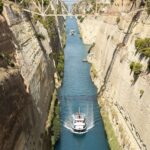
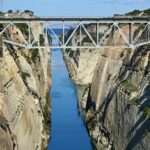
Corinth Canal is the early “wow” stop, and it’s smart that it’s short and free. You’ll travel about an hour from Athens, then spend around 30 minutes here. The canal connects the Gulf of Corinth and the Saronic Gulf, cutting through the Isthmus of Corinth. In other words, it’s the place where Greece feels like it’s turning its geography into a shortcut.
One detail that makes the canal more interesting than you might expect: it’s dug at sea level and has no locks. That means ships can’t just pass through on demand like they do in canal systems that rely on lock mechanisms. It’s also narrow—about 6.4 kilometers long and only 21.4 meters wide at its base—so modern vessels can’t go through easily.
When you’re up high, you get the best view of the isthmus and the steep limestone walls, while watching vessels make their way through. This is the kind of stop that works even if you’re already tired from the road, because you’re not committing to a long museum walk or a ticket line. You’re grabbing a clear, cinematic moment early, then heading toward Olympia with energy still intact.
Ancient Olympia: What You Actually See at Each Stop
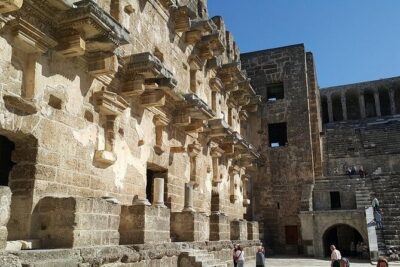
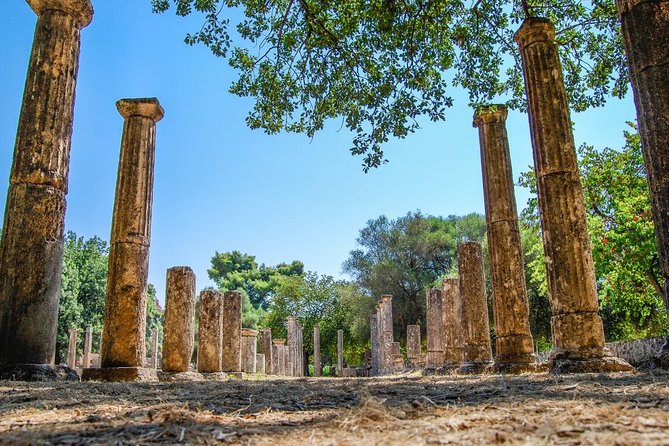
Olympia isn’t one building. It’s a sanctuary complex with different zones tied to religion, sport, and ceremony. This tour builds your time through several focused stops, which is helpful because the site is large and easy to feel lost in if you’re doing it alone.
After Corinth, you drive about 2.5 hours to Olympia. Once you arrive, you’re given a first major block of time at the archaeological site for about 3 hours, with additional short stops around key monuments and training areas.
The Sanctuary Core and the Pelopion Story
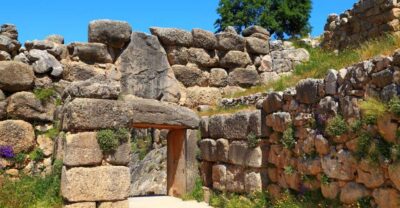
The archaeological site includes ruins from many significant buildings. One of the most notable features for both Greek imagination and historical storytelling is the Pelopion—the tomb associated with Pelops, a quasi-mythical king tied to the Atreids and to the legend cycle that eventually points toward Troy. The idea that his tomb might not be purely mythical is part of why people keep returning to Olympia. It’s where mythology and archaeology overlap in a way that feels more personal than many other ruins.
This longer first stop is where you’ll likely orient yourself. It’s also your chance to decide what to linger over once you’ve seen the larger layout—just keep an eye on your pacing, because your day continues to other specific monuments.
Temple of Zeus: Classical Doric Meets a 13-Year Statue
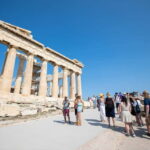
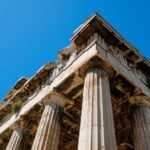
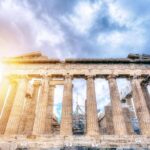
Next comes the Temple of Zeus area, with about 30 minutes here. This is the Doric temple that represents a fully developed classical model. The big story, though, is the famous Zeus statue inside—one of the Seven Wonders of the Ancient World.
You’re dealing with a statue roughly 13 meters high, made of gold and ivory (the chryselephantine style). It took about 13 years to complete, from 470 to 457 BC, created by Phidias on the site at Olympia. Even if you’ve heard of the statue before, seeing the temple area gives the story weight. You can stand in the space and connect the scale to the craftsmanship described in history.
The time here is tight. If you’re a person who loves standing still and imagining the entire sculpture-filled room, consider arriving with background reading or plan to add a licensed guide request for more interpretation.
Stadium at Olympia: Where the Games Would Have Felt Real
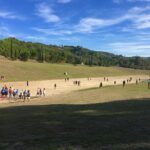
You’ll also stop by the stadium, about 30 minutes, located east of the sanctuary of Zeus. It’s where sporting events took place during the Ancient Olympic Games. What makes a stadium stop hit harder than you’d think is how the site’s other monuments reinforce the idea that these games weren’t random festivals. They were linked to ceremony and honor for Zeus.
The stadium stop is short, so treat it as a “get your bearings” moment—then rely on whatever context your driver provides and your own imagination to connect the track area to the kind of competitions that happened there.
Temple of Hera (Heraion): The Olympic Flame Connection
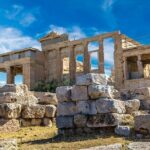
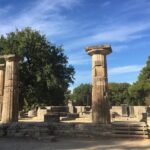
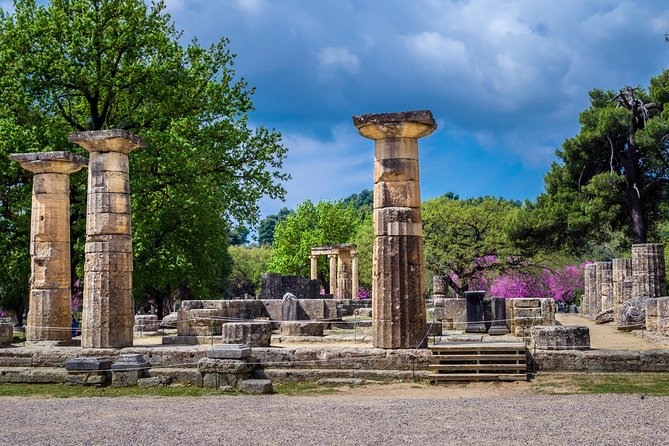
One of the most meaningful stops is the Temple of Hera, or Heraion. This is tied to ceremony in a way that modern audiences actually recognize: the Olympic flame is lit at the altar area of this temple and carried onward to different places.
This matters because it links ancient practice to the modern symbol you already know. The temple was built around 590 BC, and it was destroyed by an earthquake in the early 4th century CE. You’ll spend about 15 minutes here, so again, it’s a short visit—but it’s also a stop you can feel in your chest if the Olympics story means something to you.
Nymphaeum and Water Infrastructure: When the Games Needed Plumbing
There’s also a stop connected to the Nymphaeum, a water distribution structure constructed in the mid-2nd century. It supplied water to crowds attending the Olympic Games in July and August. The fascinating part isn’t just that water existed—it’s how staged it was.
The structure received water from an aqueduct into a cistern and released it in stages into an open-and-closed channel system around the site. People even had small drinking bowls, and troughs were placed around for crowd use. This turns Olympia from “pretty ruins” into “a real functioning event space,” which I find makes the whole site more believable.
Palaestra: Wrestling School Training for Rules and Power
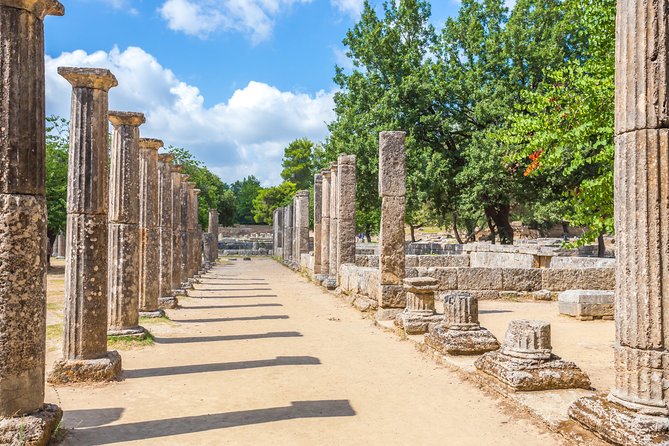
Another stop is the palaestra, a training ground for wrestling and other combat training. It’s tied to Greek terms for fist-fighting and pancration, a mixed, hands-on combat style. What stands out here is the reminder that even intense competition had structure. There were rules, umpires, and judges, and contests could be stopped for violations.
This stop is about 15 minutes, so you won’t have time to study everything. Still, you’ll leave with a stronger sense of what “Olympic athlete training” meant in that setting: more than jogging and good intentions, it included martial preparation and discipline.
Philippeion: A Human Monument Inside the Altis
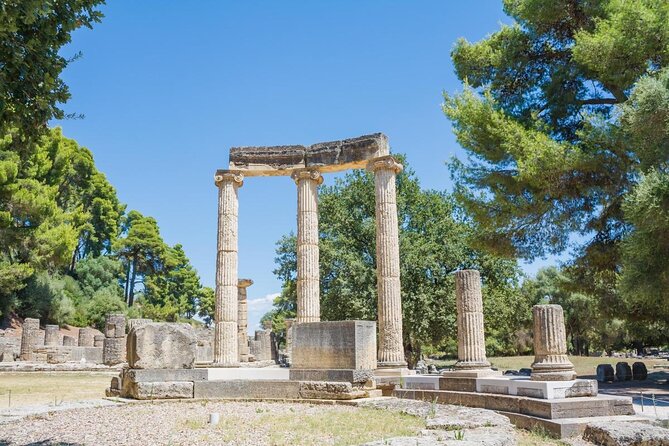
The Philippeion is about 15 minutes, and it’s an especially interesting contrast because it was the only structure inside the Altis dedicated to a human. It was a circular memorial (a tholos) built to honor Philip’s family, including Philip himself and Alexander the Great.
It was designed with ionic and corinthian elements and housed chryselephantine statues. Even if you’re not a building-type person, this is the kind of monument that makes Olympia feel political and personal, not only religious and athletic.
Olympia Museums: The Parts Where Objects Make the Stories Click
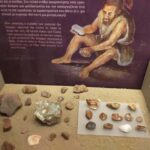
After the outdoor ruins, you’ll shift into museum time. Museum stops are where you can see the physical evidence that turns legends into objects you can point at.
Archaeological Museum of Olympia
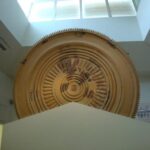
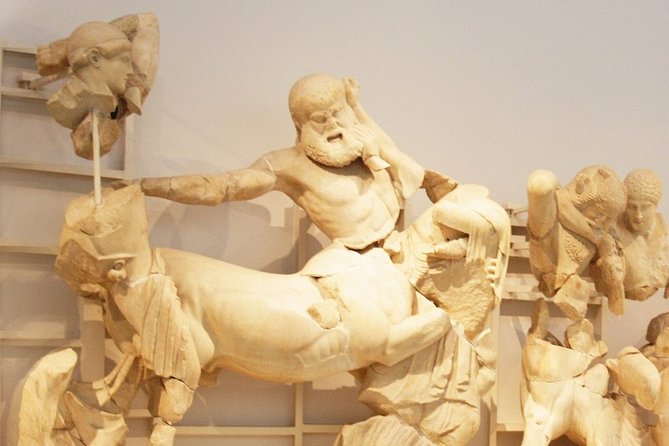
You’ll have about 30 minutes in the Archaeological Museum of Olympia. This museum holds discoveries from the surrounding area, spanning prehistory through Roman rule. It’s also historically important as the first museum in Greece outside of Athens when it opened in 1882.
Key pieces you’ll encounter include Hermes and the Infant Dionysus (attributed to Praxiteles), objects connected to the Temple of Zeus, the Nike of Paionios, and an oenochoe associated with Phidias. The bronze collection is also highlighted as one of the most important in the world.
If you’re thinking, I won’t read all the labels in 30 minutes, you’re right. Use the museum time to find a few anchor objects, then let the rest support your memory of the ruins outside.
Museum of the Olympic Games
Next is the Museum of the Olympic Games, also about 30 minutes. This focuses on the history of the Games themselves, including the traditional dating to 776 BC, their four-year rhythm, and how they continued in Roman times. It also references the final recorded celebration in AD 393 under Theodosius I and the idea that games may have continued afterward.
This is the portion that helps you connect what you saw outdoors to how the Games actually fit into Greek timekeeping and civic identity.
Archimedes Museum
Finally, the Archimedes Museum gives you a chance to step away from sport and temples into the world of invention and science. It’s dedicated to the ancient Greek mathematician, physicist, engineer, astronomer, and inventor linked with major contributions to technology.
It’s only about 30 minutes here, but it adds variety so your day doesn’t become only stone-and-sun fatigue.
Market Time and Taverna Lunch: How to Use the Free Hour
One hour of free time is built in for the Market of Ancient Olympia. This is where you can browse village shops and look for handmade souvenirs. If you’d like lunch, this is when you can eat at a traditional Greek taverna.
The best way to use this hour is to decide early what you need: either a relaxed meal, souvenir browsing, or a quick rest break. With a long drive after, I’d avoid overcommitting to too many tasks. You’re not on a tight museum-only schedule here, so treat the market as recovery time.
Price and Value: Is $330.44 Per Person Reasonable for This Setup?
At $330.44 per person for a private, full-day trip, this is not a budget tour. You’re paying for privacy, direct transportation, and a driver who gives commentary during the ride, plus the comfort package: air-conditioning, WiFi, and bottled water.
Where the value gets strong is if you’re traveling as a small group that wants flexibility and doesn’t want to manage transfers on your own. Group discounts are offered, which can help if you’re not traveling solo.
Where the value can feel weaker is the cost of what’s not included. Entry/admissions for the archaeological site and museums are listed as 12€ per adult, and lunch is not included. That means your final spend isn’t just the tour price. Also, if you expect a licensed guide inside every site, the standard driver format may leave you wanting more depth unless you request that extra option.
My practical take: this tour can be a good value when you want a well-paced, comfort-first day with major highlights, but you should budget extra time and money for site entry and optional deeper guiding.
Who This Tour Fits Best (and Who Might Prefer Another Plan)
This is a great match if you:
- Want Corinth Canal and Olympia in the same day without planning transfers
- Appreciate a private car for long travel, especially in warmer months
- Prefer a driver who can provide helpful context during the ride rather than a full scripted museum lecture
- Need a single-day way to experience Olympia’s main monuments and museums
It might not be ideal if you:
- Want a licensed expert walking you through every ruin in detail (your driver won’t enter sites as an official guide)
- Get stressed by a packed itinerary with multiple short stops
- Are trying to minimize costs, since admissions and lunch are extra
If you do book, I’d come prepared with comfortable shoes, and in summer, bring hats, sunglasses, and sunscreen. Heat can make short visits feel longer, especially when you’re walking between monuments.
Should You Book This Private Olympia Day Trip?
I’d book this if your goal is clear: see the Corinth Canal viewpoint early, spend focused time at Ancient Olympia’s major areas, and still get museum context without worrying about logistics. The comfort features and private format are the selling points, and the route is efficient for a first-time Olympia visit.
Before you decide, do two quick checks:
- Budget for the archaeological site and museum admission (12€ per adult) plus lunch.
- If you want deeper interpretation inside the site, request a licensed tour guide ahead of time (availability-dependent).
If those conditions work for you, this tour is a solid way to turn one Athens day into real Olympian memories.